C J LANDSCAPES Get in touch

Woking, Surrey · 2023

Sandstone Cut on Angles, and a Lawn Rebuilt From the Ground Up.

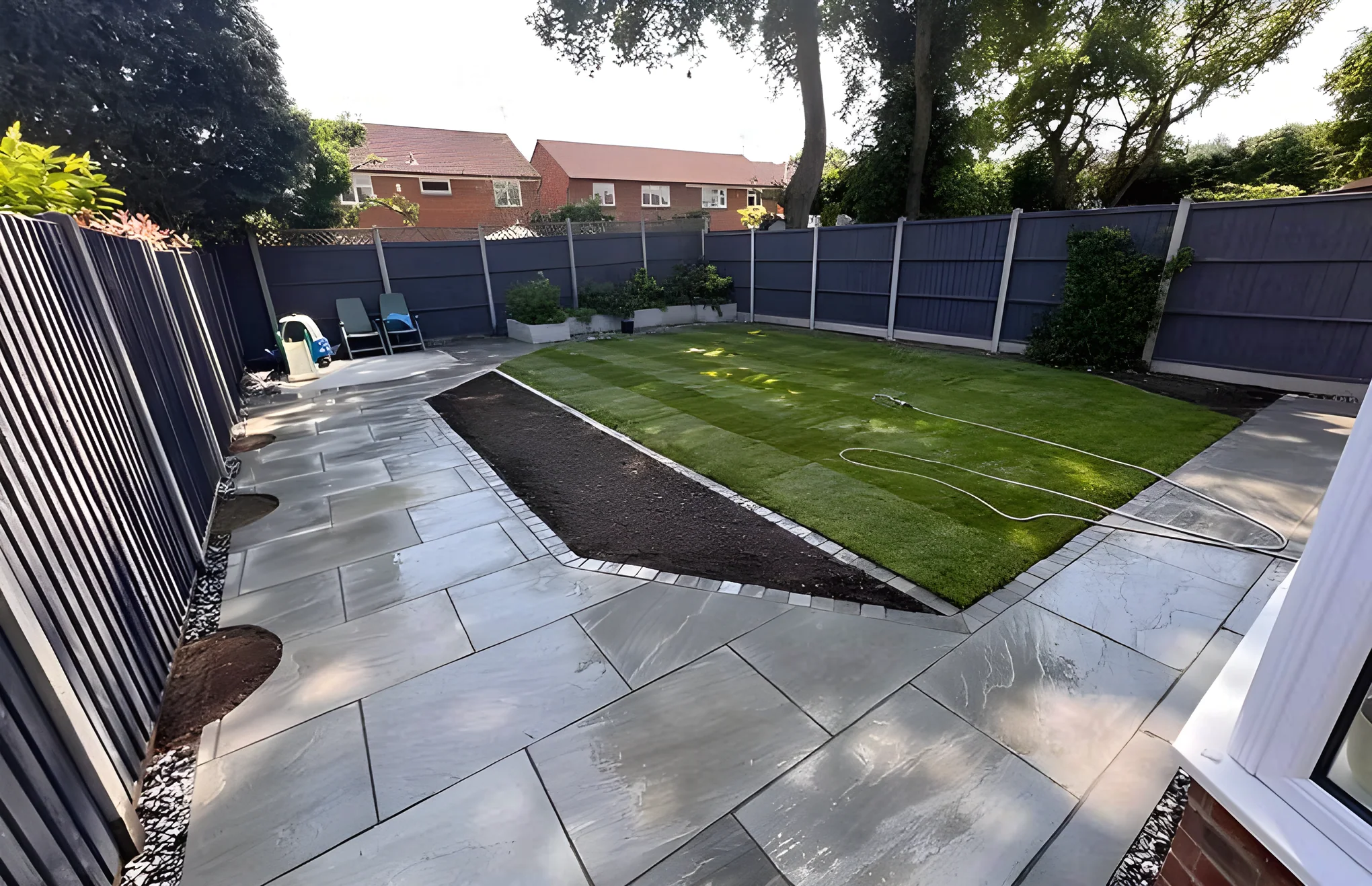
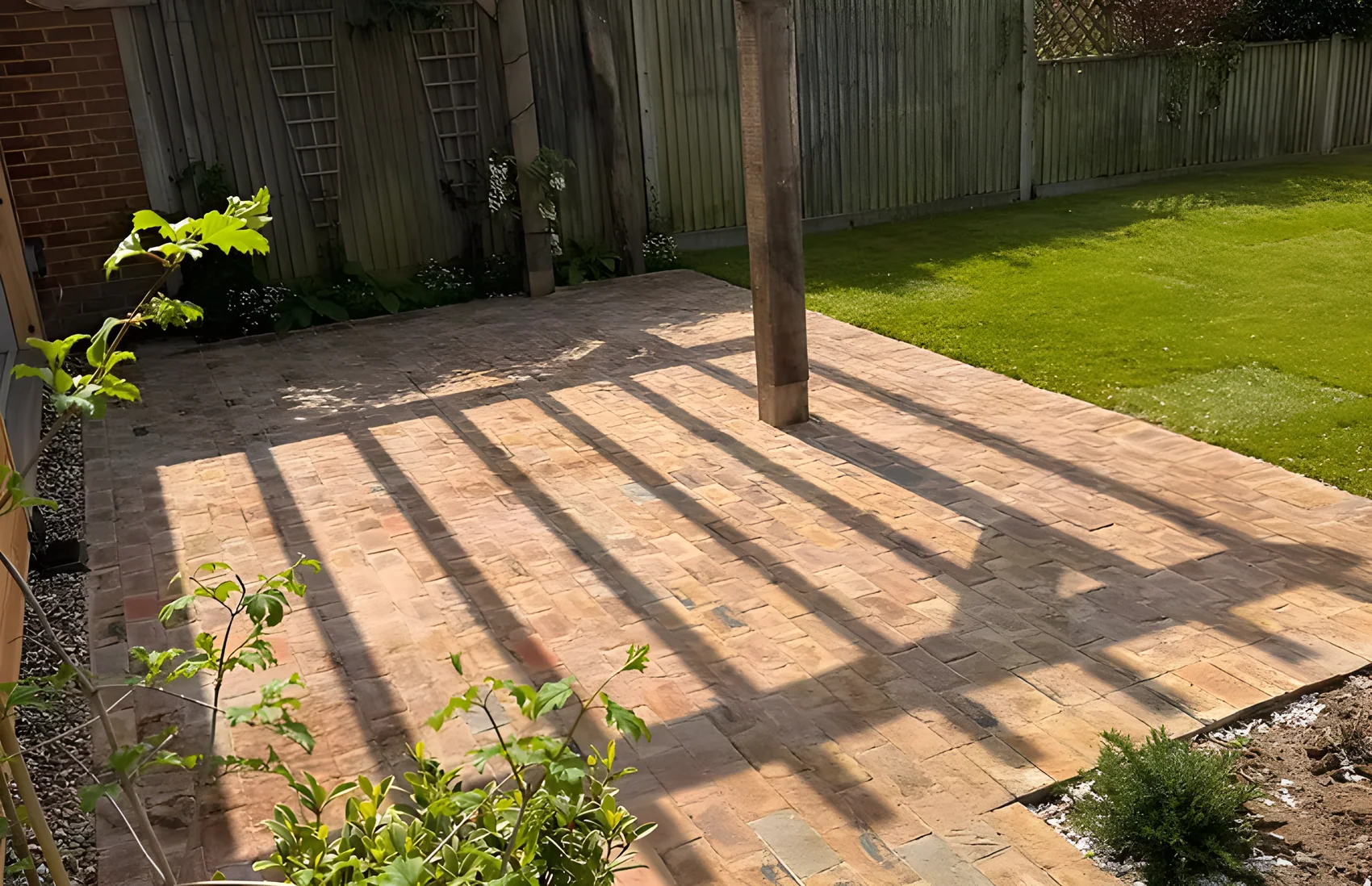
The terrace is natural sandstone, cut and laid on angles rather than square to the house, with a lawn running from its edge up to the back door. What was here before was thin grass worn through to bare soil.

Woking, Surrey

Angled Paving Is a Setting Out Job Long Before It Is a Laying Job.

This garden in Woking is built around a natural sandstone terrace laid on angles, with a lawn beside it running clean up to the back of the house. Before the work started, this is what was there instead: thin grass, worn through to bare soil in patches.

Laying stone on an angle changes the job. Nothing runs parallel to a wall, so there is no straight edge to hide behind, and almost every slab around the perimeter is a cut made on site. The line the terrace is set out from decides the whole surface, and it is struck and checked before any stone is bedded.

The same team dug the ground, set the levels, laid the stone and laid the turf. Carl runs the job from the first visit to the handover, so the standard on the last cut is the standard on the first.

Paving
Natural sandstone
Paving pattern
Cut and laid on angles
Lawn
New turf, mown in stripes
Layout
Terrace to one side, open lawn running to the house
On arrival
Thin grass with bare patches

The sandstone terrace

On an Angle There Is Nowhere to Hide, So the Setting Out Comes First.

The paving is natural sandstone, and it is laid on angles rather than square to the walls around it. That is the character of the terrace, and it is also the reason it takes longer to build. Almost every slab that meets the lawn or a wall is a cut slab, made on site to a line, not pulled off a pallet.

Natural sandstone is not a uniform product. The riven face and the colour run differently across every slab, and on this terrace that variation reads as texture rather than as a pattern repeating. It is the reason the surface looks like stone and not like a product.

On an angled layout the pattern has to be settled before the first slab goes down, because once a course is laid on an angle the rest of the terrace follows it. That is why the paving reads as one surface running round two sides of the lawn rather than as a pattern that changes halfway.

  • Natural sandstone with a riven face and the colour varying slab to slab
  • Laid on creative angles rather than square to the walls
  • Paving wrapping two sides of the lawn
  • Perimeter cuts made on site to the line of the lawn

What was here before

Bare Patches in a Lawn Are Usually About the Ground, Not the Grass.

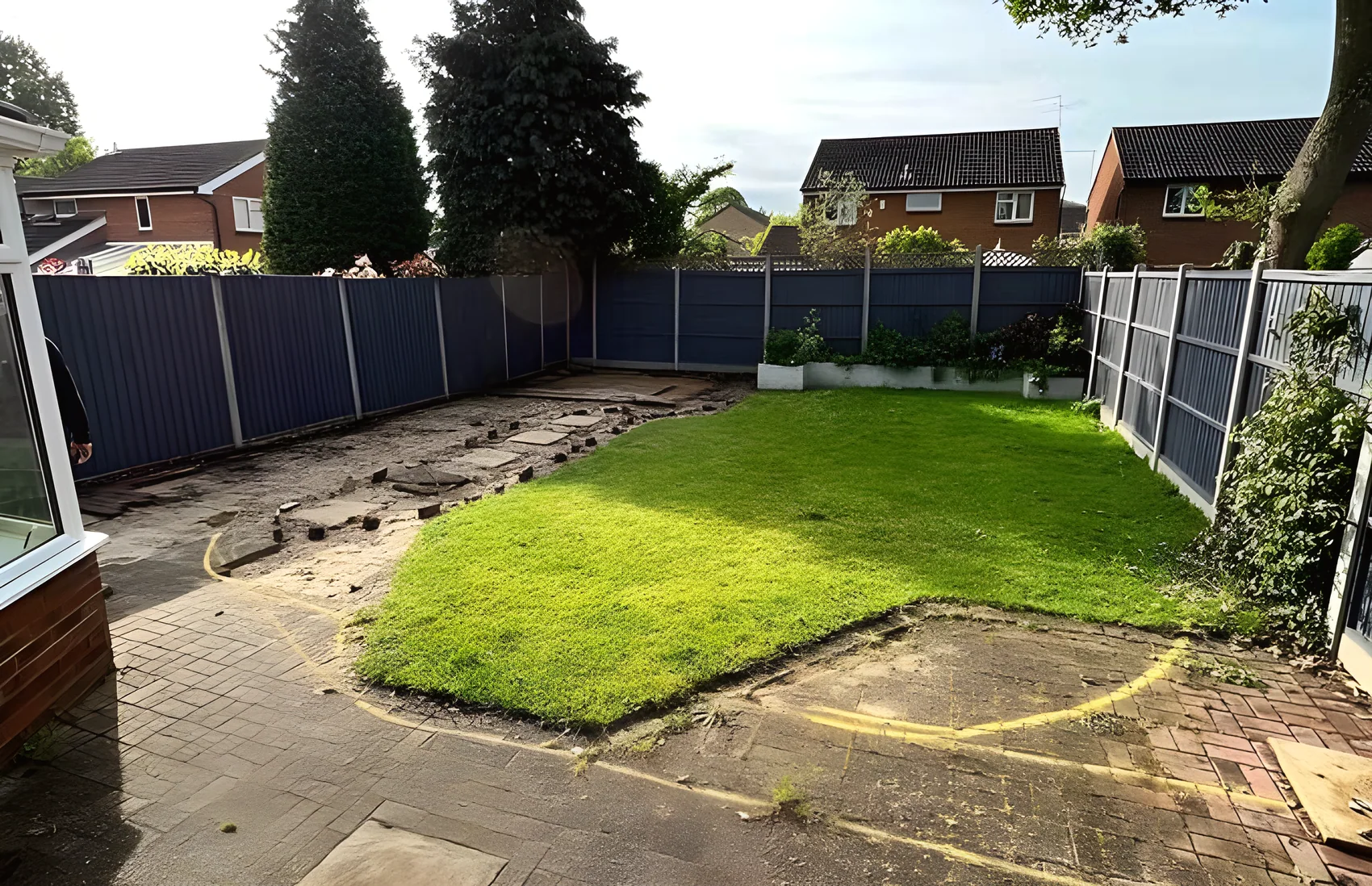
This is the garden before the work started. The grass is thin and worn through to bare soil in patches, which is the point at which a lawn stops being a maintenance job and becomes a rebuild.

Grass that keeps going bald in the same spots is rarely short of seed. The usual causes are compaction from feet, machines or a building job, topsoil spread too thin over the subsoil, shade off a fence or a tree, and water sitting in the ground long enough to drown the roots. Each one needs a different answer, and seed on its own fixes none of them.

Which is why it is worth looking under a lawn before deciding what to do with it. Where the ground is sound and only the grass has gone, scarifying out the thatch, aerating and overseeding will bring it back. Where the ground itself is the problem, patching the top of it keeps failing. In this garden the lawn was rebuilt rather than patched, and the new turf went down across the whole of it.

  • Worn patches read as a ground problem before a grass problem
  • Compaction, thin topsoil, shade and standing water are the usual four
  • A spade in two or three places tells you more than another feed will
  • Ground that is compacted rather than wet can be opened rather than lifted
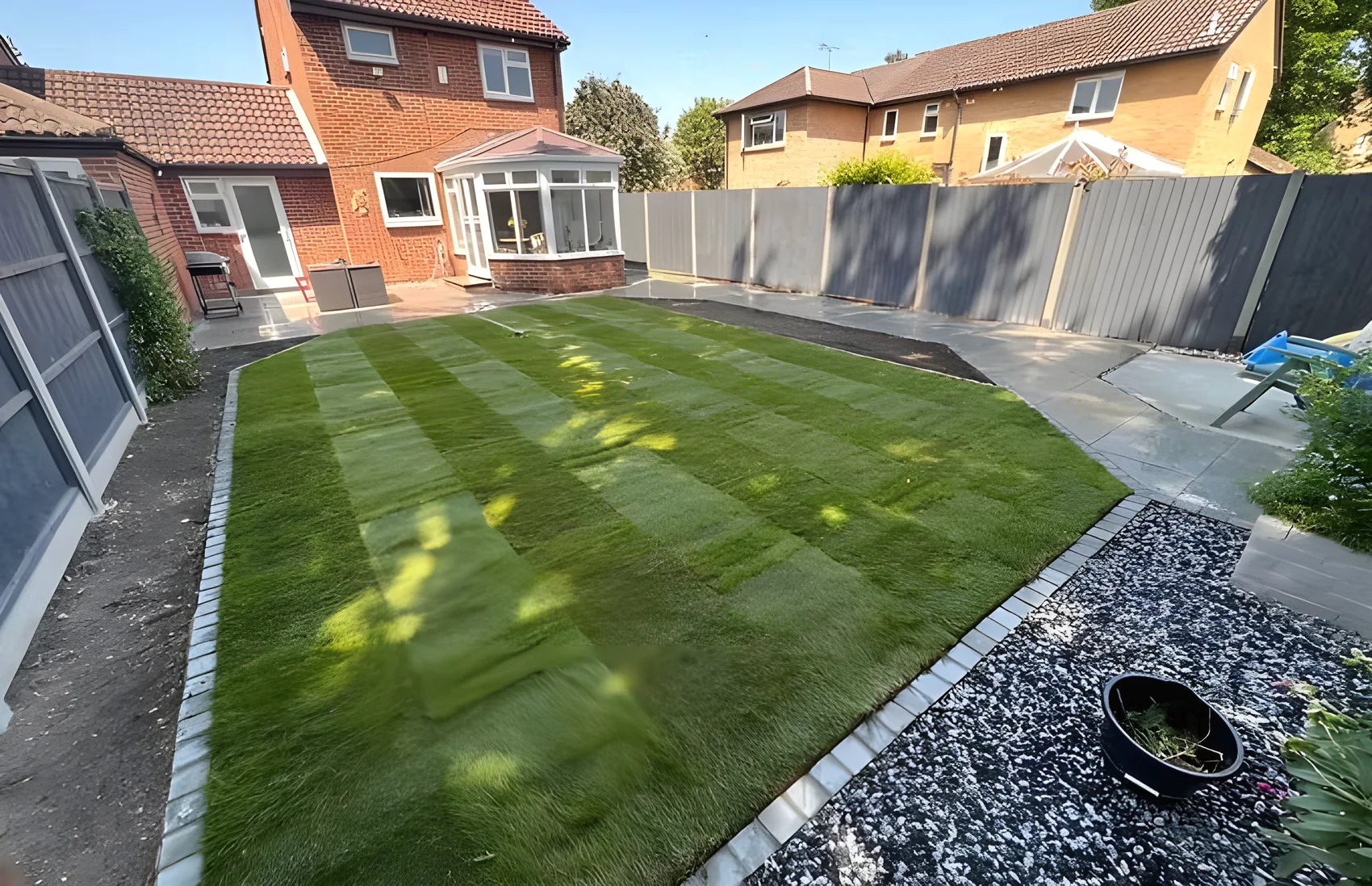
A striped lawn running up to the back of a house

The new lawn

A Lawn That Stripes Evenly Is a Lawn That Was Levelled Properly.

The lawn runs from the edge of the terrace up to the back of the house, mown in stripes. It is the surface you look at from inside the building, so it carries the garden as much as the stone does.

Stripes are not a product you buy. They are the roller on the back of the mower laying the grass flat in opposite directions, so one band reflects light towards you and the next band away from you. That is also what makes them such an honest test of the work underneath. A lawn that is not level shows it the moment the bands run across it, as a wobble in a line that ought to be straight.

Which is why this lawn is worth looking at closely. The bands run straight from the terrace edge up to the back of the house without a wobble in them, and that is the ground underneath showing through the grass rather than anything the mower did on the day.

  • A new lawn running from the terrace edge up to the back of the house
  • Laid where a tired lawn with bare patches had been
  • Stripes come from the mower roller, not from a treatment
  • Even bands from the terrace to the house

Good to know

Questions About This Garden

Why Lay Paving on Angles Rather Than Square to the House?

It changes how the garden reads. Paving laid square to a house pulls your eye straight down the plot, and in a garden that is wider than it is deep that can make the space feel shorter than it is. Running the courses on an angle sends the eye across the garden instead, and the longest line in the terrace becomes a diagonal. The cost is labour, because the whole perimeter is cut slabs and the setting out has to be right before anything is bedded.

Is Natural Sandstone a Good Surface for a Terrace?

It is a good surface if you want the garden to look like stone rather than like a product. Sandstone has a riven face with real texture to it, which holds its grip when the weather is wet, and the colour varies from slab to slab across a pallet. If you want every slab identical, that variation will annoy you and porcelain is the better answer. Either way it wants a full mortar bed, primed backs and a proper jointing compound, not a dry mix brushed into the gaps.

Can a Worn Lawn Be Saved, or Does It Have to Be Replaced?

It depends on whether the grass has failed or the ground has. Where the soil underneath is open and draining, scarifying out the thatch, aerating and overseeding will usually bring a thin lawn back within a season. Where the ground is compacted, or there is only a skim of topsoil over subsoil, the same patches go bare again and no amount of seed or feed changes that. Deep soil aeration decompacts to around a metre and holds the fissures open with around one kilogram of enriched biochar per square metre, which deals with compaction without lifting the lawn.

How Long Before a New Lawn Can Be Walked On?

Longer than most people expect, and it depends on the season and on how much you water it. New turf has to knit into the soil below before it will take any traffic, and until it does, walking on it drags the joints apart. Generally, stay off it other than to water it, give it a first light cut once it holds firm when you tug a corner, and treat the first full season as the one that sets the lawn up.

Do You Build Gardens in Woking?

Yes. Woking is within easy reach of our base in Hartley Wintney, and we build and look after gardens right across that part of Surrey, including Windlesham, Virginia Water, Sunningdale, Weybridge, Cobham and Esher. The team that builds a garden is the team that can keep it afterwards, so a new lawn like this one does not get handed to somebody else the week after it is laid.

Your garden

Tell Us What the Garden Does Now, and What You Want to Do in It.