C J LANDSCAPES Get in touch

Invasive weed control · Surrey

Japanese Knotweed, Identified and Dealt With Properly.

Identification, treatment and removal of Japanese knotweed, delivered with our specialist invasive weed partners at AIR8. We tell you what you are actually looking at, what it takes to clear it, and then we put the garden back.

The short version

Found Early, It Is a Manageable Job.

Japanese knotweed is not a weed you pull. It grows from a rhizome that sits well below spade depth and travels sideways through the soil, and a fragment the size of a thumbnail is enough to start a new plant. That is why cutting it, digging at it or running a strimmer through it makes the problem bigger rather than smaller.

Done properly it is routine work. We identify it, and the survey, the treatment plan and the disposal paperwork come through our specialist invasive weed partners at AIR8. Our own team then puts the garden back: levels, paving, topsoil, turf and planting.

The one thing that makes all of this easier is finding it early. A single stand at the back of a border is a plan on paper. The same stand under a terrace you have just paid for is a plan plus a terrace.

Start a conversation
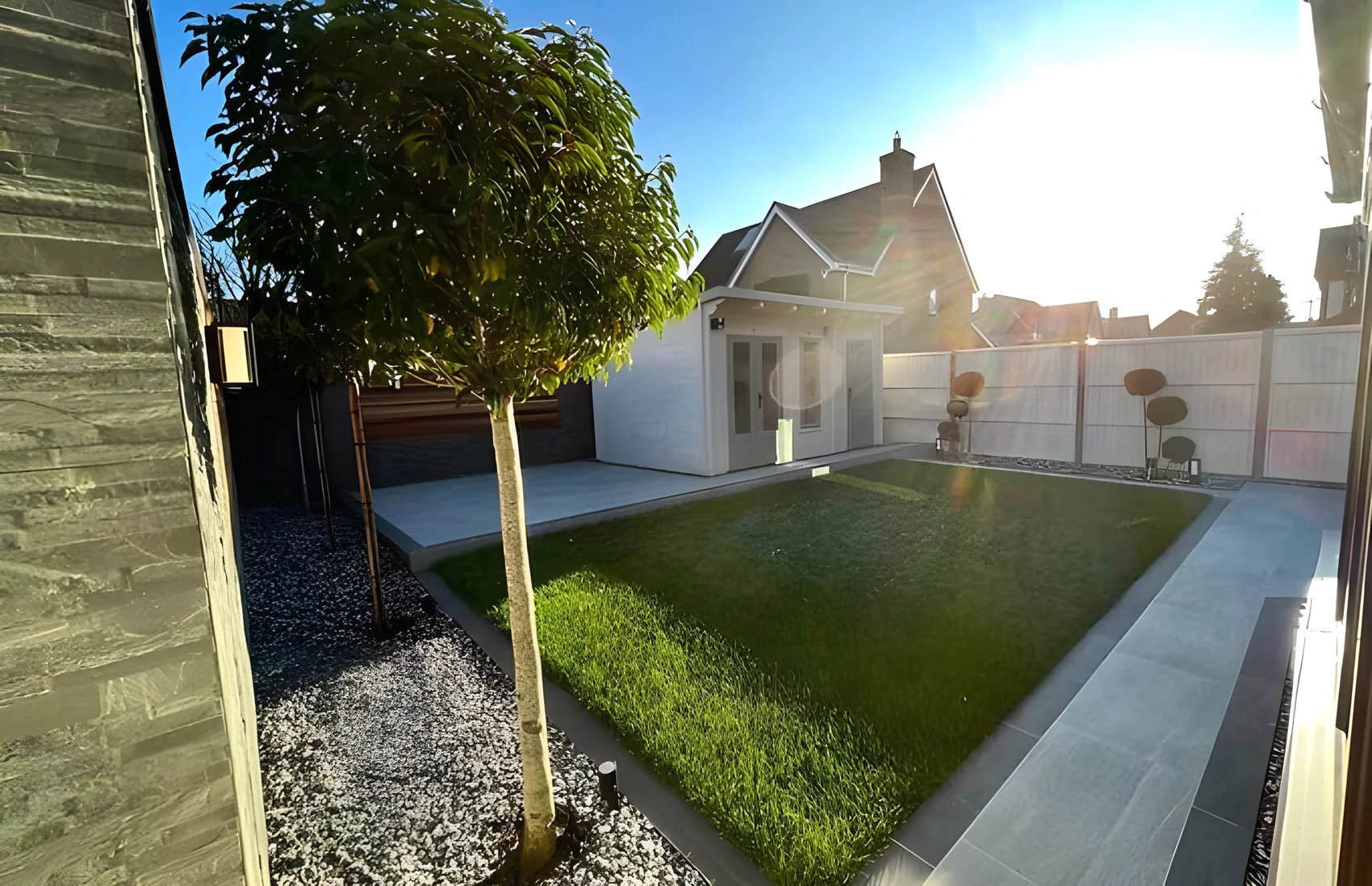
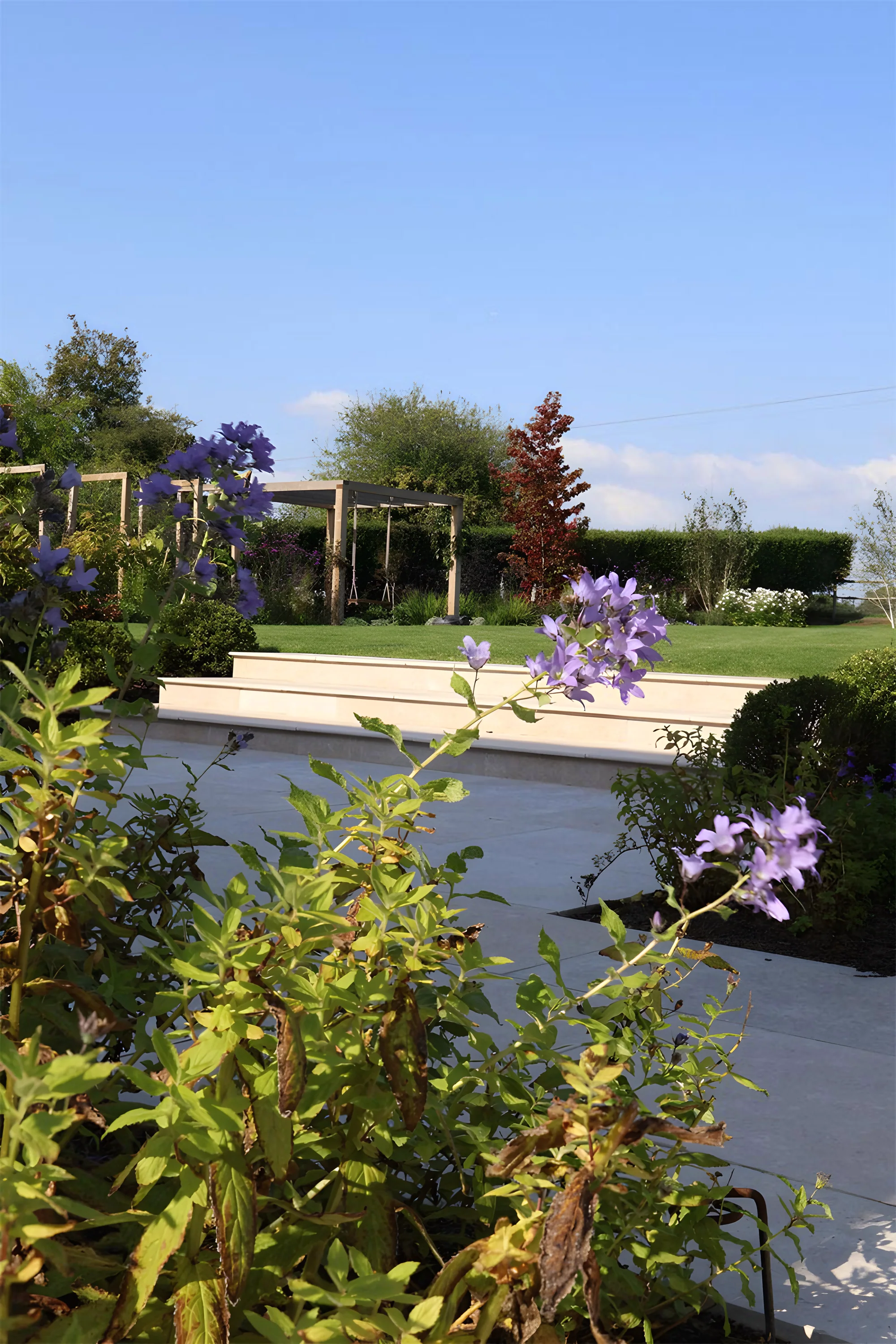
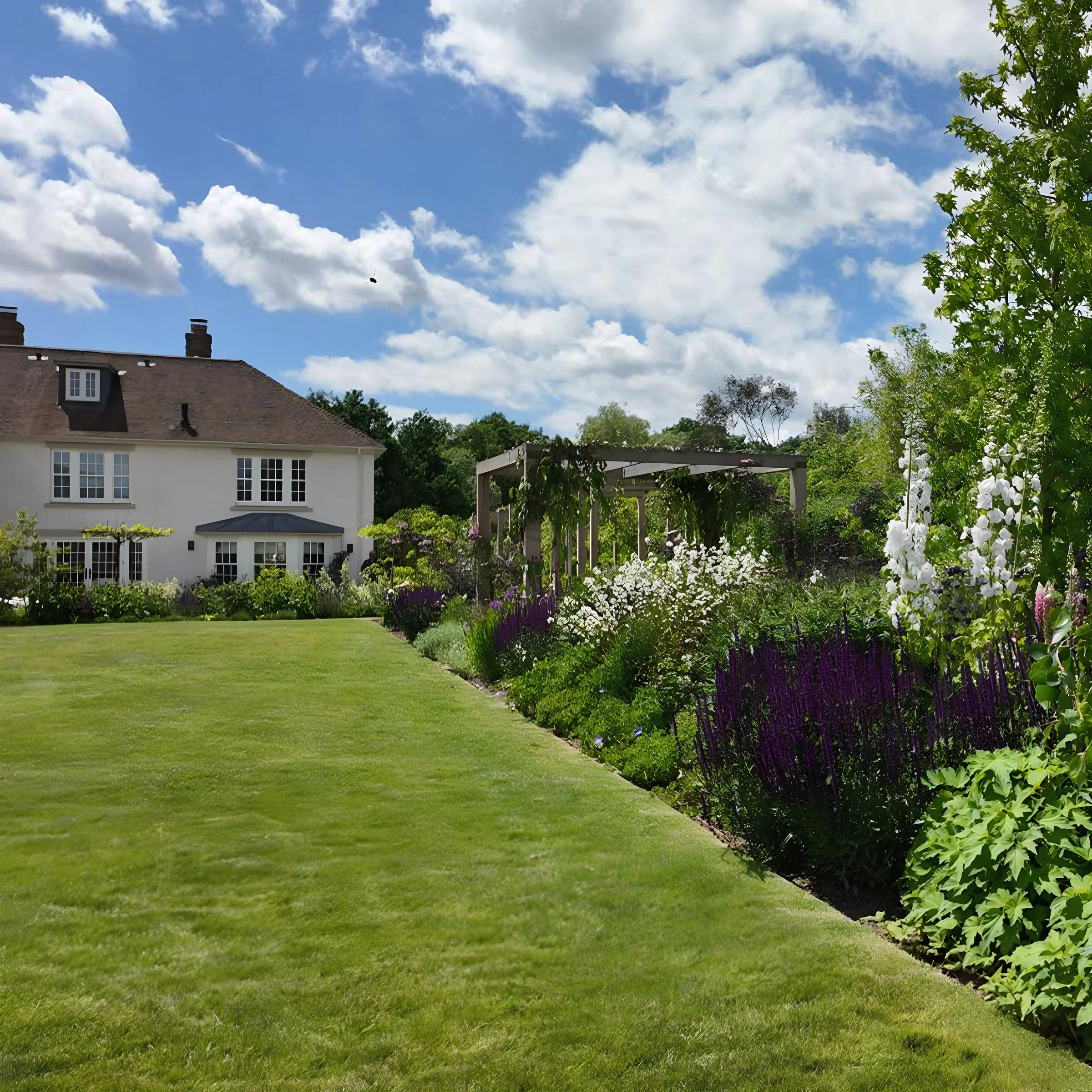
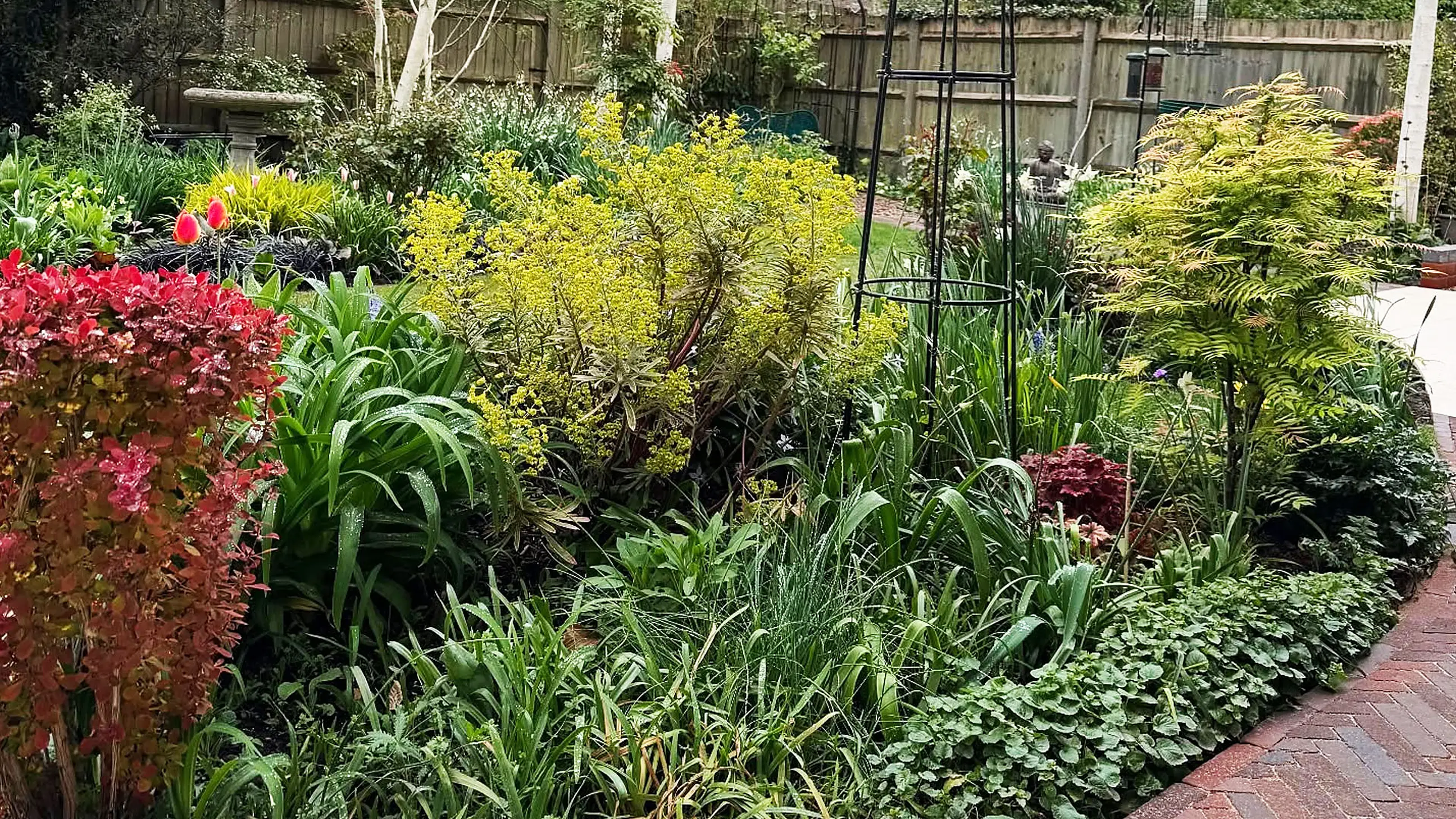
Dense mixed planting running the length of a garden
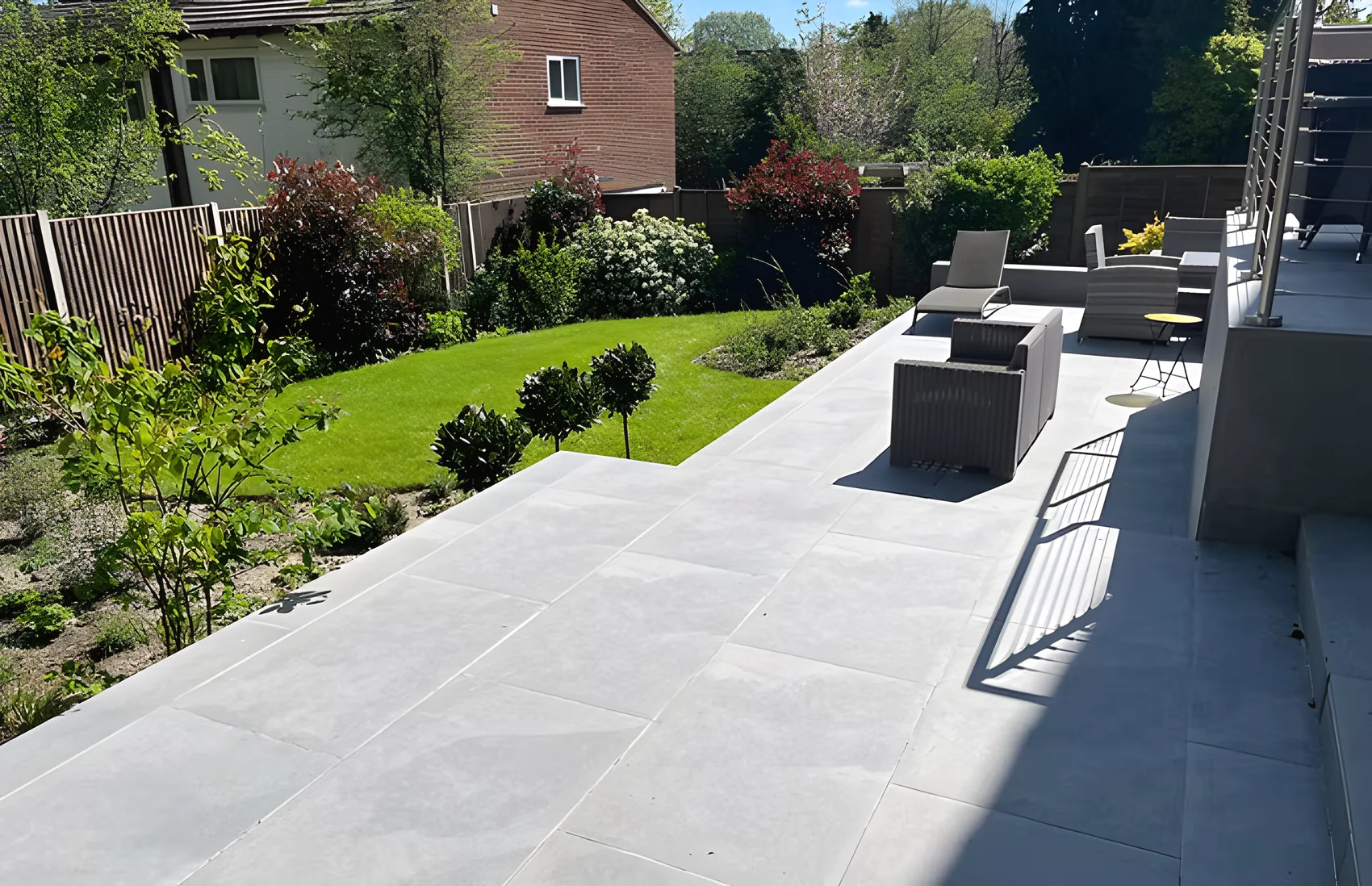
A curving porcelain path running around the side of a house
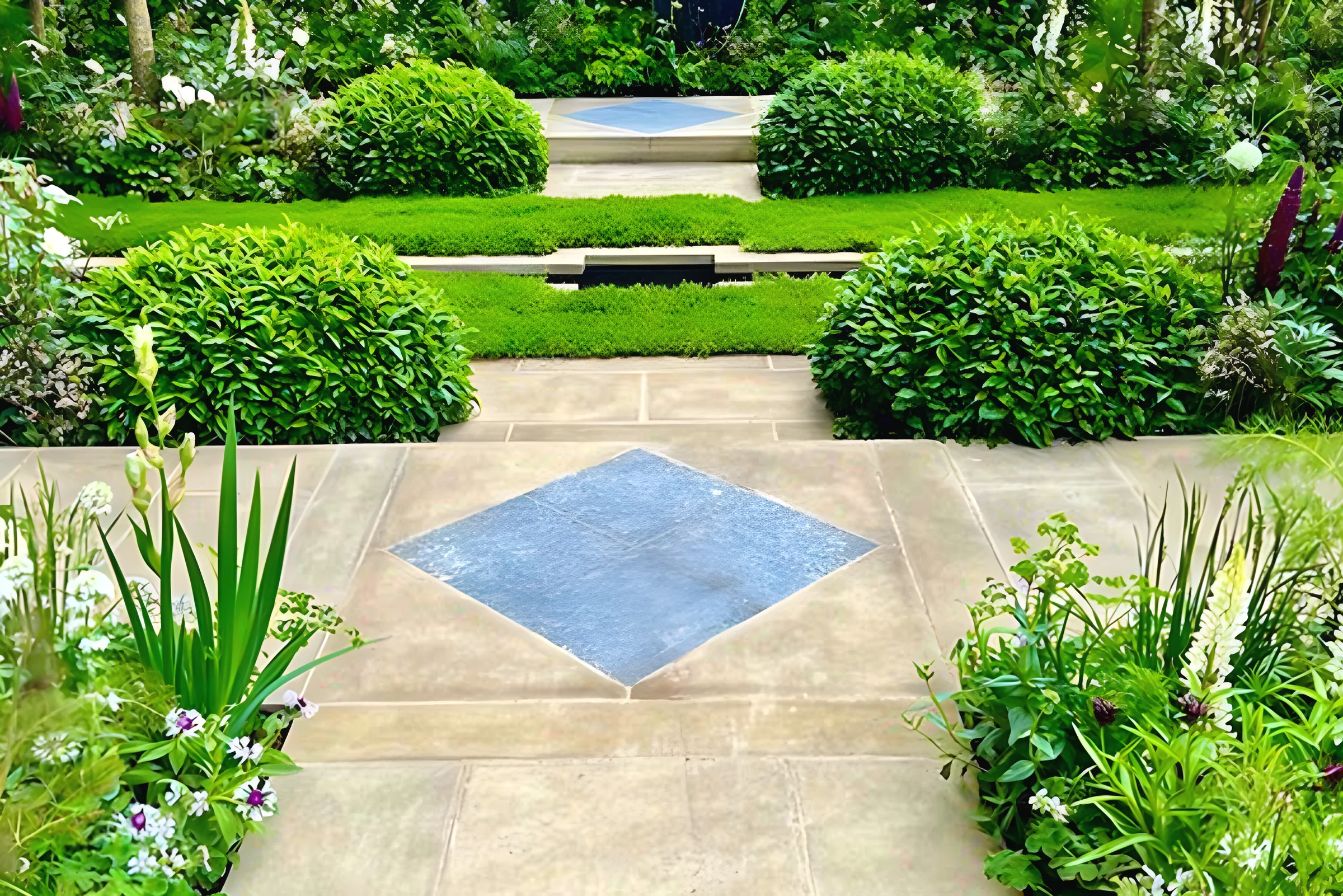
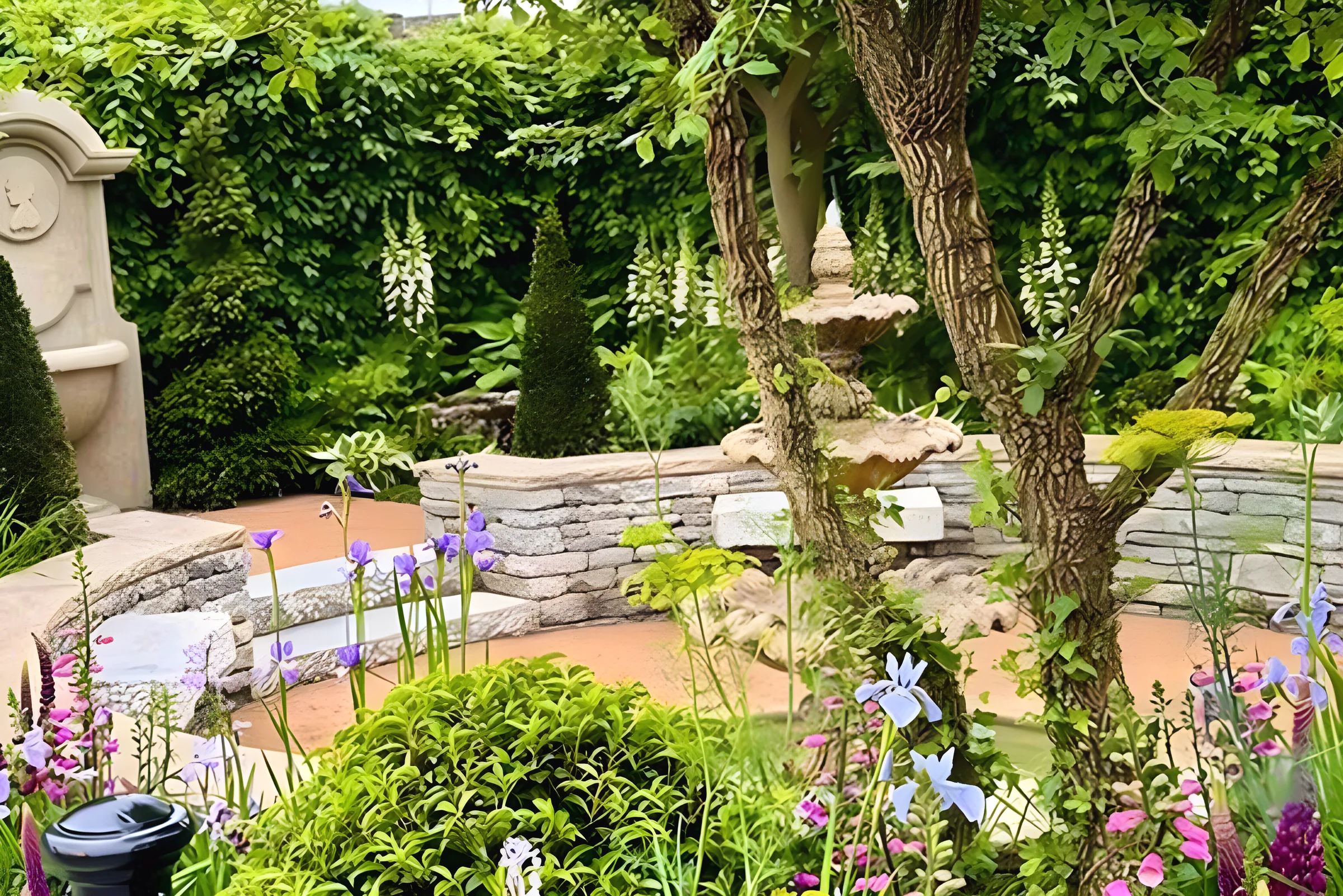
A moon gate and stone wall with mature trees and perennial planting
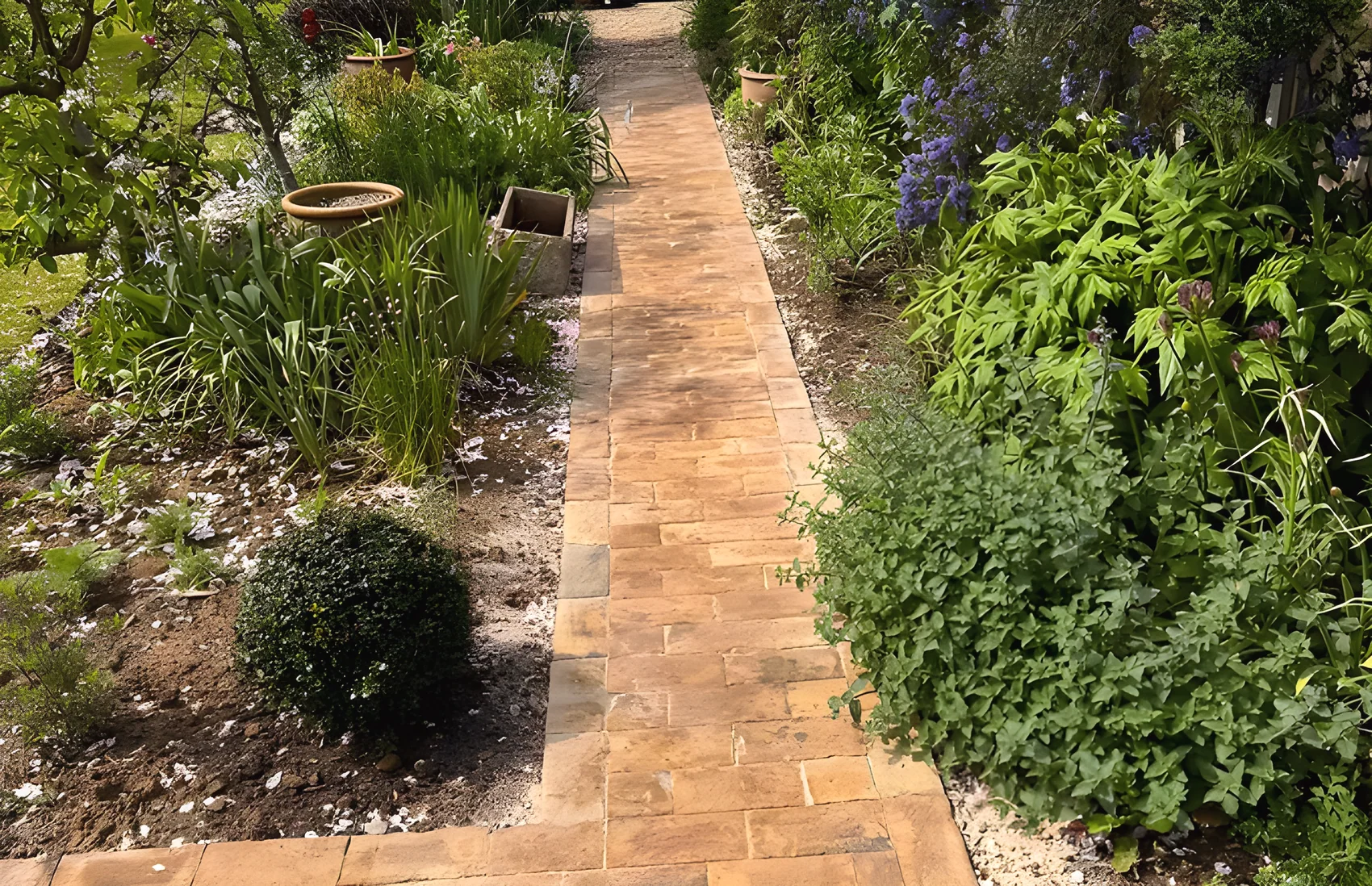
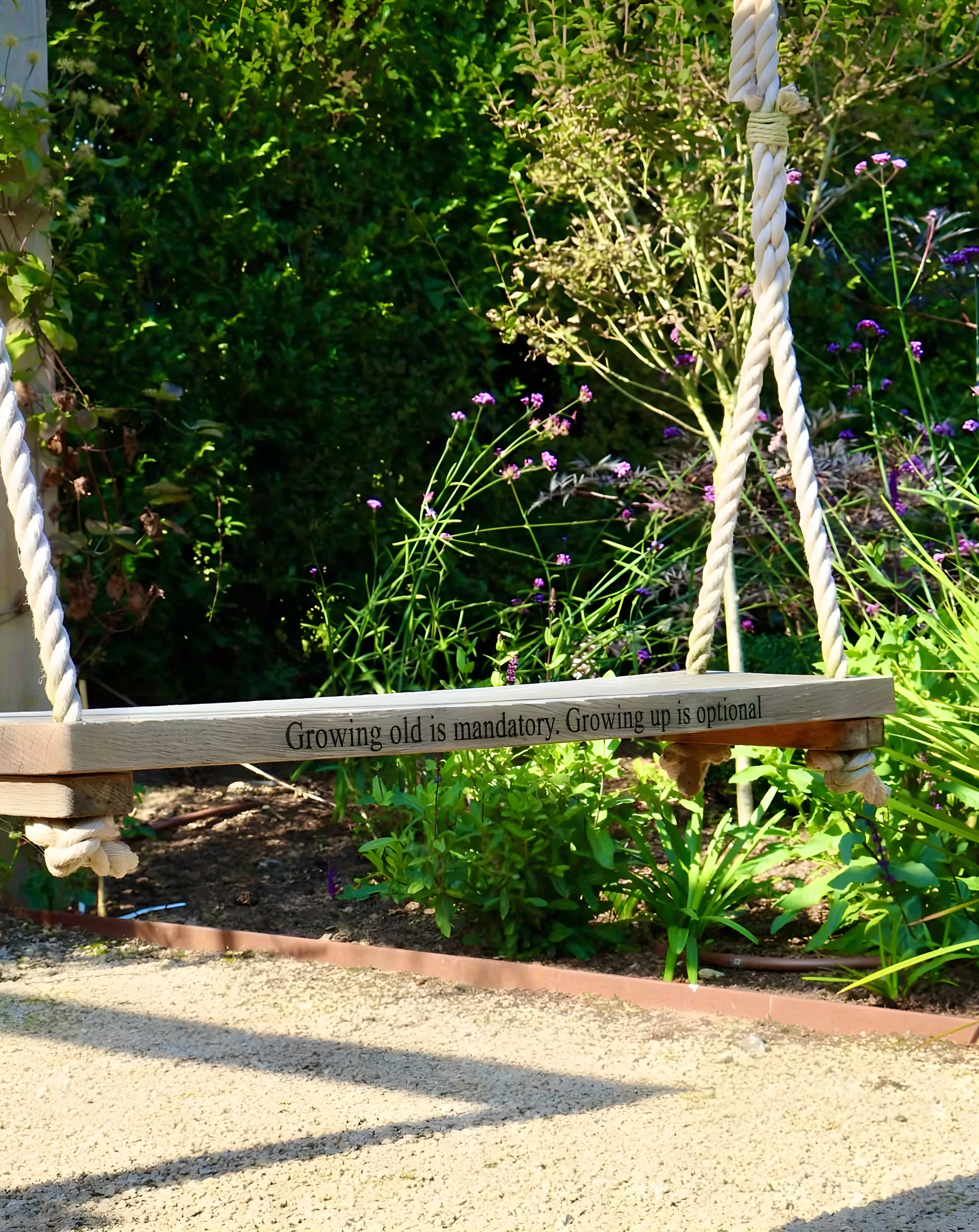
A timber swing seat set on gravel under mature trees
Dense mixed planting running the length of a garden

Identification

Know What You Are Looking at Before You Touch It.

Knotweed gives itself away by the stem. Hollow canes speckled with purple, heart shaped leaves set in a zig zag up the stem rather than in neat pairs, and creamy flower tassels by late summer. In spring the new shoots come up red and asparagus like, and they come up fast.

In winter there is almost nothing to see. The canes die back to a hollow brown stand that reads as dead bamboo, which is why a survey in January can miss something that will be waist high by June. The part that matters is underground anyway: a rhizome that is dark brown outside, orange inside, and snaps like a carrot.

  • Hollow canes with purple speckles, growing in a zig zag
  • Heart or shield shaped leaves, alternating rather than paired
  • Creamy flower tassels in late summer, hollow brown canes in winter
  • Rhizome orange inside and brittle, found well beyond the canes
  • Commonly confused with bindweed, bamboo, dogwood and Russian vine
A curving porcelain path running around the side of a house

Why it matters

A Garden Problem, and a Paperwork Problem.

Knotweed is rarely the structural monster it is painted as. What it does is find what is already weak, a cracked slab, an open joint in paving, the gap at the edge of a drive, and come up through it. On a finished garden that means it reappears in the terrace and the borders you have just paid for.

The harder half is usually the sale. The property information form a seller fills in asks whether knotweed is present, and lenders and surveyors generally want to see a professional treatment plan before they will go on. Your solicitor and your lender are the right people on the legal and lending detail. Our job is the ground and the documentation that goes with it.

  • Exploits existing cracks and open joints, not sound concrete
  • Returns through new paving and new borders if it is simply built over
  • Usually treated as controlled waste, so not a skip, a green bin or the compost heap
  • Usually has to go to a licensed site, with the paperwork to match
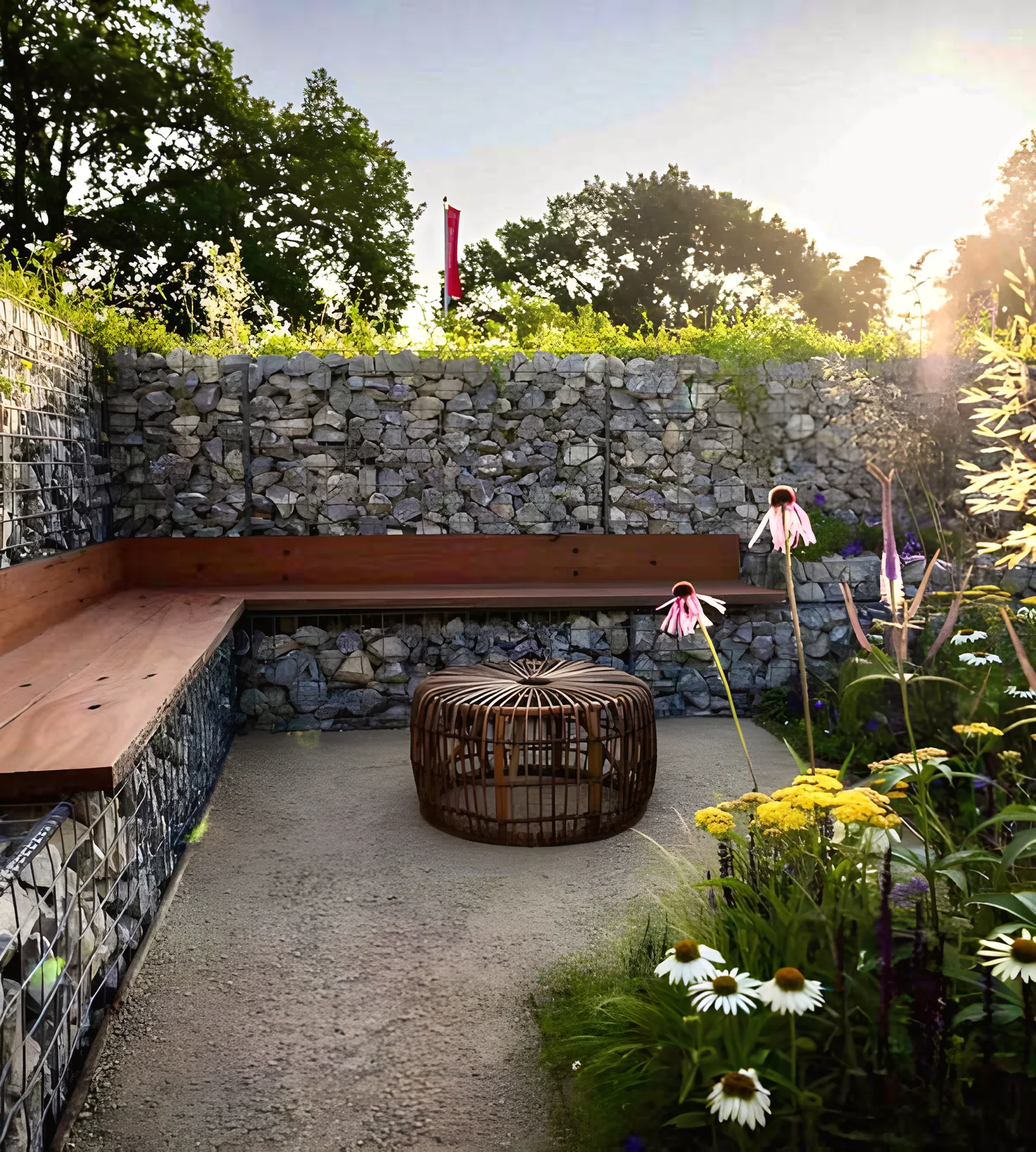
A moon gate and stone wall with mature trees and perennial planting

Treatment

A Herbicide Programme, or Dig It Out.

There are two honest routes. A herbicide programme, applied by a qualified operator across more than one growing season, works the chemical down into the rhizome and suits a garden where nothing is being built. The strongest applications are late summer into early autumn, when the plant is drawing everything back down into the root.

Excavation is the other route and it is what a build timetable usually needs. The dig runs well beyond the visible canes, because the rhizome travels further sideways than anyone expects, and the arisings leave site under licence. On some gardens the soil can be screened, or buried at depth behind a root barrier, which keeps the lorry count down.

Which route fits depends on the stand, the boundary and what you want to build. Our partners set it out in writing first.

  • Stem injection where knotweed sits among planting worth keeping
  • Foliar treatment on open stands, timed to late season growth
  • Excavation and removal where groundworks cannot wait for a programme
  • Root barrier membrane where it is pushing through from next door
  • Monitoring visits after the last visible growth
A timber swing seat set on gravel under mature trees

On a building site

The Real Risk Is the Machine That Moves It.

Most of the spread we see on a construction job was caused by the job. A bucket that dug through a stand and then cut a trench on the other side of the garden, boots, a rotavator, a strimmer, topsoil brought in from somewhere nobody checked. Every fragment is a new plant, so one careless hour turns a corner into the whole garden.

When knotweed turns up on one of our sites the sequence changes. That excavation is kept separate and done first, machines are washed down before they cross the garden or leave site, arisings are never chipped or composted, and the hard landscaping over the treated ground waits until the plan says it can go in.

It is slower on paper and far cheaper than relaying a terrace two summers later.

  • Never strim, mow, rotavate or chip knotweed
  • Keep the affected dig separate, and wash plant down before it moves
  • Check imported topsoil and new stock before it comes on site
  • Phase paving and planting over treated ground around the programme
Recently had the back garden landscaped, including new lawn, raised flower bed, new path, fencing and hedges trimmed. Was very pleased with all the work and the guys were very friendly.

Patrick Dawson · Google review

How it works

From a Photograph on Your Phone to a Finished Garden.

  1. 01

    Send Us a Photograph

    A clear photograph of the stem and the leaves usually settles it, and saves a fortnight of worrying about a bamboo. If it is knotweed, we come and look properly.

  2. 02

    Survey and Plan

    Our invasive weed partners survey the stand, map how far it runs and set out the route: a herbicide programme, excavation, or a mix of the two. The report and the paperwork come from them.

  3. 03

    Treat or Remove

    Treatment is applied by qualified operators to the agreed plan, timed late summer into early autumn when the plant is drawing everything back down into the rhizome. Where it is a dig, the excavation goes beyond the canes and the arisings leave site under licence.

  4. 04

    Rebuild the Garden

    Once the plan allows it, our own team puts back what came out: levels, drainage, paving, topsoil, turf and planting. The garden ends up finished rather than fenced off.

Our work

Gardens We Have Cleared and Replanted.

Good to know

Questions We Are Asked Most

How Do I Know It Is Actually Japanese Knotweed?

Look at the stem rather than the leaf. Knotweed canes are hollow, speckled with purple and grow in a zig zag, with leaves alternating up the stem instead of sitting in pairs. Bindweed, dogwood, Russian vine and young bamboo all get mistaken for it, so send us a photograph before you assume the worst.

Can You Not Just Dig It Out and Be Done With It?

Sometimes, and it is often the right answer when we are building anyway. Excavation has to go well beyond the canes to catch the rhizome, and the soil that comes out is usually handled as controlled waste, so it costs more and needs the right disposal. Where nothing is being built, a herbicide programme is usually the better value route.

How Long Does Treatment Take?

A herbicide programme runs across more than one growing season, because the point is to get the chemical down into the rhizome rather than simply kill the top growth, and monitoring continues after the last visible shoot. Excavation clears the ground in days instead. Our partners put the timescale in the plan so you can match it to a sale or a build.

It Is Coming in From Next Door. What Can We Do?

Treating your side alone will not hold while it is still growing on theirs, so the first move is a conversation with the neighbour, and we would not work on their land without their agreement. On our side we can install a root barrier along the boundary and treat what has already crossed. Do not cut it back and dig at it.

Will It Stop Us Selling or Remortgaging?

Not by itself, but it does need handling honestly. The property information form asks whether knotweed is present, and lenders and surveyors generally want a professional treatment plan and a record of the work. Those documents come through our invasive weed partners, and your solicitor and lender will tell you what they need to see.

Could I Treat It Myself With Weedkiller From the Garden Centre?

You can knock the top growth over, and that is the trap. The rhizome survives, the stand goes quiet for a season and comes back somewhere less convenient, and repeated cutting makes it harder to map when somebody treats it properly. The cuttings are not for the green bin either.

Start your garden

Send Us a Photograph, and We Will Tell You Straight.

If you think you have knotweed, a photograph of the stem and leaves is the quickest place to start. If it is something else we will say so and you can stop thinking about it. If it is knotweed, we will arrange a survey with our invasive weed partners and set out what clearing it involves.

  1. 01
    We Call You BackWithin one working day, to talk the garden through.
  2. 02
    The First VisitA walk round the garden to take in the levels, the access and where the water sits.
  3. 03
    A Written ScopeA specification and a programme, with samples to see in your own light.
Prefer to talk?01276 582095info@cjlandscapesltd.co.uk
1 Webbs Mews, High Street
Hartley Wintney, Hook RG27 8NZ
What Would You Like Help With?

Choose as many as you like.

Tell Us About the Project

Roughly is fine. It helps us bring the right people to the first visit.

Your Details
Photographs Optional, up to five

Thank You

Your enquiry has come through and we will call you back within one working day.

Step 1 of 3

We only use your details to reply to this enquiry.