C J LANDSCAPES 01276 582095Get in touch

Garden irrigation · Surrey and Hampshire

Water to the Roots, Not to the Paths.

Zoned irrigation designed with the garden and buried before the paving goes down. We will also tell you when a system is not worth your money.

Irrigation

Designed With the Garden, Not Added on Afterwards.

An irrigation system is pipework, and pipework belongs underground before a terrace is laid and before a border is planted. So we design it alongside the rest of the build, when a duct under the paving costs a few minutes instead of a lifted terrace.

Done properly it is invisible. Pop up heads sit flush in the lawn so a mower passes straight over them, dripline runs under the mulch in the borders, and the only part you ever see is a small controller in the garage or the plant store.

Done badly it waters the fence, soaks one corner, leaves another dry and still puts a water bill on your desk every summer. The difference is almost always in the survey and the zoning rather than the kit.

Start a conversation
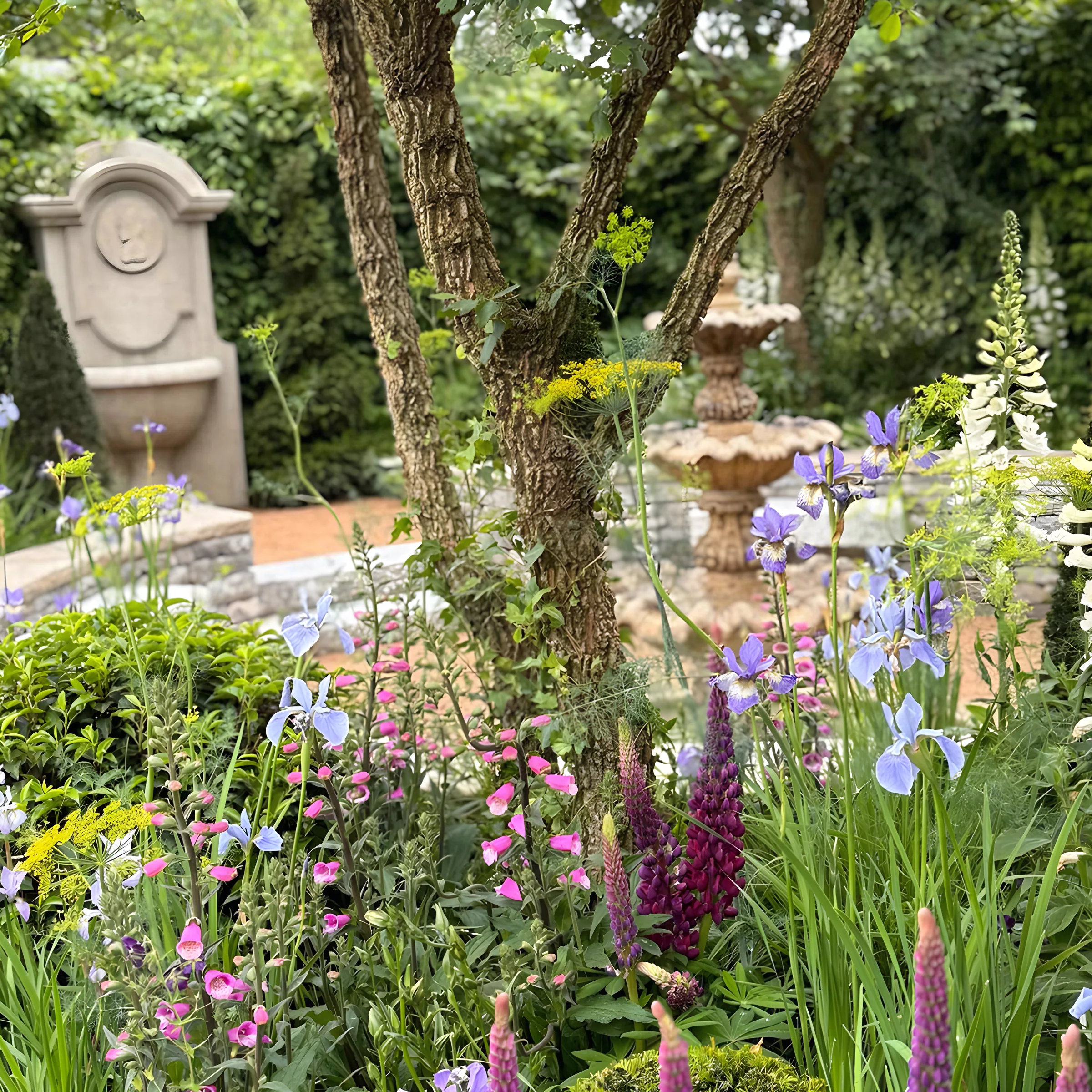
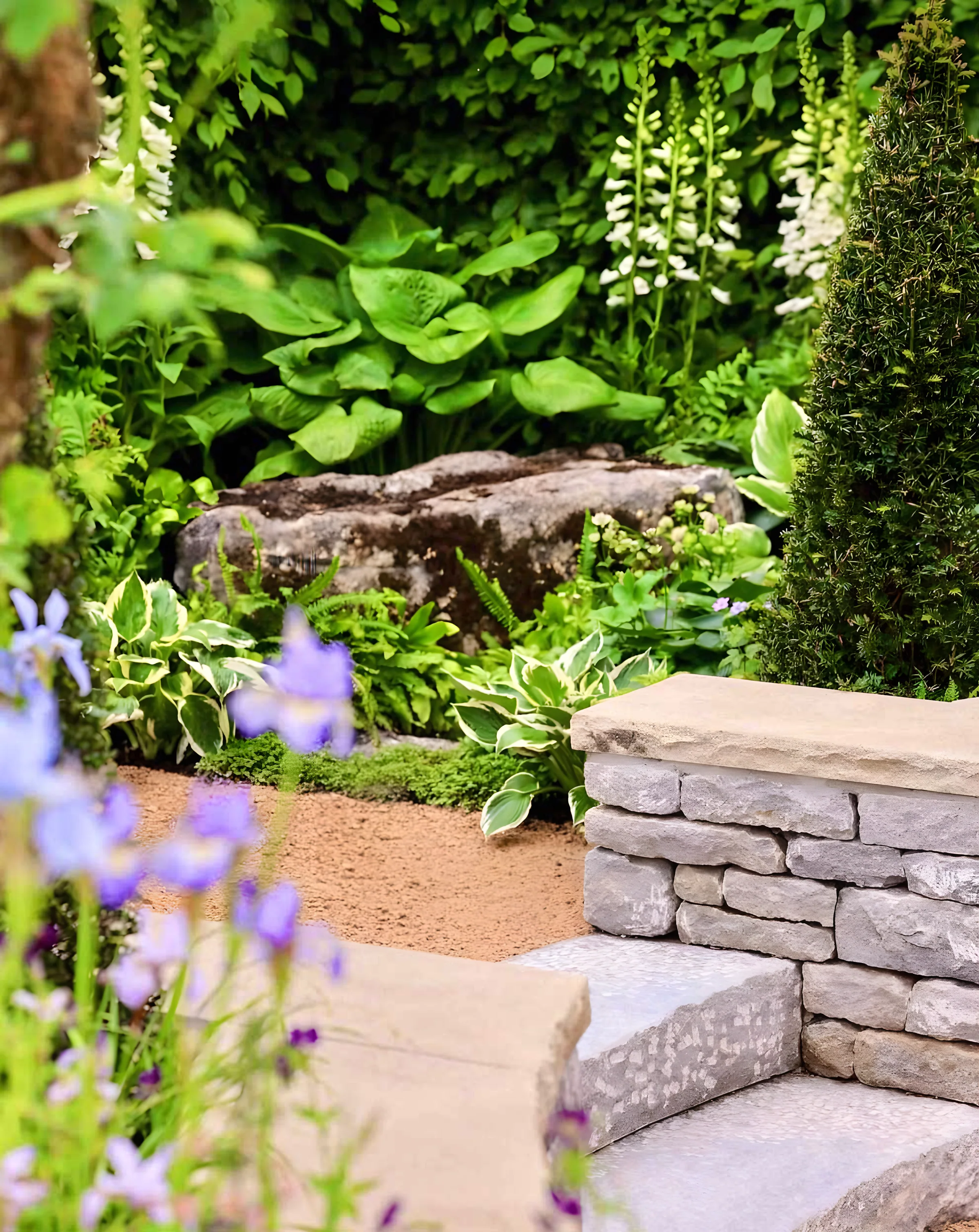
Foxgloves and shade planting against a dry stone wall
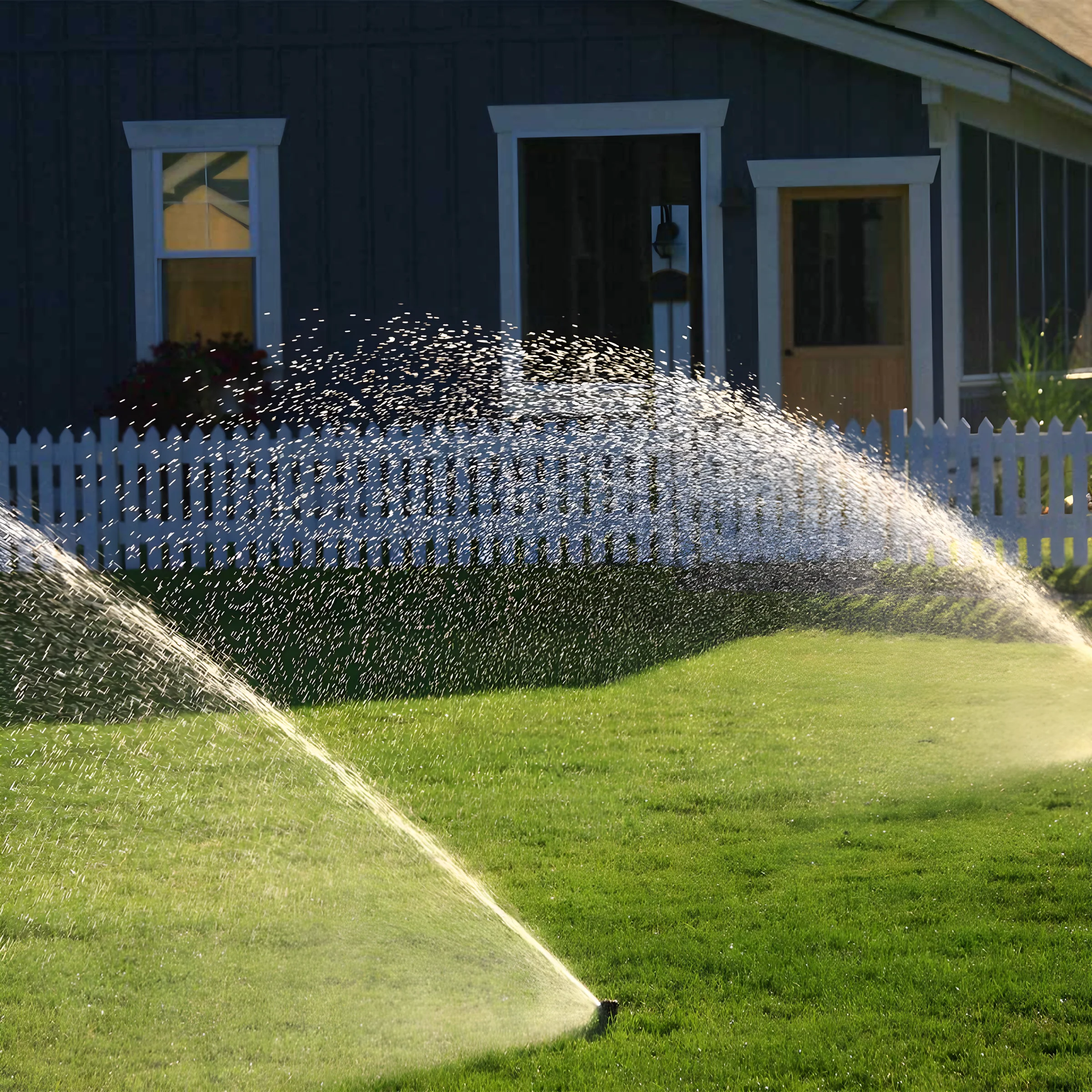
An irrigation sprinkler running across a lawn
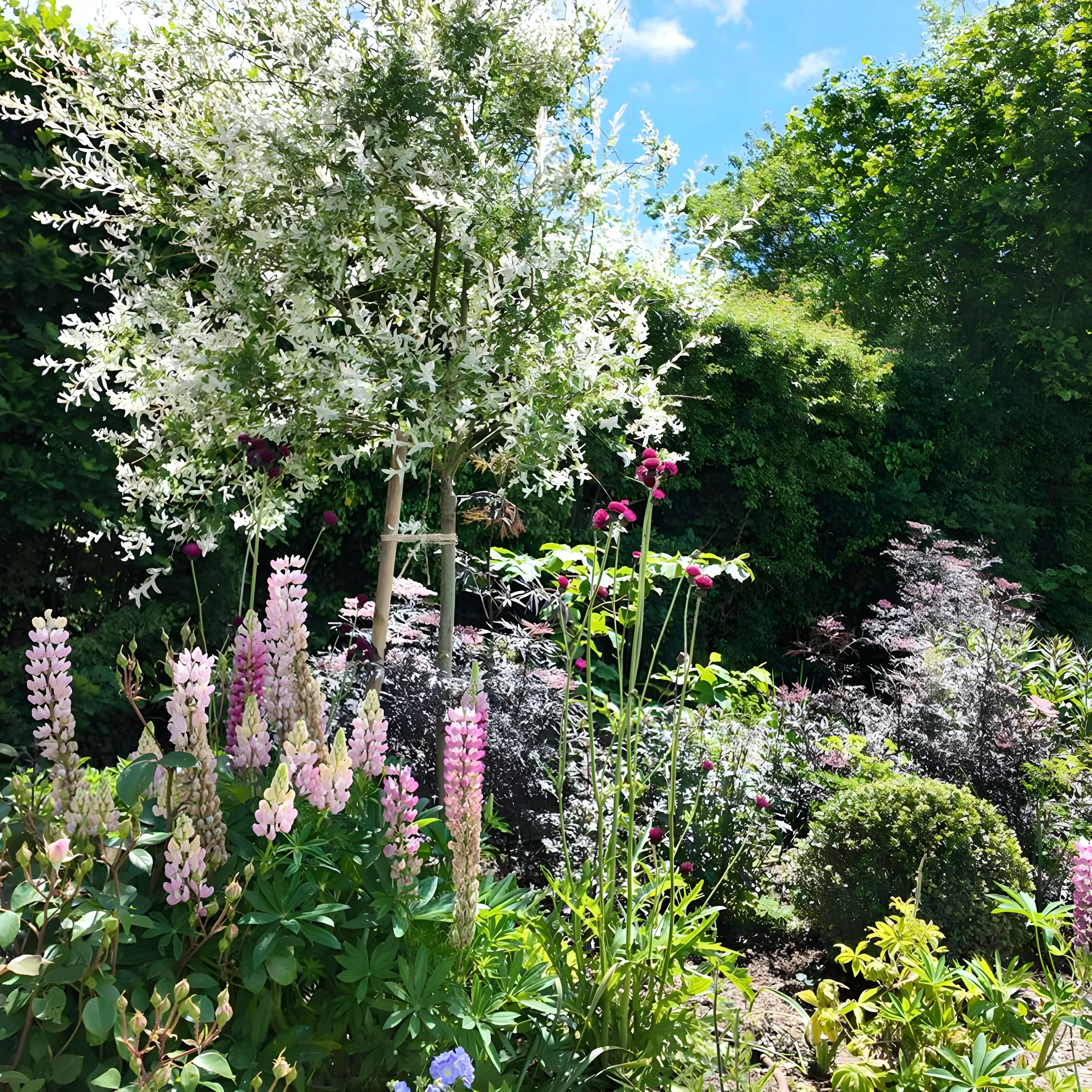
Lupins and mixed perennials in a deep border
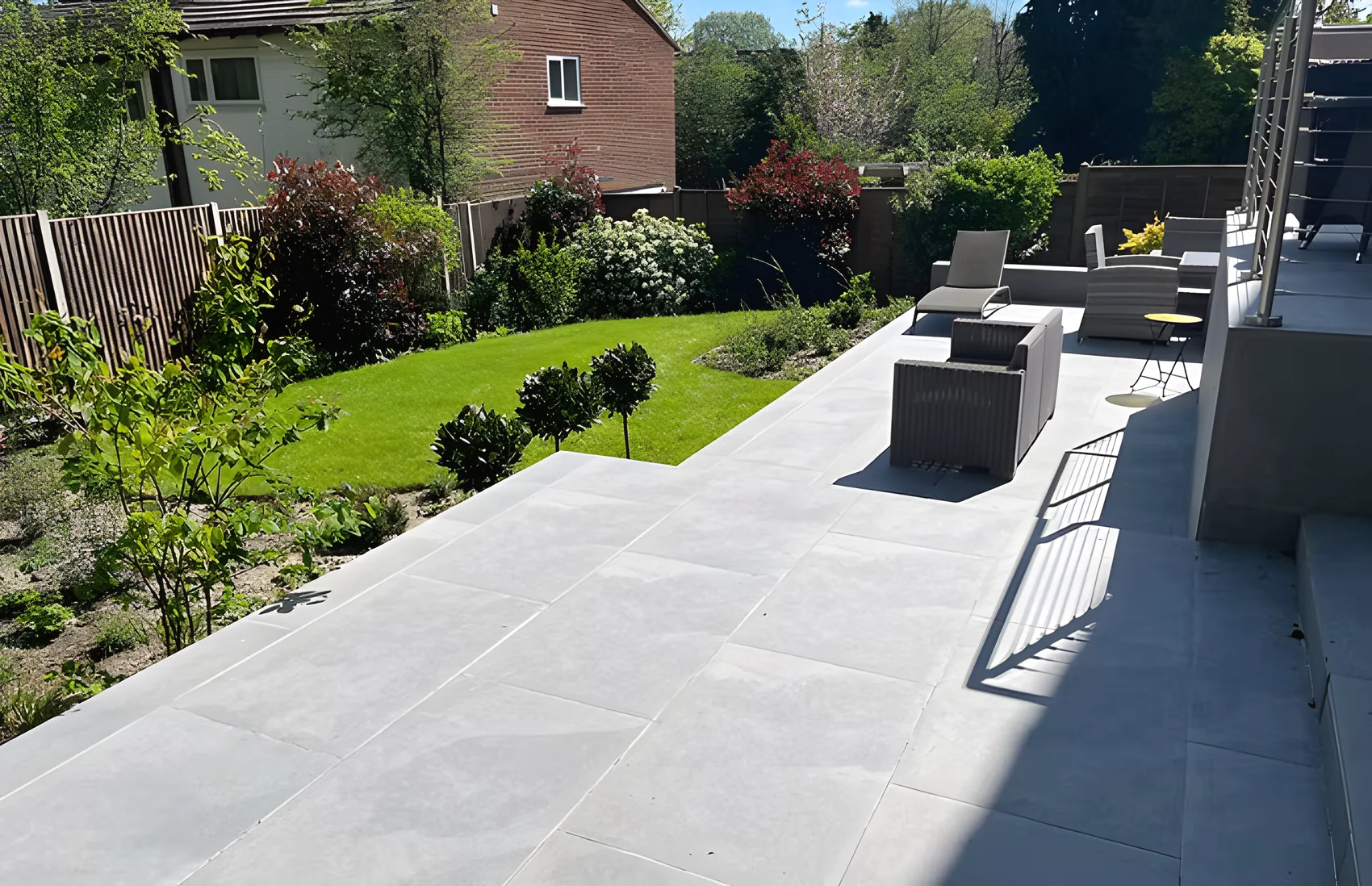
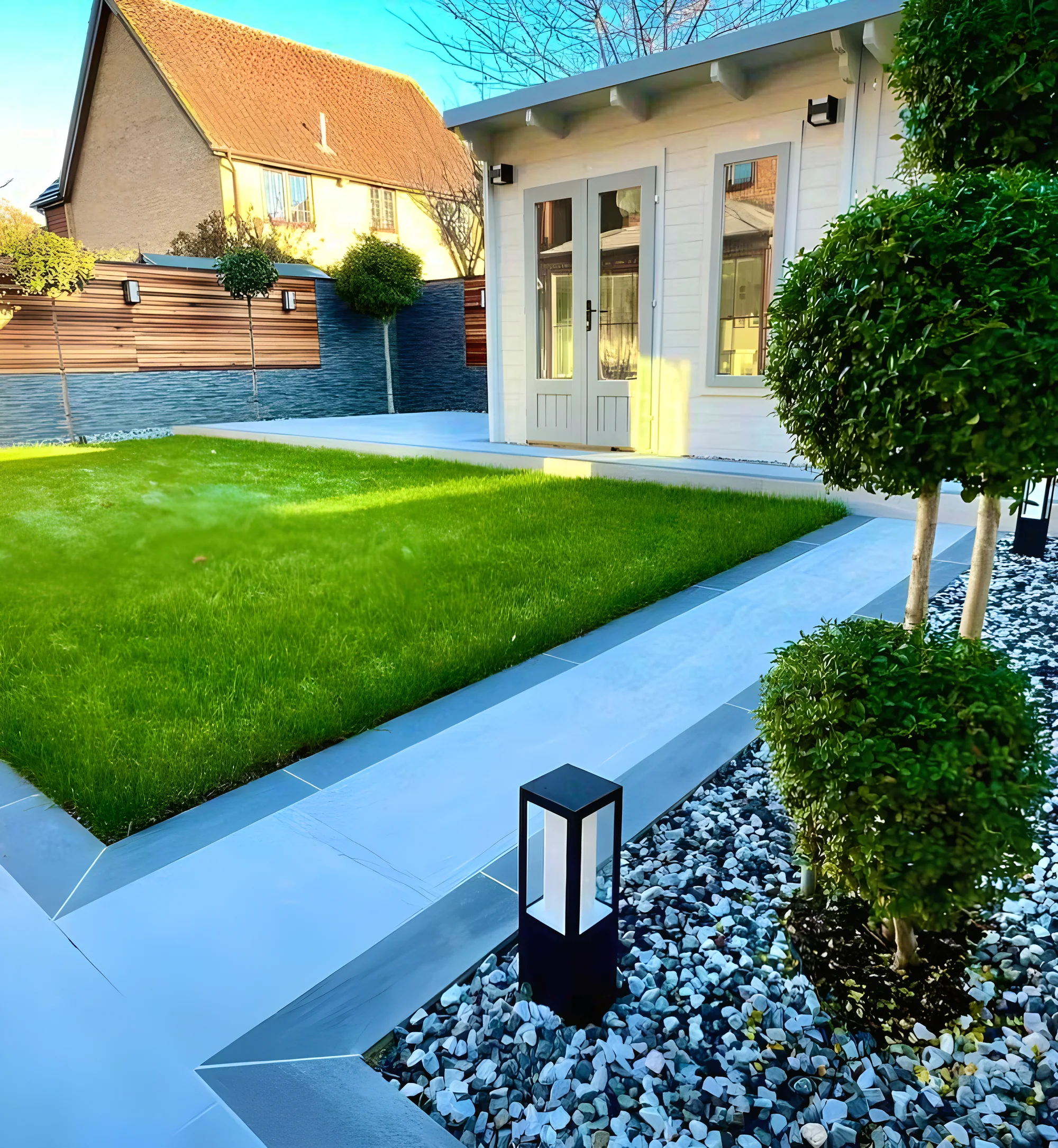
A shaped lawn with a path light and clipped topiary
Foxgloves and shade planting against a dry stone wall

First fix

The Pipe Goes in Before the Paving Does.

Mains feed, manifold position, duct runs under hard surfaces and the route back to the controller are all set out at groundworks stage, in the same week as the drainage. Anything that has to cross a terrace, a path or a drive crosses it inside a duct, so a head can be moved or a valve replaced in ten years without lifting a slab.

We take the supply from a point we have tested, not from the nearest outside tap. The irrigation main is sized to the flow we measured and laid deeper than a border will ever be dug, with a double check valve where it leaves the house supply and an isolator you can actually get to.

Valve boxes go in flush, bedded in gravel, at the edge of a bed rather than out in the middle of the lawn. It sounds like a small thing. It is the difference between a ten minute repair and an afternoon of digging.

  • Supply tested for flow and pressure before anything is specified
  • Ducts under every terrace, path and drive crossing
  • Valve boxes set flush at bed edges, never mid lawn
  • Every run photographed before backfill so it can be found again
An irrigation sprinkler running across a lawn

Lawns

Matched Heads, One Zone at a Time.

A lawn wants a lot of water quickly and evenly. Pop up rotors are set so their patterns overlap head to head, because a sprinkler that only just reaches the next one leaves dry crescents between them by the middle of July.

Heads are matched within a zone so the whole zone puts water down at the same rate. Mixing a part circle head and a full circle head on one line puts water down at two different rates on the same run, and it is why half a lawn is spongy while the other half is straw.

Zones are then sized to the water actually available. One domestic supply will rarely run a whole garden at once, so we split it and let the controller work through the zones in sequence, usually in the early morning while there is pressure and little wind.

  • Head to head coverage, not just within reach
  • Matched output across every head in a zone
  • Heads set flush so mowers pass straight over
  • Zones sized to measured flow and run in sequence
Lupins and mixed perennials in a deep border

Borders and trees

Borders Are Drip Fed, Never Sprayed.

Spraying a border wets foliage, encourages mildew and throws half the water onto the surface of the mulch where it evaporates. Dripline laid on the soil under the mulch puts water where the roots are, and the mulch keeps it there.

Planting is grouped by thirst before a single emitter is placed. Hydrangeas and ferns on the shaded side of the house are a different zone from grasses and salvias in full sun, and a new pleached hornbeam screen gets its own line, because trees want a long slow soak rather than the short burst a border wants.

New planting is the real reason to irrigate. A young garden needs steady water through its first two summers to root properly, and that is hard to keep up by hand through a dry spell.

  • Dripline under the mulch, not spray above it
  • Beds grouped by water need, then zoned to match
  • Separate lines and longer runs for trees and hedging
  • Pressure compensating line where a bed runs uphill
A shaped lawn with a path light and clipped topiary

Through the year

A Controller Is Only as Good as the Hand on It.

A programme set in May is wrong by August and wrong again in September. We set the controller for the season you are in, fit a rain sensor so it skips a cycle after real rain, and where it earns its place a soil moisture sensor, which is the only part of the system that knows whether the ground is actually dry.

Before the first hard frost the system is drained down. Water left sitting in a lateral splits the pipe and cracks the heads, and the damage does not show itself until you switch on in April and find a wet patch over the manifold.

In spring it comes back on slowly, zone by zone, with every head checked for arc and level, filters cleaned and emitters cleared. If you are on a maintenance programme with us, both visits sit in the calendar and you never have to think about it.

  • Rain sensor as standard, moisture sensor where it pays
  • Drain down before the first frost
  • Spring start up zone by zone, arcs and levels reset
  • Folded into your maintenance calendar if you have one
From start to finish with CJ Landscapes was smooth. Carl attended site to take our scope and day one to kick off the project and was communicative throughout. The chaps on site were polite and very hard working and did an excellent job.

Emma Boyling · Google review

How it works

From the Stopcock to the First Summer.

  1. 01

    Measure the Supply

    Before anything is specified we time a bucket at the stopcock and take a pressure reading. Every zone decision on the garden follows from those two numbers, and guessing them is how systems end up starved.

  2. 02

    Zone It With the Planting Plan

    The planting plan and the irrigation plan are drawn together, so beds are grouped by water need rather than by wherever a pipe happened to finish. Lawn, borders, trees and pots all end up on their own circuits.

  3. 03

    First Fix With the Groundworks

    Mains, manifold, ducts and laterals go in while the ground is still open, ahead of paving, turf and planting. Everything is photographed before backfill so it can be found again.

  4. 04

    Commission and Hand Over

    Heads are set, arcs adjusted and run times timed zone by zone against the soil we are watering. Then we walk you through the controller and leave the programme written down.

Our work

Gardens Built With the Irrigation Already Underneath

Good to know

Questions We Are Asked Most

Do I Actually Need an Irrigation System?

Often not. An established garden on reasonable soil, with mulched borders and a lawn you are happy to let go brown in August, will get through the summer without one. It earns its place when there is new planting to establish, a lawn you want green through a dry spell, raised beds and pots that dry out in a day, or simply nobody at home to water.

Can It Be Put in After the Garden Is Finished?

Our irrigation goes in during a build, which is when ducts and laterals cost almost nothing to lay. In a finished garden we will only take it on alongside other work, because anything crossing a laid terrace means lifting paving or taking the long way round. If a build or a new border scheme is coming, that is the moment to put the pipe in.

How Much Water Does It Use, and Will the Bill Go Up?

A properly zoned system usually uses less than hand watering, because it puts a measured amount at the roots early in the morning instead of a hopeful soak over the leaves at seven in the evening. On a metered supply it will still show in a dry summer. Correct run times, a rain sensor and dripline in the borders are where the real savings sit.

What Happens in a Hosepipe Ban?

A temporary use ban is set by your water company and the wording changes from one ban to the next, so it is worth reading the notice when it lands. An automatic system fed from the mains is usually among the first things covered, while a watering can is usually still allowed. We will show you how to put the controller into off without losing your programmes.

Does an Irrigation System Need Servicing?

Twice a year is the honest answer: a drain down before the frosts and a start up in spring, with filters, arcs and emitters checked. Heads get clipped by a mower or knocked by a wheelbarrow, and a blocked emitter stays invisible until the plant above it starts to go. Both visits can sit inside a garden maintenance programme with us.

Will the Sprinklers Soak the Terrace and the Windows?

Not if the heads suit the shape of the space they sit in. Part circle heads with the arc set tight to the grass, strip heads for narrow runs beside a path, and nothing aimed across a seating area. Where a lawn runs right up to a glass extension we will often use lower heads with a shorter throw and run that zone for longer, which keeps the glass clean and the roots just as wet.

Start your garden

Thinking About Irrigation? Ask Us Before the Ground Closes Up.

If a build is coming, the cheapest moment to talk about irrigation is while the trenches are still open. Send us the plan and we will tell you honestly which parts of the garden are worth watering and which are not.

  1. 01
    We Call You BackWithin one working day, to talk the garden through.
  2. 02
    The First VisitA walk round the garden to take in the levels, the access and where the water sits.
  3. 03
    A Written ScopeA specification and a programme, with samples to see in your own light.
Prefer to talk?01276 582095info@cjlandscapesltd.co.uk
1 Webbs Mews, High Street
Hartley Wintney, Hook RG27 8NZ
What Would You Like Help With?

Choose as many as you like.

Tell Us About the Project

Roughly is fine. It helps us bring the right people to the first visit.

Your Details
Photographs Optional, up to five

Thank You

Your enquiry has come through and we will call you back within one working day.

Step 1 of 3

We only use your details to reply to this enquiry.