C J LANDSCAPES 01276 582095Get in touch

Outdoor lighting · Surrey and Hampshire

Light Where You Walk, and Dark Where It Matters.

Low output fittings on the paths, steps and planting that need them, with the cable run in while the ground is still open.

What we do

A Lit Garden Is Mostly About What You Choose to Leave Dark.

Most garden lighting goes wrong in the same direction. There is too much of it, it is too white, and it is aimed at eye level, so you see the fittings instead of the garden.

We plan lighting as part of the garden rather than as something added at the end. A handful of warm, low output fittings, aimed down, on the routes people actually use. Steps and changes of level first, then the planting that holds the garden together, then nothing else.

Because we build the gardens as well, the cable goes in while the ground is open. No lifted paving, no trench cut through a finished lawn, and a transformer somewhere we can still reach in five years.

Start a conversation
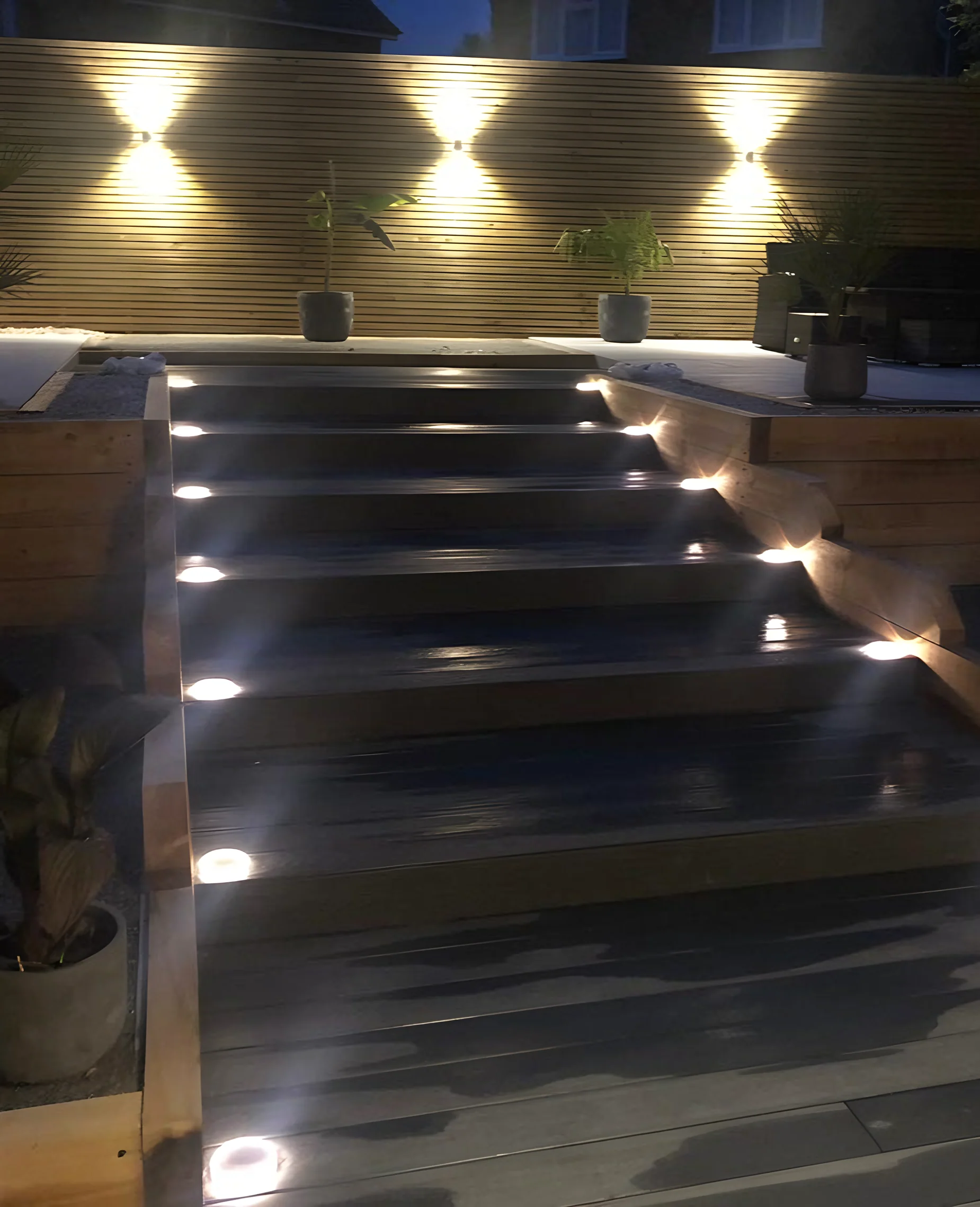
Stone steps lit from the wall above after dark
A cedar clad garden lounge lit after dark
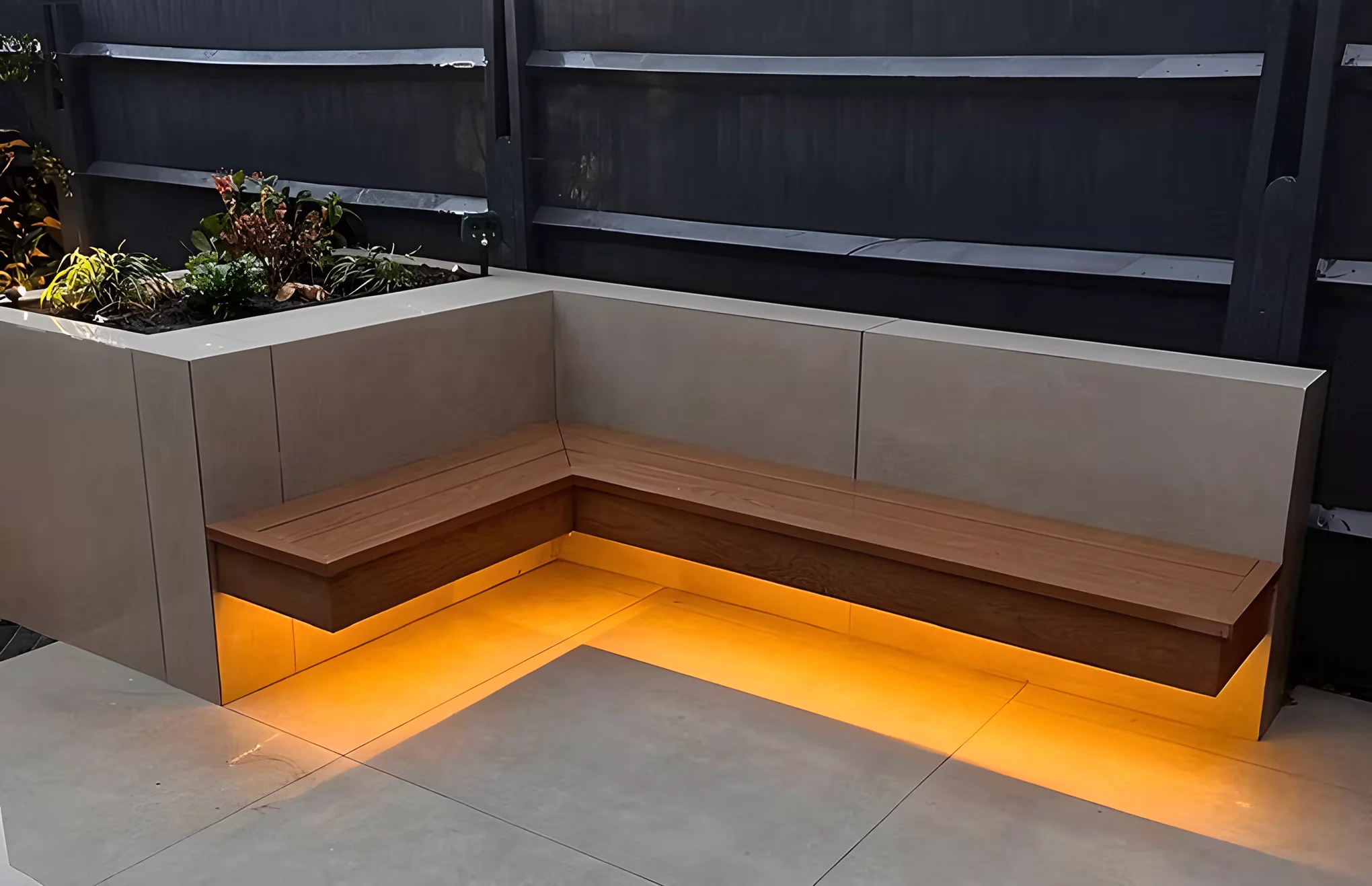
A floating timber bench lit from beneath on a porcelain terrace
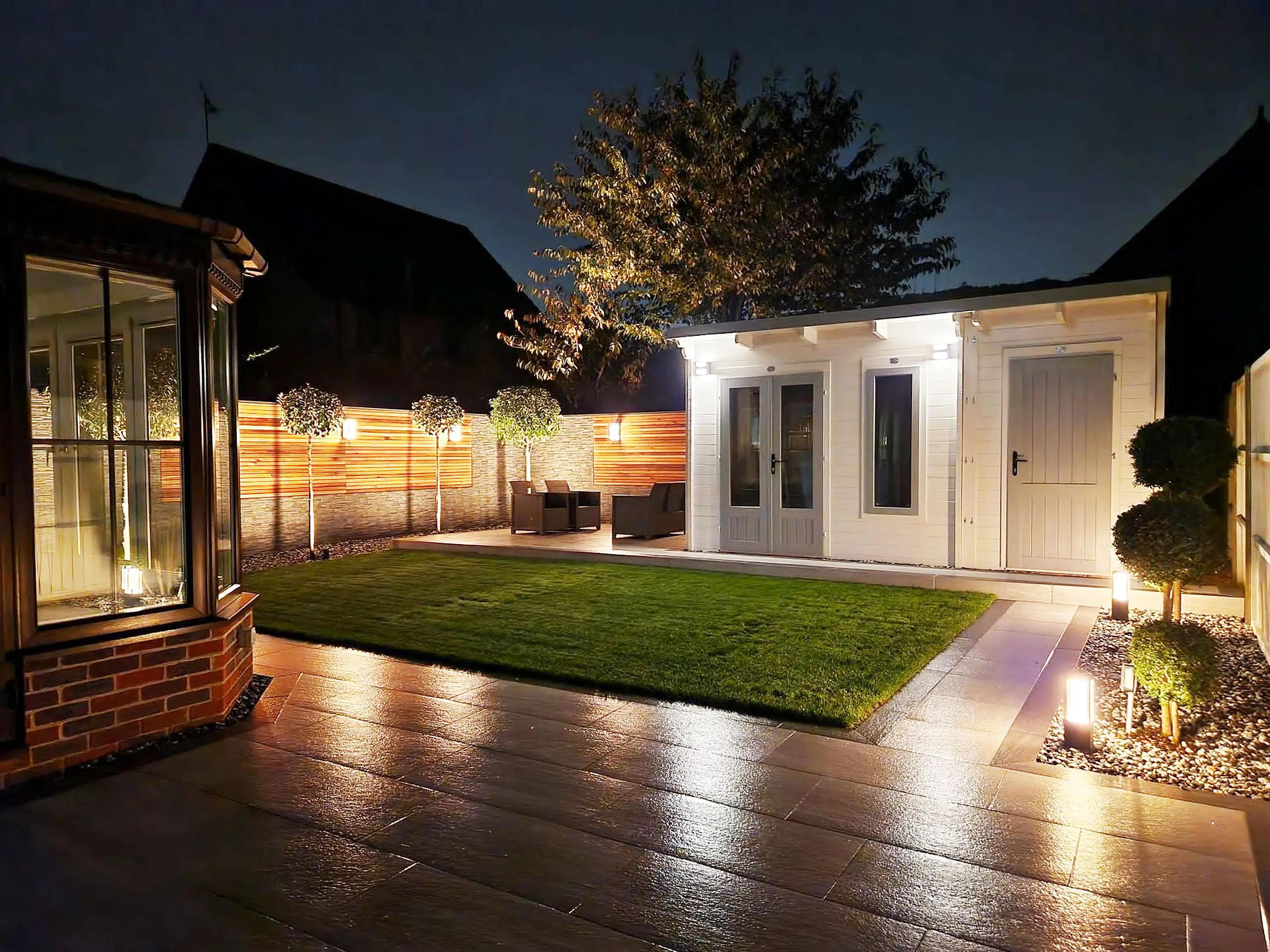
A garden summerhouse and lawn lit after dark
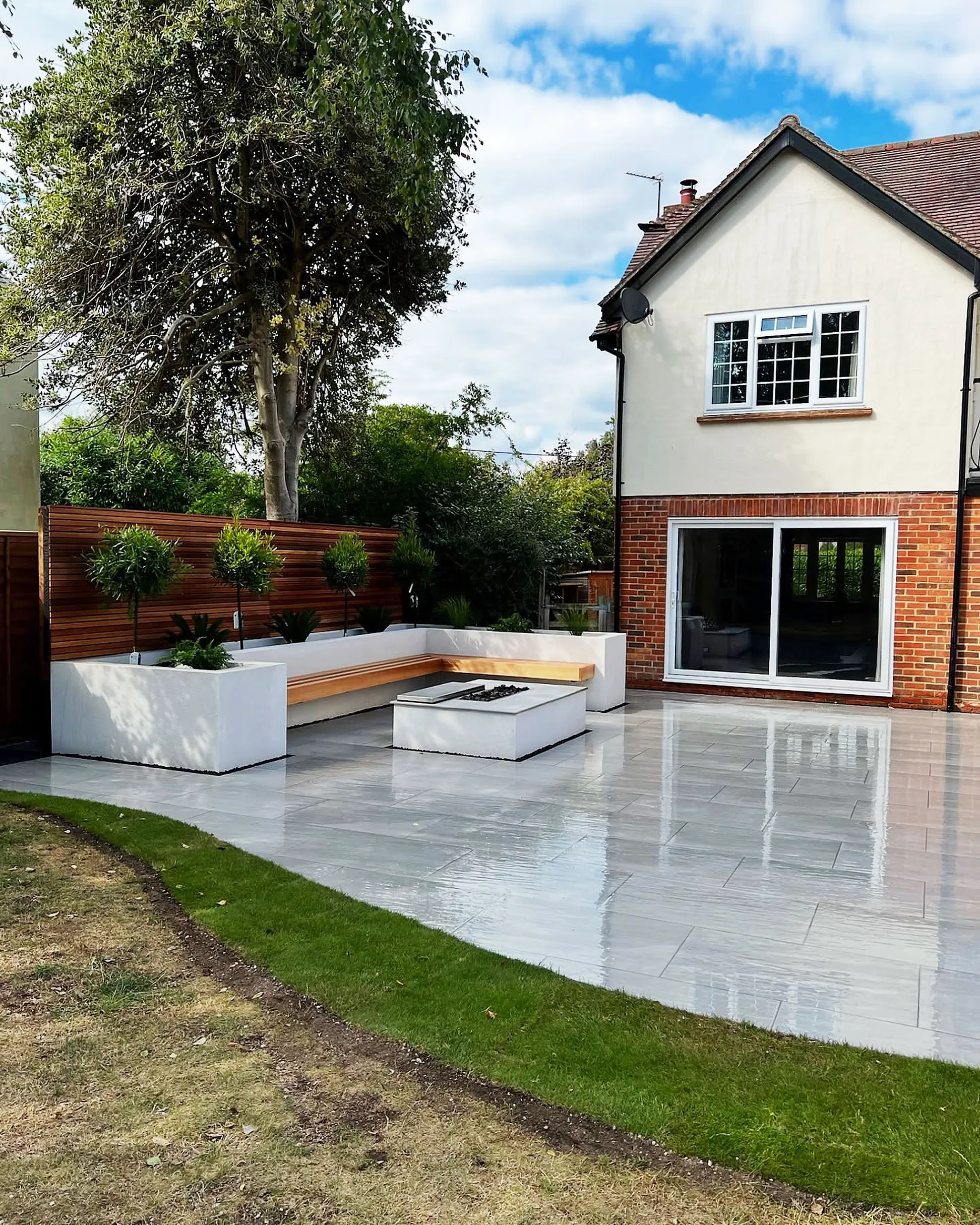
Stone steps lit from the wall above after dark

Steps and levels

The First Riser in the Dark Is the One That Catches People.

Lighting steps is the one part of a garden that is about safety before mood. What matters is that the tread is lit and the lamp is nowhere in view, so your eye reads the edge of the stone rather than a bright point above it.

We get that by building the fitting into the riser or the wall beside it while the steps are being laid, usually a recessed brick light or a small linear fitting under the nosing. It needs a chase cut and a cable in place before the coping goes on, which makes it a construction decision rather than a lighting one.

  • Fittings recessed into the riser, never mounted above the tread
  • Chases and sleeves cut while the steps are being built
  • Warm lamps, so sandstone and porcelain read as themselves
  • Top and bottom of a flight lit before the middle
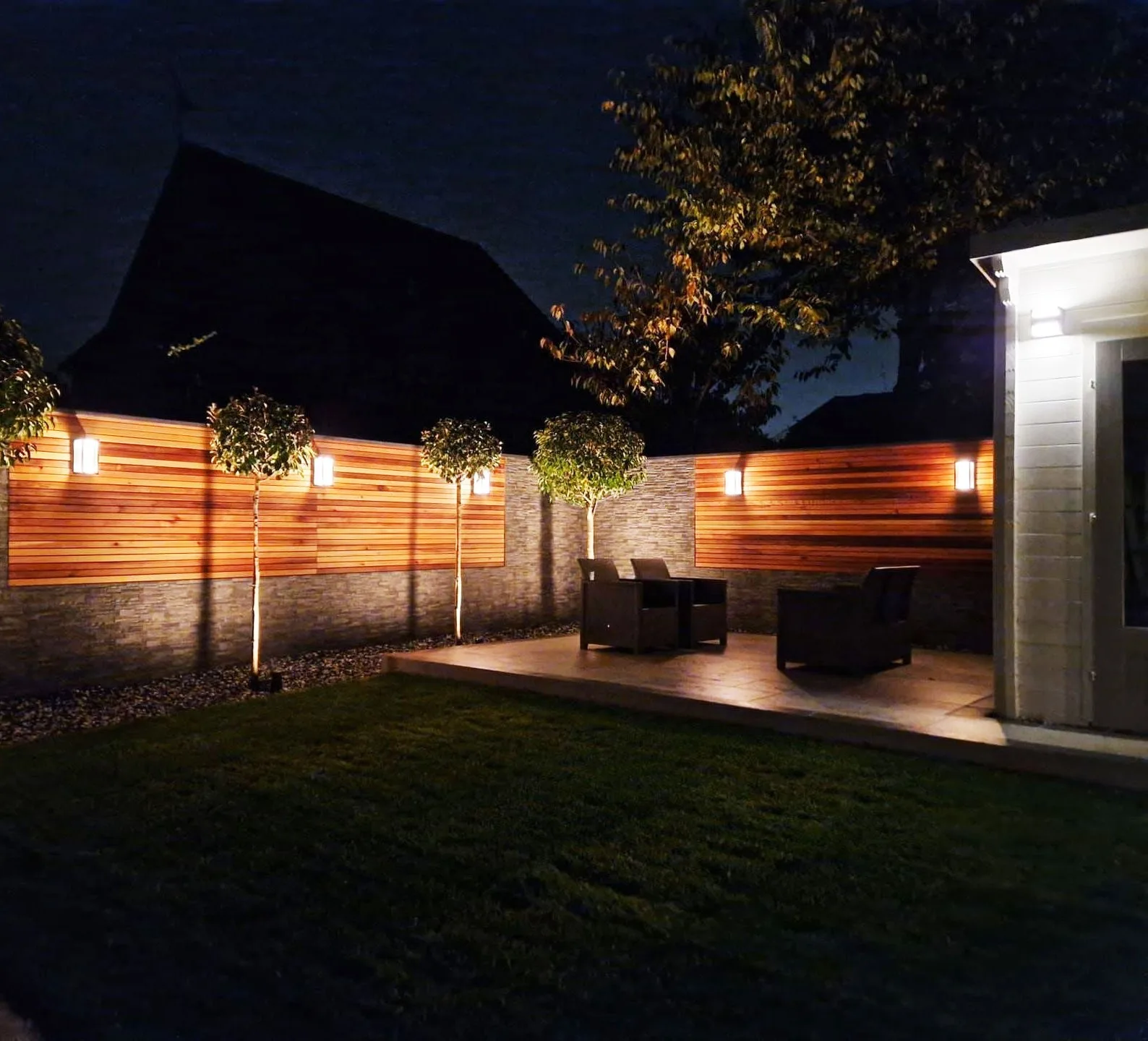
A cedar clad garden lounge lit after dark

Planting and trees

Light the Plant, Not the Lawn It Stands In.

Planting takes the least light and gives back the most. One narrow beam grazing up through a multi stem amelanchier or a pleached hornbeam gives you depth and shadow, and does more for a garden in February than a dozen path lights.

In a border we use spike fittings rather than anything fixed into the ground, because borders move. Plants put on a metre, a scheme gets lifted and divided, and a fitting bolted into concrete is stuck where it was useful four years ago. We leave a service loop of slack cable at every position so a fitting can be shifted without cutting a joint into it.

In ground uplighters have their place under a specimen tree set in paving or gravel. They need a drainage layer of clean stone under the housing, or the pit fills with water and the lamp cooks itself from the inside.

  • Spike fittings in borders, so lighting moves as planting grows
  • A service loop of slack cable left at every fitting
  • Narrow beams and cowls to keep the lamp out of sight
  • In ground fittings only in hard landscape, bedded on clean stone
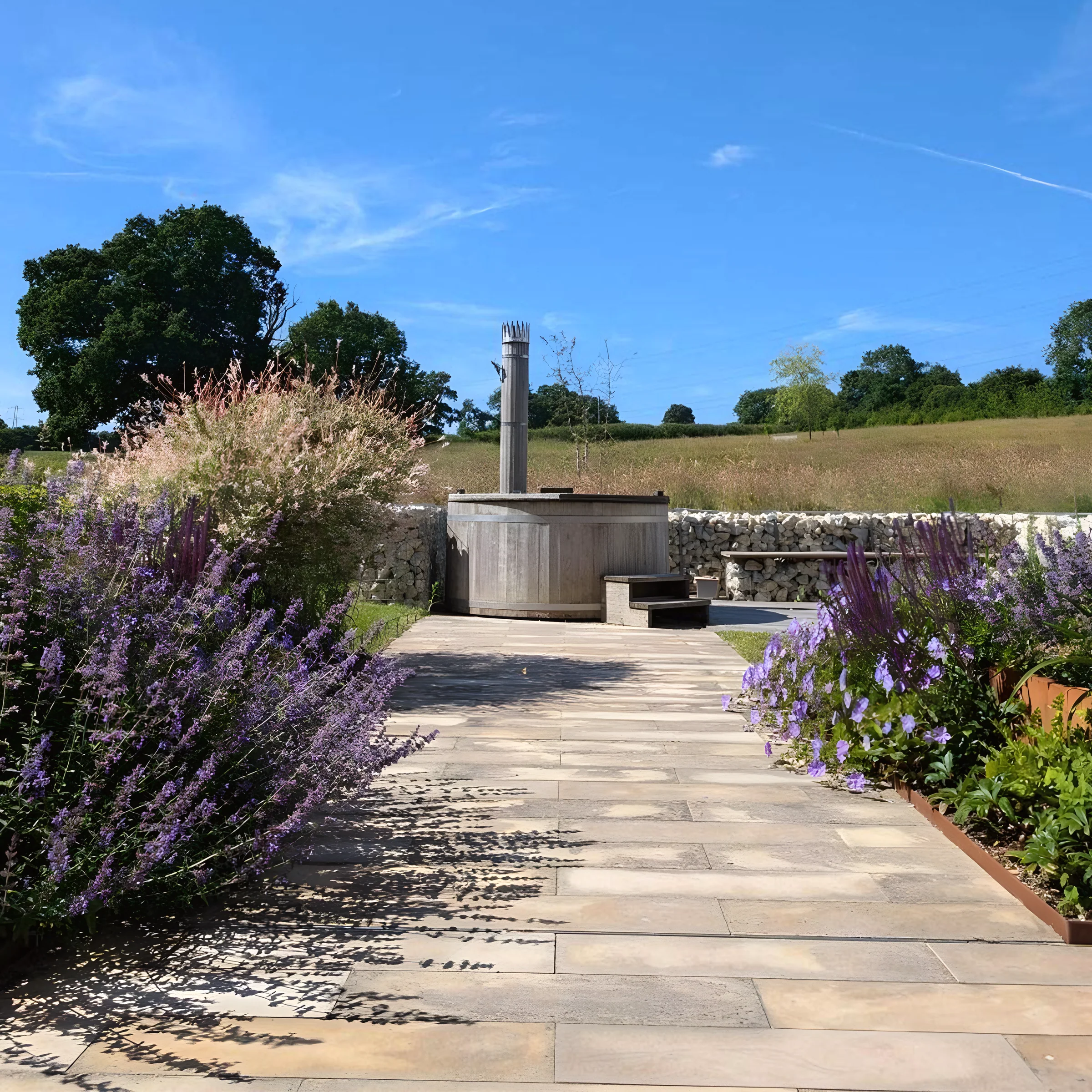
A floating timber bench lit from beneath on a porcelain terrace

Cable and ducting

Everything Difficult About Lighting Happens Before the First Fitting Arrives.

A low voltage garden runs from one transformer, and almost all of the work is getting cable from there to the right places without crossing a terrace you have only just laid. We set duct under paving, sleeve through retaining walls and leave draw cords in both directions while the walls are still open.

Twelve volt cable is sized for the length of the run, not just the fitting on the end of it. Hang a long circuit off a small transformer and the far end dims and goes greener than the near end, which is why some gardens look like two lighting schemes. A long run gets a heavier cable, or its own circuit.

The transformer wants somewhere ventilated and reachable, and a garage wall is worth the extra cable over the back of a border. Every route goes on the drawing we hand over, so the next person to put a spade in knows where not to.

  • Ducts and wall sleeves in before paving and coping are laid
  • Draw cords left in every duct for later changes
  • Cable sized for the run, not for the fitting
  • Transformer ventilated and reachable, not buried in a bed
  • Cable routes recorded on the handover drawing
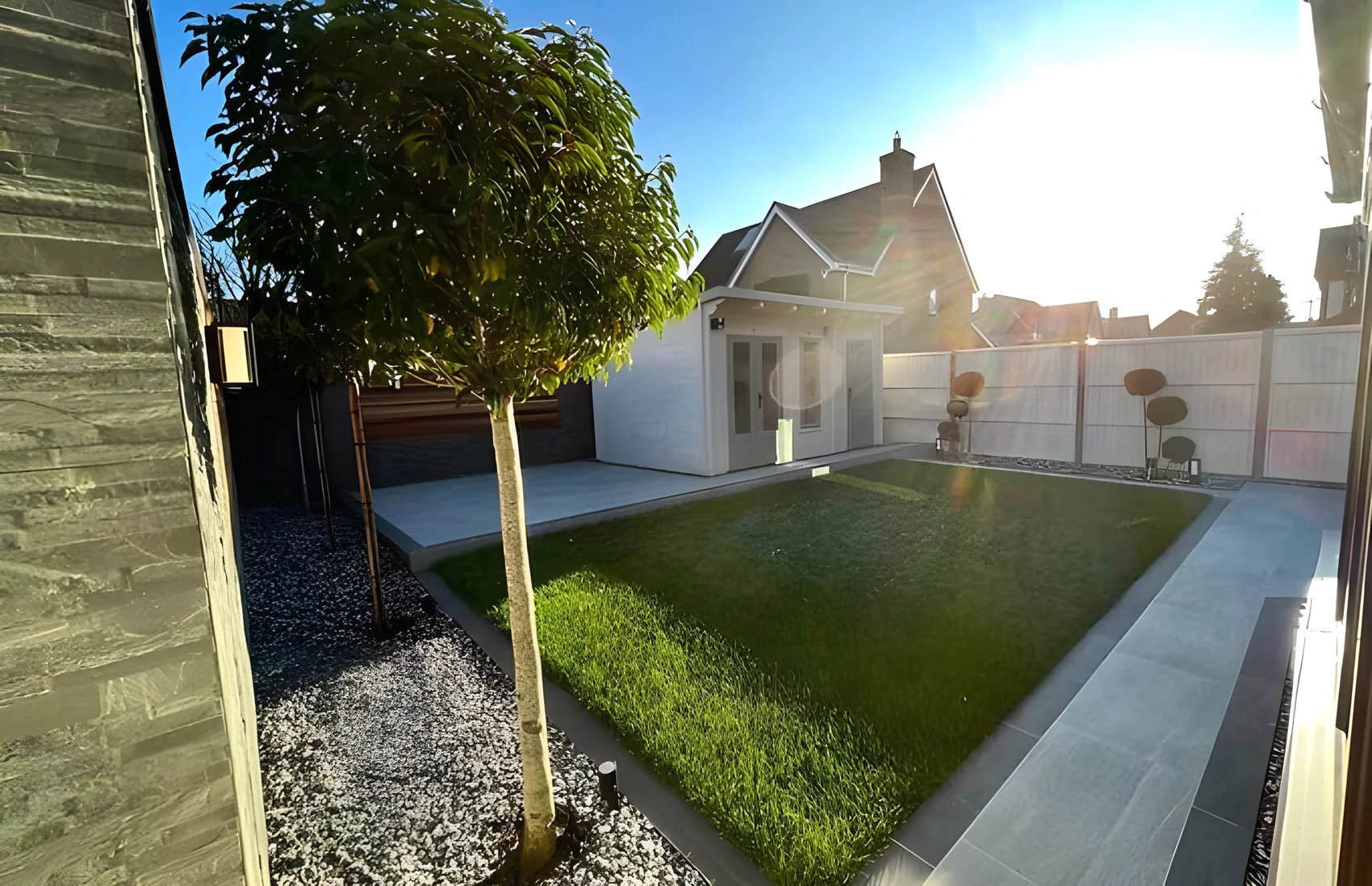
A garden summerhouse and lawn lit after dark

Light spill and wildlife

A Garden That Goes Dark Again Is Doing Something for What Lives in It.

Light that leaves the garden is wasted twice. It does nothing where you are standing, and it changes how a surprising amount of wildlife uses the place. Night flying insects gather at a bright fitting instead of feeding, and bats working a hedge line will generally avoid a lit stretch, going round it or giving up the route.

So fittings are aimed down and shielded at the source, and the beam lands on the surface rather than the boundary. Lamps are warm, in the region of 2700 kelvin, at the lowest output that does the job. Hedge bottoms, long grass, the foot of a boundary and anything close to water are left unlit, because those are the routes hedgehogs and amphibians use.

Then it goes off. Circuits are split so the path can be on while the trees are not, and a timer takes the garden dark later in the evening instead of leaving it lit until dawn.

  • Beams aimed down and shielded at the source
  • Warm lamps at the lowest useful output
  • Boundaries, hedge bottoms and water left dark
  • Separate circuits, so you light only what you need
  • A timed curfew rather than lighting through to dawn
CJ Landscapes remodelled our back garden with a new patio, paths and lawn. It looks fantastic and we are really happy with it. Carl was friendly, professional, hardworking and conscientious.

Kathy Moriarty · Google review

How it works

Planned in Daylight, and Set After Dark.

  1. 01

    A Walk Round After Dark

    We come back when it is properly dark, with a hand lamp, and look at what the garden already has. Light out of the kitchen, a neighbour's security light, the route you take to the bins.

  2. 02

    Drawn Into the Build

    Fitting positions, duct runs and the transformer position go onto the construction drawing with the levels and the drainage, so the groundworks team knows about them before anything is dug.

  3. 03

    Cable in While the Ground Is Open

    Ducts under paving, sleeves through walls, cable and draw cords left in place with slack at every position. This is the part that is close to impossible to do neatly afterwards.

  4. 04

    Aimed and Set at Night

    Fittings are aimed, shielded and dimmed on site after dark, with you there to look at it. Circuits are grouped the way you will use them and the timer is set before we hand over.

Good to know

Questions We Are Asked Most

Can Lighting Be Added to a Garden That Is Already Finished?

Yes, and we do it regularly, though it costs more and limits where fittings can go. Cable runs along bed edges and under gravel with little disruption, while getting under a laid terrace means rodding a duct through from both sides or lifting a strip of paving and bedding it back down. A retrofit scheme ends up planned around where cable can sensibly go.

Will Garden Lighting Disturb Wildlife?

Any light changes behaviour to some degree, so the aim is to keep that change small. Warm lamps at low output, aimed down and shielded, with boundaries, hedge bottoms and water left dark, make a far smaller difference than floodlights washing the whole plot. A timer that takes the garden dark later in the evening does more good than any choice of fitting.

How Many Fittings Does a Garden Actually Need?

Fewer than most people expect. A long garden can work beautifully on a dozen fittings in the right places and look worse on thirty. We would rather light the steps, a tree or two and the route to the door properly than spread a thin wash over everything, because contrast is what makes a garden look good after dark.

Is Low Voltage Better Than Mains Lighting?

For a garden, usually yes. A twelve volt system runs from one transformer, the cable is safer to work around and much easier to alter later, and the fittings are smaller. Mains cable usually needs armouring and a deeper trench, which means more digging now and less flexibility once the garden is planted.

How Long Should Outdoor Fittings Last?

It depends almost entirely on the fitting. Solid brass and marine grade stainless weather down and keep working for years, while cheap powder coated aluminium tends to fail at the gasket and let water in after a couple of winters. We also look at whether the lamp changes on its own, because with an integrated LED the whole unit comes out when it fails.

Can We Control the Lighting From a Phone?

Yes. App and scene control sits happily alongside a timer, and it is useful while a garden is being set up and you want to look at one circuit at a time. We would still ask for a physical switch somewhere sensible in the house, because at some point the phone is upstairs on charge and someone needs the path on.

Start your garden

Thinking About How the Garden Works After Dark?

Tell us what the garden is like now and how you use it in the evening. If it is still being built, this is the right moment to talk about lighting.

  1. 01
    We Call You BackWithin one working day, to talk the garden through.
  2. 02
    The First VisitA walk round the garden to take in the levels, the access and where the water sits.
  3. 03
    A Written ScopeA specification and a programme, with samples to see in your own light.
Prefer to talk?01276 582095info@cjlandscapesltd.co.uk
1 Webbs Mews, High Street
Hartley Wintney, Hook RG27 8NZ
What Would You Like Help With?

Choose as many as you like.

Tell Us About the Project

Roughly is fine. It helps us bring the right people to the first visit.

Your Details
Photographs Optional, up to five

Thank You

Your enquiry has come through and we will call you back within one working day.

Step 1 of 3

We only use your details to reply to this enquiry.