The ground
We Test the Soil Before We Write a Plant List.
A handful of soil tells you most of it. Rolled between finger and thumb, sand falls apart while clay takes a polish and holds a ribbon. We dig inspection holes right across the garden, because one plot often carries made up ground near the house and undisturbed subsoil at the far end.
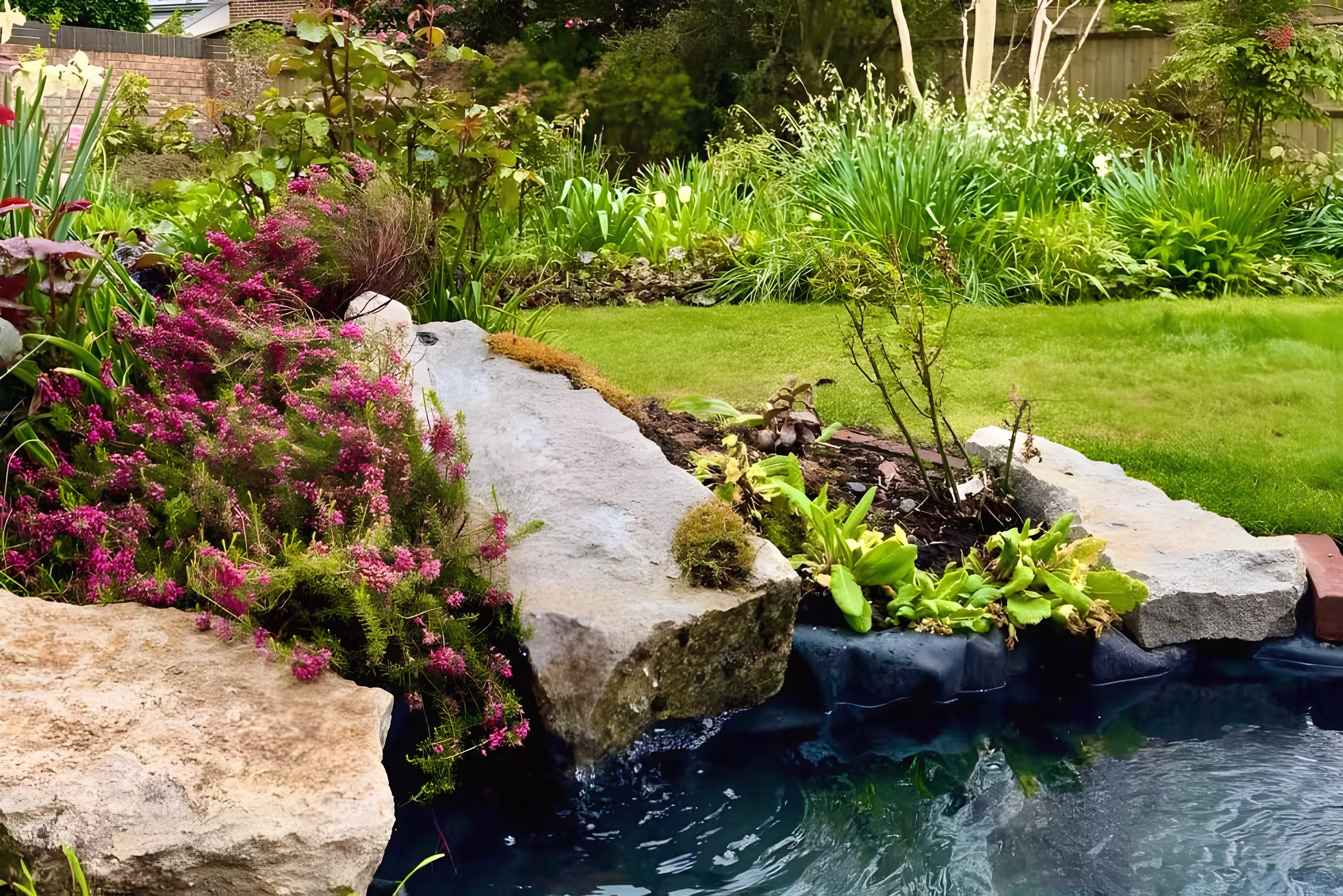
Samples go away for pH, phosphorus, potassium, magnesium and organic matter. pH decides whether a plant can feed at all. Acid sand suits rhododendron, pieris, camellia and heather; the thin alkaline soils over chalk on the North Downs turn the same plants yellow in a season.
New build and recently extended gardens get a closer look. Mortar washings lift pH along the foot of new walls, and site machinery presses the subsoil into a pan that roots and water both stop at.
- Hand texture test, plus laboratory pH, nutrient and organic matter results
- Inspection holes across the plot, not one hole by the house
- Imported topsoil matched on texture and pH to what the border needs, never bought on price
- Subsoil ripped and broken before any topsoil goes back over it
- Beds given real depth, around 400mm for shrubs and more where a tree goes in