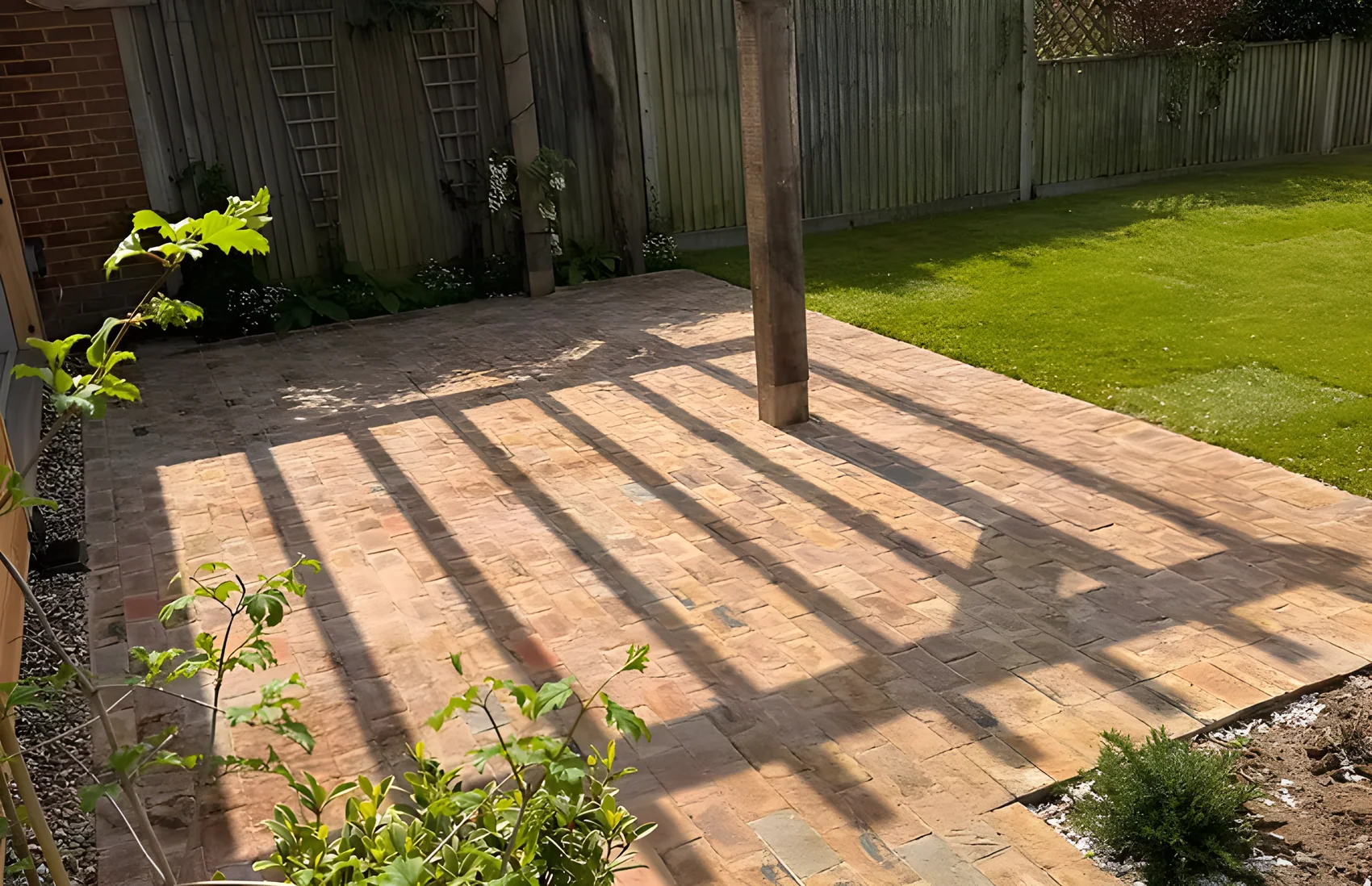
Pavers laid in long bands
Long Courses of Stone Make a Garden Read Longer.
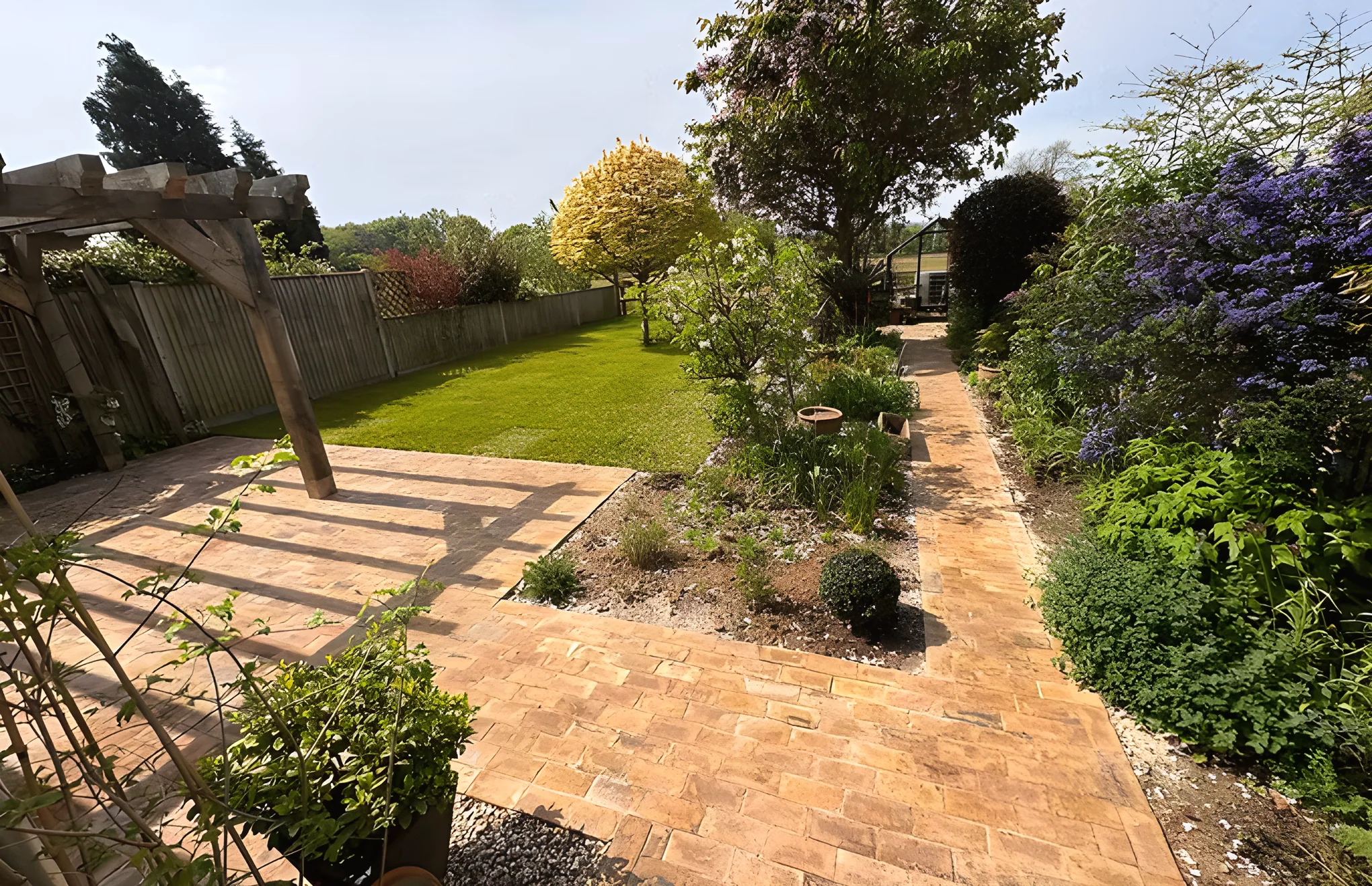
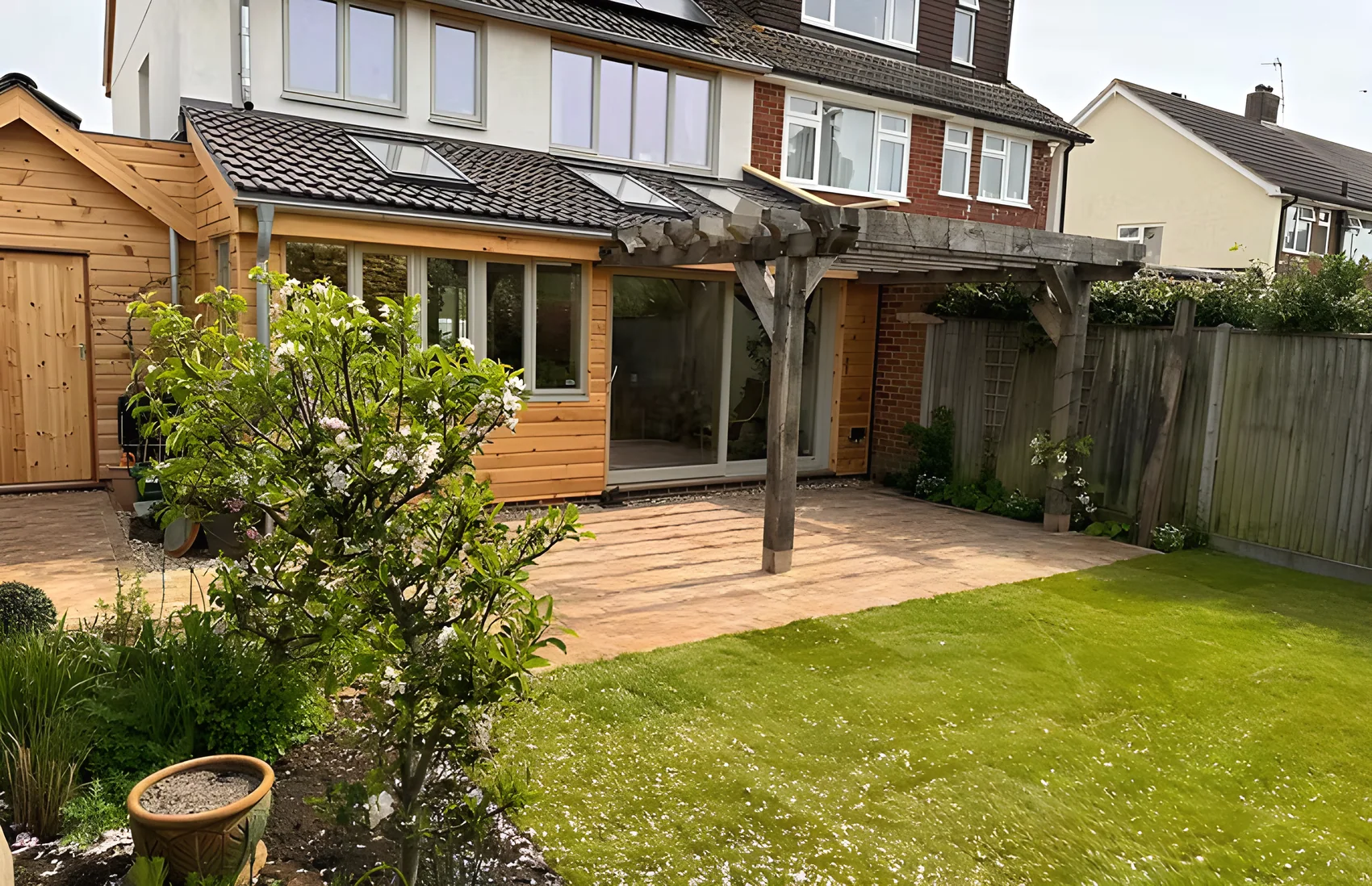
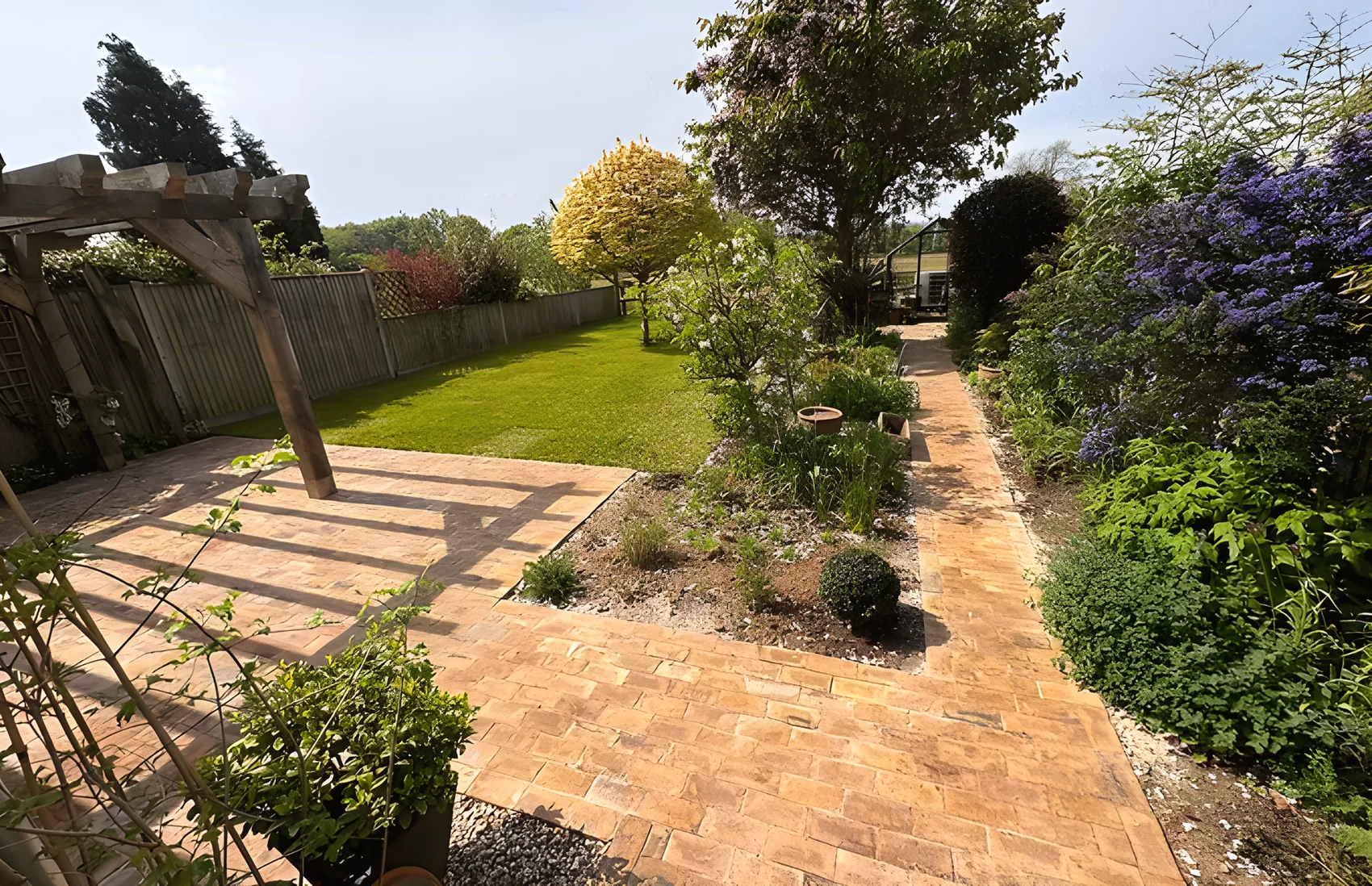
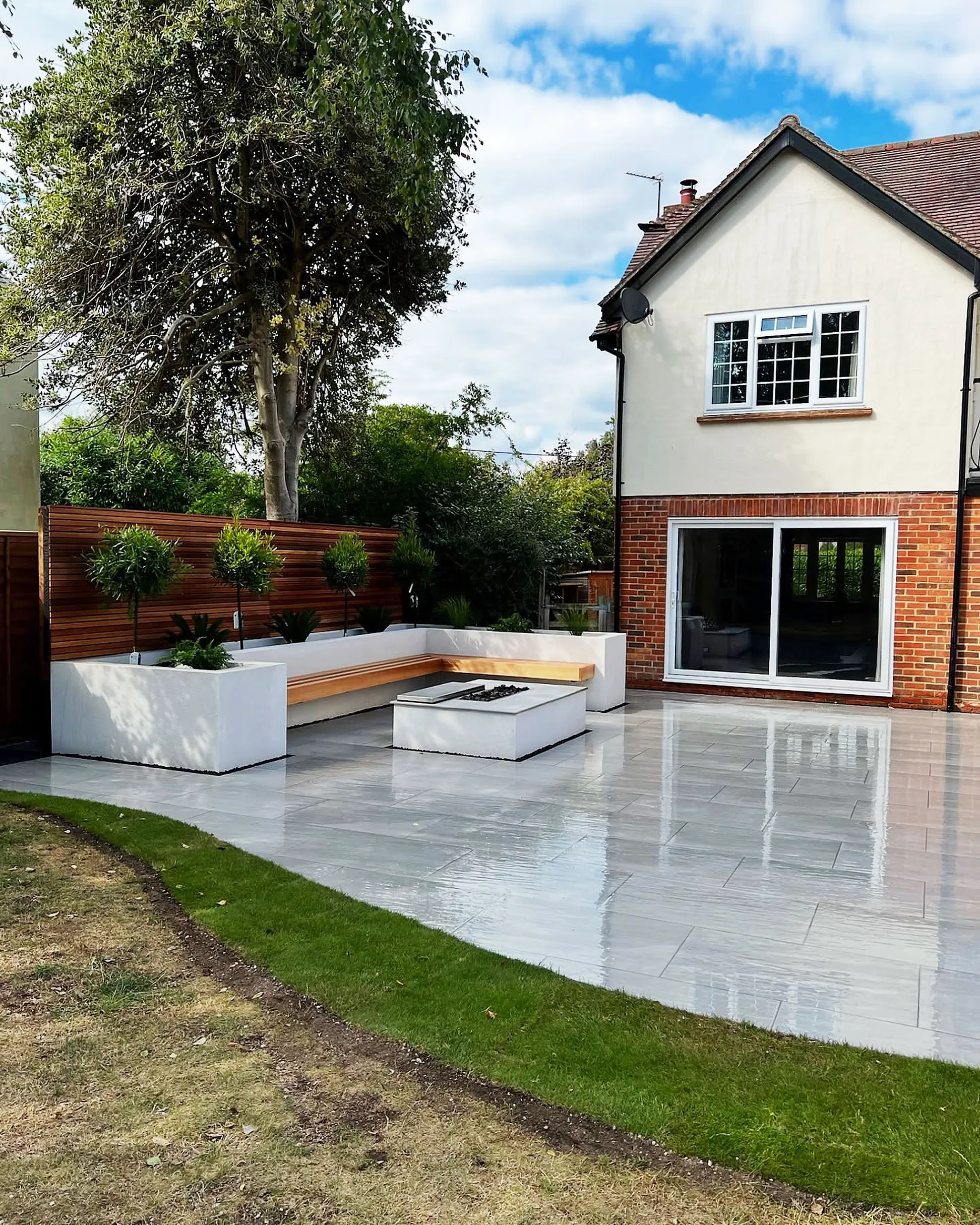
Here the stone is laid as long bands running beside the lawn. Long runs of one material read as a single surface rather than a patchwork, and keeping the bands beside the grass is what lets the lawn hold a clean shape.
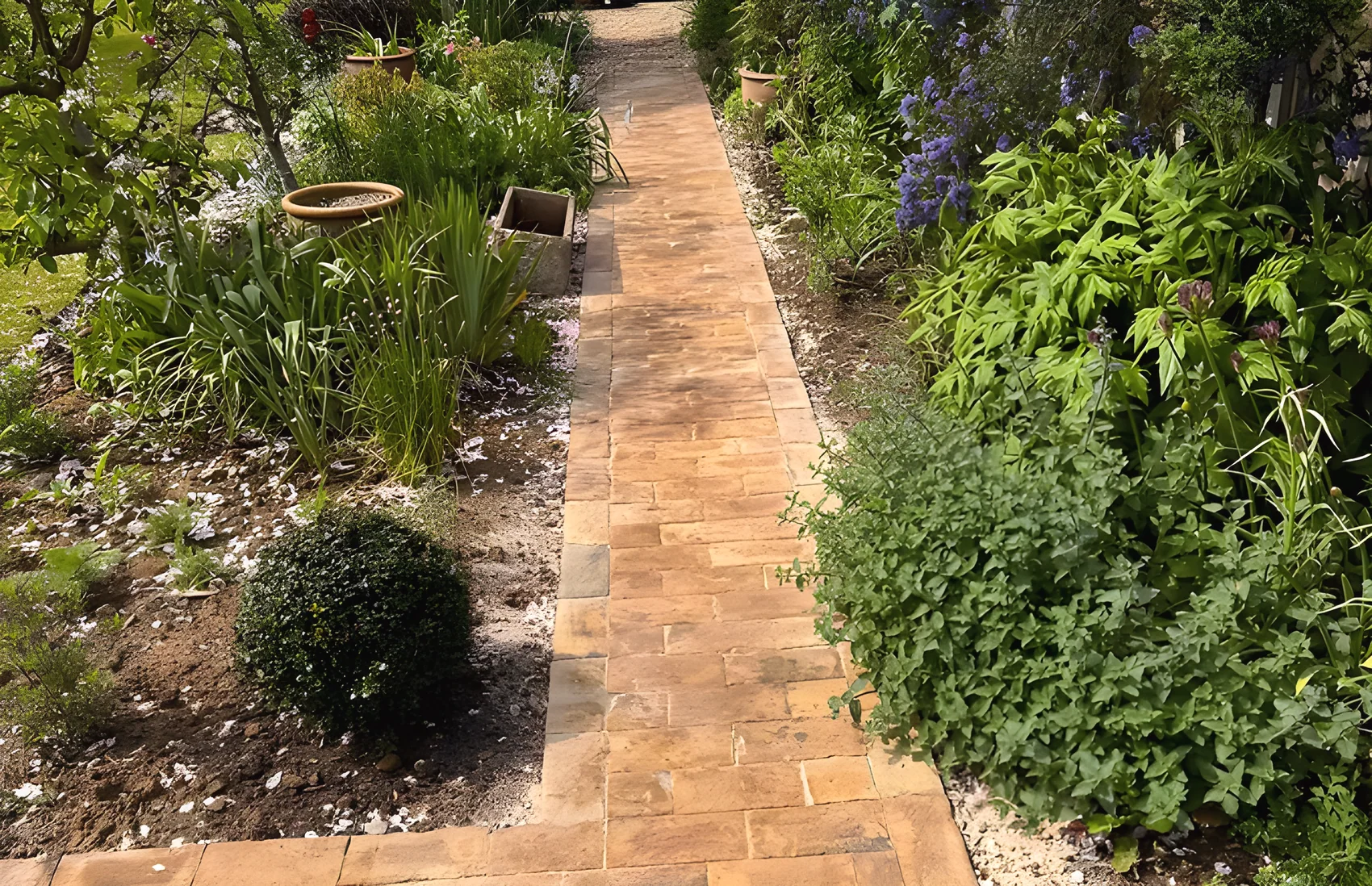
Laying it that way is harder than it looks. A long run shows every error, so the setting out has to be right before anything is bedded, and the joints have to line through from one band into the next. On a short run you can fudge a course and nobody notices. On a band that goes the length of a garden, a small drift at one end arrives as a visible kink at the other.
The lawn edge is the other line to get right. Where stone meets turf the paving generally wants to sit a shade below the grass, so a mower can run straight over it without the blades catching. Set it proud and you get a strip of long grass along every edge that has to be cut by hand for the rest of the garden's life.
- Stone laid as long bands beside the lawn
- Joints line through from one band into the next
- Stepping stones across the grass on the route to the house
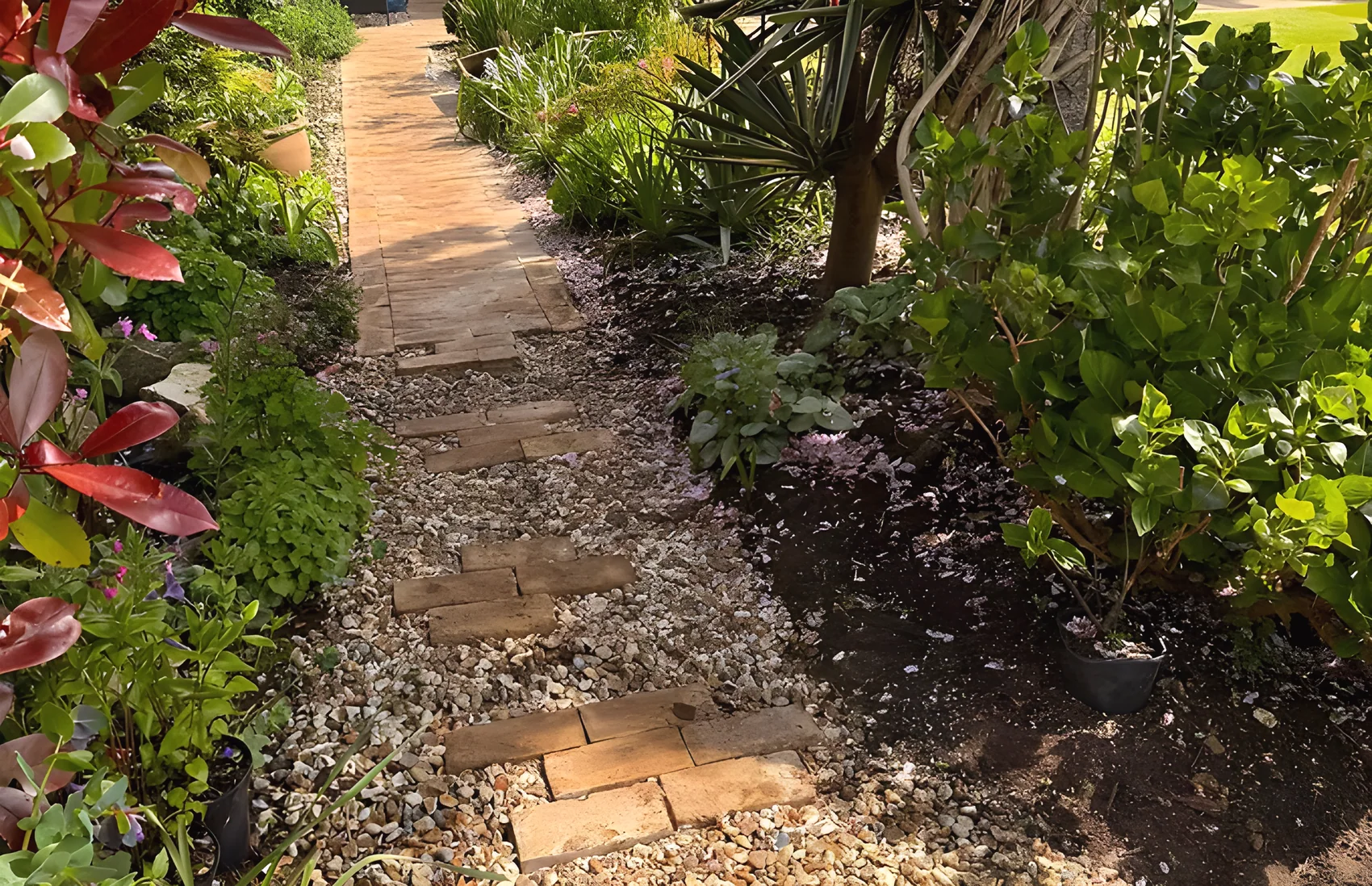
- A paver path carried on through the planted borders