C J LANDSCAPES Get in touch

Private garden · Hook, Hampshire

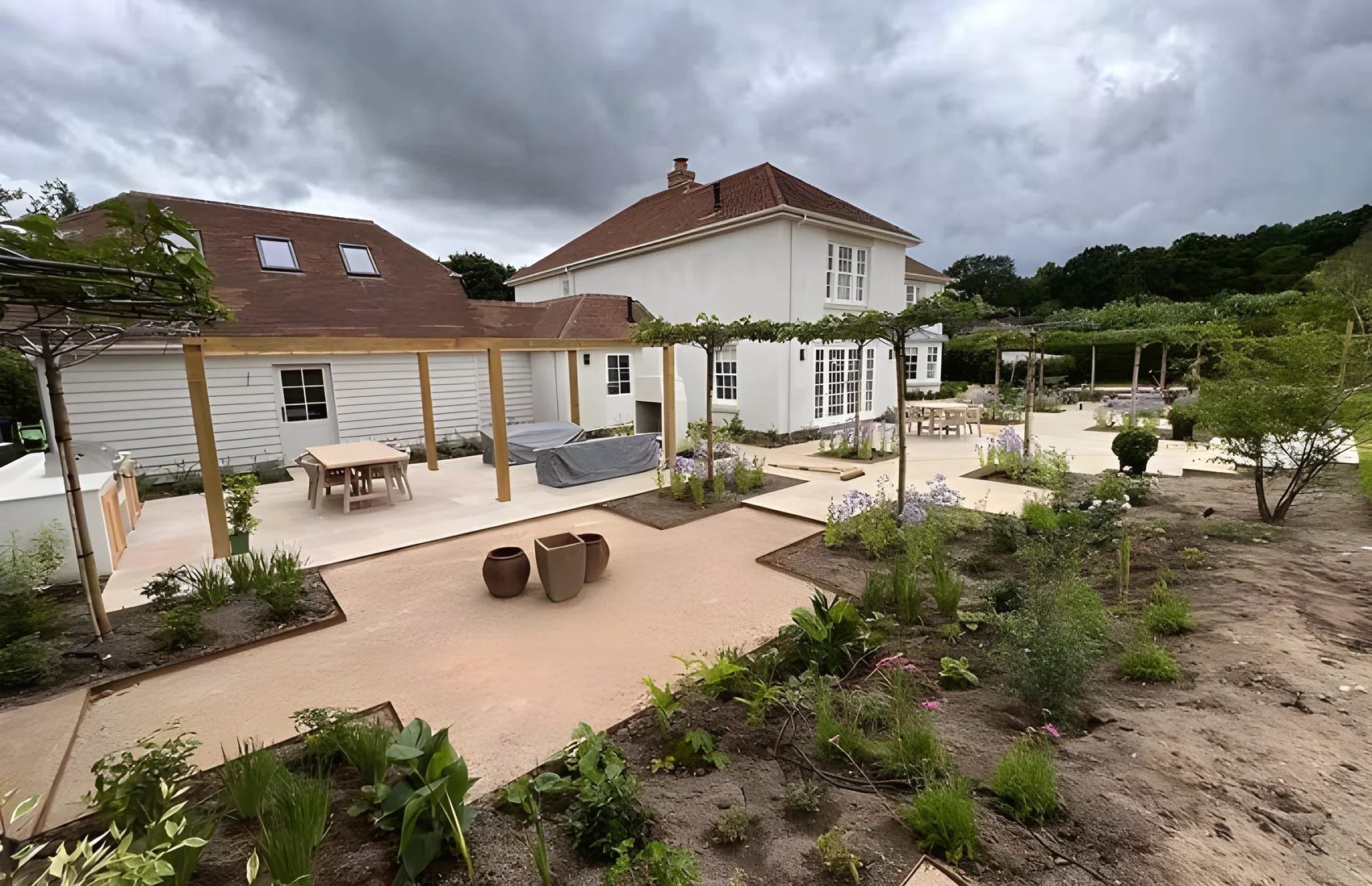
A Natural Limestone Terrace, a Pergola and Outdoor Seating.

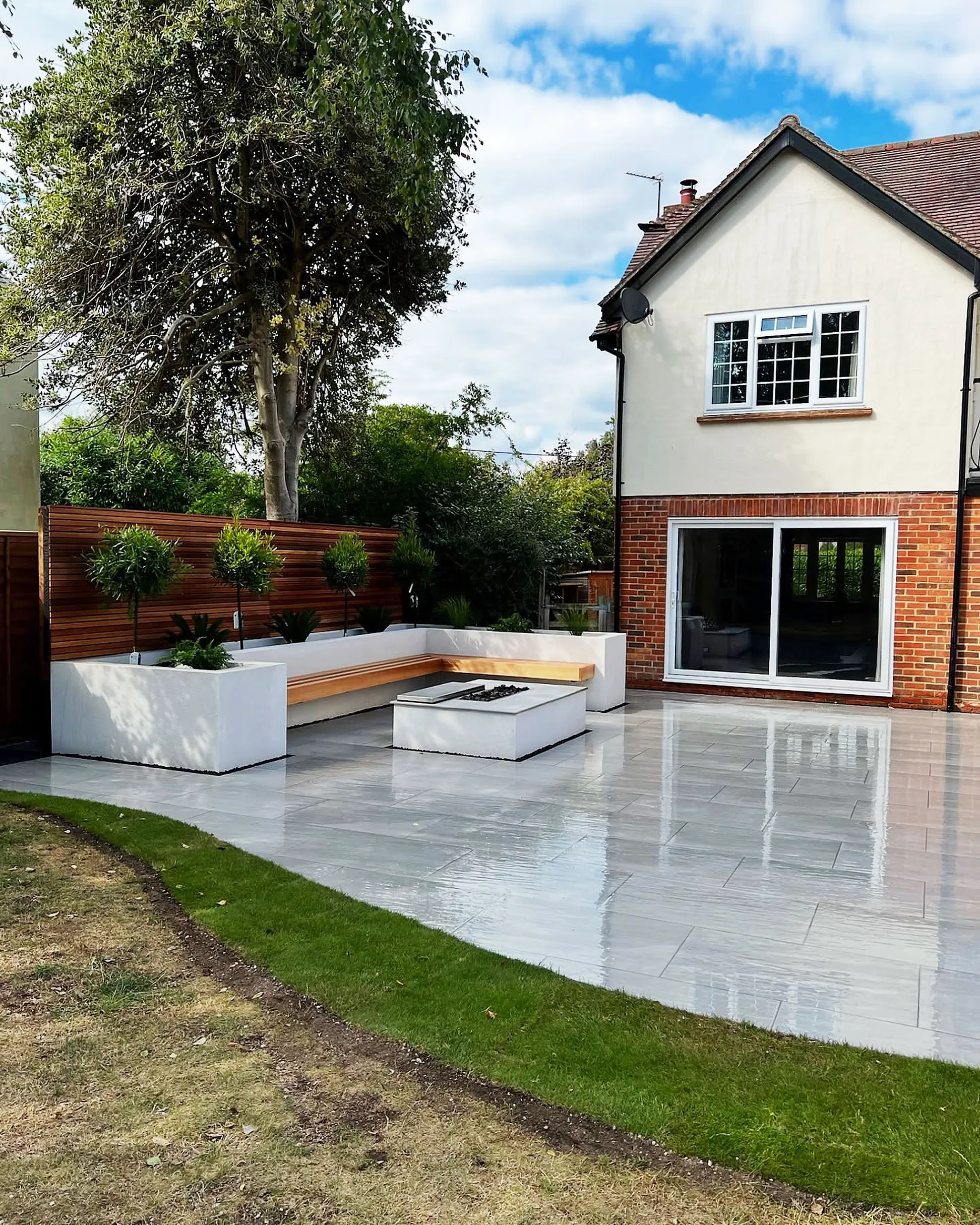
Natural limestone paving, a pergola over the seating and a lawn in front of the house. Built in 2023 by our own team, groundworks to the final joint.

Hook, Hampshire

Natural Stone Rewards the Work That Goes Under It.

This garden in Hook is built around a natural limestone terrace, with a pergola over the seating and a lawn in front of the house. It was finished in 2023.

Limestone is a sedimentary stone, and it is softer and more porous than porcelain or granite. That makes it a lovely surface to sit on and an unforgiving one to lay badly, because anything you get wrong under a pale stone eventually shows up on the face of it.

The whole of it was built by our own team. The people who dug the levels laid the stone and pointed the joints, so the standard does not change halfway through and there is no subcontractor between you and the work.

Paving
Natural limestone across the terrace
Terrace
An outdoor living space laid out for furniture
Pergola
An open frame over the seating area
Seating
Outdoor seating set beneath the pergola
Lawn
Lawn in front of the house

The terrace

Limestone Goes Down on a Full Bed, Never on Five Dabs of Mortar.

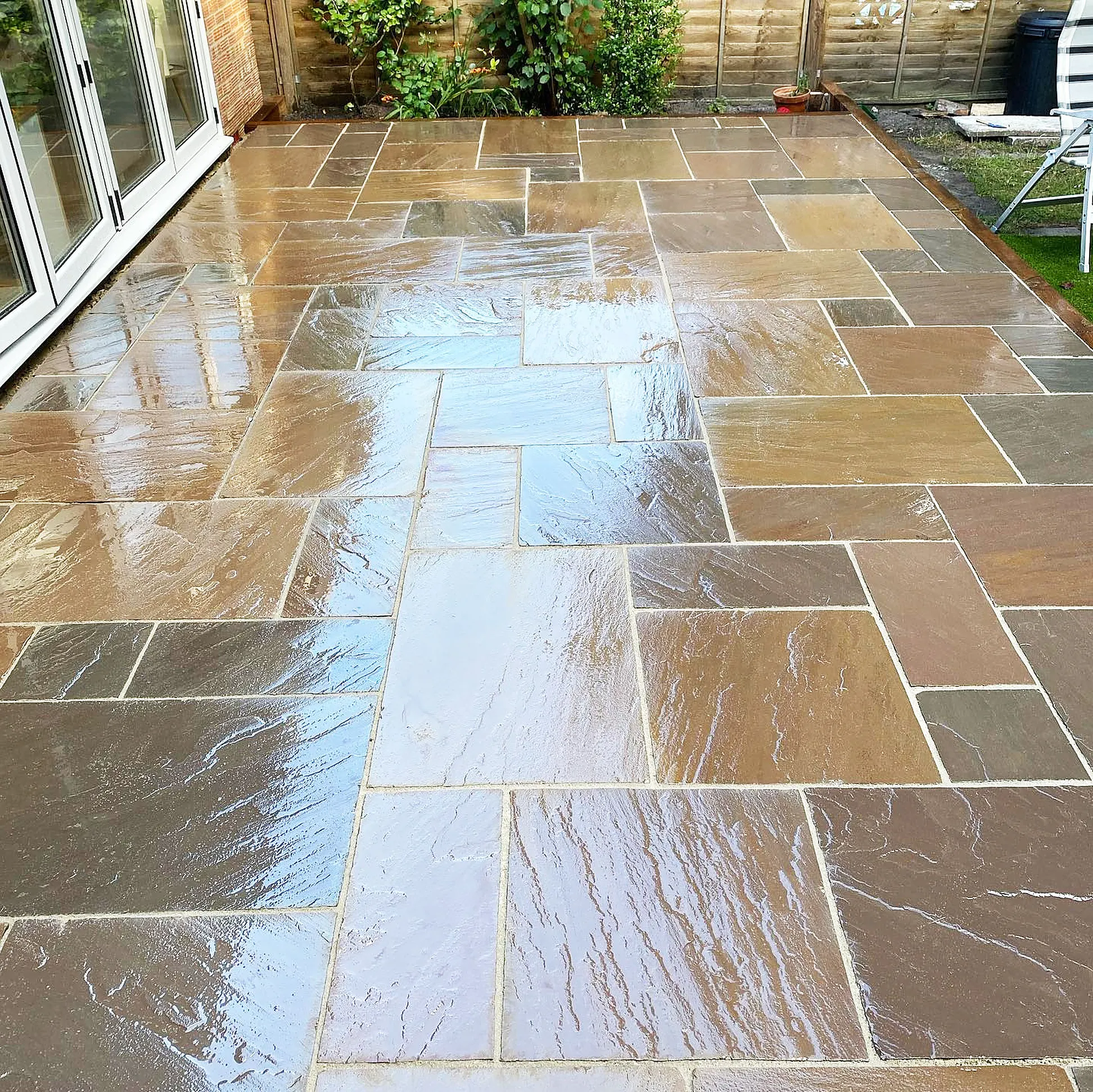
The terrace is natural limestone, with the pergola standing over the seating at one end of it. Spot bedding, the five dabs of mortar that still get used on cheap patios, leaves voids under every slab. Under a porous stone those voids hold water, and water under limestone means a cracked slab in a cold snap and a dark patch that never quite dries.

Natural stone goes onto a full mortar bed, with a slurry primer brushed across the back of each slab first, which is what actually bonds a stone to its bed rather than leaving it sitting on one. Joints want a consistent width and a pointing mortar chosen to suit a pale stone, because a cement rich mix will stain the edges of limestone and you cannot take that back out.

The pergola posts are part of the groundworks, not an afterthought. Bases go in and are fixed before any paving is laid, and the slabs are cut around them, so nothing has to be drilled into finished stone and no post is standing in a puddle. Falls across the whole terrace are set to take water away from the house and away from the doors.

  • Full mortar bed under every slab, no spot bedding
  • A slurry primer is what bonds natural stone to its bed
  • Consistent joint widths, pointed to suit a pale stone
  • Pergola bases belong in the groundworks, not after the paving
  • Falls run water away from the house and the doors
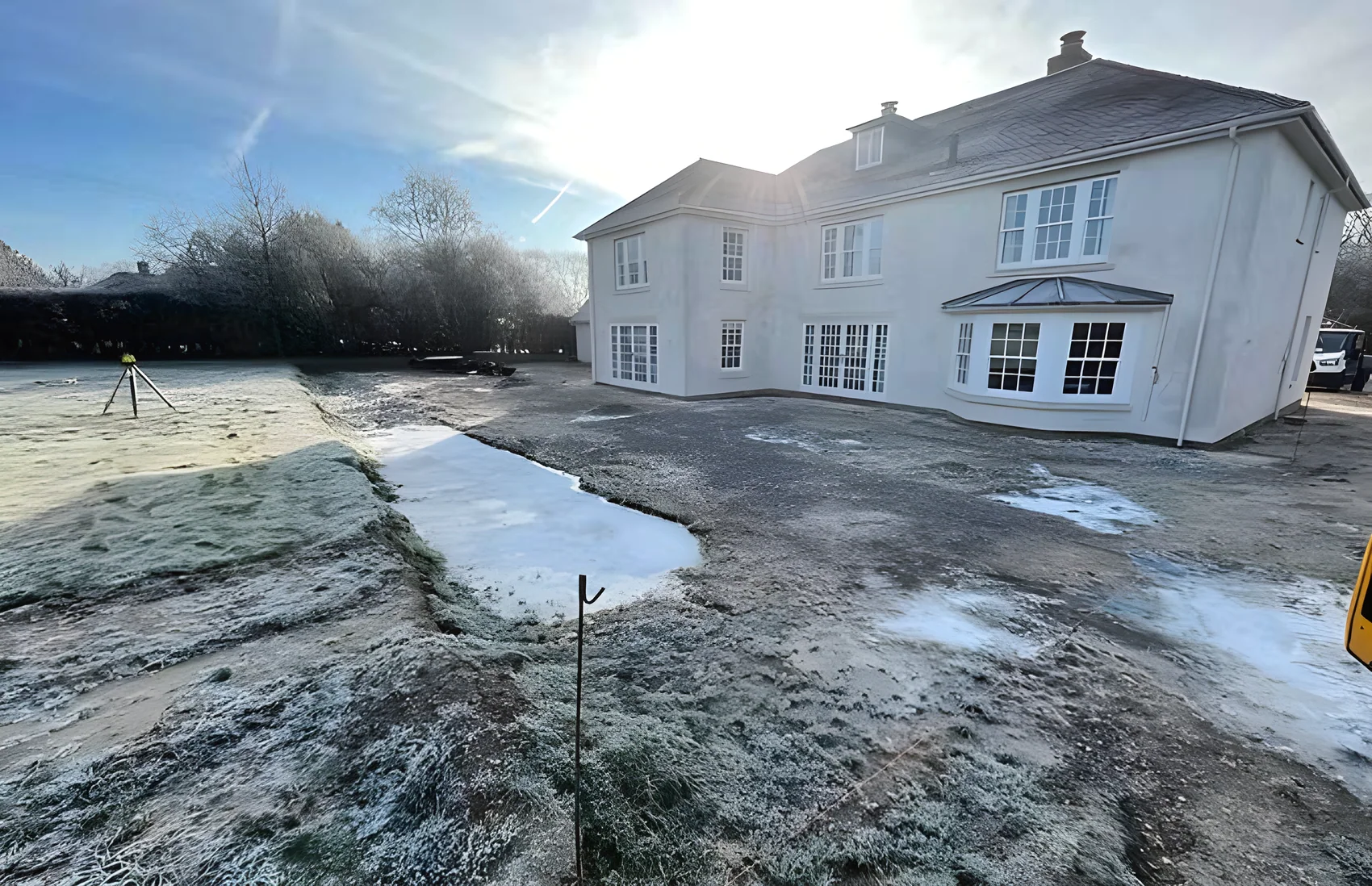
A frosted lawn in front of a large house on a winter morning

The lawn

A Frosty Morning Shows Everything a Lawn Is Hiding.

Hook, Hampshire, on a winter morning, with frost lying across the lawn in front of the house. Frost is an honest light on turf. It picks out every hollow and every high spot as a change in shade.

An even lawn is made under the turf rather than on top of it, which is why a frosty morning is worth a look. Frost sits longest on ground that is compacted and still holding water, and it clears first where the ground drains, so it tells you more about what is under a lawn than looking at the same lawn in June ever will.

The one thing worth knowing about a lawn like this on a frosty morning is to stay off it while it is frozen. Frozen grass blades are brittle and footprints bruise them, so a shortcut across the lawn on a hard morning shows up as brown marks for weeks afterwards. Give it until the thaw and it comes through the winter unmarked.

  • Frost shows every hollow and high spot as a change in shade
  • It hangs about longest on compacted, wet ground
  • Frozen grass blades bruise underfoot
  • Brown marks from a shortcut can take weeks to grow out
  • Left alone until the thaw, a lawn comes through the winter unmarked
Good to know

Questions About This Garden

Is Natural Limestone a Sensible Choice for a British Terrace?

It can be a very good one, and it depends on the aspect and the finish. A pale limestone gives you light on a dull day, which matters here far more than it would in southern Europe. On a shaded, damp side of a house any porous stone will take algae, so a terrace that gets sun for part of the day stays looking better for longer with less work.

Does a Limestone Terrace Need Sealing?

An impregnating sealer is generally worth it on limestone, because the stone is porous and the sealer keeps oil, wine and leaf tannin from soaking in rather than sitting on the surface. It is not a one off. Sealers wear and need going over again, and the interval depends on how much weather and traffic that terrace takes.

How Do You Clean a Stone Terrace Like This Without Damaging It?

Water, a stiff brush and a mild alkaline or stone safe cleaner. Keep acidic cleaners such as brick acid well away from limestone, because the acid etches the surface and takes the finish off. A pressure washer on a hard setting will blow out your joints and roughen the face of the stone, so it wants using gently if at all.

Can You Walk on a Frozen Lawn?

Better not. When grass is frozen the leaf blades are brittle and footsteps crush rather than bend them, which shows up as brown bruising once it thaws and can take weeks to grow out. If a frozen lawn is the only route to the bins, a stepping stone path or a terrace route round the edge solves it permanently.

Do You Work in Hook and the Rest of Hampshire?

Yes. We are based in Hartley Wintney, a few minutes from Hook, and we build in Hook, Fleet and Reading as well as across Surrey, so this garden sits well inside the area we work in every week. Call 01276 582095 or email info@cjlandscapesltd.co.uk and we will come and look at the garden.

Your garden

Thinking About a Stone Terrace of Your Own?