C J LANDSCAPES Get in touch

Work and play · Sandhurst, Berkshire · 2022

A Garden Split Between Terrace and Lawn, and Lit for the Evening.

A block paved terrace with the furniture out on it, an open lawn with a single specimen tree, and lighting that keeps both of them usable once the light has gone. Designed, built and looked after by our own team, because we do not subcontract the work out.

Sandhurst, Berkshire

One Garden, Doing Two Jobs.

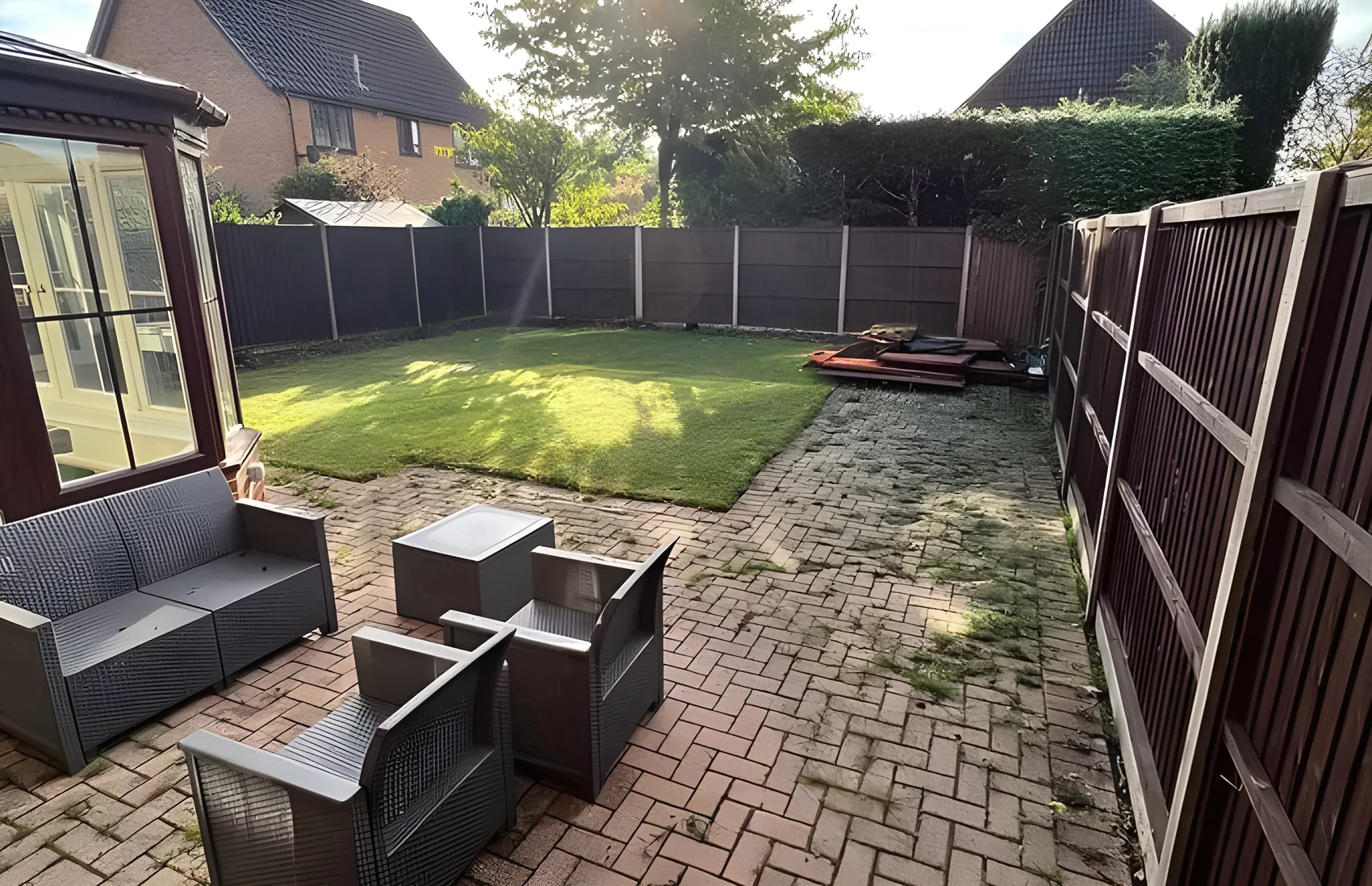
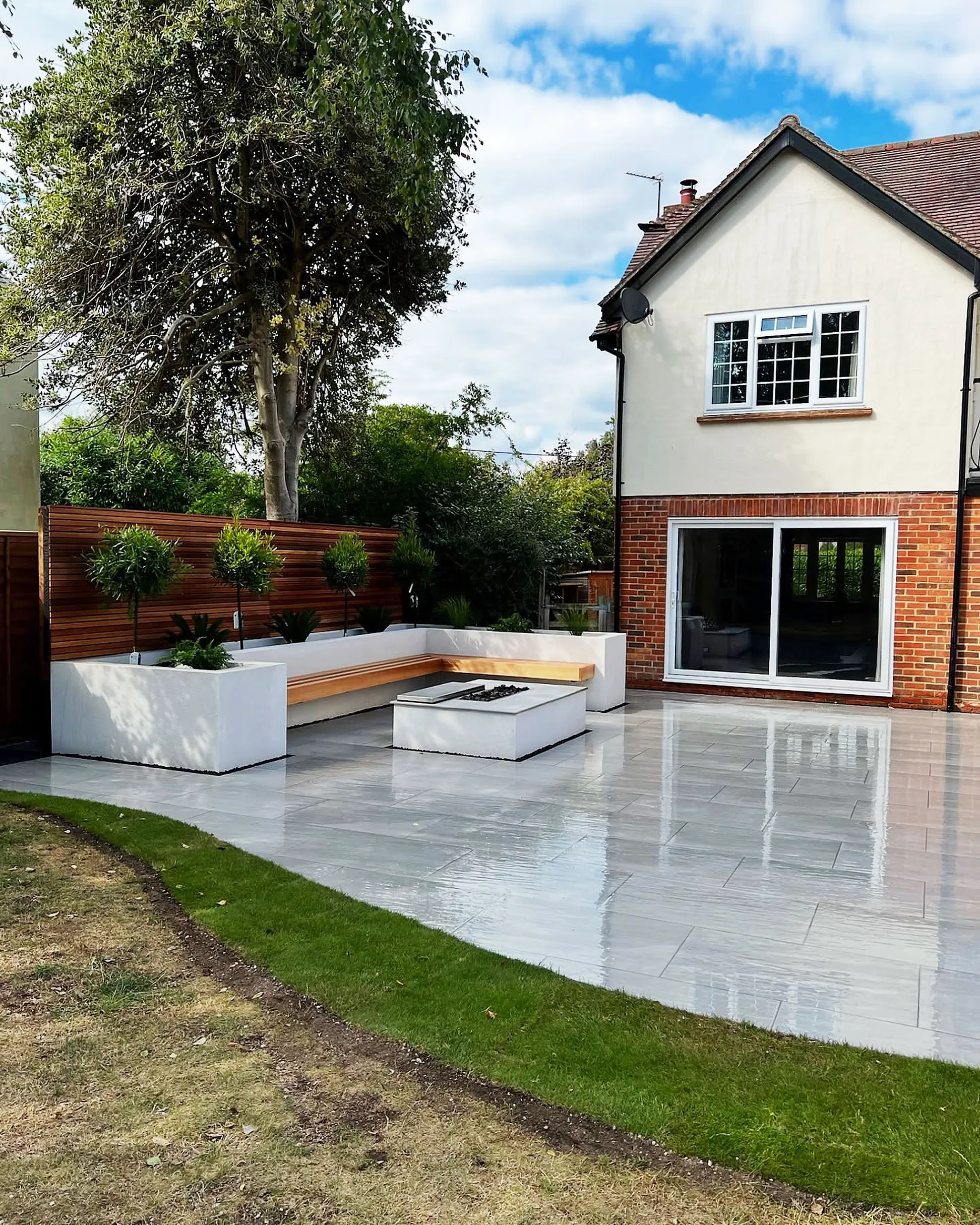
This garden is in two halves. On one side the orangery sits beside lawn and paving, with the garden furniture out on the block paving and a timber screen standing above the seating area. The rest is left open: lawn inside its boundaries, with a single specimen tree standing in it.

Splitting a garden like that is settled with a tape measure before anything is dug. The hard area has to be big enough to pull a chair back and walk behind it, and the lawn has to keep an unbroken width or it stops being a lawn and becomes a verge. Take a little from each and you end up with a terrace you cannot seat and grass nobody uses.

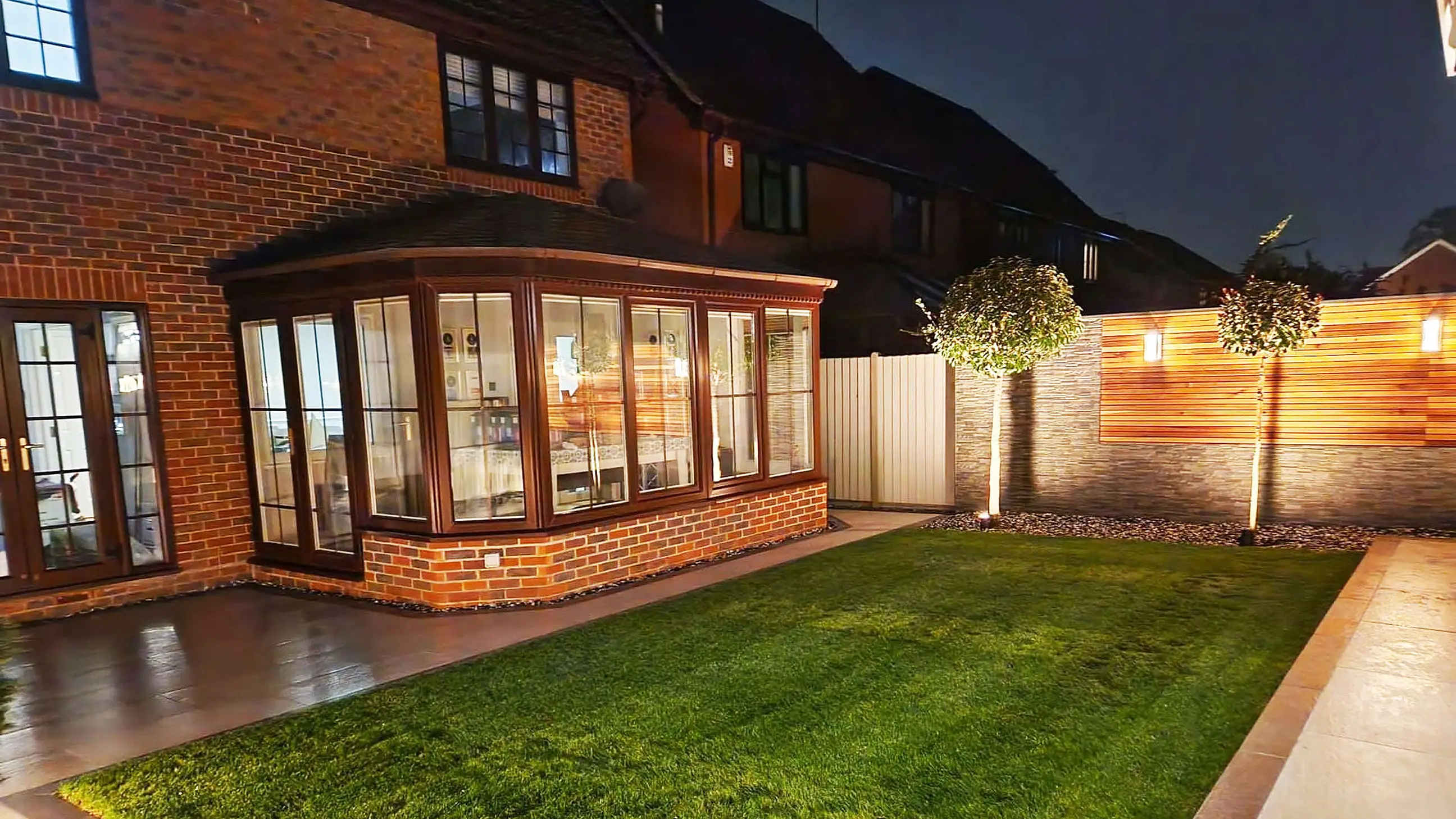
The lighting is what holds the two halves together after dark. Wall lights wash the timber screen above the seating, and the paving and lawn by the orangery are lit as well, so at dusk the garden still reads as one space rather than a bright patch next to a black one.

Terrace
Block paving, with garden furniture set out on it
Lawn
Open lawn, kept clear apart from one specimen tree
Screen
A timber screen standing above the seating area
Lighting
Wall lights washing the screen, with the paving and lawn lit at dusk
Setting
An enclosed garden, with the paving running up to an orangery

The terrace

Block Paving, and the Ground Underneath It.

This is the working half of the garden: block paving with the garden furniture out on it. Blocks behave differently to slabs. There are far more joints, so any settlement shows as a line running across the terrace rather than one slab rocking, and the edges have to be held or the whole field creeps outwards over a few summers.

What keeps a terrace like this flat is all below the surface, and none of it shows in a photograph. Block paving generally wants a compacted base under it, its edges held, and a fall so water leaves the surface rather than standing on it. That is why the build up is worth asking a contractor about rather than judging off a finished picture.

It is also the half of the garden that takes the wear. Furniture gets dragged, a terrace gets walked on wet, and a surface built on a soft base will tell you about it within a couple of winters.

  • Block paving rather than slabs, so a lot of small units instead of a few large ones
  • Garden furniture set out on the terrace
  • The paving running up to the orangery
Wall lighting washing a timber screen above an outdoor seating area
A lawn and specimen tree in an enclosed garden at dusk
Wall lighting washing a timber screen above an outdoor seating area

The lighting

Light on a Surface, Not Light in Your Eyes.

The fittings here are not aimed at the seating. They wash the timber screen above it, so what you see is a lit surface and the grain across it, and the seating below works on what comes back off the timber. That is the difference between a garden that looks good at night and a garden with a floodlight in it.

Washing a vertical surface is unforgiving. Light raking across timber picks out every ripple and every bowed board, so it only flatters a screen that is true. The line of the timber and the way it is fixed matter as much as the fitting does.

Cable for lights in a wall or a screen has to be run before those surfaces are finished, which is why lighting belongs in the drawing rather than at the end of the job. Added afterwards it usually means lifting something that was built properly the first time.

  • Light aimed at the screen, not at the people sitting under it
  • A lit surface above, and bounced light on the seating below
  • Wall lighting on the screen, in a garden built to be used after dark
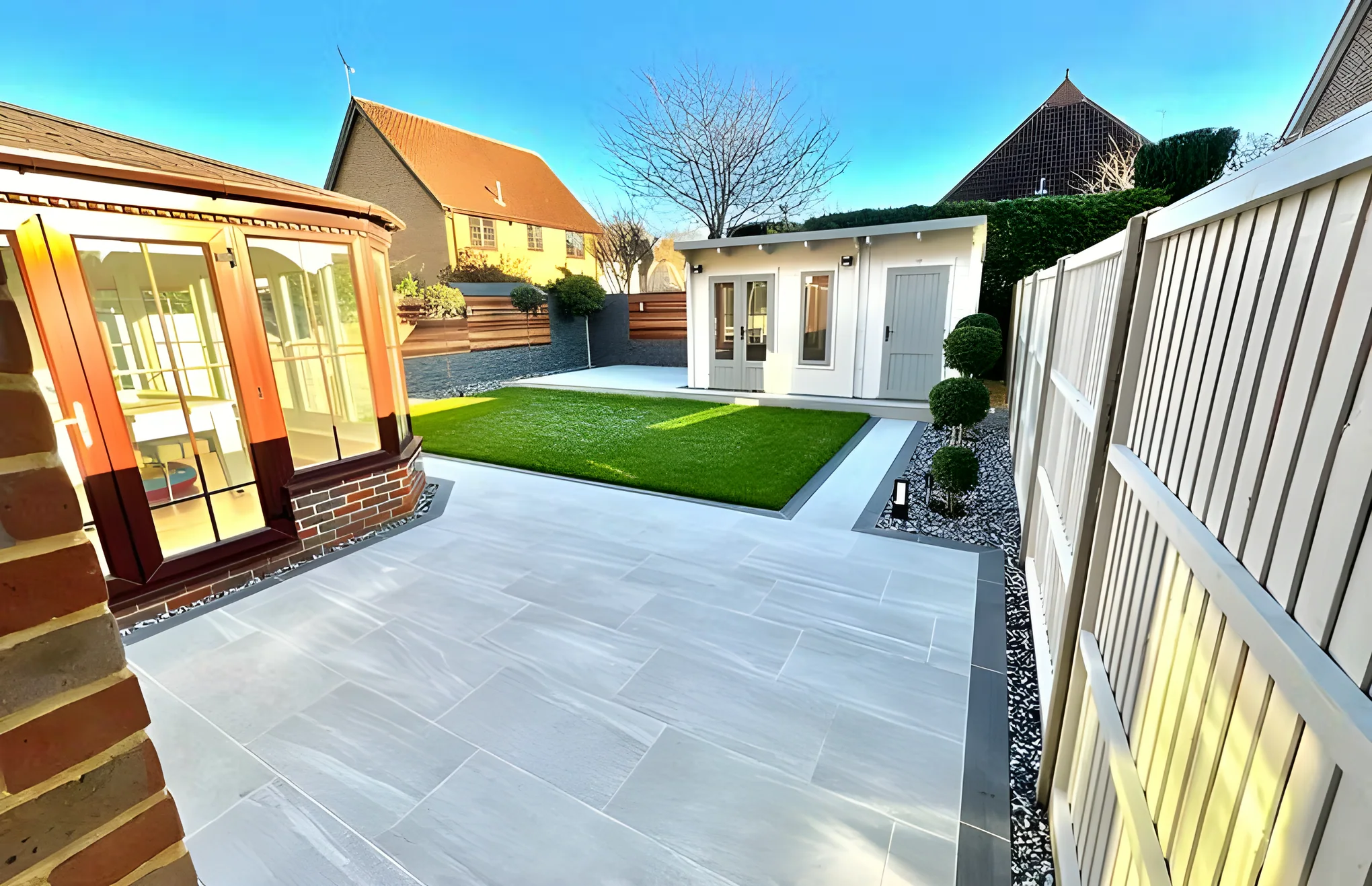
A lawn and specimen tree in an enclosed garden at dusk

The lawn

An Open Lawn, and One Tree Standing in It.

The other half of the garden is deliberately quiet: grass, the boundaries that enclose it, and a single specimen tree. An enclosed garden carries one strong thing standing in the lawn far better than it carries several small ones, because the eye reads the open ground and the tree as one picture.

Low evening light is the hardest test a lawn ever gets. It rakes across the surface and finds every dip, which is why the levels under a lawn matter more than anything you can see once the grass is down.

A tree standing in grass wants its own ground. A pit dug wider than it is deep, the tree set at the level it grew at, and the grass kept back off the base while it establishes, because grass run right up to a trunk competes for the water the tree is trying to find.

  • An open lawn, kept clear apart from one specimen tree
  • A single specimen tree standing in the grass
  • An enclosed garden, with the lawn lit at dusk

Photographs

The Garden in Photographs

Good to know

Questions About This Garden

Why Block Paving Rather Than Slabs?

Blocks give you a lot of small units instead of a few large ones, so a terrace can turn a corner or follow a curve without a slab being cut to fit. They also move as a field rather than one at a time, which is why the edge restraint matters more with blocks than it does with flags. The trade is the number of joints, and a joint is where silt and weed arrive, so the surface wants brushing and the joints topping up rather than being left alone.

Does Garden Lighting Have to Go in While the Garden Is Being Built?

Not always, but it is far tidier and far cheaper if it does. Cable for wall lights, and anything running under paving, has to be in before those surfaces are finished, so adding it later usually means lifting work that was built properly the first time. If the fittings are not settled yet, the sensible middle ground is to put the ducting and the cable in while the ground is open and choose the lights afterwards.

How Do You Stop Garden Lighting Glaring?

By lighting surfaces rather than spaces. In this garden the fittings wash the timber screen, so you see the lit screen and not the lamp, and the seating below is working on reflected light. Shielding the source, keeping the output down and aiming it away from where people sit does more for a garden at night than adding more fittings does.

Can We Keep a Proper Lawn and Still Have a Terrace Big Enough to Use?

Usually, and it is worth settling with a tape measure before anything is dug. A table and chairs needs enough paving to pull a chair back and walk behind it, and a lawn needs an unbroken run or it reads as a strip. Taking a little off each tends to leave a terrace you cannot seat and grass nobody crosses, so it is better to decide which of the two leads.

Is a Specimen Tree Standing in a Lawn a Problem Later On?

Not in itself, as long as it gets its own ground to start with: a pit dug wide rather than deep, planted at the level it grew at, and grass kept off the base while it establishes. After that the main thing is mowing, because a trunk standing in open lawn is easy to catch. Where a tree is going anywhere near a building or a drain, it is worth checking the species against the soil before it is planted rather than after.

Your garden

Thinking About a Garden That Works After Dark?