C J LANDSCAPES 01276 582095Get in touch

Camberley, Surrey Heath

Landscaping in Camberley, Built for the Ground It Sits On

Design, construction and long term care for private gardens across GU15, GU16 and GU17, from one team throughout.

Close to home

A Garden That Works With the Ground It Stands On

Camberley is a short drive from our base in Hartley Wintney and one of the towns we work in most, so this is ground we know well. The town is a Surrey garrison town built on sand, and both halves of that matter if you are making a garden here. Before the military colleges arrived this was a sparsely populated stretch of infertile land, known as Bagshot or Frimley Heath and reckoned too sandy to farm, and the soil has not changed its mind since.

What gives Camberley its particular feel is how little the heath has given up. Barossa, Swinley Forest, Diamond Ridge Woods and the old Old Dean Common press straight up against the houses, the golf course is a Harry Colt heathland layout framed by towering pines, and mature Scots pine and inherited rhododendron turn up in garden after garden. A garden here either works with all that or spends its life arguing with it.

We design, build and then look after gardens with the same in house team, and we do not subcontract the work out. On a Camberley plot that matters more than usual, because the things that decide whether a terrace stays true or a border thrives get decided during groundworks: where the iron pan sits, whether there is clay in the profile, and how the slope behaves after heavy rain. Those are not questions you want answered by someone who has already left site.

See the work
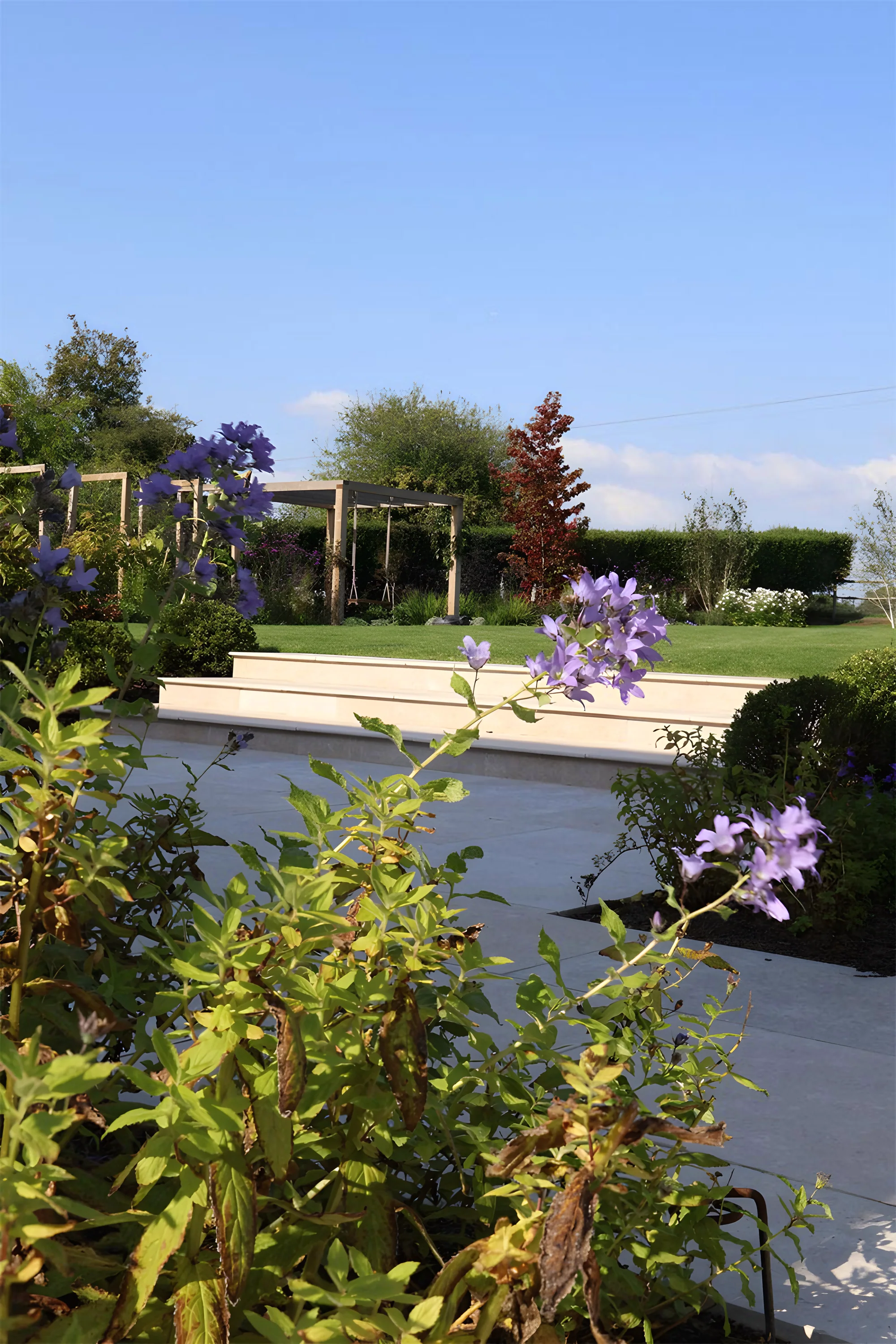
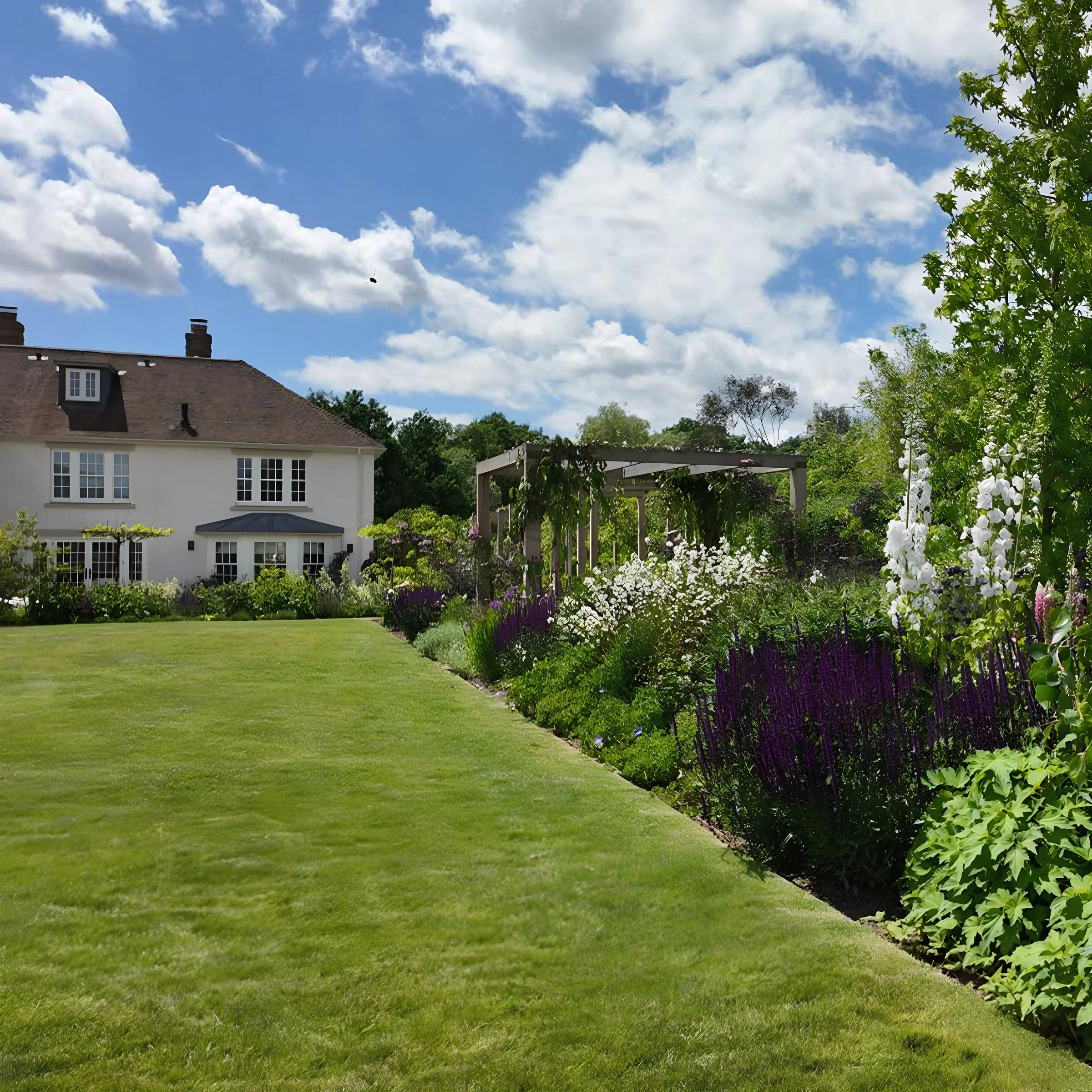
A broad estate lawn edged with deep planted borders

The houses

The Houses and Their Gardens in Camberley

The shape of the housing stock here follows the way the town arrived. Camberley grew out of the Royal Military College at Sandhurst and the Staff College to the east, as two settlements, Yorktown on the western side and Cambridge Town on the eastern side, which eventually ran together. When the railway reached the town the landowners laid out Park Road just to the south of it, followed by Church Hill, Crawley Hill and Crawley Ridge. The large Victorian and Edwardian villas in well treed gardens that followed are still the best residential stock in the town, and the best garden stock with it.

Around that core sit several quite different kinds of plot. There is the postwar estate at the Old Dean, built straight onto the common for people made homeless by bombing in the Surrey parts of Greater London. There are interwar semis through Watchetts, later suburban estates at Heatherside and Parkside, and large detached houses on the wooded sand ridges at Tekels Park, Maywood Drive, Diamond Ridge and Golf Drive. Each one hands you a different plot shape, a different kind of boundary and a different amount of mature planting worth keeping.

Access splits just as sharply, and the awkward part is that the worst access sits in the best gardens. The council's appraisal of the Upper Gordon Road to Church Hill conservation area accepts that parked cars will always be a problem in Victorian areas with little or no provision for garages, made worse by how close it is to the town centre and by controlled parking. In practice that means kerbside working with a permit, no rear vehicle access on a good many plots, and material barrowed through a side passage or through the house. On the wooded ridge roads the problem is the opposite kind: narrow, tree lined and often unkerbed, with sloping drives, so root damage and verge rutting are the risks worth planning out before anything is delivered.

  1. Victorian and Edwardian
    Detached and Semi Detached Villas and Large Houses, Some Now Flats or Care HomesUpper Gordon Road, Middle Gordon Road, Upper Park Road, Branksome Park Road, Branksome Close, Church Hill, Crawley Hill, Portesbery Road, Southwell Park Road and Gordon Road

    The best garden stock in the town, and a protected streetscene with it. The council's appraisal describes the Upper Park Road area as large Victorian houses in substantial well treed gardens forming a pleasant group in an arcadian setting, and says the open spaces of the gardens are as important as the buildings in establishing the character of the area. Mature trees are the defining feature, there are several Tree Preservation Orders through the area and all other trees are protected by virtue of being within the conservation area. Many of the big plots have since been reduced, by backland development behind Upper Park Road and frontage development along Branksome Park Road, so you often inherit an odd shaped remainder garden with a shared drive through it and few original garden walls left.

  2. Interwar
    Bay Fronted Semis and Detached Houses, With Some Chalet BungalowsCrawley Hill, Watchetts Road, Watchetts Drive, Krooner Road, Sinhurst Road, Verran Road, Park Road, Park Avenue, Gordon Avenue and Portesbery Hill Drive

    Long rectangular rear plots on fairly gentle ground, usually reached by a side passage or a gate at the end of the drive, so there is normally a route for a barrow and rarely one for a machine. Boundaries are hedge and fence rather than wall, and most gardens have one or two trees that went in small and now dominate everything around them. The soil is thin sandy topsoil over sand, often with a hard pan under the old lawn where generations of mowing and a shallow rooting sward have sealed the surface, and several of these gardens sit in the lower ground at the south end of town where Watchetts Drive is recorded as a high risk surface water wetspot.

  3. Post war estate housing
    Semi Detached and Terraced Estate Houses, With MaisonettesThe Old Dean estate north of the A30 London Road: Carshalton Road, Esher Road, Kingston Road, Mitcham Road, Surbiton Road, Sutton Road, Wallington Road, Wimbledon Road, Highland Road, Queen Elizabeth Road, Berkshire Road, Hampshire Road and Old Dean Road

    Built straight onto the Old Dean Common, so these are heath gardens with a thin skin of topsoil over sand. The plots are regular and generously long for the size of house, and mostly level or gently sloping, which makes them easier ground to work than the Victorian quarter, though rear access needs checking plot by plot rather than assuming. Gardens on the edges back onto Barossa, Swinley Forest and Diamond Ridge Woods, so they pick up pine and birch shade, heavy needle litter, root competition at the boundary and a steady supply of self sown birch. With fence and chain link boundaries and very little mature structure to keep, these are good candidates for a complete rebuild.

  4. Post war to recent, on older large grounds
    Large Detached and Executive Houses on Substantial Wooded PlotsTekels Park, Tekels Avenue and Tekels Way, Maywood Drive, Diamond Ridge, Diamond Hill, Golf Drive, Kings Ride, France Hill Drive, Crawley Ridge, Frimley Hall Drive, Elsenwood Drive and The Avenue

    These are the larger plots in the town, often substantial and well wooded, and plot size varies enough that it is worth measuring rather than estimating. Many sit on sloping ground on the sand ridges with mature Scots pine, oak and inherited rhododendron, so the real work is dry shade, root protection, level changes and retaining. The slopes are the awkward part, because the sand is loose and these formations are prone to erosion and gullying, with springs developing at their base after heavy rain, so terraces, steps and retaining walls need drainage behind them and bare sand needs covering quickly. Tekels Park itself is a wooded estate of narrow tree lined roads.

The ground

The Ground Under Camberley

Camberley gives its name to a rock formation, the Camberley Sand, and the town sits on sand for a long way down. What that sand does with water is not one answer, because the bedrock changes from one side of the town to the other and the soil cover over it is thin and acid.

RAINThin acid sandy topsoil and turfCamberley Sand to the eastSwinley Clay MemberBagshot Formation sandwater stops here

Layer 1

The Topsoil, Thin and Very Acid

Soil cover over these sands is thin and acid, and the national soil map splits the town into three. There is freely draining very acid sandy and loamy soil of very low fertility on the eastern side, which naturally carries heath and forestry, naturally wet very acid sandy and loamy soil through the centre, and loamy and clayey soil with naturally high groundwater on the western side towards the Blackwater, where the lower ground is alluvium of soft grey and brown sand, silt and clay with peat beds recorded locally. Lowland heath soils here are generally below pH 5, so we test the plot rather than work to an assumed figure. Fertility is very low and feeding leaches straight through, which is why hungry planting needs a programme rather than one application in spring.

Layer 2

The Camberley Sand and the Windlesham Formation

The British Geological Survey describes the Camberley Sand as uniform, pale yellow brown, sparsely to moderately glauconitic, bioturbated fine grained sand with sporadic thin beds of grey clay and pebbles in the lower beds. Surrey Heath's own strategic flood risk work puts it under the eastern part of the town, along with Frimley, Deepcut and Mytchett, and puts the Windlesham Formation, a dark green to blue green bioturbated glauconitic sand with clay laminae, under the western part including the Yorktown industrial area. The Camberley Sand also carries red brown staining and iron pan, mainly concentrated near the surface but running down irregularly, and BGS lists it as unstable in excavations with a high water table locally caused by that iron pan. Both the Windlesham and the Bagshot formations are recorded as having a local perched water table. This is the layer that makes a soakaway fail for no visible reason.

Layer 3

The Swinley Clay Cap, and Clay Inside the Sand

The Swinley Clay Member is a pale grey to lilac laminated clay that caps the Bagshot sand below it, and thin clay beds also sit inside the sands themselves. For a garden that means the profile can change across a single plot, so one trial pit tells you about one corner and nothing about the rest. It is also why water perches where nobody expected it, and why a terrace on one side of a lawn can need a different drainage detail from the one on the other side. We dig more than one hole before committing to a design that depends on water going down.

Layer 4

The Bagshot Sand, the Slopes and the Springs

Beneath both of the upper formations sits the Bagshot Formation, fine to medium grained orange to yellow brown and grey laminated and cross bedded sand, which crops out at surface further south east around Chobham and Mimbridge rather than under the town itself. BGS describes loose sands prone to erosion and gullying as characteristic of the Camberley Sand and Bagshot formations, and records springs developing at the base of these formations, especially after periods of heavy rain, which may cause erosion and burst out of the sands. It notes that the break of slope around Cove, Farnborough and Frimley is caused by springs above clayey beds or beds of ironstone above the base of the formation. That is the practical problem on the rising ground at Church Hill, Crawley Hill, Portesbery Hill Drive and Diamond Ridge, and the reason retaining and terracing here are drainage work first and masonry second.

Carl and his team built us a fantastic patio and new path to our greenhouse this summer. They were the only landscaping company we could find who supported our attempts to use minimal concrete in the build.

Cammie Czuchnicki · Google review

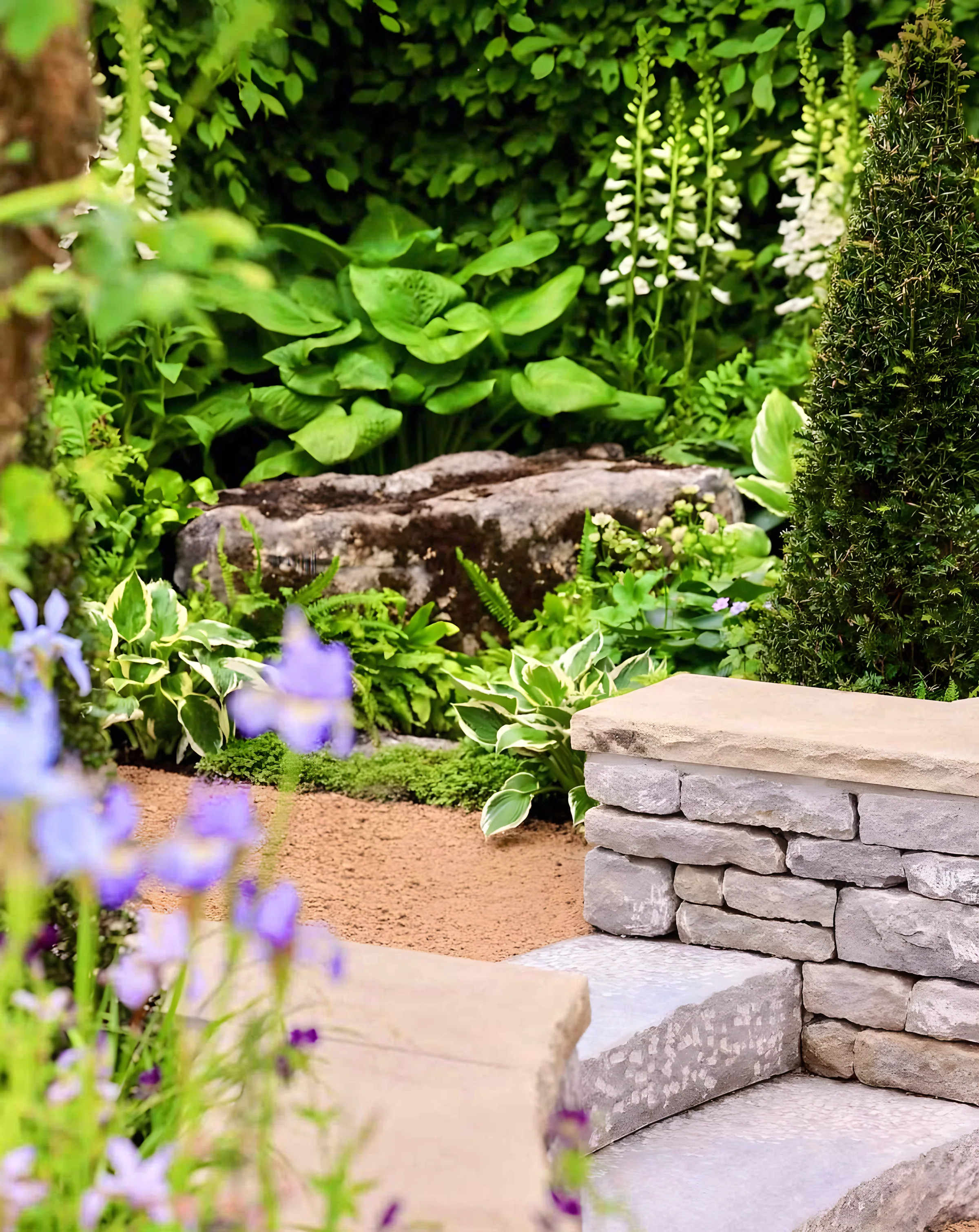
Planting set against a dry stone wall

Landscape construction

Terraces and Levels on Loose Sand

The plots on the sand ridges and the rising ground at Church Hill, Crawley Hill, Portesbery Hill Drive and Diamond Ridge are the ones where levels do the work, and the slope there is made of loose sand. The British Geological Survey describes the Camberley Sand and the Bagshot sands as loose sands prone to erosion and gullying, and records springs developing at the base of these formations, especially after heavy rain, which may cause erosion and burst out of the sands. That is exactly the behaviour you are designing against on the rising ground at Church Hill, Crawley Hill, Portesbery Hill Drive and Diamond Ridge.

So a terrace here is a drainage job before it is a paving job. Retaining walls get proper drainage behind them rather than a backfill and a hope, cut faces get held rather than left open over a weekend, and bare sand gets covered early instead of at the end. Haul routes get boarded too, because dry sand gives poor bearing for tracked and wheeled plant and a rutted lawn is a second job nobody asked for.

  • Drainage designed behind retaining walls and into the level changes, not added afterwards
  • Cut faces and bare sand stabilised and covered quickly
  • Boarded haul routes, because loose dry sand carries plant badly
  • Root protection planned on the wooded ridge roads before the first delivery
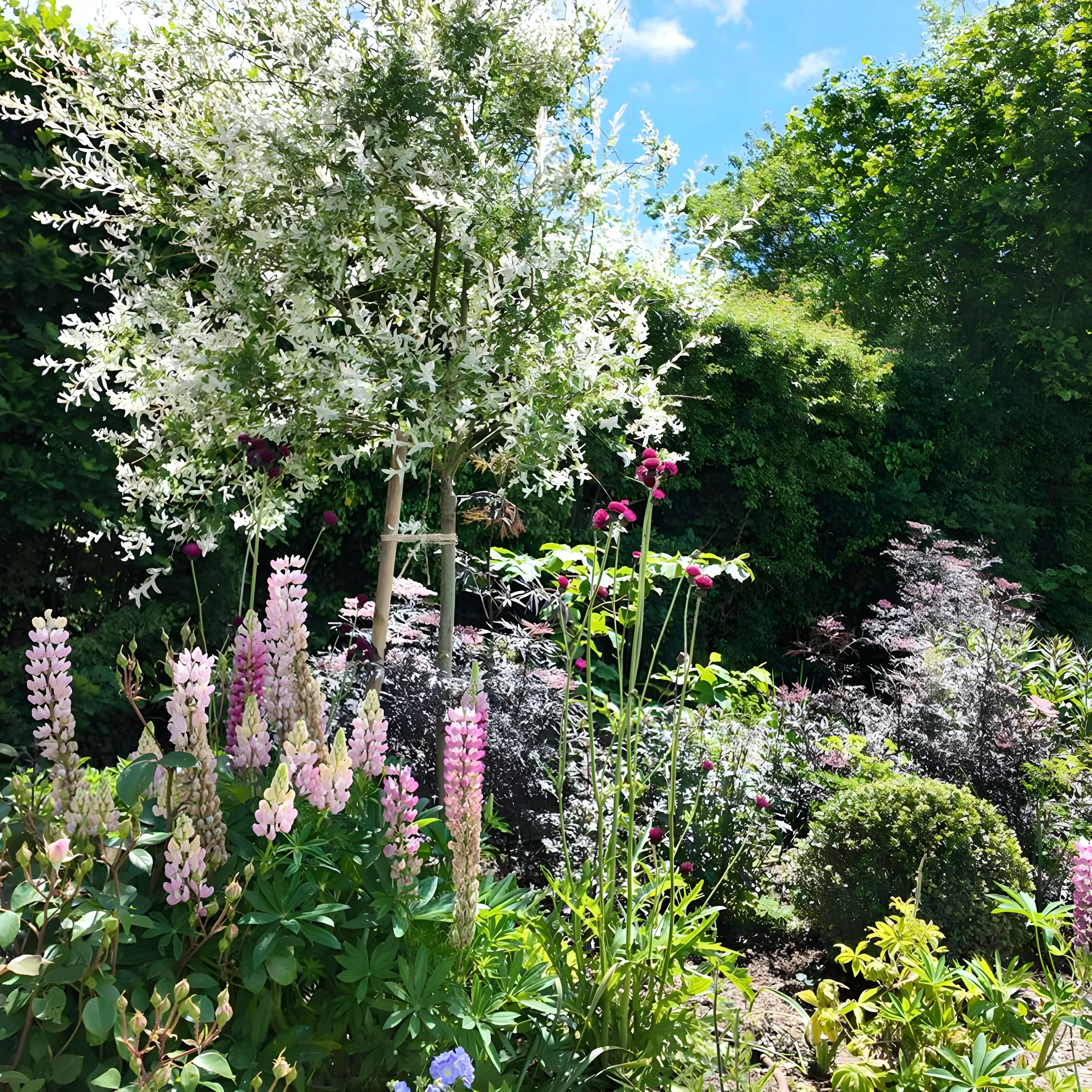
Lupins and mixed perennials in a deep border

Garden planting

Planting Into Very Acid, Very Hungry Ground

This is ericaceous country and the sensible thing is to plant into it rather than fight it. Rhododendron, azalea, camellia, pieris, Japanese maple and blueberry all thrive here, which is precisely why the Victorian villa gardens off Upper Park Road and the wooded ridge roads are full of them, and Scots pine, silver birch, heather and gorse are the native vocabulary to borrow from. For the hot dry parts of a garden the Mediterranean palette does well: cistus, lavender, rosemary, thyme and the silver leaved shrubs.

Anything that wants lime or a moist loam will sulk here, so we would rather talk you out of it than plant it twice. These are very low fertility sands and feeding leaches straight through them, so fruit and anything hungry needs a feeding programme through the season, and bedding and vegetables need real organic matter and a worked out irrigation plan. The other job is holding the line against the heath: self sown silver birch and Scots pine blow in constantly from Barossa, Diamond Ridge Woods and Swinley Forest and will colonise gravel and new beds inside a season.

  • Soil tested on your plot rather than assumed from the map
  • An acid loving core, with a dry sun palette where the ground bakes
  • A feeding programme, because nutrients wash straight through these sands
  • Zoned irrigation built in during construction where the planting needs it
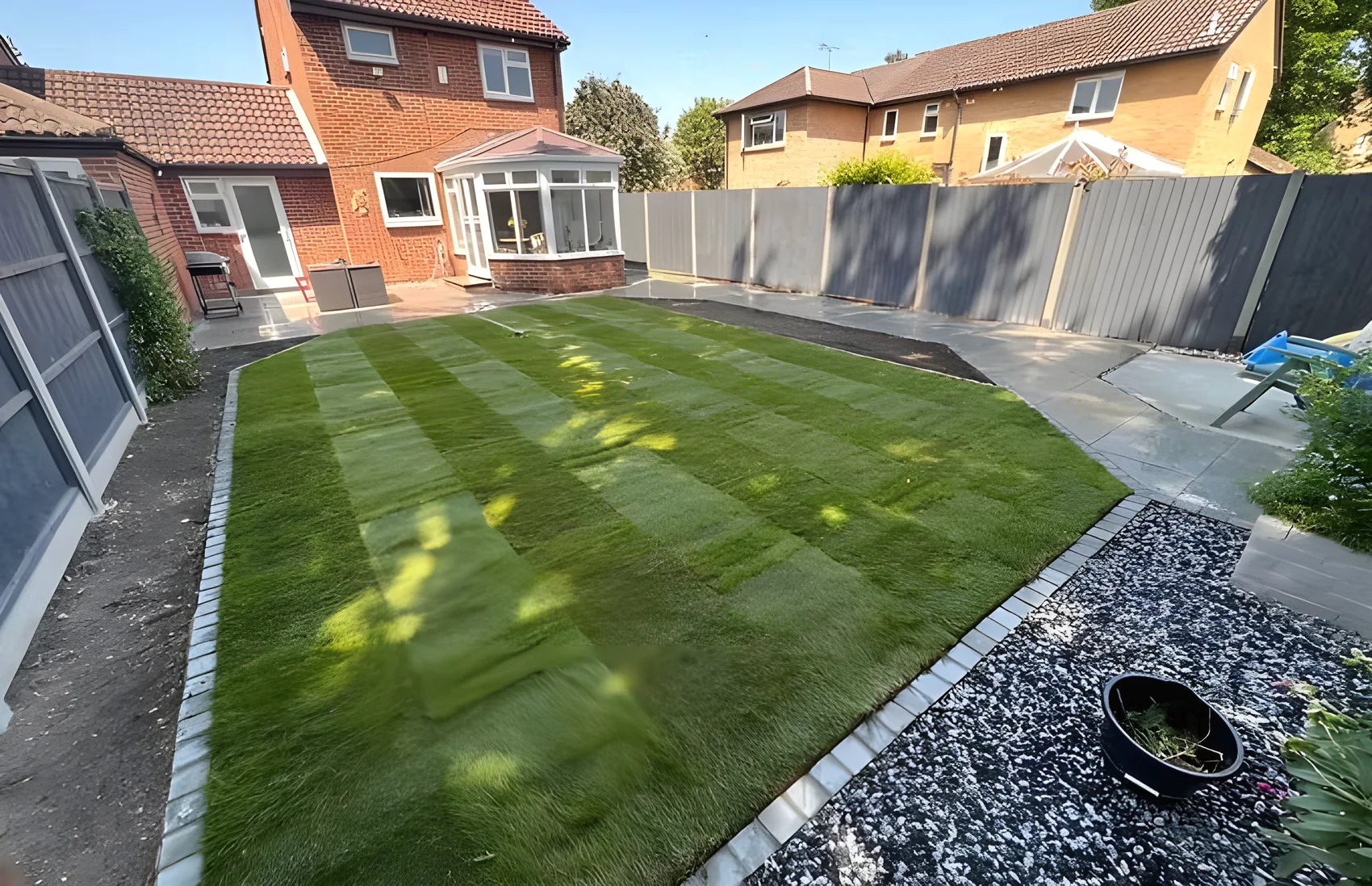
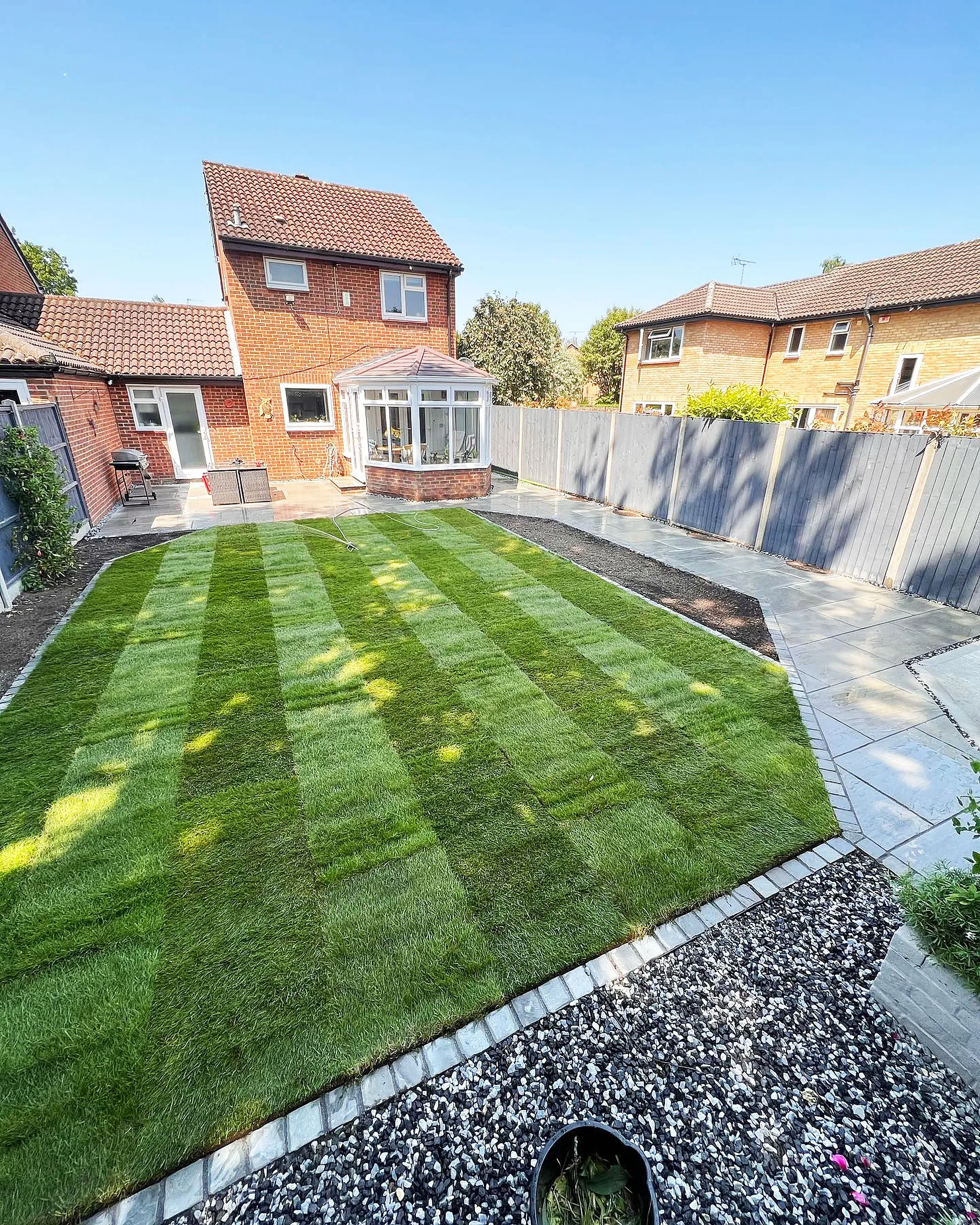
A striped lawn running up to the back of a house

Lawns, soil and aftercare

Sealed Ground, Tired Lawns and What Actually Fixes Them

A great many Camberley lawns sit on a thin skin of sandy topsoil with a hard pan underneath, sealed by years of mowing over a shallow rooting sward. On the later suburban estates at Heatherside and Parkside the topsoil is typically shallow and compacted from the original build, and any garden that has had an extension built across it carries the same problem in a stripe. Compacted sand sheds water instead of taking it, so the ground sits wet in winter and the grass scorches by July.

Deep soil aeration is the answer where digging is not. Compressed air decompaction opens the ground without excavation and the fissures are held open with enriched biochar, so air and water get back to the roots. Camberley gives that work plenty to do: the borough's surface water records put a Current and High risk wetspot at Watchetts Drive, with further wetspots at Upper Chobham Road, Mytchett Road and London Road, and winter 2013 to 2014 brought surface water flooding at Robins Bow, Middleton Road, the Maultway and a short section of the A30 London Road. After that it is a programme rather than a visit. Our garden maintenance plans start from £160 per month on a twelve month agreement with a minimum four hour visit each month, and for larger houses and grounds we run a dedicated team on a planned calendar instead of a weekly mow.

  • Decompaction with no digging, with the fissures held open using enriched biochar
  • Lawn work planned around which of the town's three mapped soils you are on
  • Maintenance plans from £160 per month on a twelve month agreement
  • Grounds and estate care on a planned seasonal calendar

On the ground

Where We Work in and Around Camberley

Camberley is a short drive from our base in Hartley Wintney, so a good deal of what we build is close to home. Around the town centre, which is the Town ward, the work runs out through Yorktown on the western side, Watchetts to the south, St Michael's and St Paul's, up Crawley Hill and Crawley Ridge, along Diamond Ridge and into Tekels Park, and north across the London Road into the Old Dean. Cambridge Town, the original name for the whole settlement, grew around the Staff College on the eastern side before the General Post Office renamed the place Camberley to stop letters going to Cambridge.

Beyond the town we work through Frimley, Frimley Green, Mytchett and Deepcut, Bagshot, Windlesham, Lightwater, West End, Valley End, Chobham and Mimbridge, and Bisley, with Pirbright over in the Guildford borough. Over the county boundaries that puts us in Blackwater, Hawley and Frogmore in Hampshire, and Sandhurst, College Town, Owlsmoor and Little Sandhurst in Berkshire, very often on the same sands.

It is worth knowing how badly the town is cut up, because the severances decide delivery timing more than anything else does. The Ascot to Aldershot railway runs through the south side of the town centre, the A30 London Road separates the Old Dean from the town, the M3 runs on a south west to north east diagonal along the south eastern side, and the A331 Blackwater Valley road runs along the western edge. Heatherside, Old Bisley Road, Tomlinscote Way and the golf club all sit east of the M3, which makes them a run of their own rather than a detour. North of the town Barossa is Ministry of Defence land, so there are no public through routes that way at all.

Planted borders running down to a swimming pool in a large garden

Neighbourhoods and villages

  • Town Centre
  • Yorktown
  • Old Dean
  • Heatherside
  • Parkside
  • Watchetts
  • St Michael's
  • St Paul's
  • Crawley Hill
  • Crawley Ridge
  • Diamond Ridge
  • Tekels Park
  • Frimley
  • Frimley Green
  • Mytchett
  • Deepcut
  • Lightwater
  • Bagshot
  • Windlesham
  • Valley End
  • Chobham
  • Mimbridge
  • West End
  • Bisley
  • Pirbright
  • Blackwater
  • Hawley
  • Frogmore
  • Sandhurst
  • College Town
  • Owlsmoor
  • Little Sandhurst

Postcodes we cover

GU15, GU16, GU17

Planning and trees

Trees are the single thing most likely to shape a garden project in Camberley, and planning here is handled by Surrey Heath Borough Council. The council's guidance is that work to a tree covered by a Tree Preservation Order needs formal consent first, and that it has 56 days from formal validation in which to determine the application. For a tree inside a conservation area its guidance is that six weeks notice is required once the stem is over the diameter the council sets out, after which it can grant consent, let the notice period expire so the work can go ahead, or make the tree the subject of an order.

The council states that carrying out work to a protected tree, or wilfully damaging or destroying one, without permission is an offence, and that it can result in a fine of up to 20,000 pounds, or an unlimited fine in a Crown court. That matters most in the Upper Gordon Road to Church Hill conservation area, where the council's own appraisal records several Tree Preservation Orders throughout the area and states that all other trees are protected by virtue of being within the conservation area. The same appraisal treats the gardens as part of the designation rather than just the houses.

It says the open spaces of the gardens are as important as the buildings, puts the historic built form and plot boundaries first among the things to be preserved, says wood fencing panels can be obtrusive and should be avoided in favour of hedges with more discreet fencing behind, and asks that front gardens be retained as gardens as distinct from parking areas. It also takes in some modern properties purely by virtue of their position within the former curtilages and drives of the Victorian houses, so works to trees at those properties are controlled too. The former Staff College conservation area on London Road and the Basingstoke Canal through the Frimley, Frimley Green and Mytchett side are the other designations close by.

Two more things are worth raising early. The whole of Surrey Heath borough lies close to the Thames Basin Heaths Special Protection Area, with Broadmoor to Bagshot Woods and Heath the component nearest Camberley, and the agreed avoidance measures include a buffer around the designation within which net new residential development is generally not accepted, plus Suitable Alternative Natural Greenspace and access management and monitoring contributions, so it is worth checking with the council early. That generally bears on anything creating a new dwelling, such as an annexe, rather than on ordinary garden works, but it is worth checking on the Old Dean and Maultway side of town where the heaths are closest.

The council also publishes guidance on oak processionary moth, stating that the moths damage oak trees by consuming their foliage and can pose a public health risk to both people and animals, advising owners to call in a pest control expert to remove infestations in their own trees at their own expense, and advising full protective clothing for anyone working on or close to oak trees in affected areas. None of the above is a bare permission threshold. It is council guidance and national designation, and every site needs checking against the council's own records before anything starts, which is part of what we do at survey stage.

One further note for anything meant to last: Surrey Heath is itself due to be abolished, when the area becomes part of a new West Surrey unitary authority, so planning references and contact details will need revisiting.

Recent work

Gardens We Have Built on This Ground

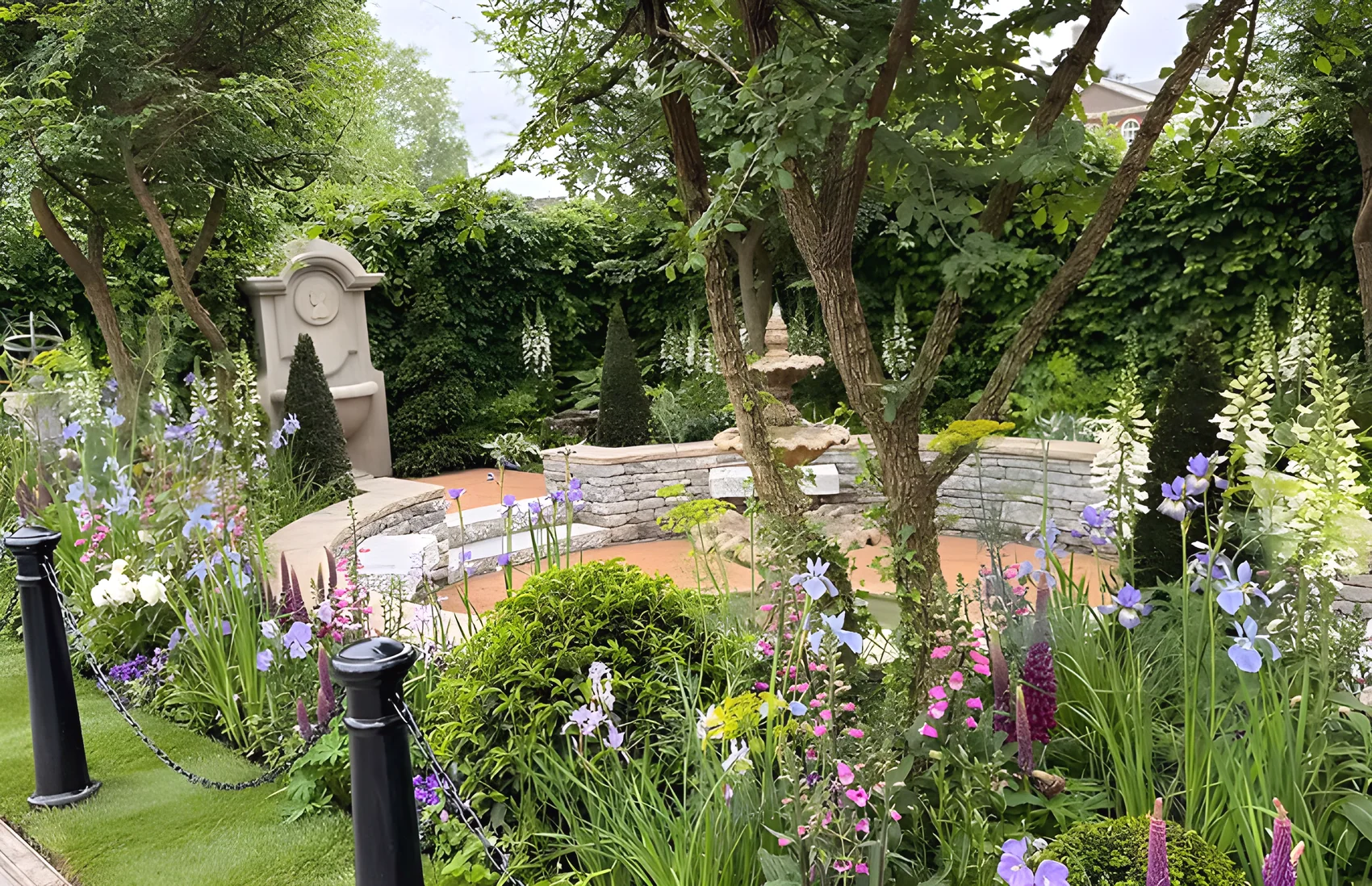
  • Planting and path lighting in the moongate show garden at RHS Chelsea 2022
  • Mature trees and layered planting in the RHS Chelsea 2022 show garden
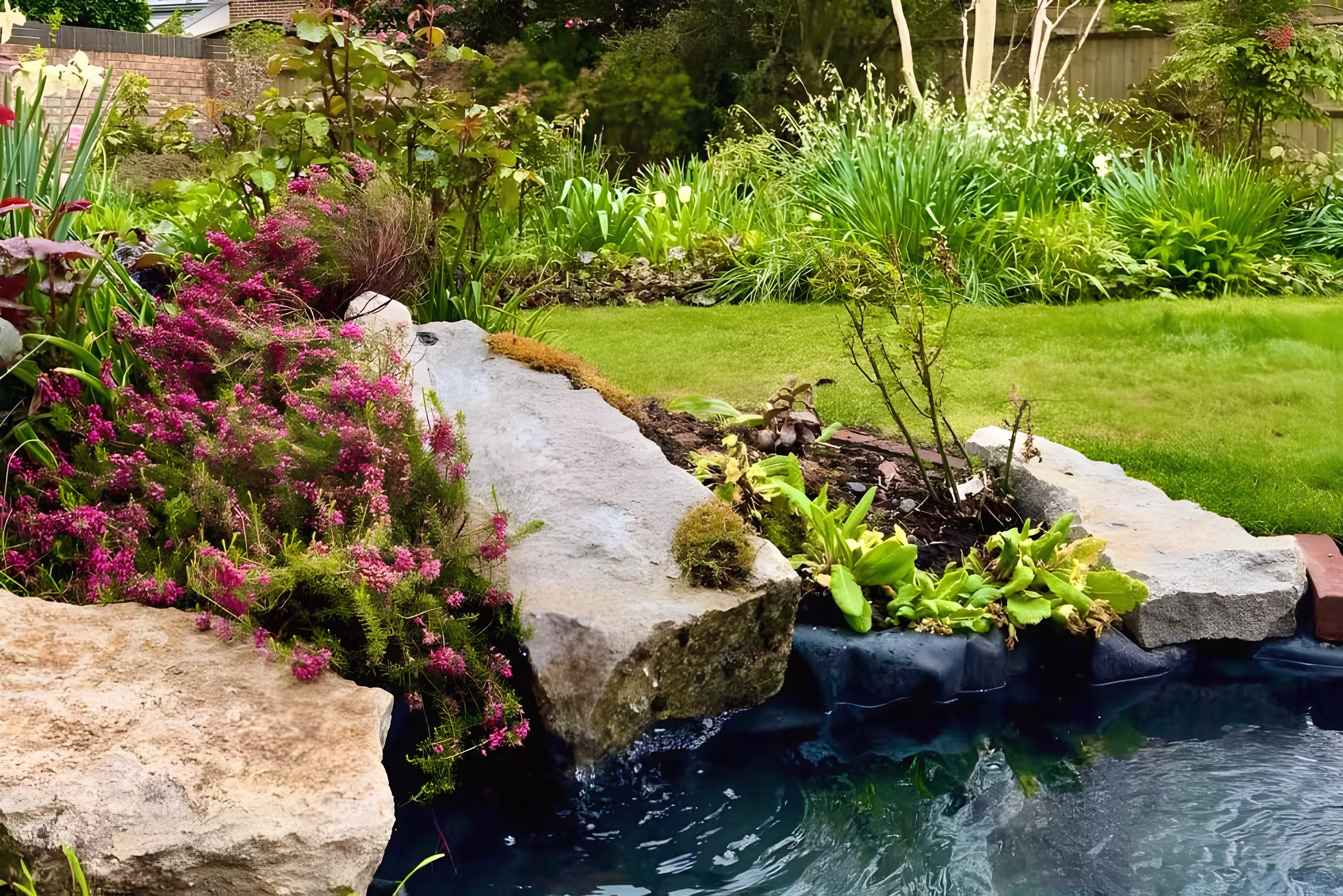
  • A garden pond edged with boulders and marginal planting

Good to know

Camberley Questions We Get Asked

Will a Garden in Camberley Drain Well Because It Is on Sand?

Not necessarily, and the word sand is the trap. The national soil map splits the town into three: freely draining very acid sandy and loamy soil of very low fertility on the eastern side, naturally wet very acid sandy and loamy soil through the centre, and loamy and clayey soil with naturally high groundwater on the western side towards the Blackwater. So one garden scorches in July while another a few streets away sits wet all winter. We establish which of the three you have before designing anything that relies on water going down.

Why Do Soakaways Fail Here When the Ground Looks Sandy?

Because the sand is not clean all the way down. BGS records red brown staining and iron pan in the Camberley Sand, mainly concentrated near the surface but extending down irregularly, and lists the formation as unstable in excavations with a high water table locally caused by iron pan development. Both the Windlesham and Bagshot formations are recorded as having a local perched water table, and the Swinley Clay cap and the thin clay beds inside the sands do the rest. That is why one trial pit tells you about one corner of a plot and nothing at all about the rest.

Do I Need Permission Before Anyone Touches a Tree in My Garden?

Quite possibly, and it is far better to check first than afterwards. The council's guidance is that work to a tree with a Tree Preservation Order needs formal consent, and that a tree in a conservation area needs six weeks notice once the stem is over the diameter the council sets out. In the Upper Gordon Road to Church Hill area the council's own appraisal records several orders and states that all other trees are protected by virtue of being within the conservation area, so the trees are usually the fixed point a design has to work around. We check the council's records as part of the survey.

Can You Get Machinery Into My Garden?

It depends entirely on which part of town you are in, and the honest answer is that the best gardens often have the worst access. Around Upper Gordon Road the council accepts that parked cars will always be a problem where there is little or no provision for garages, and many plots have no rear vehicle access at all, so material comes through a side passage or through the house. The wooded ridge roads at Tekels Park, Maywood Drive, Diamond Ridge, Golf Drive and Kings Ride are narrow, tree lined and often unkerbed with sloping drives. The Old Dean is easier ground, though the roads are narrow cul de sacs and rear access still needs checking plot by plot.

What Actually Grows Well in Camberley?

Acid lovers, and plenty of them. Rhododendron, azalea, camellia, pieris, Japanese maple and blueberry are all happy here, with Scots pine, silver birch, heather and gorse as the native vocabulary, and cistus, lavender, rosemary, thyme and the silver leaved shrubs for the hot dry corners. Anything wanting lime or a moist loam will sulk. Because these are very low fertility sands and feeding leaches through them, hungry planting, fruit and vegetables need a feeding programme and a real irrigation plan rather than a single feed in spring.

We Have Inherited Rhododendron, and We Are Worried About Knotweed. What Now?

Treat both as planned work rather than a tidy up. Rhododendron ponticum is listed in Schedule 9 Part II of the Wildlife and Countryside Act, so it is an offence to plant it or otherwise cause it to grow in the wild, and with the Thames Basin Heaths right beside the town, clearance from an old garden has to be planned and the arisings handled properly rather than cut and dumped. Japanese knotweed sits on the same schedule and wants identifying before design rather than during excavation, which is a live issue on redevelopment plots, along the railway corridor and down the Blackwater side of town. We handle identification and removal with our specialist invasive weed partners at AIR8, with a documented plan and properly consigned waste.

Close by

We Also Work In

Start your garden

Talk to Us About Your Camberley Garden

We are based close by in Hartley Wintney and work right across Camberley, Windlesham, Ascot and Fleet. Call 01276 582095 or 07717 058646, or email info@cjlandscapesltd.co.uk, and we will come and look at the ground before we talk about the garden.

  1. 01
    We Call You BackWithin one working day, to talk the garden through.
  2. 02
    The First VisitA walk round the garden to take in the levels, the access and where the water sits.
  3. 03
    A Written ScopeA specification and a programme, with samples to see in your own light.
Prefer to talk?01276 582095info@cjlandscapesltd.co.uk
1 Webbs Mews, High Street
Hartley Wintney, Hook RG27 8NZ
What Would You Like Help With?

Choose as many as you like.

Tell Us About the Project

Roughly is fine. It helps us bring the right people to the first visit.

Your Details
Photographs Optional, up to five

Thank You

Your enquiry has come through and we will call you back within one working day.

Step 1 of 3

We only use your details to reply to this enquiry.