C J LANDSCAPES 01276 582095Get in touch

Ascot · Berkshire

Landscaping in Ascot, on Hungry Bagshot Sand.

A wooded, deeply private place laid out around a racecourse, where almost every garden sits on acid sand and the trees on the big wooded plots are protected far more often than owners expect.

Ascot, Berkshire

Houses in Woodland, on Sand That Will Not Hold Water

Ascot is a wealthy, wooded, deeply private place that organises itself around a racecourse. The Royal Borough describes the settlement's character as sylvan, and residents at the council's own workshop said the same thing back to it: sylvan, surrounded by Green Belt. Live on the right road here and you can go a long while without seeing a neighbour, because the houses sit in what amounts to woodland, behind long gravel drives and tall hedges.

That is the pleasant version. The working version is that nearly every garden in Ascot sits on acid, hungry, fast draining sand, under a canopy of mature oak and Scots pine, and with a real chance that at least one tree inside the boundary cannot be touched. Those three facts decide more about a garden project here than any drawing does.

We are a landscape design, construction and maintenance company based in Hartley Wintney, and Ascot is one of the towns we work in regularly. The same team surveys the ground, builds the garden and then looks after it, which matters here because the survey has to find the protected oaks and Scots pines before a line is drawn, and because the long gravel drives and gated frontages on the villa roads decide how the materials reach the garden at all. It matters afterwards too, because on freely draining very acid sand the feed and the organic matter wash straight through, so the mulching and feeding programme after handover decides the result. At the RHS Chelsea Flower Show 2024 we took a Silver Medal for the Bridgerton show garden, designed by Holly Johnston and sponsored by Netflix, so the standard we build to is not really the question here. The ground is.

See the work
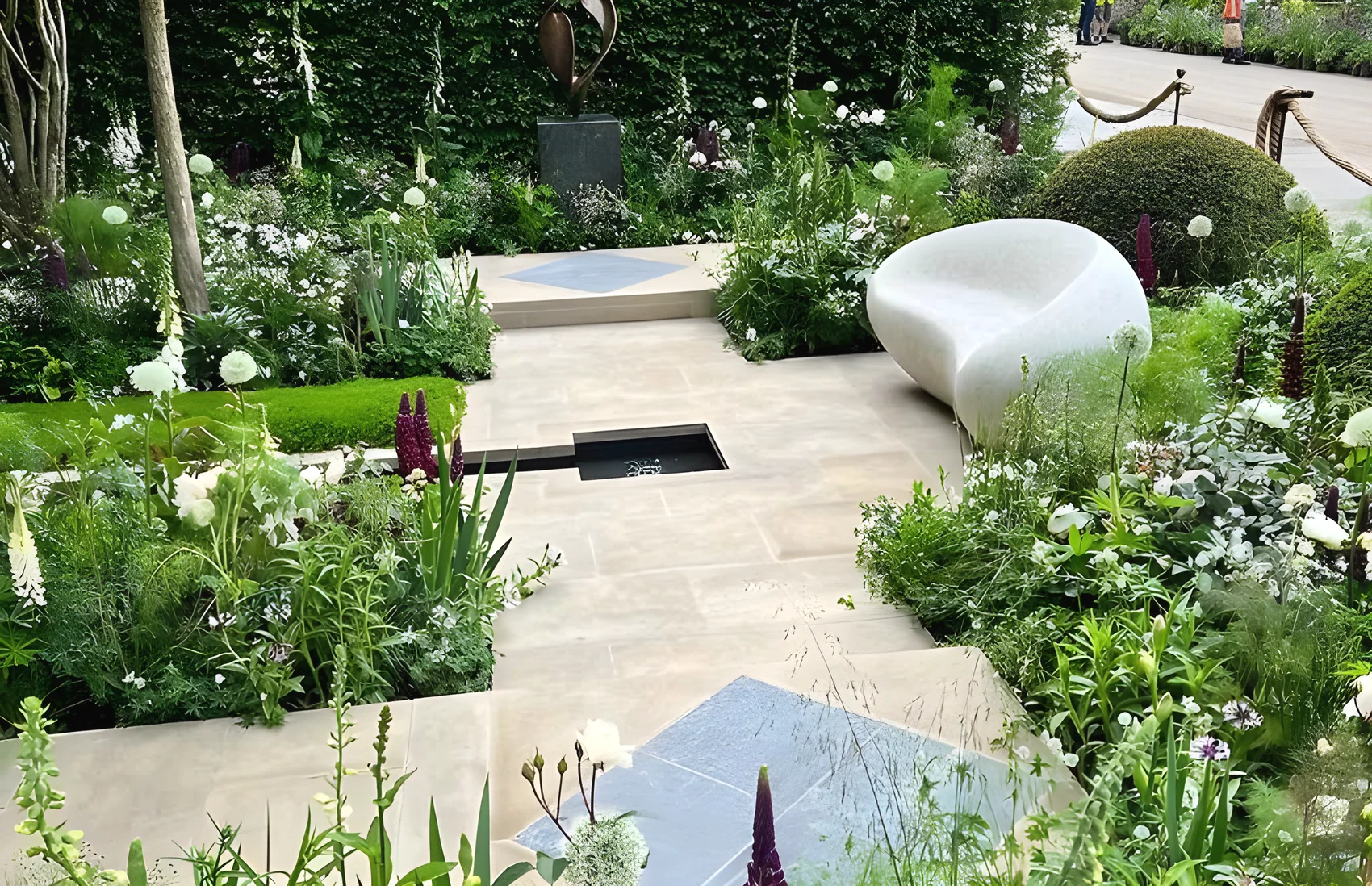
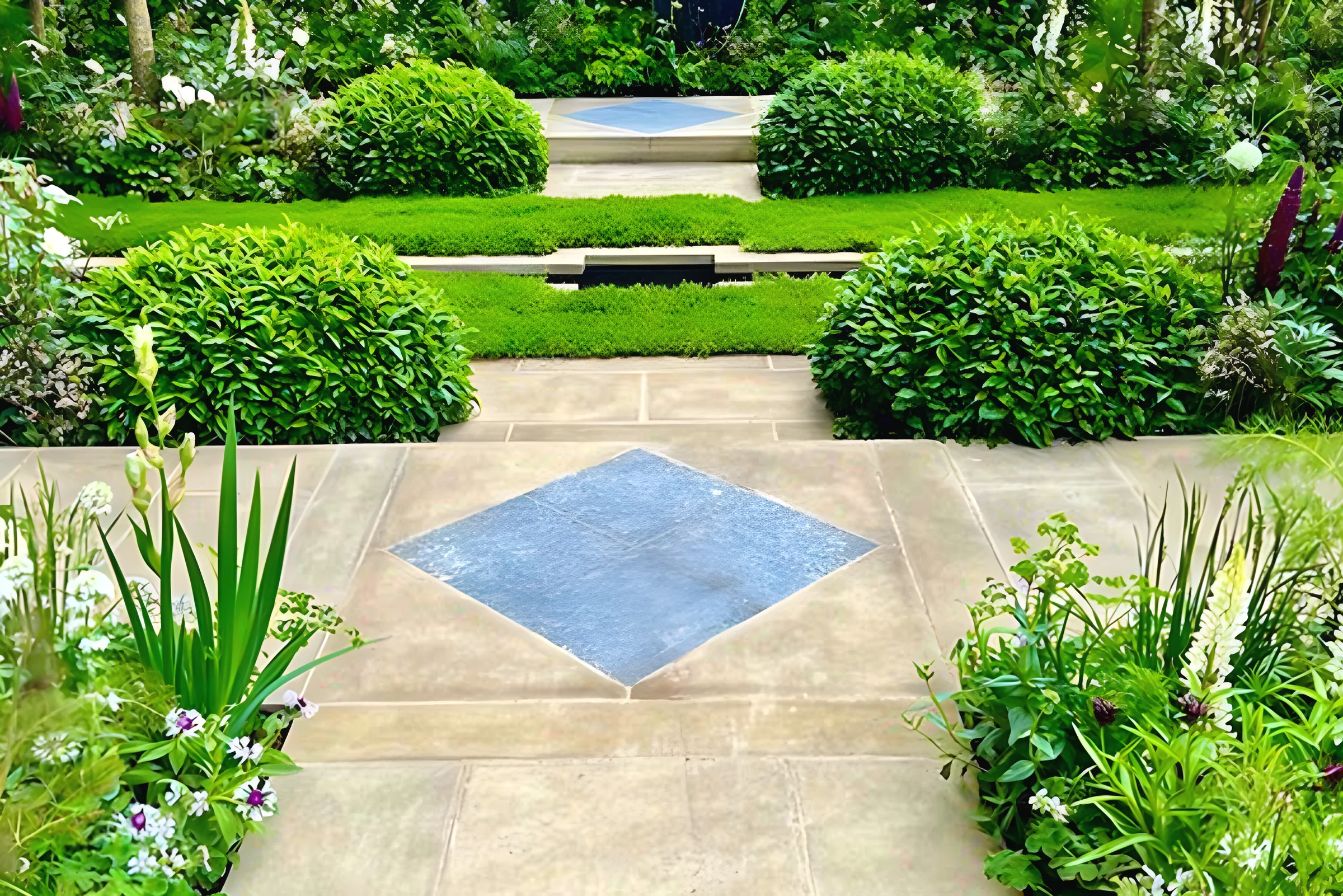
Clipped hedging and inset stone paving in a formal show garden

The houses

The Houses Here and the Plots They Sit In

Ascot is not one town but a cluster, and the gardens change as you move between the parts of it. Ascot itself runs along the High Street, North Ascot sits on the far side of the racecourse towards Winkfield, South Ascot lies below the railway, and Sunninghill and Cheapside run east. Plot size, access and even the soil change as you cross from one to the next.

The most valuable landscaping ground in the town is what the Royal Borough calls Villas in a Woodland Setting: large houses in large irregular plots, on an informal network of wide winding roads and cul de sacs, set well back behind long gravel drives and gated frontages. Built density is extremely low and the gaps between houses are wide. The plots were created organically over a long period, so the gardens are densely wooded with mature oak, Scots pine, beech, birch and sweet chestnut, with woodland belts running between neighbours. Work here is less garden design than the careful management of a piece of woodland that happens to have a house in it.

Away from those roads the picture changes three times over. There is a Victorian village of narrow plots behind the High Street and through South Ascot, executive estates from the 1980s onwards across North Ascot and Sunninghill built over former Crown Estate kennel and nursery land, and post war streets around Bouldish Farm Road and Liddell Way with short fronts and distinctly larger rears. Each of those starts a project from a different place. One has no rear access at all, one has compacted construction ground under thin turf, and one has a woodland backdrop it can borrow.

  1. Victorian and Edwardian through to late 20th century neo classical
    Large Detached Villa in a Woodland SettingKennel Avenue, Burleigh Road and Onslow Drive in North Ascot, Kier Park, Queens Hill and Wells Lane in Ascot, Brockenhurst Road in South Ascot and Hancock's Mount in Sunninghill

    Large irregular plots, densely wooded with mature oak, Scots pine, beech, birch and sweet chestnut, with woodland belts between neighbours and dense hawthorn, beech and laurel boundary hedges. The ground is flat to gently undulating, so the constraint is never levels, it is the canopy: dry shade, heavy root competition and a strong likelihood of a protected tree standing inside the garden. Owners here want terraces and lawns that work under trees, planting that copes with dry shade, and hedging thick enough to hold the privacy these roads are bought for.

  2. Early 20th century Arts and Crafts and Edwardian, with later infill
    Detached and Semi Detached House in a Leafy Residential SuburbThe Avenue in North Ascot, Winkfield Road in Ascot, and Woodend Drive, Norton Park, Woodlands Ride and Llanvair Drive in Sunninghill

    Spacious, well treed, irregular plots set well back behind tall beech or laurel hedges, with gravel drives and gates on wide streets that often end in a cul de sac. Mature oaks and Scots pines reflect the sand underneath, while cedar, conifers, large leaved lime and maple planted as ornamentals carry the leafy feel, and those trees are often protected. Rear gardens are generous but usually reached by a side path rather than a drive, so the job gets planned around barrow runs and hedge gaps rather than machine access.

  3. Mostly 1980s onwards
    Large Detached Executive HouseGeffers Ride, Ancaster Drive, Beaufort Gardens, The Burlings, Oaklands Drive and Huntsmans Meadow in North Ascot, and Armitage Court, Bagshot Road and Cavendish Meads in Sunninghill

    Big irregular plots with sweeping drives and houses set at angles, and large rear gardens that often back onto a retained woodland belt, shelterbelt or old hedgerow line, so the mature trees sit on the boundary rather than through the middle. Much of this is former Crown Estate ground: the old Royal Kennels west of the racecourse became a nursery and then an executive estate, leaving the Kennel street names behind, and the former Ascot Nursery to the north went the same way at Huntsmans Meadow. The soil is frequently construction disturbed and compacted, which is why lawns here sulk for reasons that have nothing to do with feeding.

  4. Victorian, with Edwardian infill
    Terrace and Bay Fronted Semi in a Victorian VillageThe residential side streets off Ascot High Street, Kennel Ride in North Ascot, and South Ascot around Brockenhurst Road, Oliver Road and Victoria Road

    Narrow regular plots with small front gardens behind low brick walls, clipped hedges and wrought iron railings, and modest rear gardens, many of them shortened by the backland development that has happened along most of these village streets. South Ascot's village was built on what was known as Sunninghill Bog, focused on Brockenhurst Road as the key route to the station, so the free draining sand story does not hold there and winter wet does. Rear access is through the house or a narrow side alley, which decides the materials almost as much as the design does.

The ground

The Ground Under Ascot

Nearly all of Ascot sits on the Bagshot Formation, a fine, pale, quartzose sand that lets water fall straight through it to groundwater. It is acid, it is rated very low fertility, and it decides more about a garden here than anything we could draw.

RAINThin acid topsoil and turfRiver terrace sand and gravelBagshot Formation sandLondon Claywater stops here

Layer 1

The Topsoil

Freely draining very acid sandy and loamy soil, classed very low fertility, with lowland dry heath as its natural habitat. Feed and organic matter leach through rather than banking up, so borders here want a sustained mulching and feeding programme, not one good load of compost at the start.

Layer 2

River Terrace Sand and Gravel

River terrace sand and gravel caps the high points at Kier Park, Kennel Ride, Upper Village Road, Cavendish Meads and Cheapside Road. It is stony, droughty and hard to dig, and new beds struggle to hold enough moisture to establish. On the higher ground at Cavendish Meads, the Heatherwood site and across towards Sunningdale, the Windlesham Formation of sand, silt and clay sits above the Bagshot as well.

Layer 3

The Bagshot Formation Sand

Fine, pale yellow brown to pale grey quartzose sand, once called the Lower Bagshot Sands. Water goes straight down through it, which is why lawns brown off in a dry summer and why new trees and hedges will not establish without irrigation. It also carries lenses and interbeds of pale grey clay, and its Swinley Clay Member is mapped south and west of Ascot, so water perches on a clay shelf in one garden and vanishes a plot away.

Layer 4

The London Clay

The London Clay comes to the surface along the northern fringe, at Kennel Ride and northwards towards Winkfield, so the formation boundary runs through the top of North Ascot rather than under the town. Where it surfaces the ground turns slowly permeable and winter wet, and the whole approach to drainage and planting has to change with it.

From start to finish with CJ Landscapes was smooth. Carl attended site to take our scope and day one to kick off the project and was communicative throughout. The chaps on site were polite and very hard working and did an excellent job.

Emma Boyling · Google review

Inset stone paving and perennial planting at RHS Chelsea 2024

Landscape construction

Building on Sand, Under Trees That Cannot Move

Sand is a kind ground to dig and an unforgiving one to build on. It does not bind, so sub bases have to be compacted in layers and edges properly restrained, or a porcelain terrace that looked immaculate in May has a dropped course along one side by the following winter. On the gravel capped high points at Kier Park, Kennel Ride, Upper Village Road and Cheapside Road the opposite problem arrives and digging turns slow and stony.

The bigger constraint is almost always the trees. On the villa roads the canopy is a large part of why the house is worth what it is, so the layout gets designed around root protection areas rather than through them: no cut platform where a protected oak is rooting, no raised bed piling soil against a trunk, and terraces built off the ground where that is the honest answer. We would rather survey the trees first and design second than draw something lovely and then argue about it with an officer.

  • Terraces and steps set out around root protection areas
  • Sub bases compacted in layers, because sand does not bind
  • Slow, stony digging on the gravel capped high points at Kier Park and Kennel Ride
  • Materials barrowed in where gravel drives and gates rule out machine access
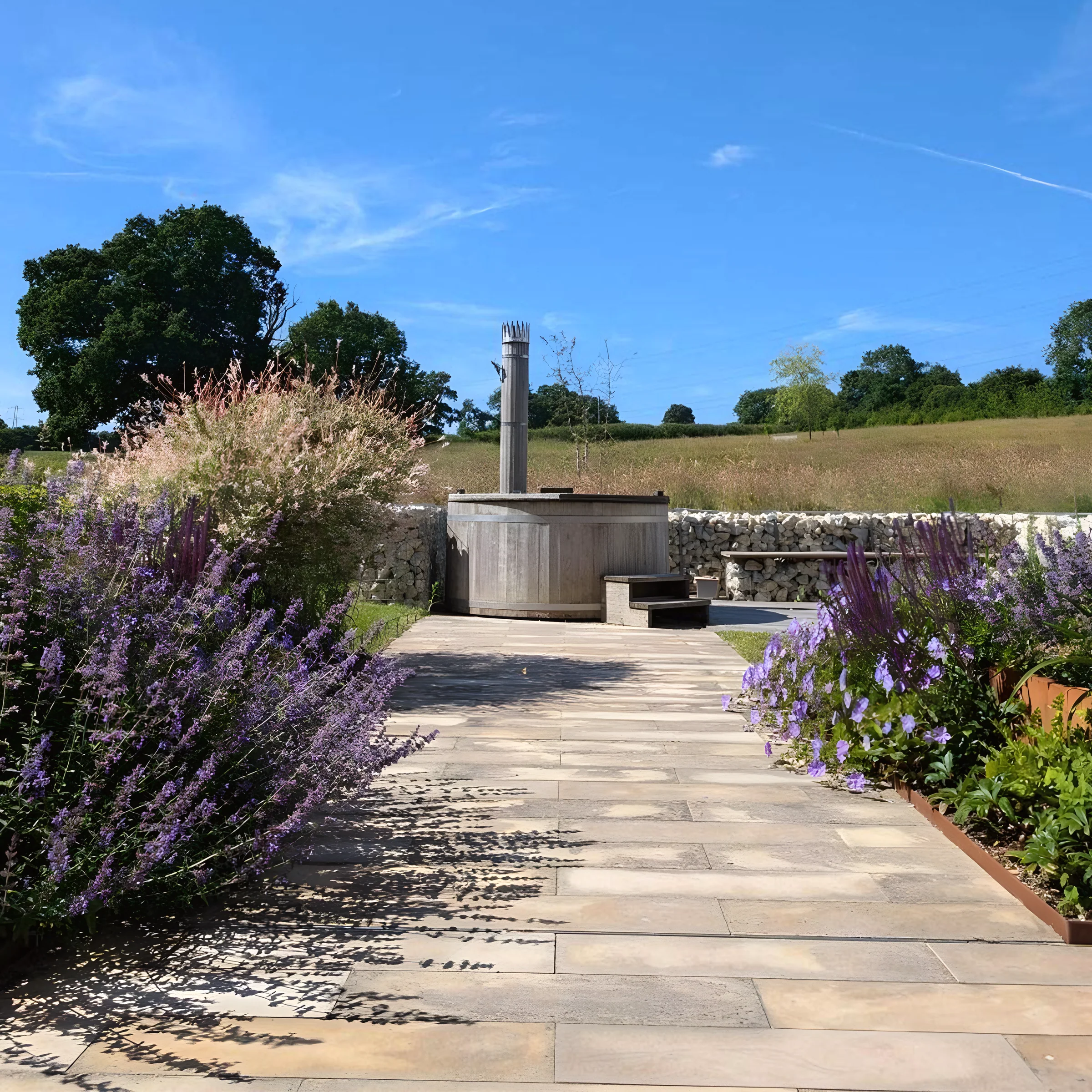
Lavender in flower along a stone path

Planting

The One Soil Where the Acid Loving Plants Are Easy

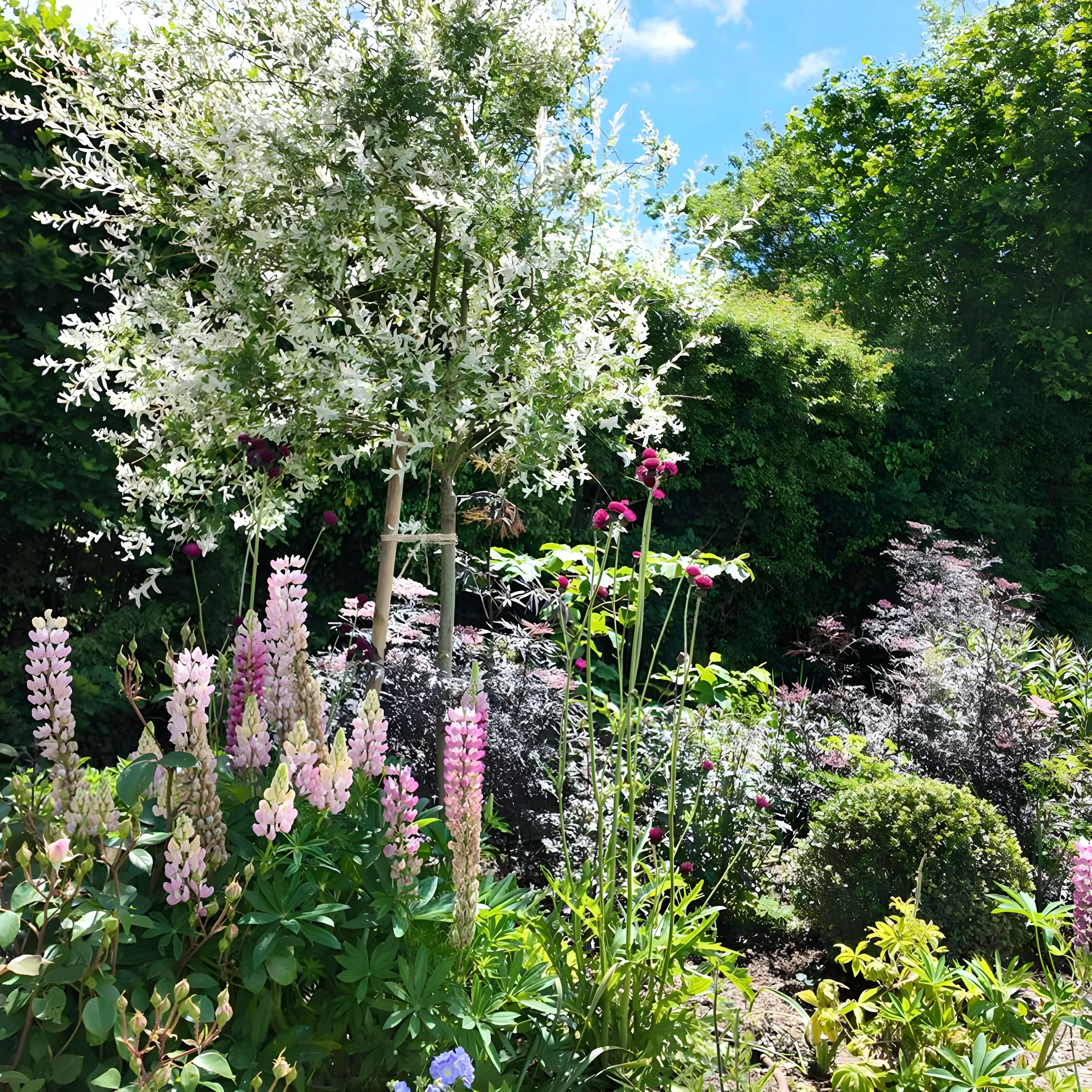
There is a real reward buried in all this sand. Acid, free draining ground is exactly what rhododendrons, azaleas, camellias and magnolias want, which is why the Crown Estate's collections at the Savill Garden and the Valley Gardens, mapped on the same Bagshot Formation, do what they do. Pieris, enkianthus, Japanese maples, blueberries and heathers all take to it without being coaxed.

What fights you is anything wanting moisture or lime. Hungry herbaceous borders, roses, clematis and most vegetable growing need genuine organic matter and a feeding regime that keeps going, not one good mulch at handover, because nutrients wash through with the water. For new trees we lean on the palette the Royal Borough itself recommends here, oak, birch, Scots pine, beech and sweet chestnut, which also keeps a garden tied to the wooded sands it sits in.

Hedges deserve their own warning. The tall beech, laurel, yew and hawthorn hedges that give these roads their privacy are slow and demanding to establish on dry sand under an existing canopy, and gappy, failing privacy hedging is one of the most common things we get called about. They go in with a proper planting trench, irrigation and a feeding plan, or they fail quietly over a few years.

  • Ericaceous schemes that suit the ground rather than fight it
  • Dry shade planting under oak, pine and beech canopy
  • Privacy hedging planted with a trench, irrigation and a feeding plan
  • New trees from the oak, birch, Scots pine, beech and sweet chestnut palette
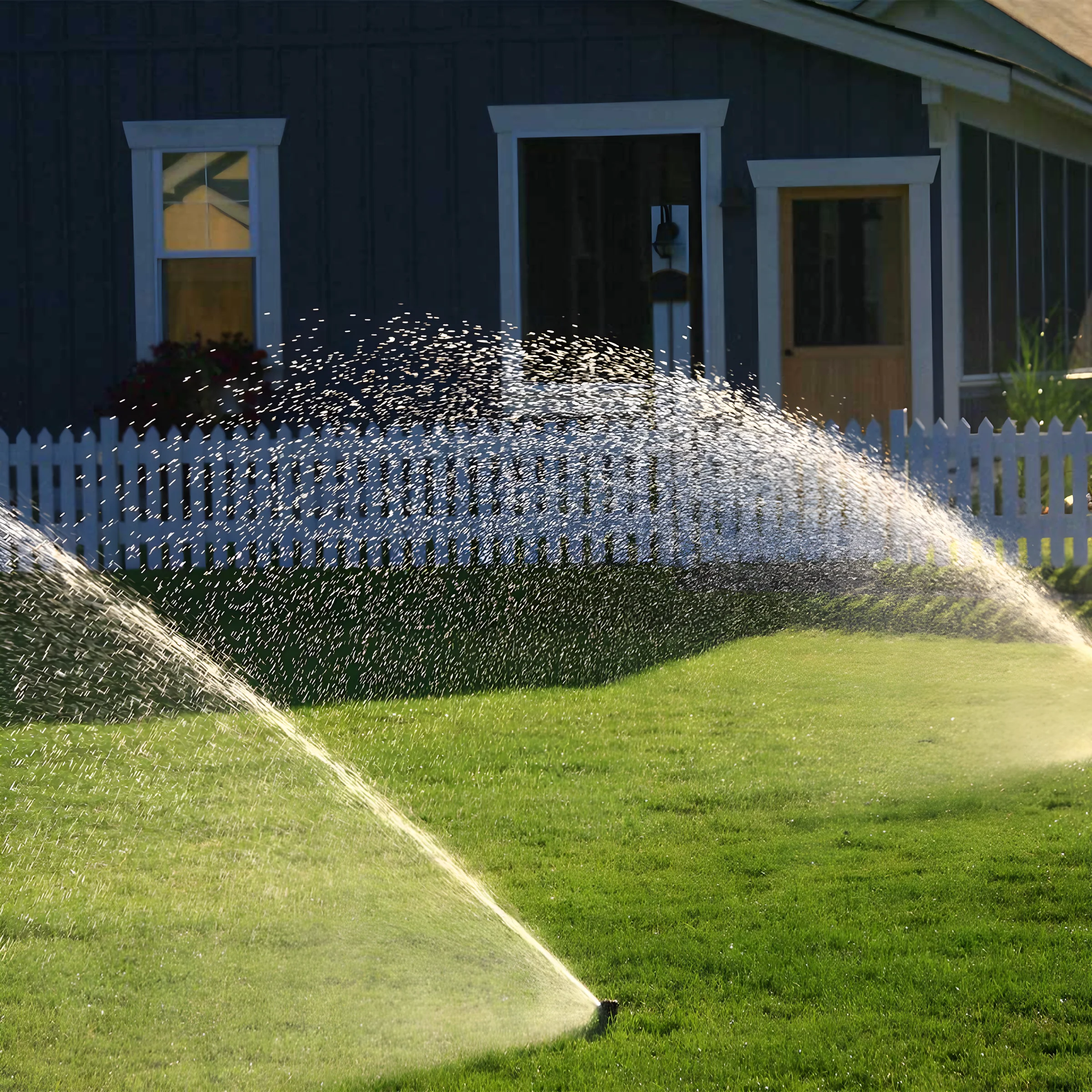
An irrigation sprinkler running across a lawn

Lawns, water and aftercare

Why Lawns Disappoint Here, and What Changes It

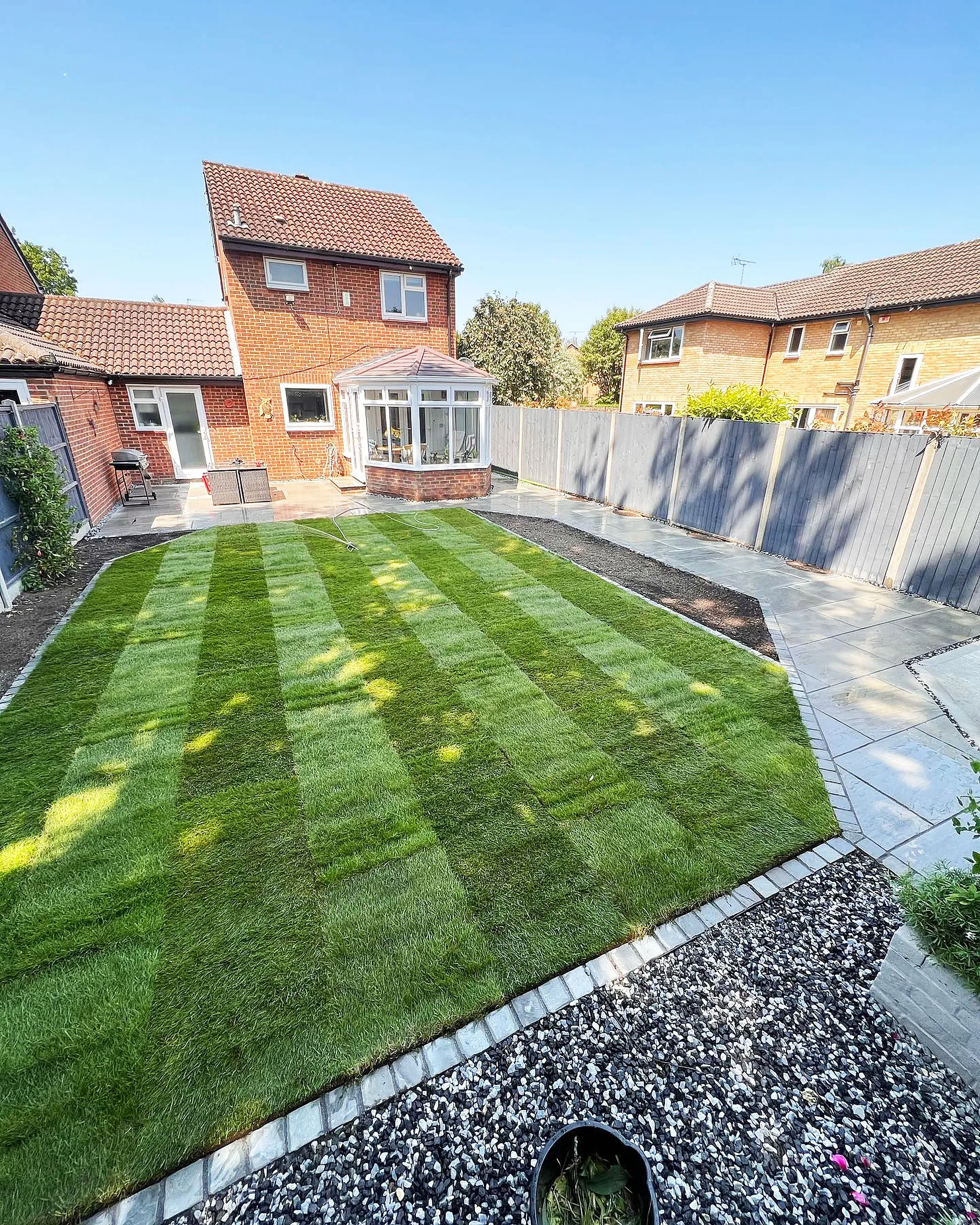
Lawns are the usual disappointment in Ascot. Free draining acid sand browns a lawn off in a dry summer, and under pine and oak canopy the same lawn goes to moss, so fescue and bent mixes and zoned irrigation earn their keep rather than counting as indulgence. Irrigation is also cheapest and tidiest to put in while a garden is being built, not retrofitted later.

The other half of the problem is compaction, and it behaves differently in sand than it does in clay. Clay cracks and reorganises itself over a winter, while sand that has been driven over by construction traffic, or rebuilt around for decades, sets into a pan and stays there. That is common on the executive estates around Geffers Ride, Oaklands Drive and Huntsmans Meadow, and on the new gardens on the old Heatherwood Hospital site, where thin imported topsoil sits over compacted ground. Decompacting to depth with compressed air and holding the fissures open with enriched biochar sorts it without digging the garden up.

Then there is water that should not be there at all. Clay lenses inside the Bagshot and the Swinley Clay perch water within the sand, the London Clay surfaces along the northern fringe at Kennel Ride, peat is mapped along the valley between Ascot and Sunninghill, and South Ascot sits on what was Sunninghill Bog, with parts of it in Flood Zone 3. One garden on a road drains too fast while the next sits wet all winter, so we dig trial holes and look before we specify drainage.

  • Fescue and bent lawns with zoned irrigation built in during construction
  • Deep decompaction with compressed air and enriched biochar, no digging
  • Drainage specified after trial holes, never from the postcode
  • Maintenance plans from £160 a month on a twelve month agreement, with a minimum four hour visit each month

On the ground

Where We Work in and Around Ascot

We work across Ascot, North Ascot, South Ascot, Sunninghill, Cheapside and Ascot Heath. The gardens we get asked about most sit on Kennel Avenue, Burleigh Road, Wells Lane, Kier Park, Onslow Drive, The Avenue and Winkfield Road, with Devenish Road and Titlarks Hill Road just over the boundary in Sunningdale. South Ascot brings us Bouldish Farm Road, Victoria Road, Liddell Way, Crown Hill Court, Oliver Road and St George's Lane, along with the newer gardens on the old Heatherwood Hospital site.

North Ascot deserves a word of its own, because it is genuinely split. The Royal Borough of Windsor and Maidenhead decides Kennel Avenue, Kennel Ride, Burleigh Road, Onslow Drive, The Avenue, Oaklands Drive, Huntsmans Meadow, Geffers Ride, Ancaster Drive, Beaufort Gardens, The Burlings and Sutherland Chase, while Fernbank Road, Gainsborough Drive, Gold Cup Lane, Heathway and King Edwards Road fall to Bracknell Forest Borough Council. The boundary runs through the built up area rather than around the racecourse, and the Royal Borough's own character area 10A straddles it, pairing Gainsborough Drive with Sutherland Chase. Worth checking the individual address before anyone assumes which council is involved.

Beyond the built up edge we go out to Cheapside, Sunninghill and Sunningdale, Chavey Down, Winkfield Row, Winkfield, Winkfield Street, Cranbourne, Woodside and Kings Ride, and across the county line into Windlesham, Bagshot, Englefield Green and Virginia Water. The landscape setting is Crown and common land on most sides: Ascot Heath and the racecourse, Windsor Great Park with the Savill Garden and the Valley Gardens, Swinley Forest, and Englemere Pond on the edge of North Ascot.

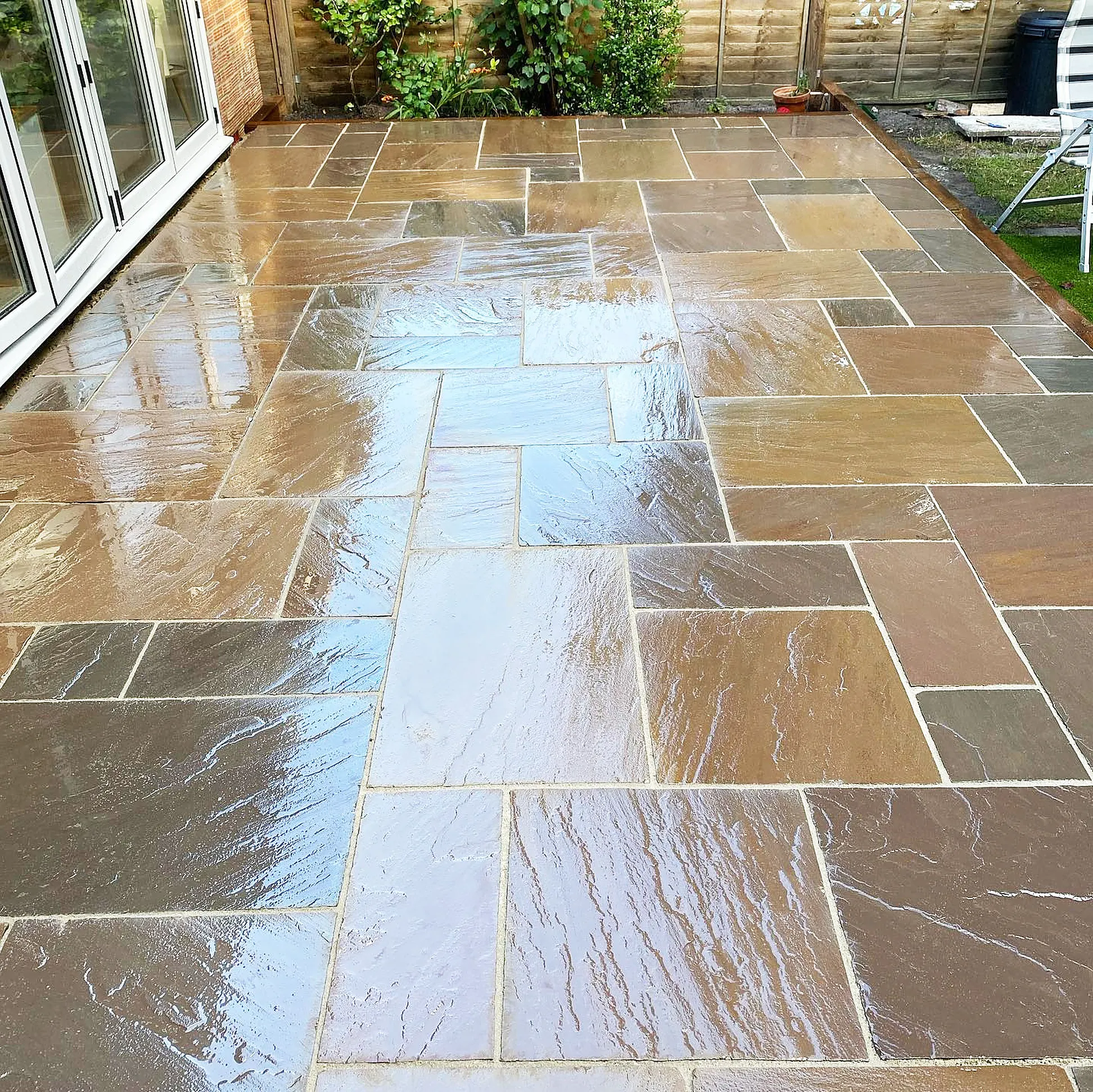
Natural sandstone paving, freshly laid and washed down

Neighbourhoods and villages

  • Ascot
  • North Ascot
  • South Ascot
  • Sunninghill
  • Cheapside
  • Ascot Heath
  • Sunningdale
  • Chavey Down
  • Winkfield
  • Winkfield Row
  • Winkfield Street
  • Cranbourne
  • Woodside
  • Kings Ride
  • Windlesham
  • Bagshot
  • Englefield Green
  • Virginia Water

Postcodes we cover

SL5, SL4

Planning and trees

Trees are the biggest planning consideration for garden work in Ascot, well ahead of paving or levels. The Royal Borough's Townscape Assessment records mature specimen trees, woodland and pine shelterbelts in the Leafy Residential Suburbs and the Villas in a Woodland Setting as often or frequently protected by tree preservation order, so on the large wooded plots a TPO is more likely than not, and the parish council states in its Parish Plan that it has negotiated orders on many more trees and that it asks for two replacements whenever one is felled. Expect a protective rather than a permissive attitude, and treat the trees as fixed points in the design.

The adopted Ascot, Sunninghill and Sunningdale Neighbourhood Plan generally asks for proposals to come with a tree survey and tree protection plan, and where necessary an arboricultural impact assessment to the relevant British Standard for trees in relation to design, demolition and construction. It also resists development on residential gardens that is disproportionate or overly dense relative to its neighbours, or that noticeably diminishes the greenness of an area, and asks that green corridors stay connected. Ascot itself is not on the Royal Borough's published list of conservation areas; the nearest one is Sunningdale in the adjoining parish, and on the Bracknell Forest side of North Ascot the parish contains the Winkfield and Winkfield Row conservation areas.

Inside a conservation area additional controls usually apply to demolition, minor development and the felling of trees, so give notice of tree work and check before starting. Most of the neighbourhood plan area lies in Green Belt and the settlement is ringed by it, which materially limits what can be built beyond the settlement boundary, and the area sits in the zone of influence of the Thames Basin Heaths Special Protection Area, although that generally bites on net new dwellings rather than on garden works. The Royal Borough has also adopted an Ascot Placemaking Supplementary Planning Document.

None of this is an outright prohibition, but all of it shapes what an officer is likely to support, so anything touching a protected tree, a conservation area or a Green Belt boundary is worth checking with the right council first.

Recent work

Recent Work Nearby

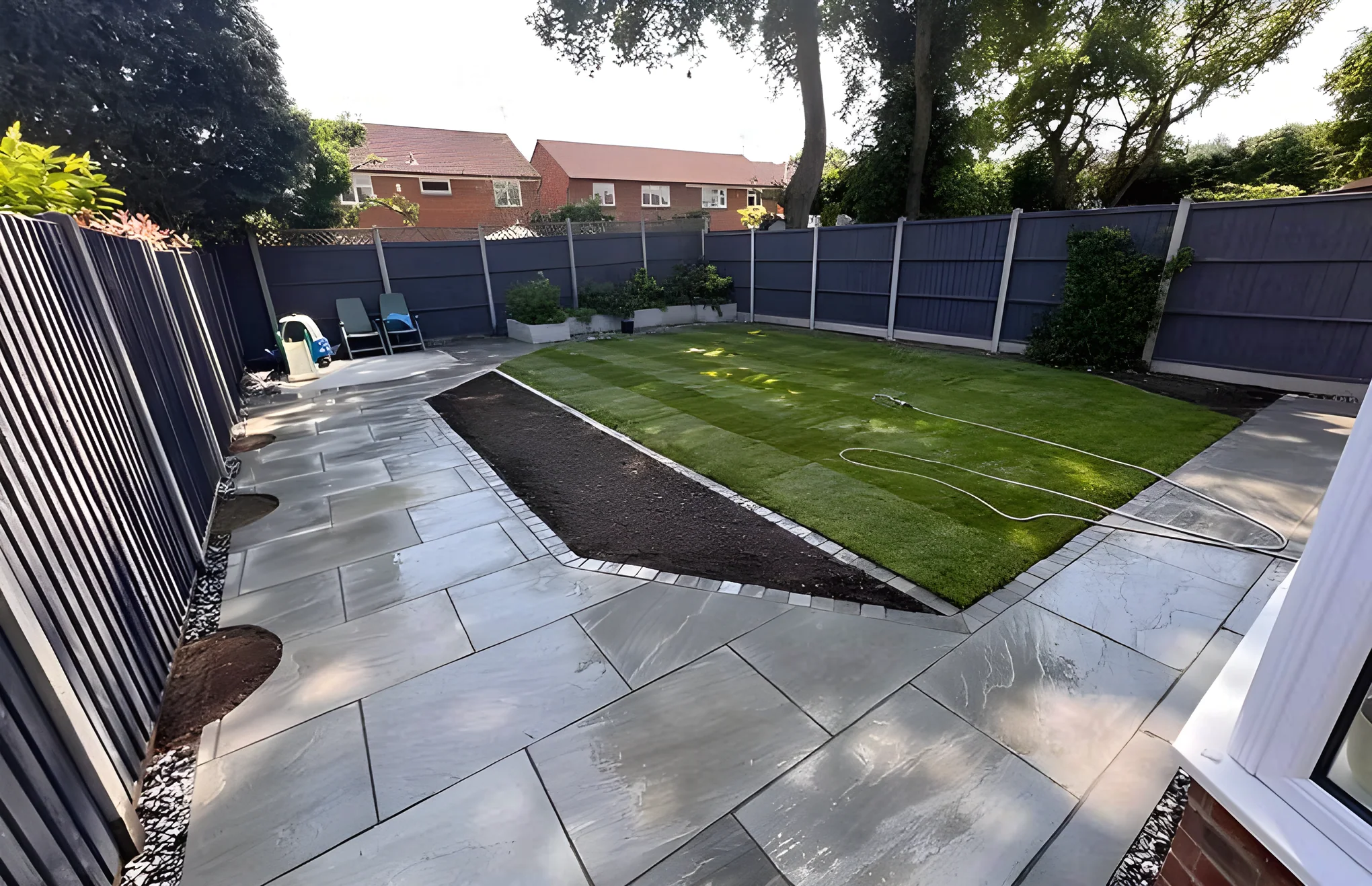
  • Natural sandstone paving laid on creative angles beside a lawn
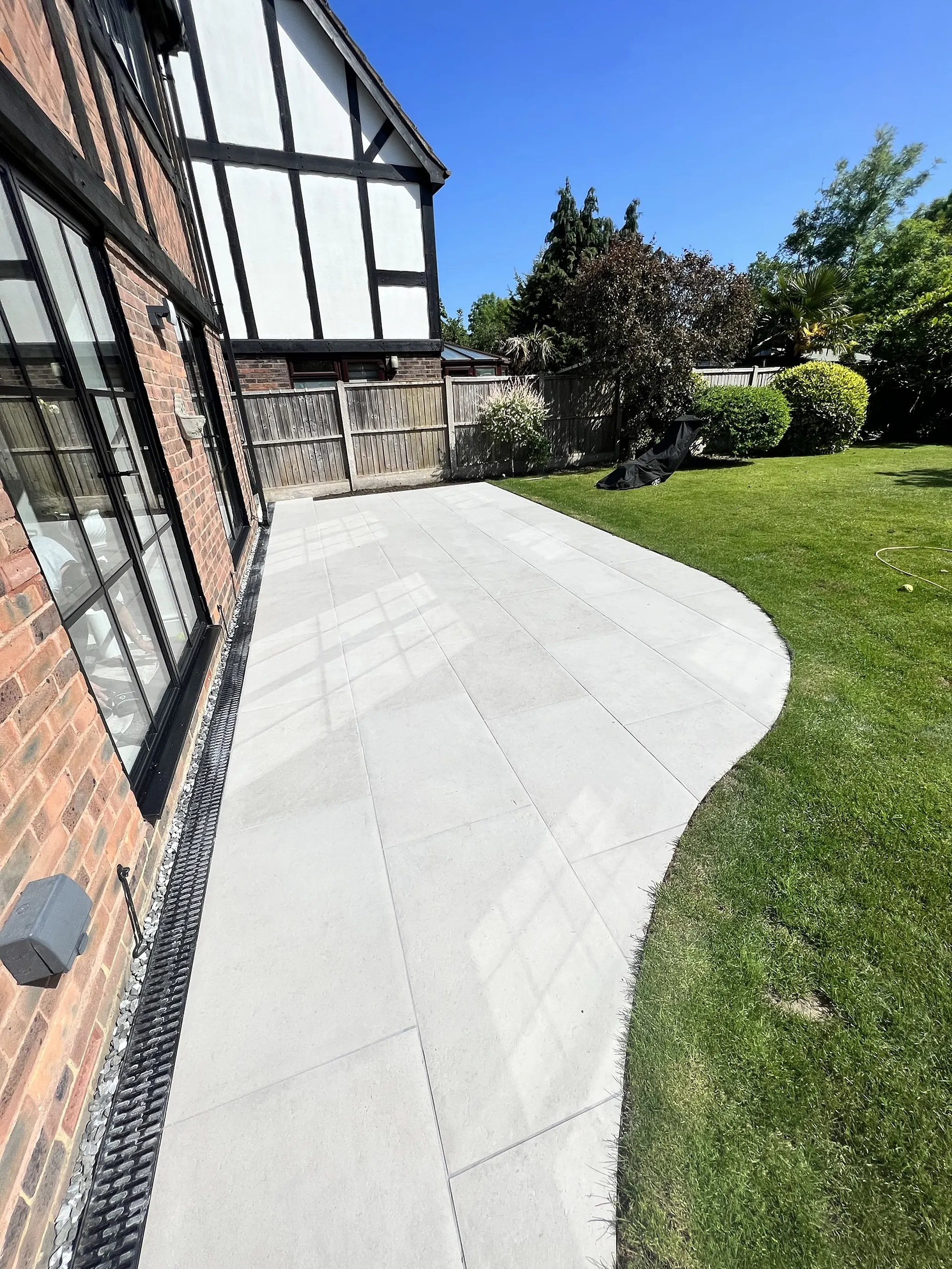
  • A curving porcelain path running past the house and around a shaped lawn
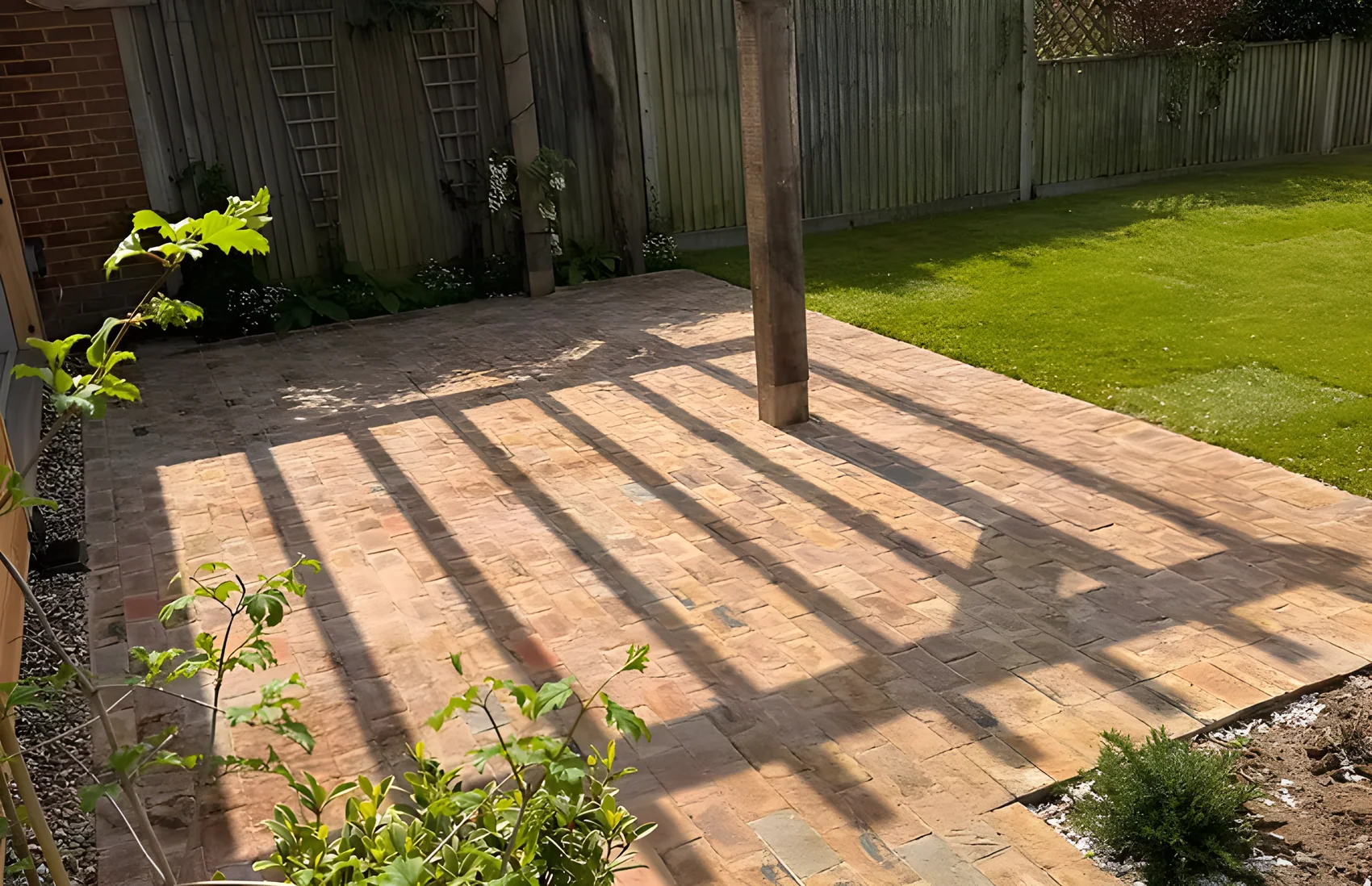
  • Stone paving laid in long bands beside a lawn

Good to know

Ascot Gardens, Asked and Answered

Why Does My Ascot Lawn Brown Off Every Summer When the Borders Look Fine?

Because the ground will not hold water for it. Most of the town sits on Bagshot Formation sand, which the national soil classification puts in the freely draining very acid sandy and loamy class and rates very low fertility, so rain goes straight down to groundwater and feed goes with it. Under pine and oak canopy the same lawn then goes to moss. Fescue and bent mixes, zoned irrigation, a feeding programme that keeps going and, where the ground has been compacted into a pan, decompaction to depth are what actually change the result.

Are the Trees in My Garden Likely to Be Protected?

On a large wooded plot it is more likely than not. The Royal Borough's own Townscape Assessment records mature specimen trees and woodland belts in the villa and leafy suburb roads as frequently protected, and the parish council has pressed for orders on many more trees and asks for two replacements for every one felled. We check the position before drawing anything, because root protection areas decide where paving, levels and foundations can honestly go. It is far cheaper to design around a protected oak than to redesign after a refusal.

One End of My Garden Is Boggy and the Rest Is Dry Sand. How Is That Possible?

That is normal here and it catches people out. The Bagshot sand carries lenses and interbeds of pale grey clay, and its Swinley Clay Member is mapped south and west of Ascot, so water perches on a clay shelf in one part of a garden and disappears in another. Add the London Clay surfacing along the northern fringe at Kennel Ride, peat mapped along the valley between Ascot and Sunninghill, and South Ascot built on Sunninghill Bog, and you get neighbours on the same road with opposite problems. We dig trial holes rather than assume.

Which Council Do I Deal With for Garden Work in Ascot?

It depends on your address, which is unusually annoying in North Ascot. The Royal Borough of Windsor and Maidenhead is the authority for Ascot, South Ascot, Sunninghill, Cheapside and for most of what people call North Ascot, including Kennel Avenue, Kennel Ride, Burleigh Road, Onslow Drive, The Avenue, Oaklands Drive, Huntsmans Meadow, Geffers Ride, Ancaster Drive, Beaufort Gardens, The Burlings and Sutherland Chase. The western side, including Fernbank Road, Gainsborough Drive, Gold Cup Lane, Heathway and King Edwards Road, is Bracknell Forest Borough Council. Sunninghill and Ascot Parish Council is the parish tier and comments on applications, and Sunningdale has its own parish council covering Devenish Road and Titlarks Hill Road.

What Actually Grows Well on Ascot Soil?

Anything that likes acid ground, and it likes it here as much as anywhere in the country. Rhododendrons, azaleas, camellias, magnolias, pieris, enkianthus, Japanese maples, blueberries and heathers all thrive, which is exactly why the Crown Estate's Savill Garden and Valley Gardens, on the same formation, are built around them. For trees we follow the Royal Borough's own recommendation of oak, birch, Scots pine, beech and sweet chestnut. What struggles is anything wanting moisture retention or lime, so roses, clematis, hungry herbaceous borders and most vegetable growing need real organic matter and sustained feeding rather than a single improvement at the start.

Does the Racing Calendar Affect When You Can Work on a Garden Here?

Yes, and so do the drives and the street layout. Race meetings put the local road network under heavy pressure, and both the Royal Borough and the parish council treat congestion and parking around Ascot and Sunninghill as unresolved, so we check the fixture list and any temporary restrictions before booking deliveries, grab lorries or skip exchanges. On the villa roads there is no on street parking and the drives are long gravel behind ornamental gates, so machinery comes in without rutting the gravel and materials end up on long barrow runs. The Victorian streets off the High Street were, in the council's words, not built with the car in mind, and several estates in North Ascot and Sunninghill are gated or on private roads and need arranging in advance.

Close by

We Also Work In

Start your garden

Thinking About a Garden in Ascot?

Tell us the road and we can usually tell you what you will be standing on before we arrive. We design, build and then look after gardens across Ascot, North Ascot, South Ascot, Sunninghill and Cheapside, and on into Sunningdale, Windsor and Virginia Water.

  1. 01
    We Call You BackWithin one working day, to talk the garden through.
  2. 02
    The First VisitA walk round the garden to take in the levels, the access and where the water sits.
  3. 03
    A Written ScopeA specification and a programme, with samples to see in your own light.
Prefer to talk?01276 582095info@cjlandscapesltd.co.uk
1 Webbs Mews, High Street
Hartley Wintney, Hook RG27 8NZ
What Would You Like Help With?

Choose as many as you like.

Tell Us About the Project

Roughly is fine. It helps us bring the right people to the first visit.

Your Details
Photographs Optional, up to five

Thank You

Your enquiry has come through and we will call you back within one working day.

Step 1 of 3

We only use your details to reply to this enquiry.