
A CJ Landscapes guide · Surrey and south west London
Gardening on Clay, and Ground That Will Not Drain.
Most of the gardens we are called to in February are not badly planted. They are sitting on ground that water cannot get through. This guide explains why that happens so often here, how to tell heavy clay from compacted soil, and what genuinely fixes each one.
Two complaints bring us to more Surrey gardens than anything else. The lawn holds water from November to March, and the borders set like a road surface by July. They sound like two faults. Usually they are one, and it is sitting in the top half metre of the ground.
The geology does not help. Around Camberley, Bagshot, Windlesham and Ascot, the sands let everything straight through. East of here, through Esher, Claygate and Cobham and on into south west London, the London Clay comes close to the surface. In between, a single road can start on sand and finish on clay.
What follows separates the two things that get muddled together everywhere else. Clay is what your soil is made of, and you are not going to change it. Compaction is what has been done to it, and that you can put right. Working out which one you are looking at decides everything you do next.
In short
- The ground here
- Bagshot sands around Camberley, London Clay east of us through Esher, Claygate and Cobham, and sometimes both in one street
- Clay
- What the soil is made of. You can change its structure but never its texture
- Compaction
- What has been done to it. Usually a hard pan 150 to 250 millimetres down
- The giveaway
- A grey layer flecked with orange in the side of a hole means that depth sits wet
- Fixes clay
- Organic matter on the surface every year, and never working it wet
- Fixes compaction
- Breaking the pan at the depth it sits, then keeping weight off the ground
Why the Ground Here Floods in Winter and Bakes in Summer
Most of north east Surrey and south west London is built on the London Clay Formation. It is a stiff marine clay, blue grey where it has never been disturbed and weathered to brown in the top metre or so. Gardens in Richmond, Barnes, Putney and Wimbledon are usually working on it, with river terrace gravel and alluvium along the Thames making the ground near the water more mixed than the ground above it.
Nearer home the picture flips. Camberley, Bagshot, Windlesham, Sunningdale, Ascot and Virginia Water sit largely on the Bagshot sands, which is why the commons and heaths around them are acid, free draining and dry by midsummer. The same rain that stands on a lawn in Claygate has gone by teatime in Camberley.
The awkward ground is in between. The Claygate Member, a band of interbedded sand and clay that takes its name from Claygate itself, caps the London Clay across parts of Esher, Cobham, Oxshott and Weybridge. Ground can change from sand to clay inside a single road, so what a neighbour's garden does in February is not a reliable guide to what yours will do. Up on the North Downs it changes again, to clay with flints over chalk, which manages to be sticky and stony at the same time.
Whatever the map says, clay behaves the way it does because of particle size. Clay particles are smaller than two thousandths of a millimetre, and the spaces between them are smaller still. A clay soil actually holds a great deal of water, but it holds most of it in pores too fine to drain under gravity. Water has to travel through the soil rather than around the particles, and that takes time it does not have in a wet February.
Then summer arrives. Clay shrinks as it dries, so the surface cracks and sets hard, and autumn rain swells it shut again. Flooding in winter and baking in summer are not two faults. They are one material doing exactly what clay does.
- Water standing on the lawn for days after rain, in the same places every year.
- Moss through the grass, and bare patches where the water sits longest.
- A surface that cracks and sets hard enough to bounce a fork off in July.
- Soil that comes off the spade as a solid shiny lump rather than crumbs.
Clay Is a Texture, Compaction Is a Condition
Two words get used as though they mean the same thing, and almost every wrong decision about heavy ground starts there. Texture is what the soil is made of, the proportion of sand, silt and clay in it. You are not going to change that. Structure is how those particles are stuck together into crumbs, and the gaps between the crumbs are what air and water actually move through. Structure you can rebuild.
Compaction is lost structure. Pressure squeezes the large pores out, the crumbs collapse into a solid mass, and the soil is left holding water with no route in or out. Clay compacts more easily than sand because its particles are flat and slide over each other when wet, but any soil will do it given enough weight at the wrong moment.
Most of it is caused by us. A house gets built, the topsoil is stripped, the subsoil is tracked over by machinery for months and a thin layer of topsoil is spread back on top. A rotavator leaves a smeared, polished layer at exactly the depth the blades stopped. A heavy mower crosses the same ground every week, year after year. Building materials sit on a lawn for a fortnight. Someone barrows across a border in January.
Here is the useful part. When a garden on heavy clay floods, the cause is nearly always structural rather than textural, and structure can be put back. The clay is not the enemy. What has been done to it is.
How to Tell Them Apart With a Spade and a Bucket
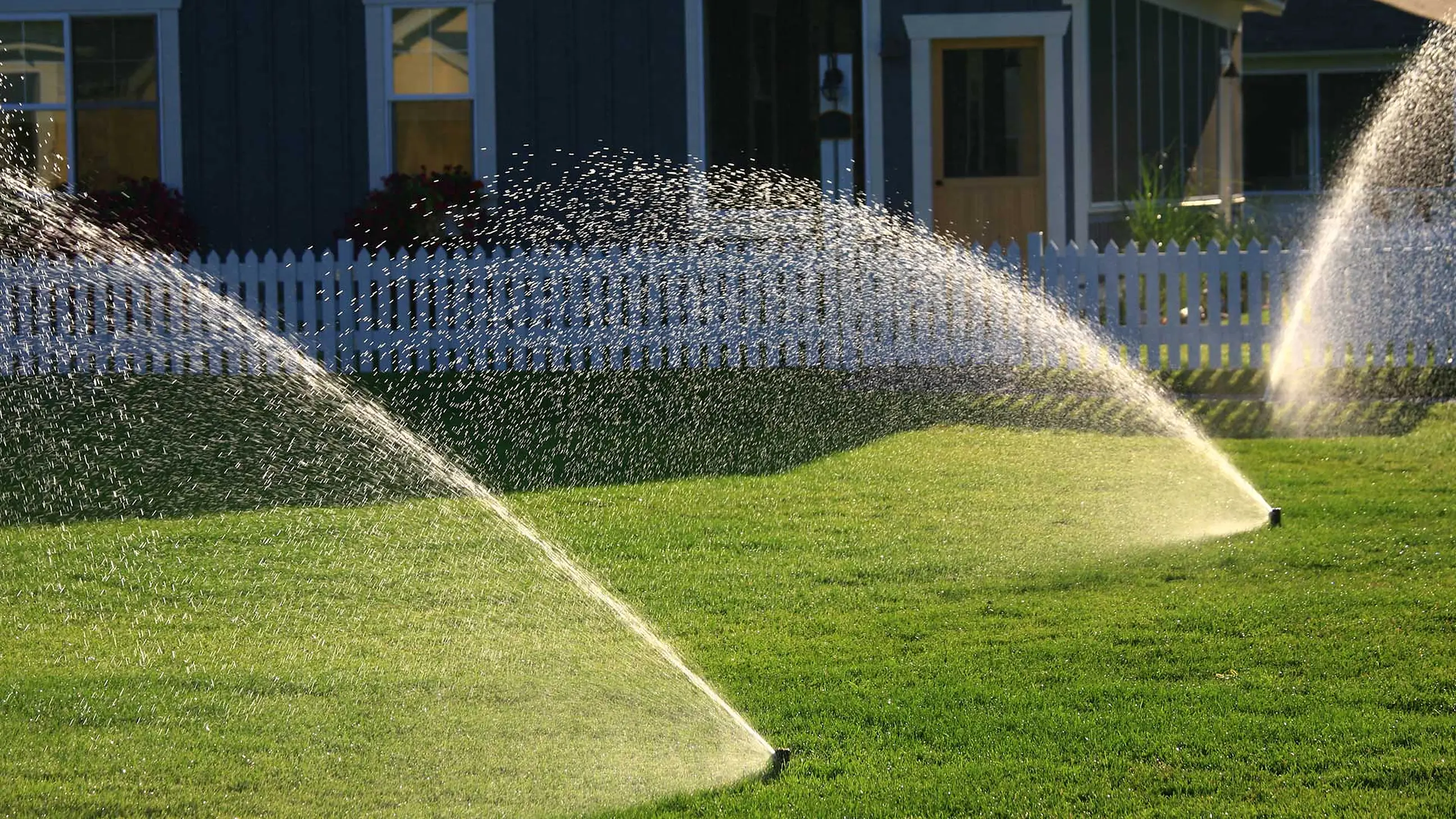
Everything below is something you can do yourself in an afternoon, and it is worth doing before you spend any money. Pick the worst ground in the garden and dig a hole, roughly 300 millimetres across and 400 to 500 deep, with a spade rather than a fork so that you keep one clean face to look at. Do it when the soil is moist rather than sodden.
First the texture. Take a lump the size of a walnut from the top of the hole, wet it slightly, roll it into a sausage in your palm and then bend the sausage into a ring. Heavy clay makes the ring without cracking and takes a polish when you rub it with a thumb. A loam cracks as it bends. Sandy soil will not hold the shape at all and feels gritty between the fingers. Silt feels silky, almost soapy.
Now the structure. Run a knife blade down the clean face of the hole and feel for a layer that suddenly resists. A compaction pan usually sits somewhere between 150 and 250 millimetres, which is where machinery, a rotavator or years of mowing have stopped. The soil above it may break into crumbs while the pan itself breaks into flat plates, or will not break at all. Look at the roots as well. Healthy roots go down. Roots that reach a pan turn and run sideways along the top of it.
Colour is the clearest evidence you will get. A grey or blue grey layer flecked with orange means that depth has been waterlogged long enough, and often enough, for the iron in the soil to change state. That is not an opinion, it is a record of what the ground does every winter. Waterlogged soil tends to smell sour too, which healthy soil never does.
Last, the water. Fill the hole, let it empty, then fill it a second time and time that one. Ground that drains freely takes it away within a couple of hours. If there is still water standing in the hole the following morning, nothing is moving through that profile and you have your answer.
The plants will have been telling you for years in any case. Moss and annual meadow grass in a lawn, creeping buttercup through the borders, soft rush out in rougher grass and horsetail almost anywhere all say the same thing. This ground stays wet.
- Clay with good structure: crumbs, worms, roots running down, and a hole that empties in an hour or two.
- Clay with a pan: a hard layer at a consistent depth, roots turning sideways, water standing overnight.
- Grey soil flecked with orange: that depth sits waterlogged for long stretches of the year.
- Sandy soil that still floods: suspect a buried pan or a failed drain, not the soil itself.
What Actually Improves Heavy Clay
Organic matter, on the surface, every single year. Composted bark, well rotted manure, leaf mould or a good green compost, spread 50 to 75 millimetres thick over moist soil and then left alone. Worms and roots take it down and build the crumb structure for you, and that is the only mechanism that genuinely improves clay over time.
Stop digging it in. Turning and rotavating clay breaks up the crumbs you are trying to encourage, and doing either when the soil is damp smears a fresh pan at the bottom of the cultivated layer. Mulch, and let the soil do the mixing.
Learn the window. Clay is workable for a shorter part of the year than sand, and the test is simple. If a handful smears rather than crumbling, stay off it. One afternoon of walking, barrowing or digging wet clay undoes a season of improvement.
Keep it covered. Bare clay caps under rain and cracks under sun, and both make the next downpour run off instead of soaking in. Mulch, ground cover planting or a green manure over winter, but not bare soil.
Raise the root zone where you need to. Mounding a border 150 to 300 millimetres above the surrounding level lifts crowns and root collars clear of the winter water without draining the whole garden. On wet ground it is often the most honest answer for a single planting bed.
Two things are sold as clay cures and mostly are not. A few bags of grit will not change a soil's texture, because texture is a proportion by mass and shifting it in a border would take a lorry load rather than a barrow load. Worse, a thin sandy layer sitting on clay creates a perched water table exactly where the new roots are. Gypsum is the other one. It genuinely helps where clay is sodium affected, which is a real problem in some parts of the world and rarely the problem in a Surrey garden. Put the money into organic matter instead.
- Mulch 50 to 75 millimetres every year, and never dig it in.
- If the soil smears instead of crumbling, keep off it until it dries.
- Never leave clay bare through the winter.
- Mound a border rather than drain a whole garden for the sake of one bed.
What Actually Relieves Compaction
Relieving compaction means breaking the layer at the depth it actually sits, which is why finding it first matters so much. The wrong tool at the wrong depth is money spent on nothing at all.
If the problem is only in the top 100 millimetres of a lawn, hollow tine aeration followed by a top dressing and overseeding will deal with it, and that is a genuinely useful annual job on a well used lawn. It is also the limit of what spiking and tining can reach. A pan at 200 millimetres is entirely unbothered by it.
In a border, a fork does better work than a machine. Push it in to full depth, pull the handle back to lift and crack the ground without turning it over, draw it out and move back a foot. It is slow, it is effective, and it is realistic across a bed rather than across a lawn.
Over lawn, paddock or grounds sized areas, hand work stops being realistic and machine decompaction earns its place. The same goes for the ground under mature trees, where the aim is to relieve the compaction without cutting through roots to do it.
Be careful about drainage as a first answer. A land drain only works if it has a continuous fall and somewhere legitimate to discharge into, and on deep clay a soakaway frequently has nothing permeable to soak into at all. A percolation test tells you that for the cost of a morning rather than the cost of a trench. Where garden water would need to join a public drain, that is worth checking with the water company before anything is dug.
Then protect the result. Ground that has been opened up will compact again under the same traffic that closed it in the first place. A path where people actually walk, boards under barrows, and a lighter machine on a lawn that holds water all buy you years.
- Top 100 millimetres only: hollow tine, top dress and overseed.
- A border: fork and lift, working backwards, and never turn the soil over.
- A lawn, paddock or grounds: machine decompaction, because hand work will not cover it.
- A trench with nowhere to drain to is just a trench that fills up and stays full.
Where Deep Soil Aeration Fits, and Where It Does Not
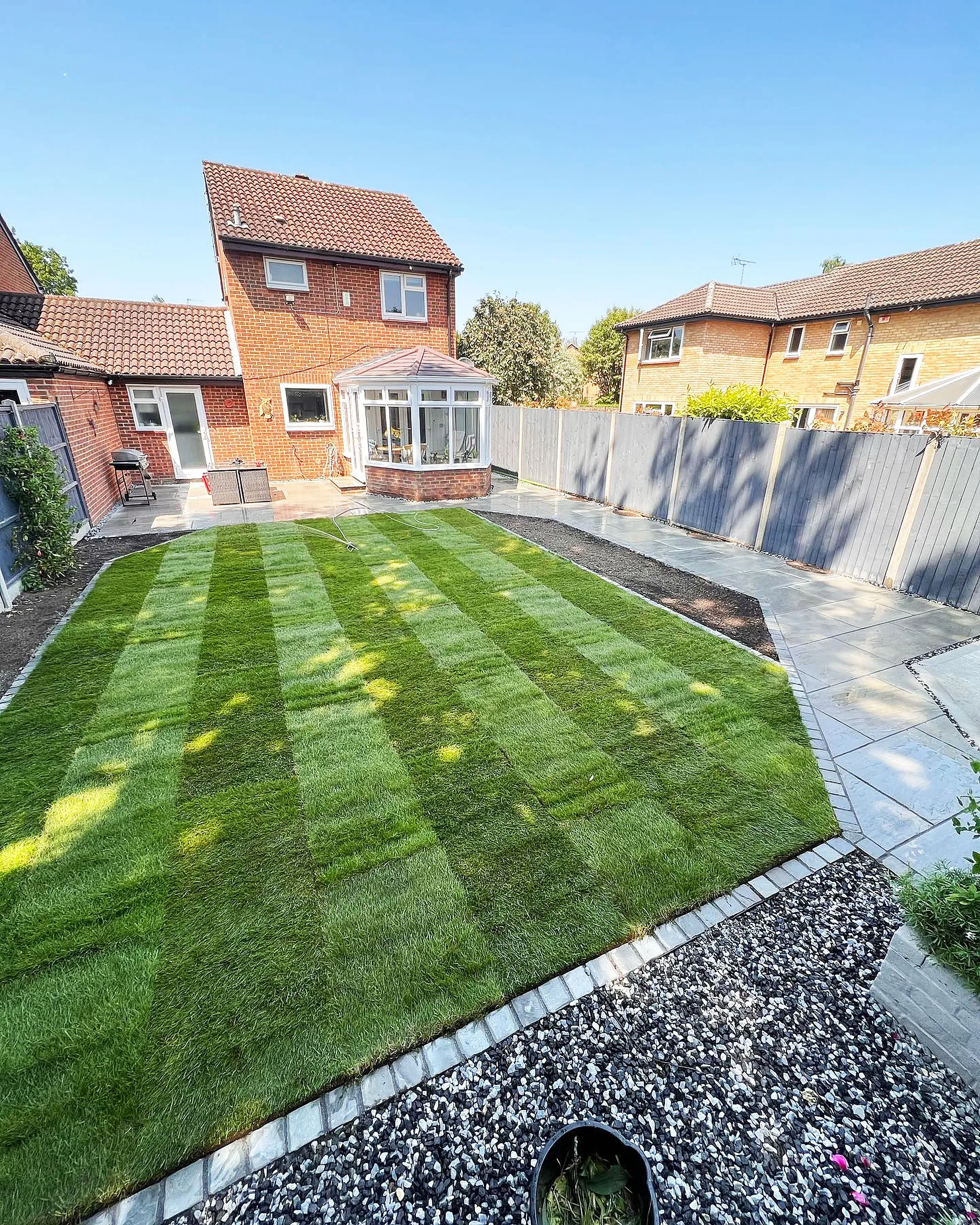
Deep soil aeration is the machine answer to a deep pan. A narrow probe is driven around a metre into the ground, then compressed air at seven bar is injected at depth, fracturing the compacted layers and opening a web of fissures through the whole profile.
Those fissures are filled with enriched biochar, around one kilogram per square metre of treated ground. Biochar is stable carbon with a honeycomb structure and it does not break down, so the channels it holds open stay open. Each injection point links to the next, which leaves a network of small soakaways under the treated area rather than a single point of failure.
There are no trenches, no spoil heaps and nothing to relay afterwards. The only trace left behind is the pattern of probe holes. We run the treatment with the VOGT soil injection system, operated by our own in house team.
Where it is the right answer: lawns that flood every winter, new build gardens where the soil was crushed before the turf went down, compacted paddock and worn estate lawn, tree root zones under stress, and ground being prepared properly before a new lawn or a planting scheme goes in.
Where it is not the answer, said plainly. If water is standing for a reason other than compaction, decompaction will not cure it. A high winter water table, a spring line, water arriving off a neighbouring slope, a collapsed or blocked existing drain, or a garden that simply sits at the bottom of everything around it are drainage design problems and need a drainage answer. That is why the survey comes before the quote, and why we will sometimes tell a client the lawn is not the thing worth spending money on this year.
Building a Terrace, a Wall or a Path on Clay
On clay the build up under a terrace matters more than the stone on top of it. A clay subgrade is strong enough when dry and weak when wet, and it will be wet for months at a stretch, so every layer above it is there to spread load and keep water moving.
The detail left out most often is separation. A geotextile between the clay and the sub base stops the stone being pushed down into soft clay and stops clay fines working up into the stone. Leave it out and a terrace that looked perfect in May is rocking and holding puddles three winters later. Over clay the sub base also wants to be deeper, and compacted in thinner layers, than the same build would need over gravel.
Water has to be given somewhere to go, and that gets decided before the first slab is cut. Falls run away from the house, and where the ground will not absorb anything a channel drain at the threshold is not an optional extra. Permeable paving over clay is not soaking water away into the ground, because the ground will not take it. It is holding water and letting it out slowly, which is a design with an outlet rather than a design without one.
Retaining walls on clay hold back more than soil. Saturated clay pushes hard, so free draining backfill, a land drain behind the wall and weep points are what keep a wall doing the job it was built for instead of holding back water as well.
Two more things worth knowing. Clay changes volume as it wets and dries, and guidance for foundations on shrinkable clay takes account of how close trees are, so it is worth checking before a large tree goes in near a house, a wall or a hard surface. And clay ground is best worked in the drier months. Where that is not possible, boards and tracking mats keep the damage to one route rather than spreading it across the whole garden.
Our own team does the groundworks and the finish, which is the practical reason any of this gets done properly. Nobody is guessing at what went in under a terrace when the people who built the base also laid the stone.
Planting That Is Happy on Heavy Ground
Clay is fertile ground. It holds nutrients and moisture far better than sand, and once air and water can move through it the planting is stronger and needs less watering than the same scheme on the sands around Camberley. The trick is to plant what is comfortable rather than fight the soil every single year.
Trees and shrubs that are genuinely happy on heavy, moist ground: hornbeam, English oak, alder, willow, guelder rose, dogwood, elder, hydrangea, and most roses, which do better on clay than on almost anything else. For hedging on wet clay, choose hornbeam over beech every time. Beech resents waterlogged roots and hornbeam puts up with them.
Perennials and grasses for the same conditions: astrantia, persicaria, ligularia, rodgersia, astilbe, Siberian iris, meadowsweet, hardy geraniums, alchemilla, molinia, deschampsia and miscanthus. None of them is a compromise. They are the plants that look best in this part of the country.
What will not forgive heavy wet ground: lavender, rosemary, cistus, santolina and the other grey leaved Mediterranean plants. They rarely die of cold here, they rot over a wet winter. Mexican feather grass goes the same way, and yew, which is perfectly happy on clay that drains, will not take standing water at all. If you want that look on clay, build the condition for it with a raised free draining bed and a gravel mulch, and be honest that it is constructed rather than natural.
On the sand side of our patch the problem reverses completely. Around Camberley, Bagshot, Windlesham and Ascot, water and nutrients run straight through, summer is the hard season rather than winter, and the planting that thrives is the acid loving kind: pines, birch, rhododendron, pieris and heathers. The answer is still organic matter, for the opposite reason. On clay it opens the soil up. On sand it gives the soil something to hold on to.
- Roses, hornbeam, oak, alder and willow are at home on heavy ground.
- Lavender, rosemary and cistus need a raised free draining bed or a different plant.
- Hornbeam hedging rather than beech wherever the ground holds water.
- Mulch is the answer on both soils, for opposite reasons.
A Year on Clay Ground, Season by Season
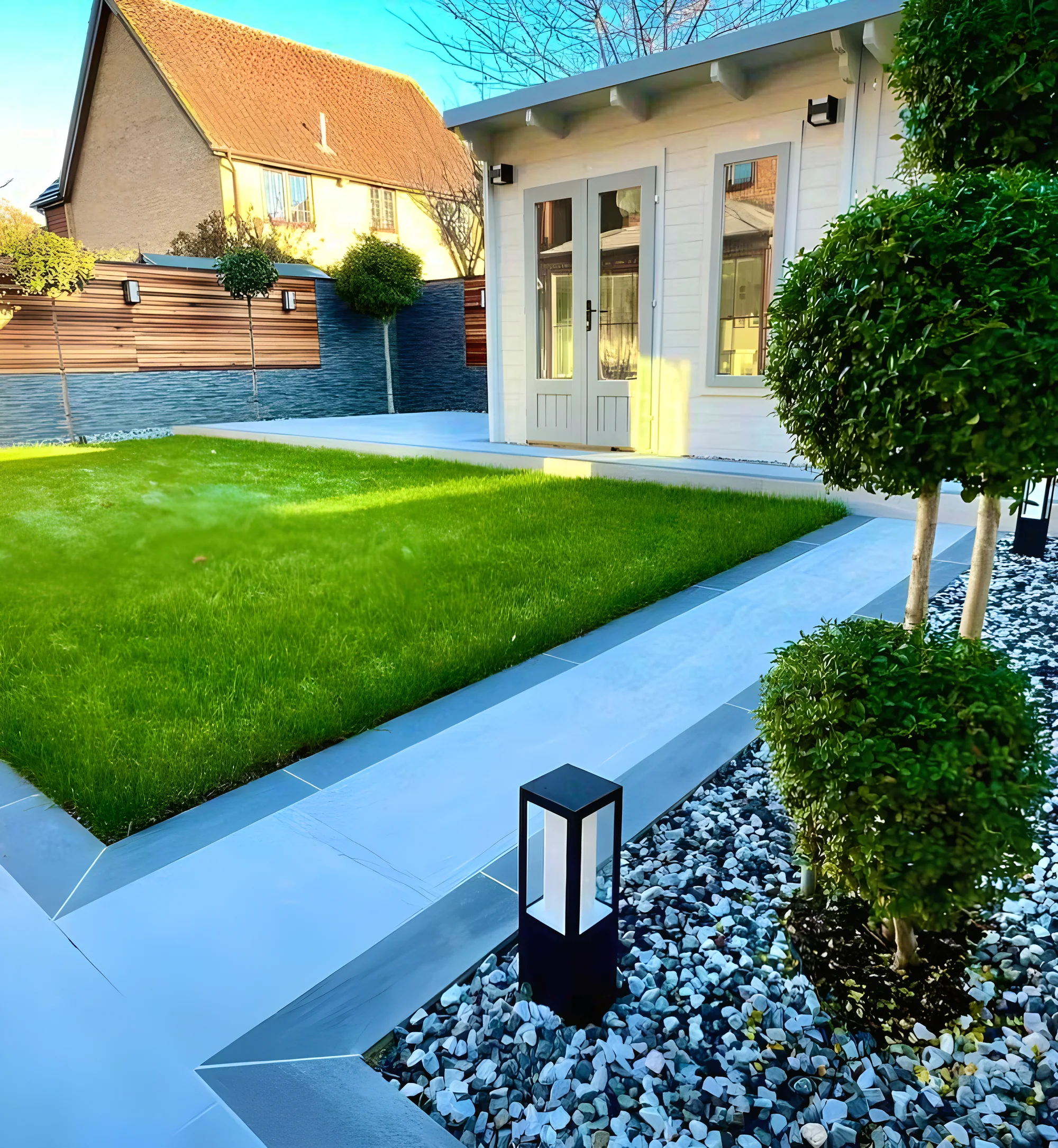
Winter is the diagnosis season, and most people waste it. Walk the garden while it is wet, photograph exactly where the water stands and how long it takes to clear, and mark it on a plan. By June you will not believe it was ever that bad, and June is usually when the decisions get made.
Late winter is for bare root planting. Hedging, trees and roses go in while dormant and establish before the dry weather, provided the ground is neither frozen nor sodden when they arrive.
Spring is for the lawn. Hollow tine, top dress and overseed, and get mulch onto the borders before the clay dries out and caps. Mulch spread on a dry cracked surface does far less good than the same mulch spread on moist soil.
Late spring to early autumn is the working window. Construction, cultivation, changes of level and anything that puts weight on the ground belong in the drier months. On clay that is not a preference, it is the difference between a garden that settles properly and a garden built on smeared, ruined soil.
Summer is for watering properly and for not panicking about cracks. Cracks are what clay does, and they close again. Water slowly and deeply, or by drip, because a hose running on cracked clay goes straight down the cracks and past the roots that need it. Zoned irrigation, put in while a garden is being built, is the quiet reason some gardens look the same in August as they did in May.
Autumn is the best planting season on clay. The soil has rewetted, so it is easy to work and easy to settle around a root ball, and anything planted then roots through the winter without being watered at all. Mulch straight after planting, and leave the ground covered until spring.
Good to know
Questions We Are Asked Most
How Do I Tell the Difference Between Clay Soil and Compacted Soil?
Clay is a texture, so you test it by feel. Roll a moist lump into a sausage and bend it into a ring, and heavy clay will hold the shape and take a polish. Compaction is a condition, so you find it with a hole. Dig 400 to 500 millimetres down and run a knife down the clean face, feeling for a layer that suddenly resists, usually between 150 and 250 millimetres. Plenty of gardens here have both.
Will Adding Sand or Grit Break Up My Clay?
Not in the quantities anybody actually adds. Texture is a proportion by mass, so changing it in a border would take a volume of material nobody is barrowing in. A thin sandy layer over clay is also worse than nothing, because water perches at the boundary between the two and sits in the root zone. Organic matter on the surface, year after year, is the thing that genuinely changes heavy soil.
Does Deep Soil Aeration Work on Heavy Clay?
Yes, where compaction is what is wrong. The treatment fractures the compacted layers around a metre down and holds the fissures open with enriched biochar, so water and air move through the profile again instead of sitting on top of it. What it cannot do is cure water that is standing for some other reason, such as a high winter water table or a failed drain, which is why the ground is surveyed before anything is quoted.
Do I Need Land Drains or a Soakaway?
Only once you know where the water would go. A land drain needs a continuous fall and a legitimate discharge point, and on deep clay a soakaway often has nothing permeable to soak into. A percolation test answers that before a trench is dug. Where garden water would need to join a public drain, it is worth checking with the water company first.
When Should I Avoid Working on Clay Soil?
Whenever a handful smears instead of crumbling. In practice that rules out most of the winter and a good part of early spring. Walking, barrowing, digging or driving on wet clay destroys the structure that makes it drain, and one wet afternoon can undo a year of improvement. Construction and cultivation belong in the drier months.
Is Clay Soil Bad for a Garden?
No. Badly structured clay is difficult, but clay itself holds water and nutrients better than sand and grows stronger planting with less watering once it drains. Gardens on the sands around Camberley have the opposite problem and work harder every summer for it. Put the structure right and clay is the better soil of the two.
Related services
The Work Behind the Guide
- Deep Soil AerationCompacted, waterlogged ground decompacted to around a metre down, without digging. One treatment, permanent change.
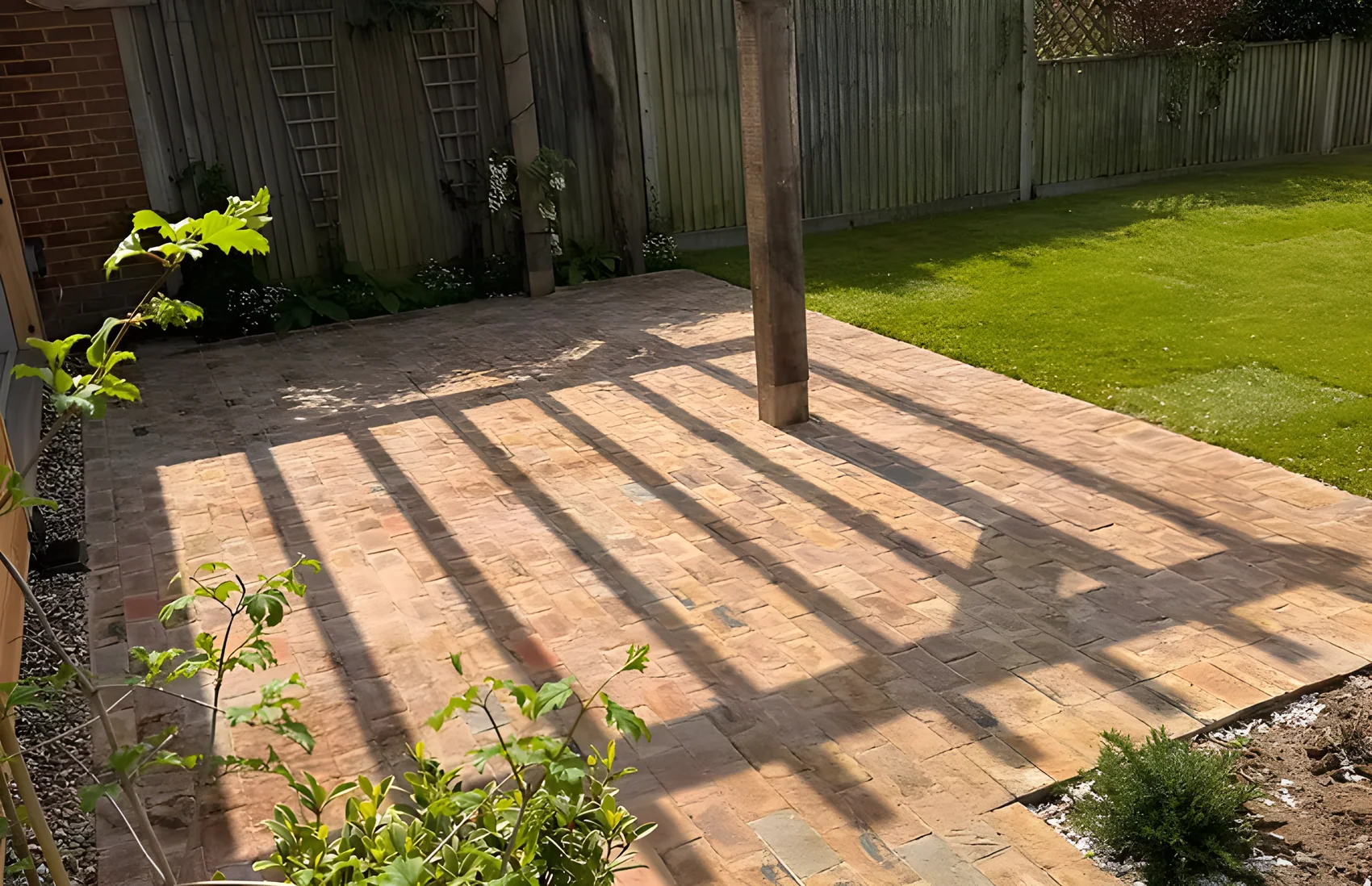
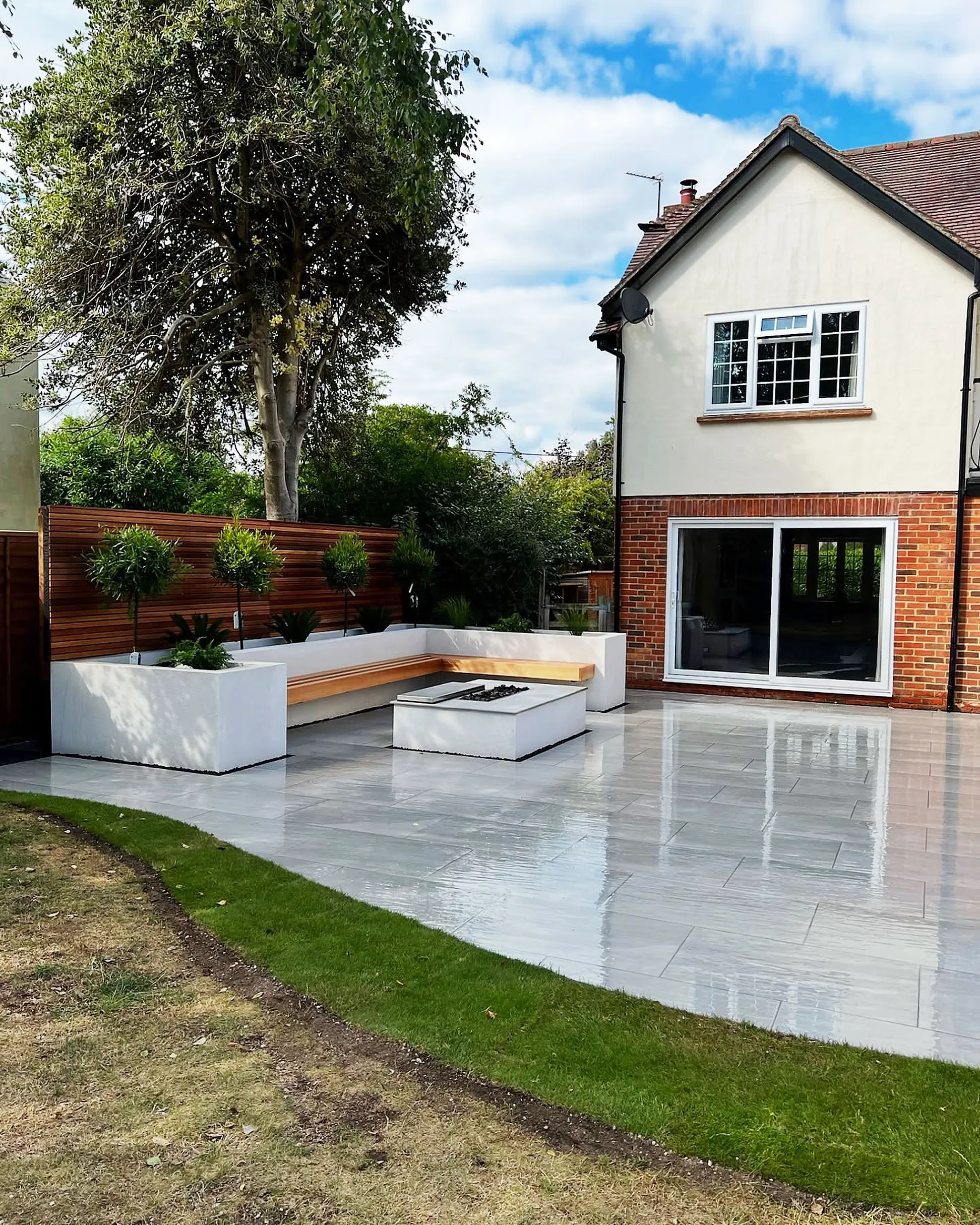
- Landscape ConstructionTerraces, paths, levels, retaining walls and outdoor rooms, built in house from groundworks to the final joint.
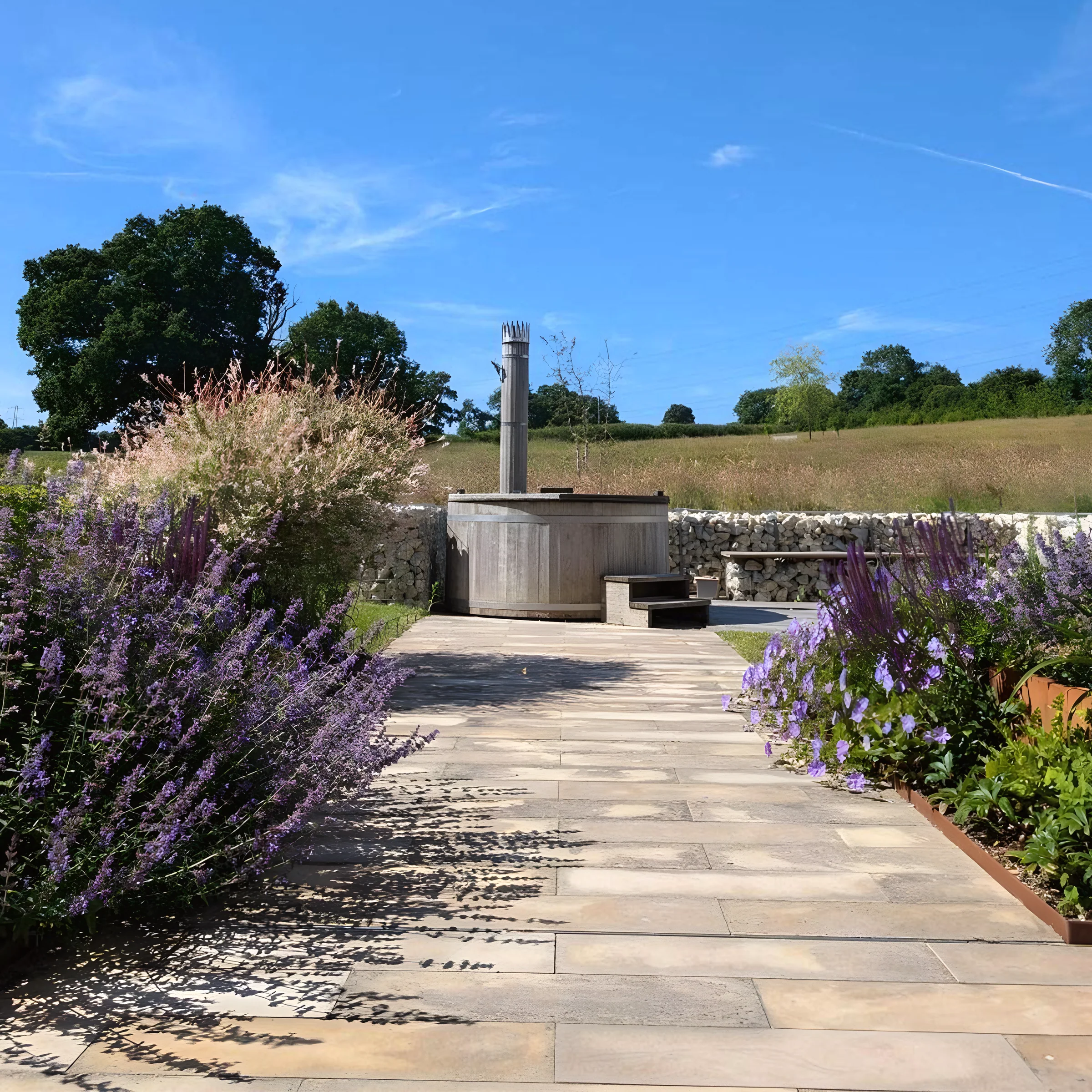
- Garden PlantingPlanting schemes shaped around soil, light and season, installed to mature naturally and stay manageable.
Start your garden
Find Out What Is Under the Lawn, Before You Spend a Penny on It.
Send us a photograph of where the water stands in February and we will tell you what to look for in a hole, and whether the answer is likely to be clay, compaction or a drainage problem. What we will not do is quote for a trench before someone has dug a hole, filled it twice and timed how long the second one takes to empty.
- 01We Call You BackWithin one working day, to talk the garden through.
- 02The First VisitA walk round the garden to take in the levels, the access and where the water sits.
- 03A Written ScopeA specification and a programme, with samples to see in your own light.
Hartley Wintney, Hook RG27 8NZ