
A guide · Budgets and what drives them
What a Garden Costs, and What Moves the Number.
Nobody can price a garden from a photograph. This is an honest account of what the money is spent on, how much of it goes below ground where you will never see it, and why access, levels and soil move a quote further than the stone you choose.
The first thing worth saying is that there is no average. Two gardens of the same size, in the same town, can sit in different budget bands because one has a drive wide enough for a lorry and firm sand under the lawn, while the other is reached through the kitchen and sits on clay that holds water until April.
What follows is what actually moves a landscaping budget, roughly in the order it moves it. None of it is a price list. The aim is that by the end you can walk your own garden and name the things that will move the number, the width of the side gate, the fall from the house to the back fence, and what the lawn does two hours after heavy rain.
Where figures appear, they are the budget bands on our own enquiry form, because those are the brackets their own enquiry form offers.
In short
- The biggest drivers
- Access, levels, ground conditions and drainage, all before anyone chooses a material
- What you never see
- A large share of a construction budget goes into groundworks hidden under the finished surface
- Budget bands we work in
- 15 to 25, 25 to 35, 35 to 60, 60 to 100, and 150 thousand pounds plus
- Why no rates here
- A price per square metre given without a site visit is a guess, and usually the wrong one
- Getting a real number
- A site visit, a measured survey and a drawing, not a figure over the phone
- Looking after it afterwards
- Garden maintenance plans start from £160 per month on a twelve month agreement, with a minimum four hour visit each month
Where the Money Actually Goes
Most people picture a garden budget as paving, plants and labour. In practice a large part of a construction budget is spent before anything visible appears. Clearing, digging out, carting spoil away, drainage, sub base, concrete, retaining structures and ducting all come first, and all of it is buried by the end of the job.
The visible layer is usually a smaller share of the total than clients expect, and it is the part most easily changed. You can choose a different slab or a smaller plant late in the process. You cannot change the build up under a terrace later without taking the terrace up.
This is why two quotes for the same patio can differ so widely. The difference is rarely the stone. It is normally the depth and quality of what goes underneath it, how much material is leaving site, and whether drainage has been priced at all.
- Site clearance, and taking spoil off site
- Excavation, setting levels and any retaining structure
- Drainage, land drains and soakaways
- Sub base, concrete and the bedding under every surface
- Ducting for lighting and irrigation, laid before any paving
- Surfaces, walls, steps and carpentry
- Soil preparation, planting, turf and establishment
Access Is the First Thing That Changes the Price
The width of your side gate can matter more to a quote than the choice of stone. If a machine can reach the back garden, a day of digging replaces a week of barrowing. If it cannot, every tonne of spoil going out and every tonne of aggregate coming in travels by hand, through a passage, in a wheelbarrow.
A garden reached only through the house is a different job from the same garden with a rear gate or a drive wide enough for a grab lorry. So is a garden where the lorry has to stand on a busy road, or where the only route to the work runs across a lawn you want to keep.
Tight access does not stop good work. Narrow machines, conveyors, dumpers that fit a standard gate and careful sequencing all help, and we build in gardens like that regularly. It does change how long the work takes, and labour is the largest single line in most landscaping budgets.
- Gate and passage width, and whether a machine fits or only a barrow does
- Where a lorry can stand to tip aggregate and take spoil away
- How far every load has to travel between the lorry and the work
- Whether the house, hall, drive or lawn needs protecting on the way through
- Parking and skip permits, which are worth checking with the council early
Levels, Retaining and What Leaves the Site
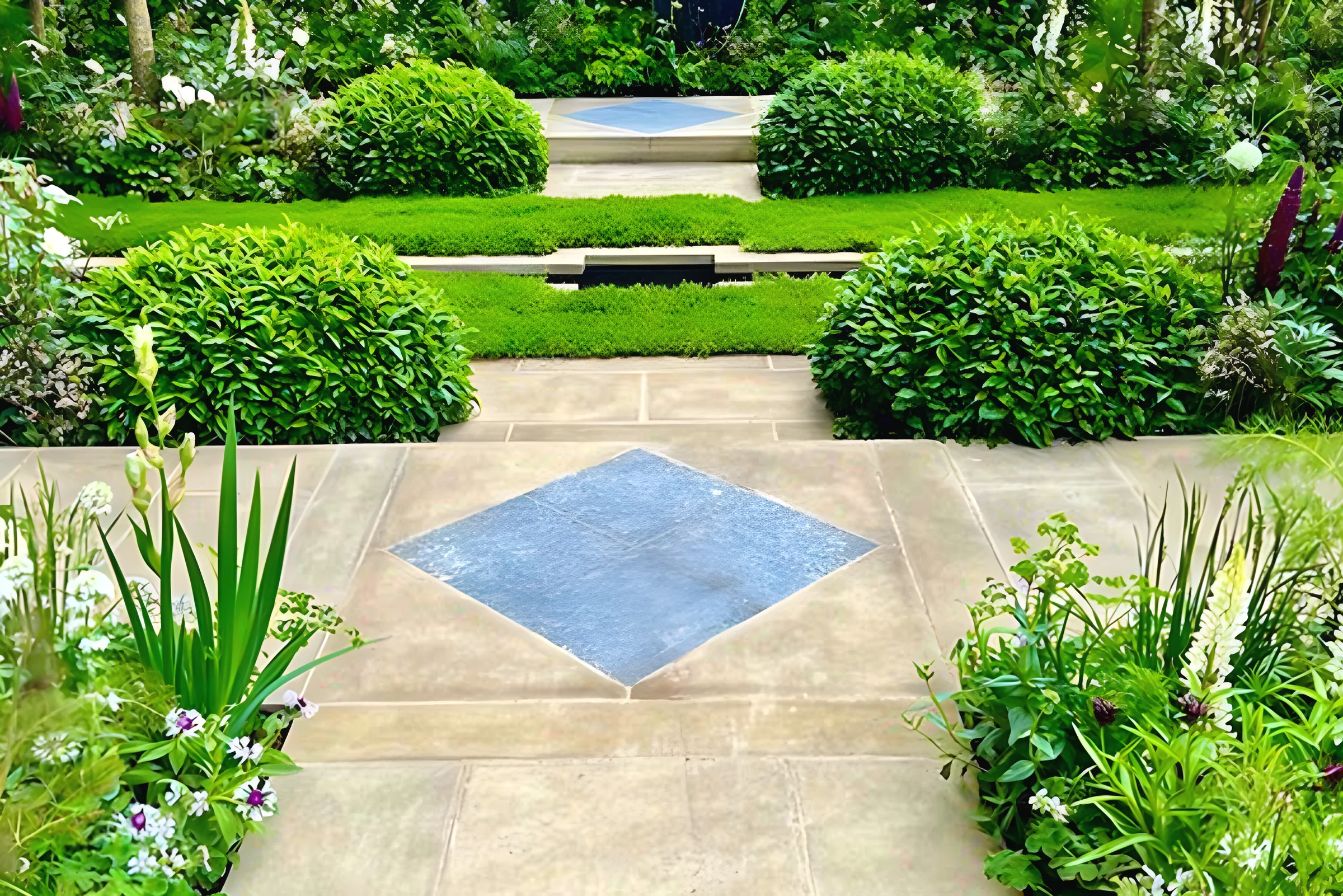
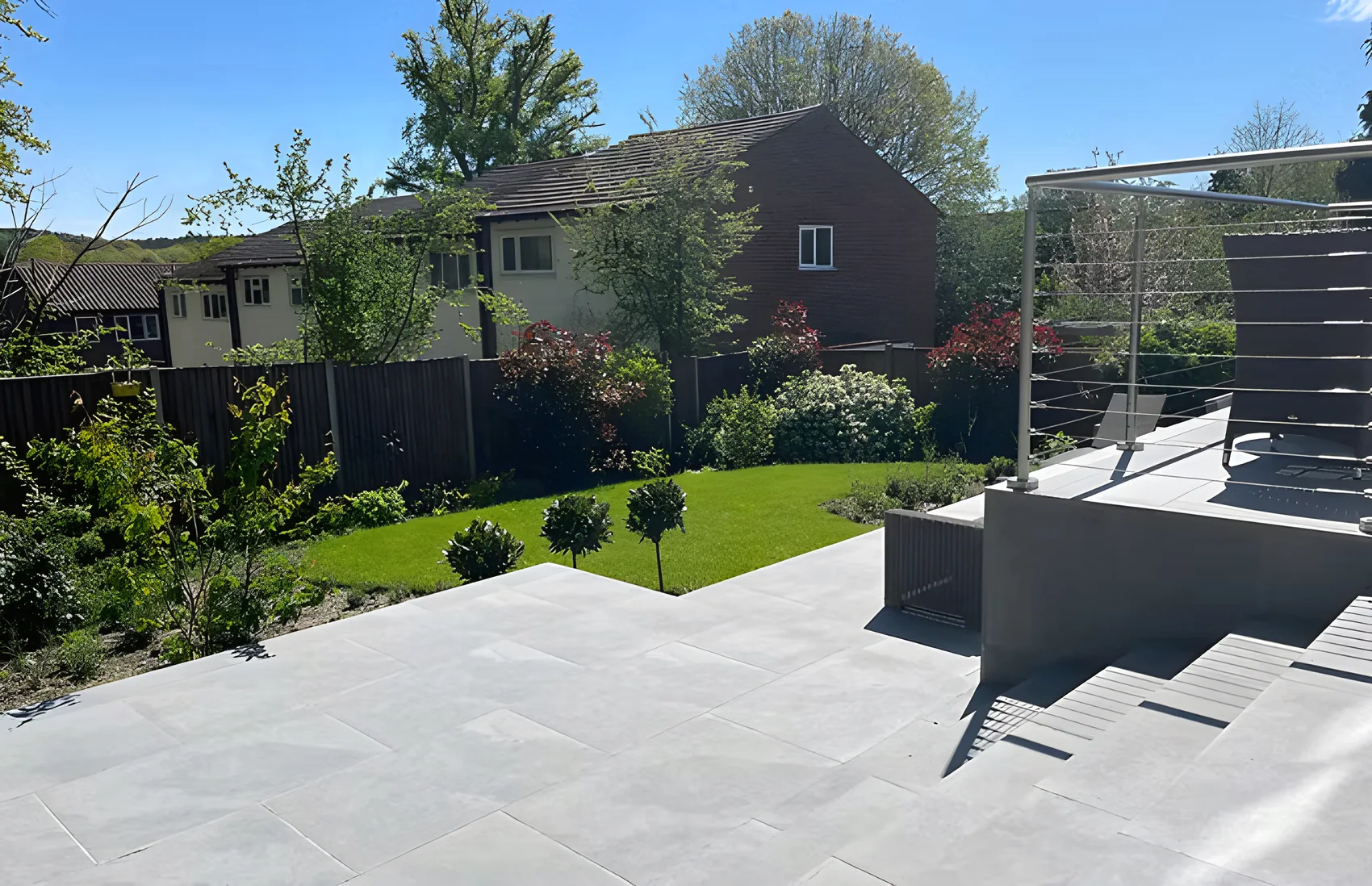
A flat garden is cheaper to build than a sloping one, and the gap is not small. Making a level terrace on a slope means cutting into the ground on one side and building up on the other, then holding the difference with a wall that has to be founded, reinforced, drained and backfilled.
Retaining walls carry real load. A low sleeper edge is garden carpentry. Anything holding back a metre or more of wet ground is generally treated as a structure, and is priced as one, which is why two schemes with the same area of paving can sit a whole band apart.
Then there is the spoil, which is heavier and more expensive to move than almost anything else on site. Balancing cut and fill so that soil is reused within the garden rather than carted away is one of the few genuinely large savings available on a sloping plot, and it is a design decision taken early or not at all.
Steps are the other quiet cost of a slope. Every flight needs a structure under it, a consistent rise, and a tread detail that drains, and a long run of generous steps is closer to building a staircase outdoors than to laying a path.
The Ground Under a Surrey Garden
Surrey does not have one soil. Around Camberley, Windlesham and Sunningdale a great deal of the ground is free draining sand and gravel. It digs easily and water disappears through it, but it holds little moisture or nutrient, and open excavations in it want shoring. Further east the ground turns heavier in places, and clay there holds water all winter then shrinks and cracks in a dry summer.
Clay changes a budget twice over. Foundations generally go deeper, because ground that moves with moisture has to be built off properly, and planting needs genuine soil preparation rather than a bag of compost dropped into a hole. Sand changes it differently. Drainage is rarely the problem there, so the money goes into soil improvement and often into irrigation instead.
Newer houses bring their own version of this. The garden of a house finished in the last couple of decades is often builders' subsoil, compacted hard by machinery, with brick, mortar and plastic through it. That ground usually has to be broken open, improved, or in places taken away, before anything will grow in it or sit level on it.
Nobody can tell you which of these you have from the pavement. A couple of trial holes and a look at what the garden does two hours after heavy rain settle the question, and both belong before a serious quote rather than after one.
Drainage, the Cost You Never See
Drainage is the line most often missing from a cheap quote, and the most common reason a new terrace disappoints. Water has to go somewhere. If a new paved area sheds rain towards the house, into next door, or onto a lawn that already floods, the problem has not been solved. It has been moved.
Done properly it means falls set out so water runs where you want it, a channel or a slot detail where paving meets a threshold, land drains in ground that holds water, and a soakaway sized and sited for what the surface sheds. Permeable build ups let water through the surface instead of running it off, and are worth asking about. Larger areas of new hard surfacing can carry planning guidance of their own, so it is worth checking with the local authority before a design is settled.
Where the real problem is compacted ground rather than a missing pipe, deep soil aeration can be the cheaper answer. Compressed air opens fissures at depth and enriched biochar, around one kilogram per square metre, holds them open, with no trenches and nothing to relay afterwards. It does not suit every site, but it is worth testing before you price a full drainage scheme.
Materials, and Why the Slab Is Not the Expensive Part
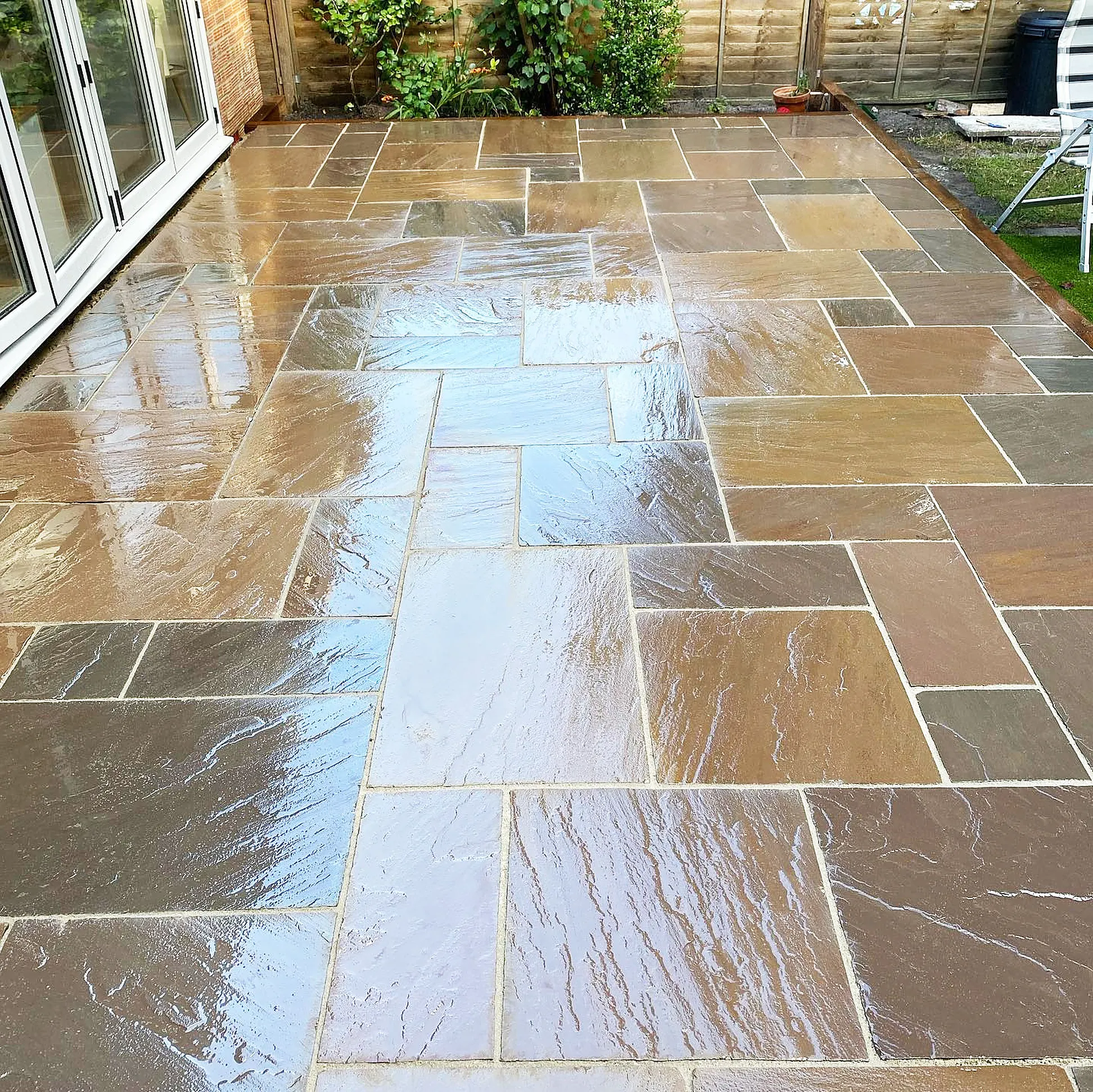
There is a real difference in price between porcelain, sawn sandstone, granite and natural Yorkstone, and you will see it on the crate. You will usually see a bigger difference in what it costs to lay them.
Large format porcelain wants a full bed, a primer on the back of every slab and an accurate sub base. The tolerances are tight and the cutting is slow. Riven stone forgives a lot, while sawn stone with a narrow joint forgives nothing, so the time goes into setting out. Hand made brick, granite setts and fine timber detailing are all paid for in hours rather than by the box.
The cheapest route to a garden that reads as expensive is fewer materials, laid well, in generous sizes. Three surfaces changing every few metres cost more in cutting, edges and junctions, and they look busier for the money.
- Porcelain. Hard, stable and easy to keep clean, with more labour in it than the crate price suggests.
- Sawn sandstone. Calm and consistent, a popular middle ground, and kinder to work with.
- Granite setts and small units. Hard wearing and handsome, priced by the time each unit takes to lay.
- Yorkstone. Beautiful and expensive, both to buy and to work.
- Timber, brick and metal detailing. Paid for by the hour, so it is where fine detail is won or lost.
Planting, Lawns and the Price of Maturity
Planting is where a budget flexes most, because the same scheme can be bought young or bought mature. A hornbeam hedge planted as bare root whips and a run of pleached hornbeam on a clear stem are the same species at a different order of cost. Multi stem trees, large specimens and anything that needs a machine to lift it into place sit at the top of that range.
The part of a planting budget that always pays for itself goes in before a single plant does. Breaking up the pan, improving soil structure, getting levels right and mulching properly decide whether a scheme grows away or sulks for three years. Replacing plants that failed in unprepared ground costs far more than preparing the ground would have.
Lawns work the same way. Turf itself is cheap. A lawn that stays level, drains and keeps its colour through August is a product of what sits under it. Irrigation is far cheaper fitted during construction than added afterwards, because the pipework goes in while the ground is already open.
Reading the Budget Bands Honestly
Our enquiry form asks which band you have in mind: 15 to 25 thousand pounds, 25 to 35, 35 to 60, 60 to 100, or 150 thousand plus. Clients sometimes read that as a price list. It is not. It is a set of brackets that tells us what kind of conversation to have and what is realistic to draw.
A band only means something once it meets a particular garden. The same figure buys a generous terrace, planting and lighting on a flat, accessible plot with sound ground, and covers the groundworks and retaining alone on a steep garden reached through the house. Neither is a bad answer. They are different sites.
What a budget does settle is the order of the work. Tell us the number you are comfortable with and we will say what it reaches, what it does not, and whether you would be better doing half the garden properly this year. Phasing over two or three seasons works well, as long as the drainage and the ducting all go in with the first phase.
How to Get a Number You Can Rely On
A figure worth relying on comes from a visit, a measured survey and a drawing. On the visit we look at access, levels, what the ground does after rain, where water goes now, what is staying and what has to come out. It is also when the awkward questions get asked, which is rather the point of it.
A quote worth comparing shows its working. It gives a build up for each surface, says what happens to the spoil, sets out the drainage, includes the ducting, and shows where the allowances sit for planting and lighting. When two quotes differ a long way, read those lines before you read the totals. A single figure under a list of areas is a guess in better clothes.
It is worth asking who will actually be on site as well. We design, build and then look after gardens with our own team, and the construction is not subcontracted out, which is why the figure we give is one we are still answerable for when we come back to look after the garden.
- Have a budget band in mind, even a rough one, before the first visit
- Say how you want to use the garden, and who uses it, before you discuss materials
- Photograph the access, including the gate, the passage and where a lorry could stand
- Say what has to stay, whether that is a tree, a shed base or a view
- Ask what is excluded, whether that is spoil removal, the soakaway, the ducting for lighting and irrigation, or the planting allowance
Good to know
Questions We Are Asked Most
How Much Does a Landscaping Project Cost in Surrey?
There is no useful average, which is why there is no rate on this page. Our enquiry form works in bands from 15 to 25 thousand pounds up to 150 thousand plus, and where a garden falls in that range depends on access, levels, ground conditions and how much structure the design needs. A number given without a site visit is a guess.
Why Do Two Quotes for the Same Garden Differ So Much?
Almost always because of what sits under the surface rather than on it. Compare the depth and make up of the sub base, what each quote does with the spoil, whether drainage and ducting are included, and what allowance is set aside for planting. The cheaper quote has usually left one of those out.
How Much of the Budget Goes Below Ground?
More than most people expect. On any garden with a change in level, groundworks, drainage and retaining can account for a large share of the cost before a single slab is laid. It is the part of the work you never see, and the only part you cannot revisit later without lifting the surface.
Does a Sloping Garden Cost More Than a Flat One?
Yes, usually noticeably more. The slope has to be cut, built up and then held, and retaining structures need foundations, reinforcement and drainage behind them. Spoil is heavy to move, so a design that reuses soil within the garden instead of sending it away is the saving worth chasing on a sloping plot.
Can the Work Be Done in Phases?
Often, and it can be the sensible way to do it. The rule is that anything buried goes in first. Drainage, ducting for lighting and irrigation, and the levels across the whole garden are set in phase one, so later phases do not mean digging up finished work.
What Does It Cost to Look After the Garden Afterwards?
Our garden maintenance plans start from £160 per month on a twelve month agreement, with a minimum four hour visit each month. A well built garden is cheaper to keep than a neglected one, and planned care is what keeps a planting scheme looking like the drawing three summers later.
Related services
The Work Behind the Guide
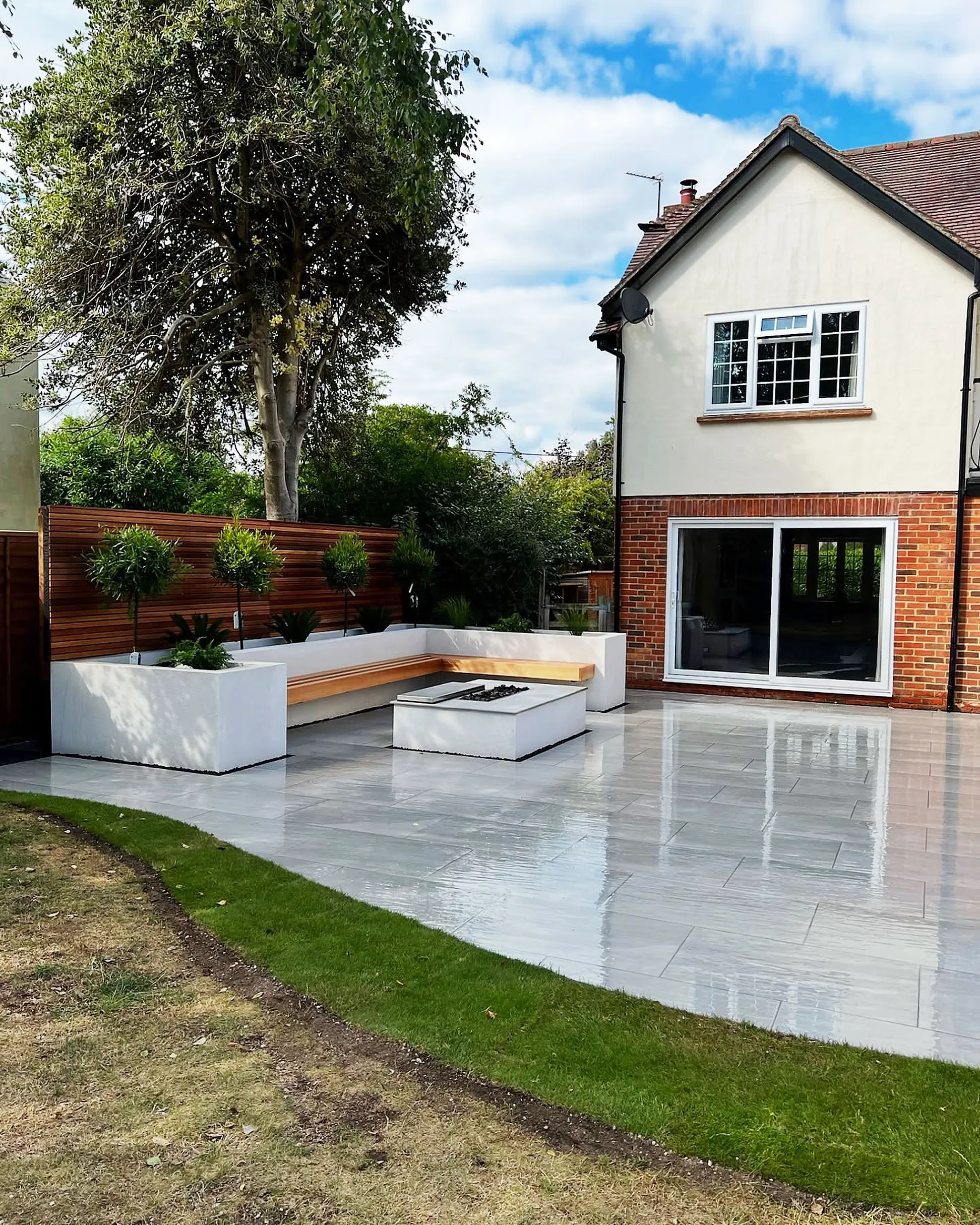
- Landscape ConstructionTerraces, paths, levels, retaining walls and outdoor rooms, built in house from groundworks to the final joint.
- Garden DesignSurvey, concept and planting plan, drawn around how you actually want to use the garden and what the ground will support.
- Garden MaintenanceA considered monthly programme that keeps a well designed garden healthy, tidy and developing properly over time.
Start your garden
Tell Us the Number, and We Will Tell You What It Reaches.
Send a budget band and a few photographs of the access, and we will arrange a visit. You will get a straight answer about what that figure buys in your garden, including when the answer is to do less of it, properly.
- 01We Call You BackWithin one working day, to talk the garden through.
- 02The First VisitA walk round the garden to take in the levels, the access and where the water sits.
- 03A Written ScopeA specification and a programme, with samples to see in your own light.
Hartley Wintney, Hook RG27 8NZ