
A CJ Landscapes guide · Surrey and Berkshire
The Garden Year, Month by Month.
What a well run garden needs in each month of the year, which jobs have a window that closes, and when somebody should actually be in it.
A garden does not run on a calendar of dates. It runs on soil temperature, daylight and how much water the ground is holding, and across Surrey and Berkshire those three things vary more than you would expect over a few miles. The same job can be right in the first week of March on sand at Camberley and wrong until the end of the month on clay at Cobham.
What follows is the year as our own teams work it. What the garden needs each month, what can safely wait, and which jobs have a window that genuinely closes. It is written for a garden that was designed and built properly and now needs keeping that way.
If you take one thing from it, take this. Most of what goes wrong in a private garden goes wrong because a job was done in the wrong month, not because it was done badly.
In short
- Busiest months
- March, April, September and October, when planting, mulching and lawn work all land at once.
- Best planting window
- Mid September to early November, while the soil is still warm and the rain has returned.
- Hard landscaping
- Winter, when the planting is dormant and the garden has a full season to recover.
- Hedge cutting
- Formal evergreens in late summer, with nests checked before anything in the March to August period.
- Lawn renovation
- Early autumn. Scarifying, aeration and overseeding all want warm soil and returning rain.
- Our maintenance plans
- From £160 per month on a twelve month agreement, with a minimum four hour visit each month.
How the Garden Year Really Works in Surrey
Three things set the calendar: soil temperature, day length and how much water the ground is holding. Grass only grows once the soil has warmed to around six degrees. Roots only push out while the soil is both warm and moist. Nothing you plant will establish in ground that is frozen or sodden.
The ground itself changes quickly across this part of the country. The heathland belt through Camberley, Windlesham, Sunningdale and Ascot sits on free draining sand and gravel, so it warms early, dries out fast and needs feeding and watering sooner. Head towards Cobham and on into south west London and heavier clay ground takes over. Clay holds water, warms late, and bakes hard in a dry August.
So read the months below as a sequence rather than a timetable. On sand you will usually be a week or two ahead of them. On heavy clay you will be a week or two behind, and you wait for the ground to be workable rather than for a date in the diary.
- Sand and gravel: early start, early drought, more feeding and more watering.
- Clay: late start, standing water in winter, cracking and compaction in summer.
- A frost pocket at the bottom of a sloping garden holds cold long after the top has warmed.
- A walled or south facing terrace can run a month ahead of the rest of the same garden.
January and February, the Structure Months
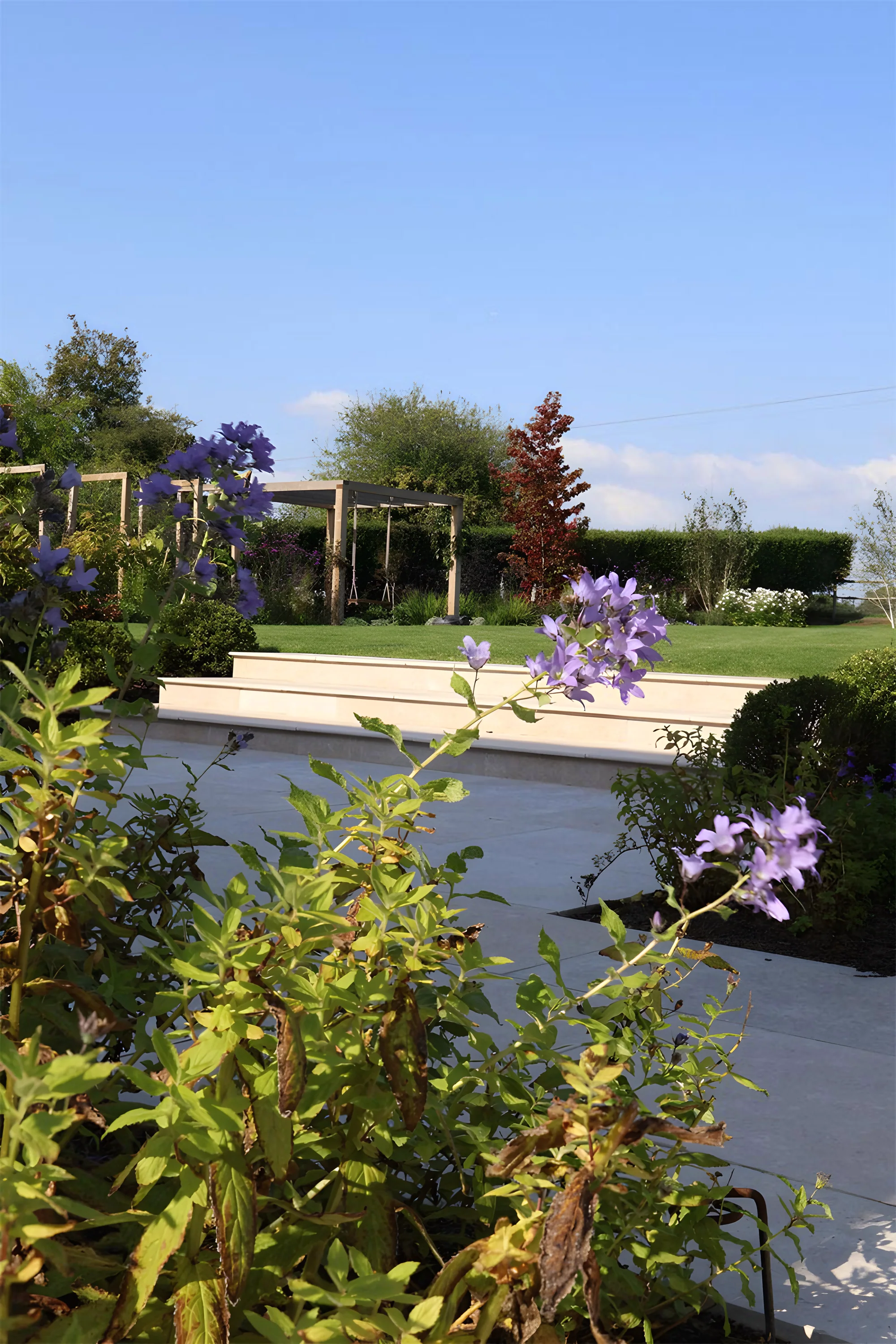
This is when a garden is at its most honest. With the planting cut back you can see the bones of it: the levels, the walls, the paths, the steps and the hedges that hold everything together. It is the right moment to look hard at what has gone tired and plan the work.
It is also the best time to build. Hard landscaping in winter means the planting is dormant, there is nothing in flower to damage, and the garden has a full growing season to settle before you want to use it. On clay it becomes a scheduling job rather than a seasonal one, because the work needs dry spells, proper ground protection and somewhere to put the spoil.
On the plants, this is pruning season. Roses take their main cut in late winter. Wisteria is shortened back to two or three buds. Apples and pears are pruned while dormant, and deciduous hedges can be reduced hard now and will come back. Bare root trees and hedging go in through to about March, and they usually establish better than containerised stock planted in spring.
Leave the grass alone. Walking a wet or frosted lawn does more damage in February than a whole month of mowing does in June.
- Prune roses, wisteria, apples and pears while they are dormant.
- Plant bare root trees and hedging, usually possible into about March.
- Repair and repoint paving, clear gullies and check where water goes.
- Service and sharpen machinery before the first cut, not after it.
- Keep off wet and frosted lawns.
March and April, the Weeks That Set the Year
These two months decide how the rest of the year looks, and they are the two most often left too late. The soil is warming, the rain is still about, and anything that has to establish should be going in now.
Mulch first. A generous layer of compost or composted bark over moist soil in early spring holds water through the summer, feeds the borders slowly and keeps weed seedlings down. Done in March it saves hours of watering and weeding in July. Done in July it is mostly decorative.
The lawn starts moving in March or April depending on the ground. The first cut goes on with the blades high, and the height comes down over several cuts rather than in one. Edges are cut properly once and then only need tidying for the rest of the year. Feeding starts here too.
Irrigation is recommissioned: the system is charged, every zone is run through, and heads are checked for coverage and for anything a winter of growth has blocked. Finding a failed zone in March costs an afternoon. Finding it in a July heatwave costs you the planting.
In the borders, herbaceous perennials are lifted and divided, grasses are cut back to the base before the new growth tangles into the old, and the first clip of fast growing evergreens like privet and laurel comes towards the end of this period, with the hedge checked for active nests before anybody starts.
- Mulch every border while the soil is still moist.
- First cut with the blades high, then lower the height gradually.
- Recommission irrigation and run every single zone.
- Divide perennials and cut grasses back to the base.
- Start feeding lawns, borders and containers.
- Order summer planting now rather than in June.
May and June, When Growth Gets Ahead of You
From May the garden grows faster than at any other point in the year, and the work shifts from starting things to keeping up with them. Mowing moves to weekly. Borders need staking and tying before a wet night flattens them, not afterwards.
New planting from the previous autumn and from spring needs watering through its first two summers, properly and infrequently. A long soak once or twice a week sends roots down. A light sprinkle every evening keeps them sitting at the surface, where they will suffer the week you go away.
Late May is when the Chelsea chop goes on, cutting certain perennials back by about a third so they flower later, shorter and sturdier. It is one of the few jobs where the timing is the whole technique.
Early summer is also when the pests and the mildews arrive. Box, roses and young trees want looking at weekly rather than monthly, because almost every problem is cheap to deal with in the first fortnight and expensive after that.
- Mow weekly, and keep the height up through dry spells.
- Stake and tie before the weather does it for you.
- Water new planting deeply and less often.
- Chelsea chop the right perennials in late May.
- Clip box and topiary as the new growth hardens.
- Look at box, roses and young trees weekly.
July and August, Water and Discipline
The high summer jobs are unglamorous, and they are what separates a garden still looking good in September from one that is not. Deadheading keeps roses and perennials flowering for weeks longer. Raising the mower and leaving the clippings on a stressed lawn does it more good than a close cut and a feed.
Watering wants doing early in the morning or late in the evening, at the base of the plant, and far less often than most people think. Pots and newly laid turf are the exception. In a hot week both will need attention every day.
These are the holiday months, and the one stretch of the year when an unattended garden visibly loses ground. If nobody is going to be there, the pots and the watering need to be somebody's job, agreed and written down before you go.
Formal evergreen hedges, yew, beech and hornbeam, are generally clipped in late summer once growth has slowed. One cut at that point holds a crisp line right through to the following spring, which is why estate hedges are usually done then rather than in June.
- Deadhead weekly to keep roses and perennials going.
- Water early or late, at the root, and deeply.
- Raise the mower height in dry weather and leave the clippings on.
- Clip yew, beech and hornbeam in late summer.
- Arrange cover for pots and irrigation before you go away.
- Keep an eye on newly laid turf daily in a hot spell.

September and October, the Best Planting Window
If there is one thing worth moving in your diary, it is this. Autumn planting beats spring planting almost every time. The soil is still warm from summer, the rain has come back, and a tree or a shrub put in now spends six months making roots before it is ever asked to hold up a canopy of leaves.
Spring planting has to establish and grow at the same time, usually heading into a dry May. Autumn planting is already away by then. For trees, hedging and larger shrubs in particular, mid September to early November is the window to aim for, and bare root stock becomes available towards the end of it.
Autumn is lawn renovation season as well. Scarifying out the thatch, aerating, overseeding and topdressing all want warm soil and returning rain, so early autumn gives much better germination than spring does. If a lawn floods every winter the cause is compaction below the root zone, and the time to deal with that is before the wet months rather than during them. It is why our deep soil aeration is usually carried out in autumn or winter.
Bulbs go in through the autumn, with tulips usually left until about November. Leaves start, and they matter more than they look. Left on a lawn for a fortnight they will kill the grass underneath, and left in a gully they will put water across a terrace in January.
- Plant trees, hedging and shrubs from mid September into early November.
- Scarify, aerate, overseed and topdress the lawn while the soil is warm.
- Deal with winter waterlogging now, not in February.
- Plant spring bulbs, leaving tulips until about November.
- Clear leaves off lawns weekly, and keep gullies and terrace drains clear.
- Order and plan next spring's planting before the nurseries sell out.
November and December, Cutting Back and Protecting
The autumn cut back is a judgement call rather than a clearance. Anything that will collapse into a wet mess comes down. Seed heads and grasses that hold their shape through a frost stay up, because they are most of what the garden has to look at for the next three months, and the birds use them.
The practical jobs are about water and frost. Irrigation is drained or blown through before the first hard frost, and outside taps are isolated. Pots come up off cold paving onto feet so they can drain, and anything tender is wrapped or moved under cover.
This is when outdoor lighting earns its keep, and when it needs checking. Lenses are cleaned, angles are adjusted after a year of growth, and any fitting that has been swallowed by a shrub is freed. A scheme that was right in April is often pointing at the inside of a hedge by November.
The last cut goes on in mild weather with the height raised, and then the mower stays off until spring. Winter is also when a deciduous tree is easiest to look at honestly, because with the leaves off you can see the whole shape of it, and firm ground is kinder than soft ground to anything that has to cross the lawn.
- Cut back what will collapse, leave what holds its shape through frost.
- Drain or blow through irrigation before the first hard frost.
- Lift pots onto feet and protect anything tender.
- Clean and adjust outdoor lighting after a year of growth.
- Last cut in mild weather with the height raised.
- Keep gullies, drains and channel outlets clear through the wettest months.
The Lawn Through the Year
A lawn is the one part of a garden where the right job in the wrong month shows up within days, so it is worth setting out on its own.
Through winter, keep off it when it is wet or frosted and keep the leaves off it. Early spring, first cut high, edges cut properly, feed as growth starts. Late spring and summer, weekly cutting, height up in dry weather, water deeply or not at all. Early autumn is the real work: scarify, aerate, overseed, topdress and feed. Late autumn, a last high cut and leaves off every week.
Two things cause most of the lawn problems we get called about. The first is cutting too short, which stresses the grass and lets moss and weeds in. The second is compaction, which is why water sits on the surface and why spiking never quite fixes it. If a lawn has flooded every winter for years, the answer is below the root zone rather than on top of it.
- Never take off more than about a third of the leaf in a single cut.
- Keep the height up in drought and in winter, and lower it only in the growing season.
- Scarify and overseed in early autumn, when warm soil gives the best germination.
- Moss and standing water are symptoms of compaction and shade, not of a missed feed.
- Aerate before the wet months rather than in the middle of them.
Who Should Be in the Garden, and How Often
A well run private garden does not need somebody in it every week of the year. It needs the right amount of time in the right months, and a plan written down so nothing gets missed in the weeks when four jobs are all due at once.
In practice that means a monthly visit as a floor through the whole year, with far more time in March, April, September and October than in December and January. A garden that gets a mow every week in summer and nothing at all in autumn will drift, because the mow is the least important thing on the list.
Our garden maintenance plans start from £160 per month on a twelve month agreement, with a minimum four hour visit each month. The twelve months matter because of the autumn and winter work, which is where a garden is actually made or lost, and which is the first thing to fall out of a pay as you go arrangement.
For larger houses and grounds we run it as a planned calendar rather than a list of visits, under grounds maintenance or estate management. Lawns, borders, hedges, trees, drives and drainage are all programmed across the year by one team. Where the same people designed and built the garden, they already know what is under the lawn, where the irrigation runs, and why a border was planted the way it was.
- Monthly as a floor, weighted heavily towards spring and autumn.
- Write the year down, including every job with a window that closes.
- Keep winter inside the agreement, because it is the work that gets dropped first.
- Larger grounds are better run on a calendar than on a visit by visit basis.
- One team across design, build and care means nothing has to be explained twice.
Good to know
Questions We Are Asked Most
When Is the Best Time of Year to Plant a Tree or a Hedge?
Autumn, broadly mid September to early November, while the soil is still warm and the rain has returned. The plant spends the winter making roots instead of trying to establish and grow at the same time. Bare root trees and hedging come available from late autumn through to about March, and they usually settle in better than containerised stock planted in spring.
When Should Hedges Be Cut?
Formal evergreens like yew, beech and hornbeam are generally clipped in late summer, once growth has slowed, and that single cut holds a crisp line into the following spring. The bigger constraint is nesting birds. An active nest is something you generally have to work around, so any cutting in the main nesting season, broadly March to August, means checking the hedge first and taking the current guidance into account, and fast growers like privet and laurel are the ones that usually need an earlier cut as well.
Can Hard Landscaping Really Be Built in Winter?
Yes, and winter is often the better time for it. The planting is dormant, nothing in flower is at risk, and the garden has a whole growing season to settle before you want to use it. On clay it becomes a scheduling question rather than a seasonal one, because the work needs dry spells, proper ground protection for lawns and access, and somewhere to put the spoil. Mortar work pauses in hard frost.
How Often Does a Well Designed Garden Actually Need Somebody in It?
Monthly as a floor across the whole year, with much more time in spring and autumn than in midwinter. A weekly summer mow and nothing in October is the common pattern and the wrong one, because the autumn jobs are the ones whose window closes. Our own maintenance plans start from £160 per month on a twelve month agreement with a minimum four hour visit each month.
My Lawn Floods Every Winter. What Is the Actual Fix?
Almost always compaction rather than missing drainage pipework. The soil particles are pressed together so rain cannot move down through the profile, and spiking or hollow tining only reaches the top few centimetres. The time to deal with it is autumn or early winter, before the wettest months. Our deep soil aeration decompacts the ground to around a metre using compressed air, and the fissures are held open with around a kilogram of enriched biochar per square metre.
Which Jobs Do People Most Often Leave Too Late?
Four come up again and again. Mulching, which wants doing in early spring while the soil is still moist. Recommissioning irrigation, which wants testing in March rather than discovered broken in a July heatwave. Autumn planting, which gets pushed into spring and then struggles. And draining the irrigation before the first hard frost.
Related services
The Work Behind the Guide
- Garden MaintenanceA considered monthly programme that keeps a well designed garden healthy, tidy and developing properly over time.

- Grounds MaintenanceEstate level care for larger houses and grounds. A dedicated team on a planned calendar, not a weekly mow and go.
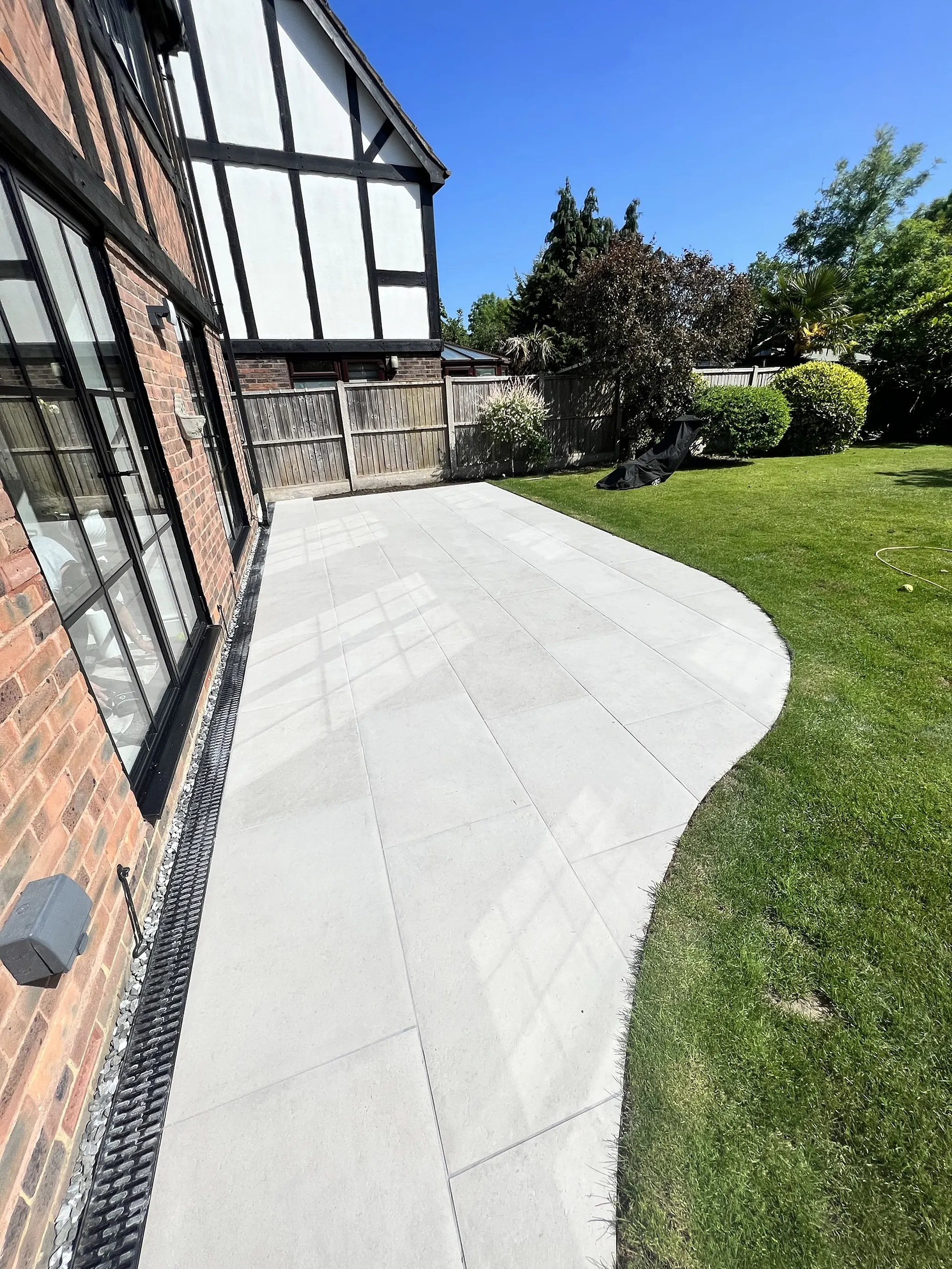
- Estate ManagementA single team looking after the whole property: lawns, borders, trees, drives, drainage and the seasonal programme behind them.

Start your garden
Tell Us What the Garden Does, Month by Month.
If you would rather the year was somebody else's job to remember, we will set it out properly: what needs doing, when, and who is doing it. The same team that builds the gardens looks after them.
- 01We Call You BackWithin one working day, to talk the garden through.
- 02The First VisitA walk round the garden to take in the levels, the access and where the water sits.
- 03A Written ScopeA specification and a programme, with samples to see in your own light.
Hartley Wintney, Hook RG27 8NZ