
A CJ Landscapes guide · Lawns and soil
Why Your Lawn Is Struggling, and What Actually Fixes It.
A lawn that floods in January and bakes in July is not short of feed. It is telling you something about the ground underneath it. Here is how to work out which of the usual faults you have, and what each one really needs.
A thin, mossy, patchy lawn is almost never hungry. Grass roots live in the top layer of the soil, so anything wrong down there shows on the surface first, and feed spread over a fault does not reach it.
A lawn fails in a Surrey or Berkshire garden for a short list of reasons: compaction, shade, drainage, thatch, wear, watering, and a seed or turf that was never right for that ground. Most struggling lawns have two or three of them running at once, which is why a single treatment so often changes nothing.
This guide takes each one in turn: what it looks like, how to confirm it, and what actually fixes it. Read it with a spade in your hand, because nearly every diagnosis here begins with cutting a small square out of the lawn and looking at what is under it.
In short
- The usual cause
- Compaction. The hard band that makes a lawn flood normally sits below the depth a spade or a lawn spiker reaches.
- First test
- Push a screwdriver into damp ground. If it will not go in easily, the soil is tight.
- Second test
- Lift a turf square. Roots that stop dead at a smooth, hard layer are not short of feed.
- Best window
- Autumn for scarifying, surface aeration and overseeding. Deep decompaction whenever the ground is workable.
- Deep soil aeration
- Compressed air at seven bar to around a metre down, with around one kilogram of enriched biochar per square metre.
- Keeping it right
- Garden maintenance plans start from £160 per month on a twelve month agreement, with a minimum four hour visit each month.
Start With the Ground, Not the Grass
Before you buy a bag of anything, cut a square out of the lawn with a spade, a full spade blade deep, and lift it out. You are looking at a section through the soil, and it answers most of the question on its own.
Healthy ground is open and crumbly, dark near the top, with grass roots running down through it and worm channels you can see. Compacted ground comes out as a slab. The roots stop abruptly at a smooth, hard layer, and the soil below is often grey or blue tinged and smells sour, because water has been sitting in it without air.
Then watch the lawn through a wet week and a dry one. A lawn only shows its real fault in one season or the other, and the pattern of where water stands and where moss grows is the most useful information you will get all year. Put the turf square back, firm it down and water it, and it knits back in.
- Lift a turf square. Roots that stop dead at a smooth, hard layer mean compaction, not hunger.
- Push a screwdriver into damp ground. If it will not go in easily by hand, the soil is tight.
- Watch where water stands after heavy rain and how long it takes to clear. A few hours is normal, days are not.
- Map the moss. Moss in shade, moss in hollows and moss along the worn routes are three different problems with three different answers.
- Look at the same lawn in January and in July before you decide what is wrong with it.
Compaction, the Fault Behind Most Tired Lawns
Compacted soil has had the air squeezed out of it. The particles are pressed tightly together, so water cannot pass down and roots cannot push through. The lawn floods in winter because the rain has nowhere to go, and burns in summer because the same tight ground holds very little water where the roots can reach it.
It builds up quietly. Clay subsoil compacts easily, building work and machinery crush it further, and on many newer houses the topsoil was stripped, the ground driven over for months, and a thin layer of soil laid back over the top. After that it is foot traffic, mowers on soaking ground and the same turning circle every week that keep it tight.
The tell is a lawn that does both extremes. Puddles in the same places every winter, ground you could not get a fork into in August, moss creeping in, grass that thins however much you feed it, and very few worm casts, because worms do not live in airless soil.
Surface aeration helps, within limits. Spiking and hollow tining work the top few centimetres, which relieves surface sealing and lets water and air in at the crown of the plant. The band that actually floods a lawn usually sits well below that, which is why a lawn can be aerated every autumn for years and still stand in water.
That deeper layer is what our deep soil aeration service was brought in to treat. A probe goes down around a metre, compressed air at seven bar fractures the compacted layers, and the fissures are filled with around one kilogram of enriched biochar per square metre so they stay open. There are no trenches, nothing to relay afterwards, and because biochar does not break down, one treatment holds.
- Surface spiking and hollow tining treat the top few centimetres. They do not reach a compacted band lower down.
- Rolling, feeding and topdressing a compacted lawn lays good material over the problem.
- Deep decompaction opens the whole profile, so water keeps moving and roots can go down after it.
- Stay off it when it is soaking. Mowing and walking wet ground is how a lawn gets a little tighter every year.
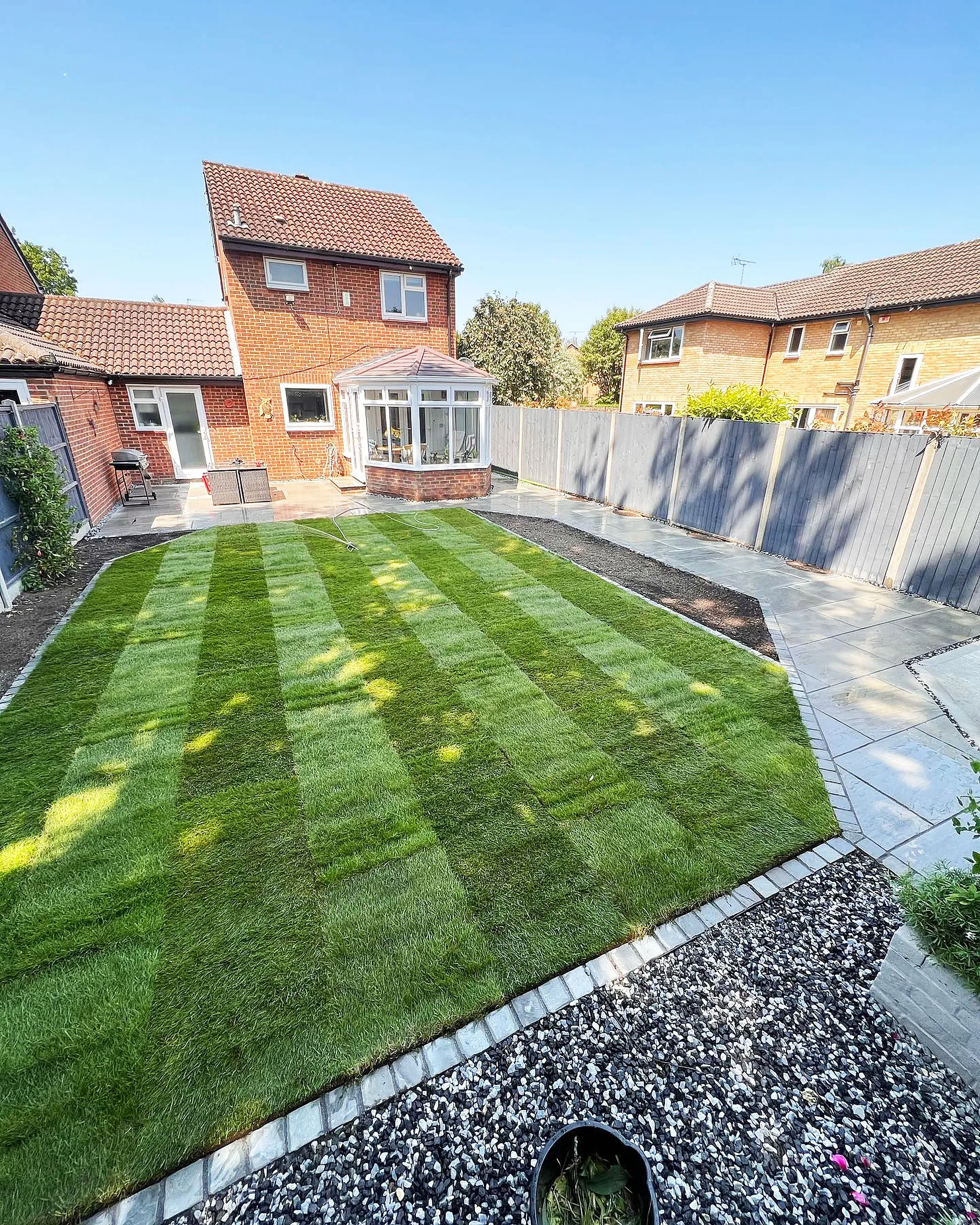
Drainage, and the Difference Between a Wet Lawn and Wet Soil
Two separate things make a lawn wet, and they need opposite answers. Either too much water is arriving, or the water that arrives cannot leave. Work out which before anyone picks up a spade.
Water arriving is usually a levels problem. Go out in heavy rain and follow it. A blocked gully, a downpipe discharging onto the grass, a terrace or drive laid with its fall towards the lawn, or a lawn sitting lower than everything around it will collect whatever the hard surfaces shed. That is a construction fault, and the fix is in the levels and the surface water drainage, not in the grass.
Water not leaving is the soil. Heavy Surrey clay, a compacted band left by machinery, or a layer of crushed hardcore under a thin skin of topsoil will all hold water above themselves. You get a shallow pool of saturated soil sitting on a lid, with dry ground below it.
Land drains and soakaways have a real place, but a drain needs somewhere to go. If there is no fall to an outfall, no soakaway in free draining ground below and nowhere you have permission to discharge to, a trench simply moves the puddle somewhere else. Where the problem is a compacted lid rather than a lack of pipework, decompaction is often the cheaper and less destructive answer, because nothing has to be dug up and relaid.
Discharging surface water into a public sewer, a ditch or a watercourse generally needs permission, and large new areas of hard surfacing can bring their own requirements. It is worth checking with the local authority and your water company before anything is dug.
- Follow the water in heavy rain first. Downpipes, gullies and the fall of the paving cause more wet lawns than soil does.
- A land drain needs an outfall. Without one it relocates the puddle rather than removing it.
- A hard band under the turf holds water above it. Break the band and the water keeps moving down.
- Discharging water into a public drain or a watercourse usually needs permission, so it is worth checking before work starts.
Shade, the One You Cannot Argue With
Grass is a sun plant. Under a mature canopy, against a north facing wall or down the side of a garage it is short of light, and in dry shade it is short of water as well, because the tree takes what falls before the grass gets to it.
Damp shade is workable. Dry shade under beech, birch, lime or conifers is the hardest ground in any garden, and a lawn there will be thin, mossy and bare in patches no matter what you spend on it.
There are honest ways to buy ground back. Shade tolerant mixes built around strong creeping red fescue and smooth stalked meadow grass hold on better than a ryegrass lawn. Mowing higher leaves more leaf to collect what light there is. Thinning or lifting a canopy lets light and rain through, which is work for an arboriculturist rather than for us, and keeping traffic off a shaded strip matters more there than anywhere else, because it recovers so slowly.
Mature trees are often protected by a tree preservation order, or stand in a conservation area, so pruning generally needs consent before anyone climbs. It is worth checking with the council first, and worth taking advice from an arboriculturist on what the tree will tolerate.
The useful answer, often, is to stop asking grass to do it. A shade planting scheme with ferns, epimedium, hellebores, hostas and woodland bulbs looks deliberate and gets better every year. So does a gravel path, a run of stepping stones or a small seating area taken out of the shaded corner. A bald strip of grass under a tree reads like a mistake, which is what it is.
- Dry shade under a mature canopy is the hardest ground of all for grass, because the tree takes the water first.
- Shade tolerant seed mixes buy ground back. They do not make grass a shade plant.
- Mow higher in shade. More leaf means more light collected.
- Mature trees are often protected, so lifting or thinning a canopy generally needs consent. Check with the council before any work.
- Where grass will never hold, shade planting, gravel or a path is a better answer than a bare patch.
Thatch and Moss, Two Symptoms Treated as Causes
Thatch is the layer of dead stems, roots and clippings that sits between the green growth and the soil. A thin layer is normal and does some good. A thick, spongy one is a problem: it holds rain at the surface, keeps the roots up in the thatch instead of down in the soil, feels like a mattress underfoot, and dries out within days of a dry spell.
You can measure it in the turf square you already cut. Look at the brown fibrous band above the soil. If it is noticeably thick and springy, the lawn needs scarifying, and the real point of scarifying is what you do next. Raking out thatch opens the surface, so overseed and topdress straight after, while the soil is still warm enough to germinate.
Moss is not a disease and not a sign of hunger. It is an indicator, and where it grows tells you which chapter of this guide applies. Moss in the shade is a light problem. Moss in the hollows and along the wettest edge is drainage or compaction. Moss in the walked lines is wear. Moss evenly across a lawn that is cut very short is usually a mowing height problem.
Iron based treatments blacken moss so it rakes out, and that is worth doing as part of a renovation. On its own it is cosmetic. If the reason the grass was weak has not changed, the moss comes back into the same gaps within a season or two.
Two things make it worse. Scarifying hard in spring on a lawn that is already thin opens it up to weeds and drought just as the pressure comes on. And heavy feeding builds soft growth and more thatch, which is the opposite of what a spongy lawn needs.
- A thin thatch layer is normal. A thick, spongy one holds water at the surface and keeps roots out of the soil.
- Scarify in autumn and overseed straight afterwards, while the soil is still warm.
- Moss is an indicator, not a disease. Treat it without changing the reason and it returns.
- Mowing too short, too often, thins the grass and hands the gaps to moss.
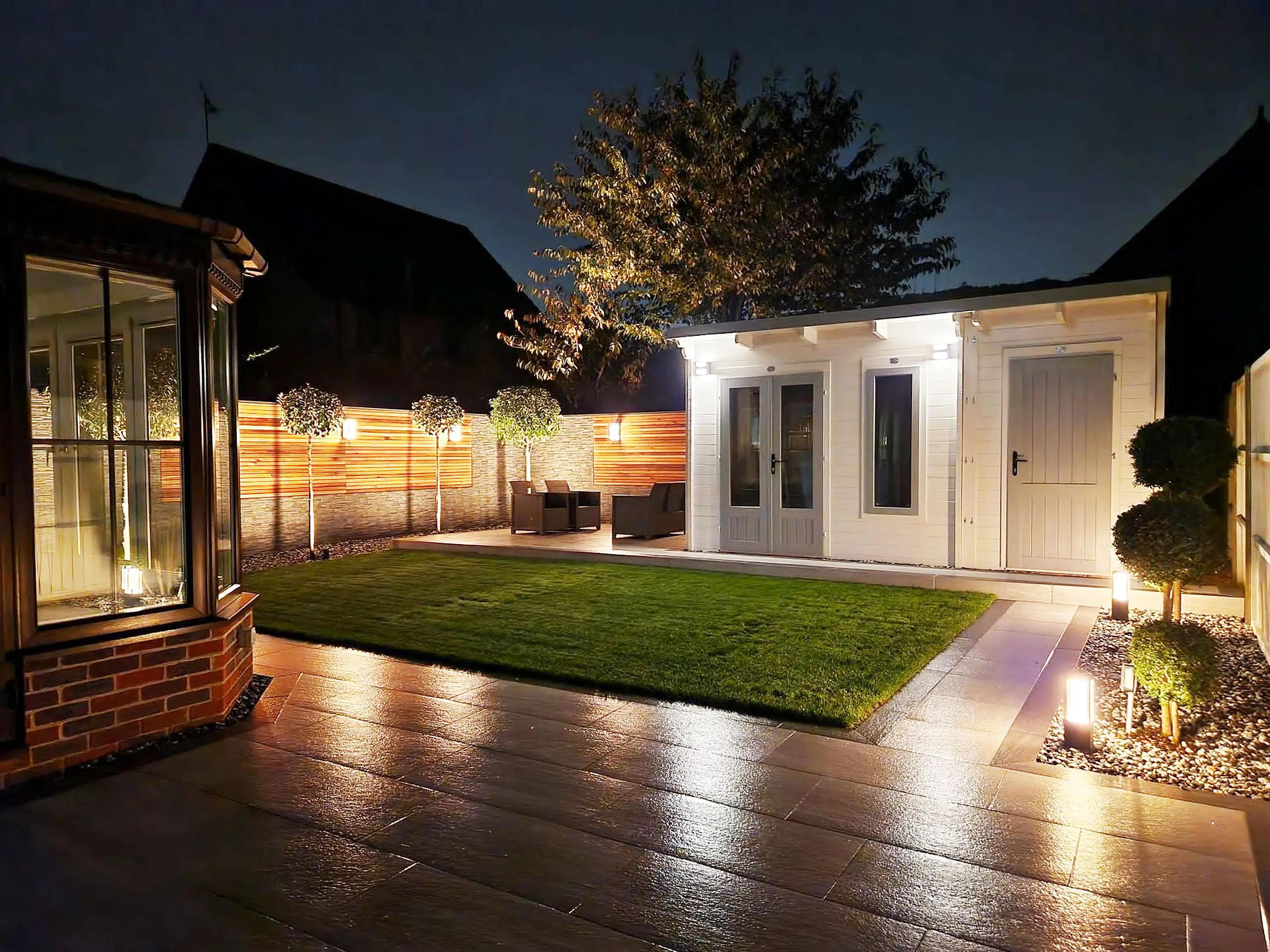
Wear, and the Routes People Actually Walk
Look at a struggling lawn in late winter and the bare ground draws you a map of how the garden is used. A worn line cut across the corner to the gate. A bald ring under the trampoline. A dog's patrol route along the fence. The strip by the bin store, and the landing spot at the bottom of the slide.
Grass will not carry concentrated traffic, and no seed mix changes that. Reseeding a route that people walk every day is an annual bill with nothing to show for it by March.
The answer is usually to accept the route and build it. Stepping stones set flush with the turf let you mow straight over them and give the foot a hard landing. A gravel or stone path on the desire line looks intentional and lasts. Where the route is created by an object rather than a destination, move the object: a trampoline shifted two metres each spring, a bin store relocated off the grass, a washing line moved to a hard standing.
Heavy, short bursts of use do the most damage. A skip, a delivery lorry, a marquee or a pile of building materials will compact a lawn in one weekend, and the lawn will take a season or more to answer for it. If work is coming, protect the route with boards or take the traffic across hard surfaces instead.
- Reseeding a route people walk is an annual bill. Put a path on the line instead.
- Stepping stones set flush with the turf still let you mow straight across.
- Move what creates the route: a gate, a bin store, a trampoline, a washing line.
- Vehicles, skips and marquees compact a lawn in a weekend. It takes a season to recover.
The Wrong Seed and the Wrong Turf for the Ground
Lawn grasses fall into two broad families, and they are not interchangeable. Hardwearing mixes built on perennial ryegrass take traffic, recover fast and look green rather than fine. Ornamental mixes of fine fescues and bents make the close, even, finely textured lawn that stripes properly and sits well beside crisp paving, and they will not take a football match.
Most trouble comes from putting one where the other belongs. An ornamental mix on a family lawn with a dog thins out inside a year. A coarse ryegrass turf in a formal scheme looks heavy next to porcelain, clipped hedging and a sharp edge, and no amount of mowing makes it read fine. Almost all standard garden turf sold on a pallet is ryegrass based, which is the right choice for most family gardens as long as you know that is what you are buying.
Then there is the ground it is laid on, which matters more than the mix. Turf rolled out over compacted, poorly graded soil knits into the thin layer under it and no further. Two or three seasons later it is thin, uneven and holding water, and the turf gets the blame. The lawn is actually made before it arrives: decompaction, a decent depth of suitable rootzone, grading so the falls run where you want them, and a fine, firm, even finish.
Soil decides the rest. On the free draining sands and gravels around parts of Surrey and Berkshire, a fescue rich mix copes with dry summers far better than ryegrass. On heavy clay, drainage and compaction have to be sorted first or the mix is irrelevant. If a design calls for a striped ornamental lawn, the light and the soil have to support one, and if they do not, the honest move is to put the lawn where they do and do something else with the rest.
One practical point when patching: overseed with the same family you already have. Ryegrass seed scattered into a fine fescue lawn grows in a different colour and texture, and the repair stays visible for years.
- Ryegrass for a lawn that gets used. Fine fescue and bent for an ornamental one.
- Most standard turf on a pallet is ryegrass based. In a formal scheme it reads coarse against porcelain and clipped hedging.
- Turf knits into the rootzone it is laid on and no further. Decompaction, a decent depth of suitable rootzone and a firm, even grade are what make the lawn.
- Overseed with the same grass family you already have, or the repair shows for years.
Water, Too Little, Too Much, and at the Wrong Time
A lawn that goes brown in a dry July is usually dormant rather than dead. Ryegrass and fescue shut down, hold on at the crown and green up again within a fortnight of proper rain. Watering a whole lawn through a hot summer to keep it green uses a great deal of water for a cosmetic result, and in a drought it is the first thing to give up.
How you water matters more than how often. Little and often wets the thatch and the top centimetre, which keeps the roots up there where they dry out fastest. A longer soak, less frequently, pushes water deeper and the roots follow it down, which is what makes a lawn able to ride out the next dry spell. Early morning loses less to evaporation than the middle of the day, and leaves the grass dry by evening, which helps keep disease down.
A dry Surrey summer can bring hosepipe restrictions, so it is worth checking with your water company before you plan a watering regime around a sprinkler.
On compacted ground, none of this works. Water either runs off to the low point or sits in the surface layer, so the money goes on watering a lid. Fix the soil first.
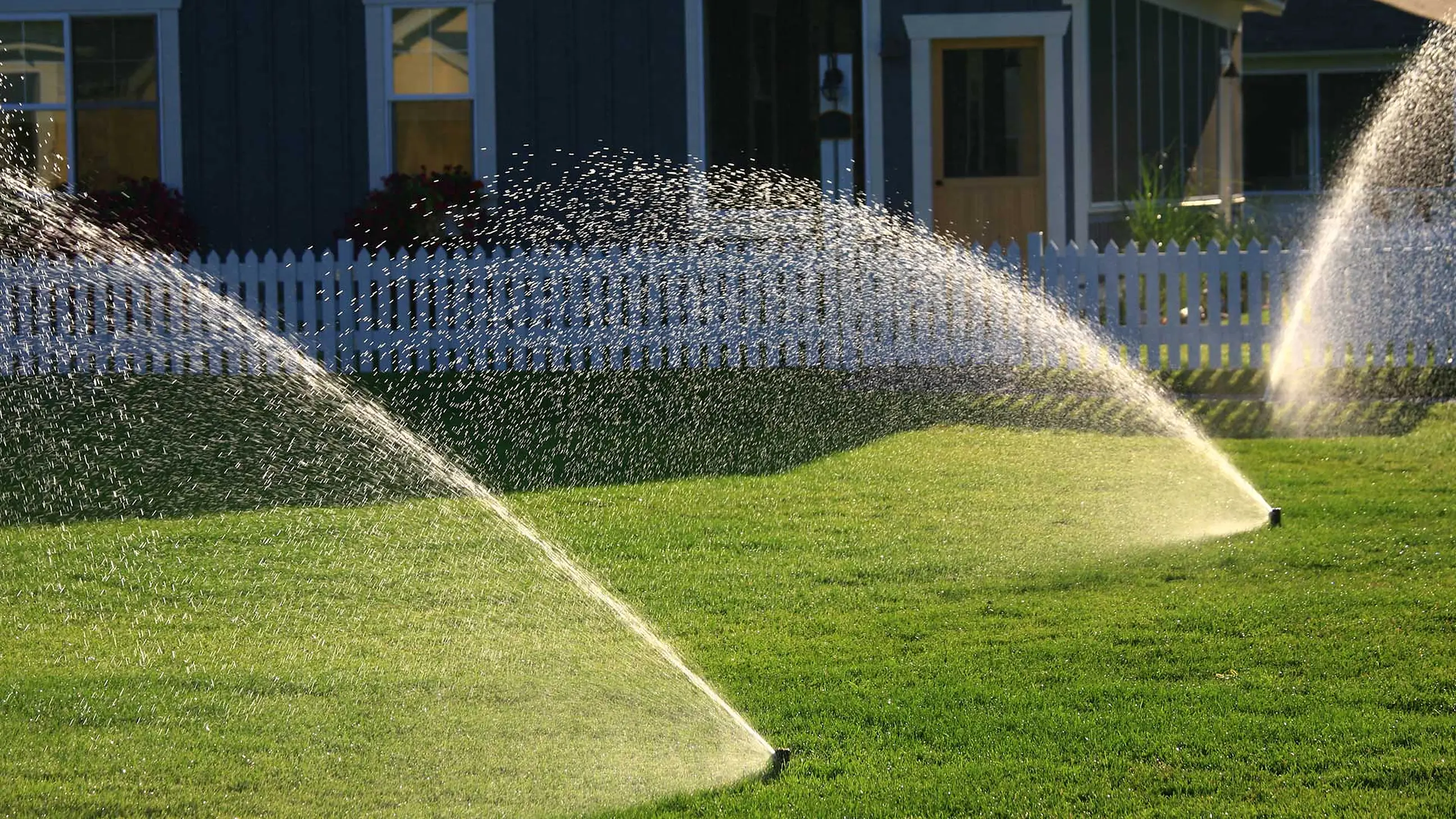
Where a lawn genuinely has to stay green, zoned irrigation is the sane way to do it, with lawns and borders on separate zones because they want completely different amounts. The time to install it is during construction, while the ground is open and the pipework can run under the hard landscaping. Retrofitting under a finished lawn and a finished terrace is far more disruptive and far more expensive, which is why we build irrigation in as part of the construction programme rather than selling it afterwards.
- Brown grass in a dry summer is usually dormant, not dead.
- Water longer and less often. Little and often keeps the roots at the surface.
- Early morning beats the middle of the day, and the grass goes into the night dry.
- Put irrigation in while the ground is open during construction. Retrofitting under a finished garden costs far more.
- Watering compacted ground is watering a lid. The soil comes first.
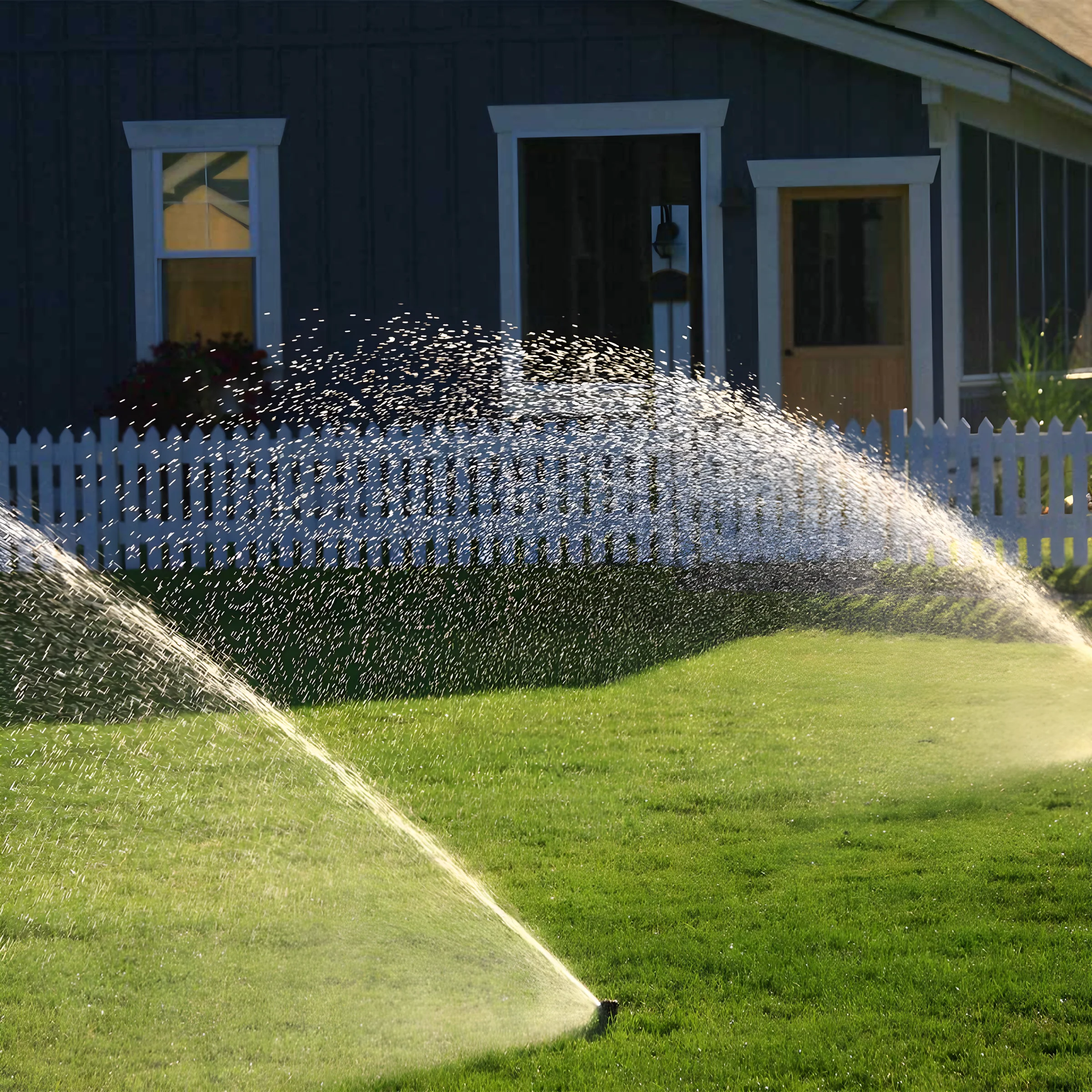
Putting a Struggling Lawn Right, in the Right Order
The order matters more than the products. Stop the water arriving, then open the soil, then deal with thatch and seed, then fix the mowing, then keep it on a calendar. Do those in the wrong order and you pay twice.
Autumn is the main working window. The soil is still warm, rain is more reliable, and weeds and drought are not competing with new seedlings, so scarifying, surface aeration, overseeding and topdressing all take far better than they do in spring. Spring is the second choice. Deep soil aeration can go in whenever the ground is workable, and a waterlogged lawn is usually treated in autumn or winter so that it drains properly through the wettest months.
Set your expectations to a season rather than a weekend. A lawn is a crop. Seed sown in September is a thin green haze in October and a lawn by the following June, and ground that has been compacted since the houses went up does not recover in a fortnight.
The last part is simply doing the right thing at the right time, every year, which is most of what separates a good lawn from a tired one. Our garden maintenance plans start from £160 per month on a twelve month agreement, with a minimum four hour visit each month, and the point of a plan is that the mowing height, the feeding, the aeration and the seeding happen on one calendar, done by the team that knows what the ground under that lawn does in February.
If you want a straight answer before you spend anything, ask for the ground to be looked at. We cut a turf square, look at the profile and the depth the roots actually reach, and tell you which of the faults in this guide your lawn has got.
- First, stop water arriving: downpipes, gullies and the fall of the paving beside the lawn.
- Second, open the soil. Surface aeration for the top few centimetres, deep decompaction for the band below it.
- Third, scarify and overseed in autumn, while the soil is still warm.
- Fourth, raise the mowing height and keep it there. Most struggling lawns are cut too short.
- Then put it on a calendar, so the work happens at the right time rather than when the lawn starts to look bad.
Good to know
Questions We Are Asked Most
Why Does My Lawn Flood in Winter and Go Hard in Summer?
Those are two faces of the same fault. Compacted soil has had the air squeezed out of it, so winter rain cannot pass down and sits on the surface, and in summer the same tight ground bakes and holds very little water within reach of the roots. A lawn that does both is nearly always telling you about the soil rather than the grass.
Will Spiking or Hollow Tining Fix a Waterlogged Lawn?
It helps the surface. Spiking and hollow tining work the top few centimetres, which relieves surface sealing and thatch. The compacted band that actually makes a lawn flood usually sits lower than that, which is why a lawn can be aerated every autumn for years and still stand in water. Deep soil aeration treats the profile to around a metre, and because the fissures are held open with biochar the change does not wear off.
Is Moss a Sign That the Lawn Needs Feeding?
Rarely. Moss grows where grass is weak, so it is pointing at the reason: shade, wet or compacted ground, mowing too short, or heavy wear. An iron based treatment will blacken it so it rakes out, which is worth doing as part of a renovation, but unless the reason changes the moss is back in the same gaps within a season or two.
Can I Have a Good Lawn in Shade?
A reasonable one, sometimes. A shade tolerant mix built around creeping red fescue holds on better than ryegrass, a higher mowing height helps, and thinning a canopy lets light and rain through where the tree will tolerate it and consent allows. In dry shade under a mature canopy the honest answer is usually to stop asking grass to do the job and plant for shade instead, or run a gravel path or stepping stones through it.
Is It Better to Returf or Repair the Lawn I Have?
It depends entirely on what is underneath. New turf laid over the same compacted or badly drained ground fails in the same way within a few seasons, so returfing without sorting the soil is the most expensive way of not solving it. If the ground is sound and the grass is simply thin, worn or the wrong mix, scarifying and overseeding will get you there for a great deal less.
When Is the Best Time to Put a Struggling Lawn Right?
Autumn for most of the work. The soil is still warm, rain is more reliable and weed competition is lower, so scarifying, aeration, overseeding and topdressing all take better. Spring is the second window. Deep soil aeration can be done whenever the ground is workable, and waterlogged lawns are usually treated in autumn or winter so they drain through the wettest months.
Related services
The Work Behind the Guide
- Deep Soil AerationCompacted, waterlogged ground decompacted to around a metre down, without digging. One treatment, permanent change.
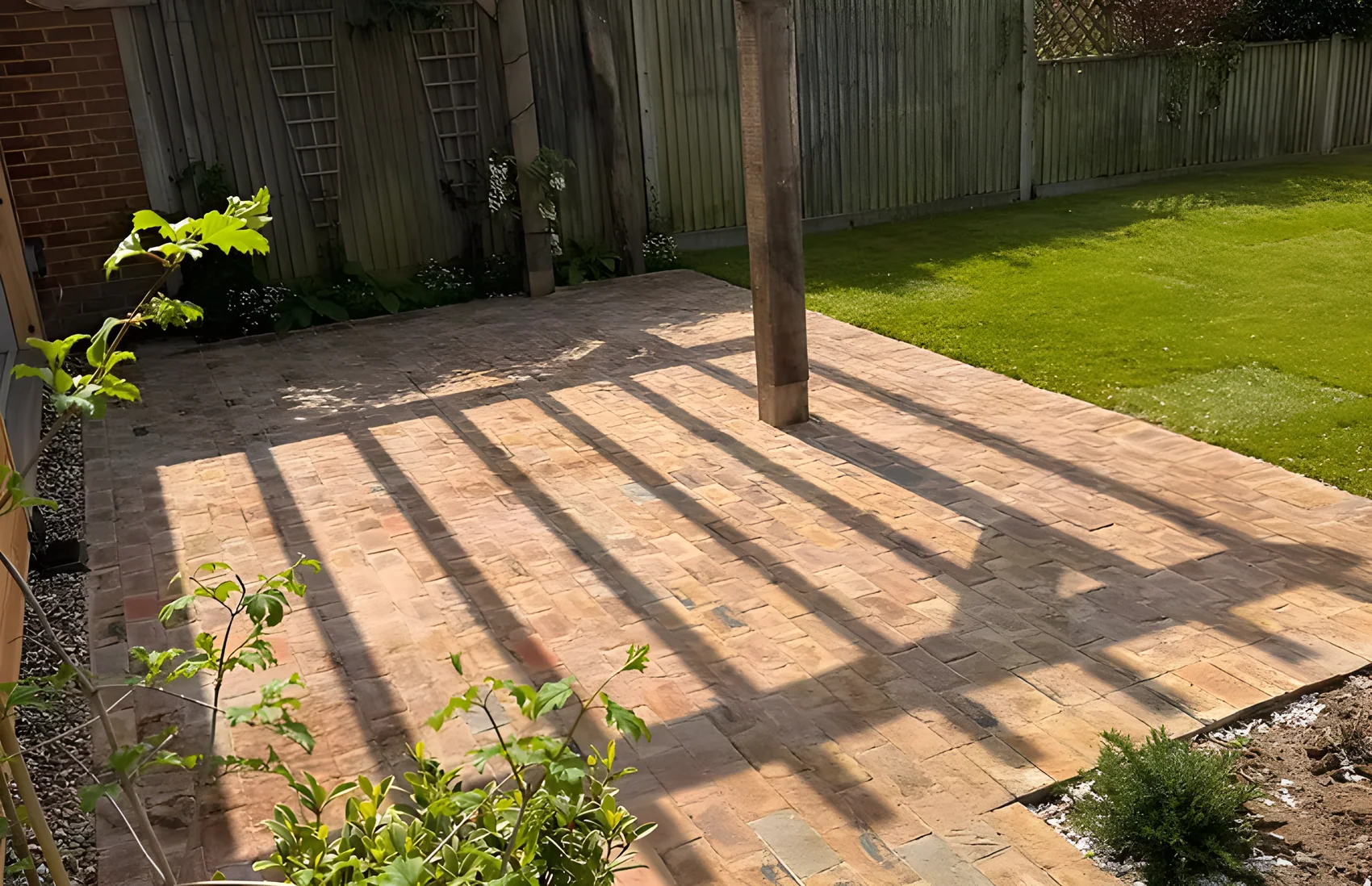
- IrrigationZoned irrigation built in during construction, delivering the right water to lawns and borders without waste.
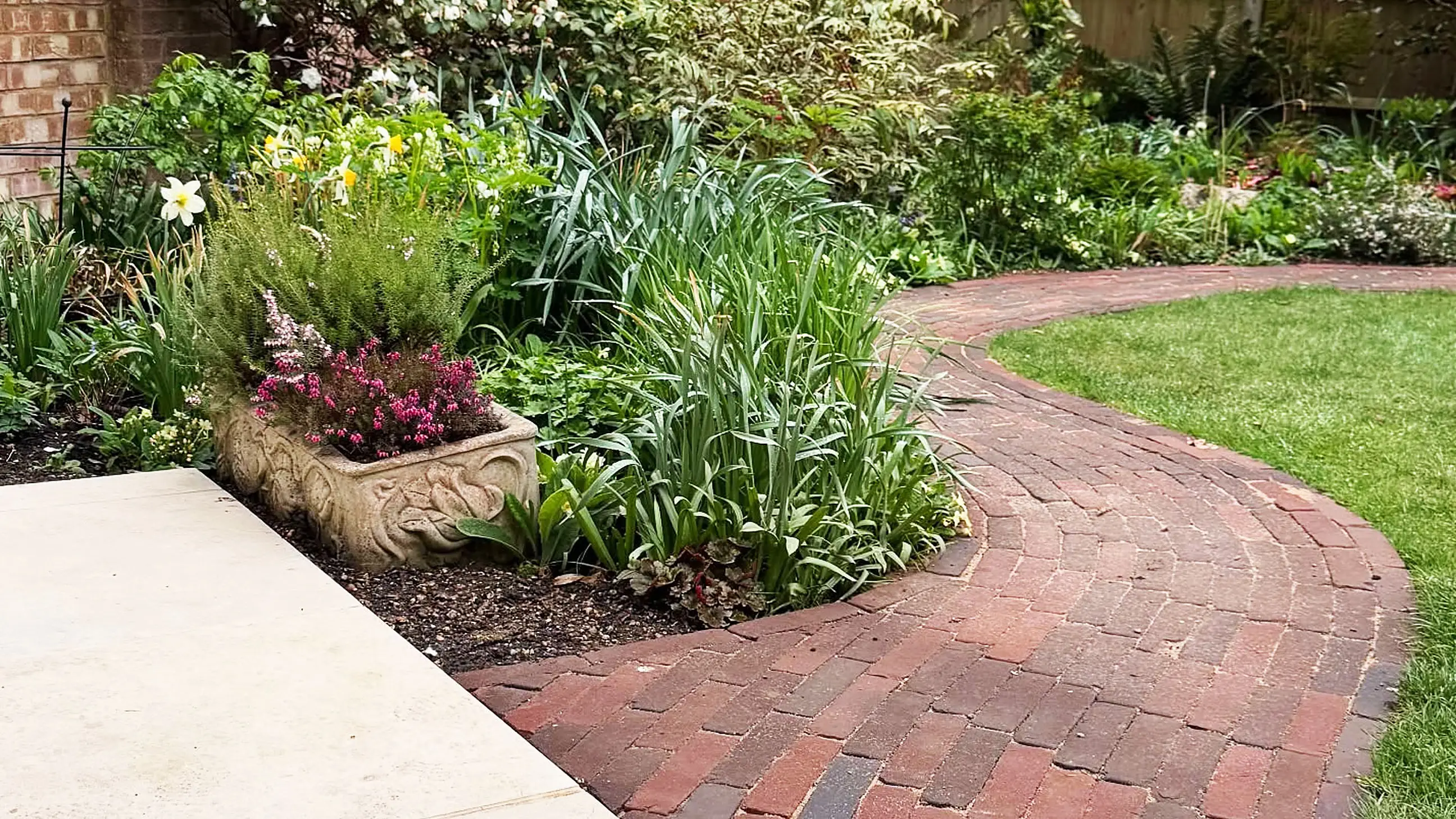
- Garden MaintenanceA considered monthly programme that keeps a well designed garden healthy, tidy and developing properly over time.
Start your garden
Tell Us What the Lawn Does in the Wettest Week of the Year.
That one answer usually tells us where to start looking. We will come and read the ground, and if compaction is not what is wrong with your lawn we will tell you that and point you at what is.
- 01We Call You BackWithin one working day, to talk the garden through.
- 02The First VisitA walk round the garden to take in the levels, the access and where the water sits.
- 03A Written ScopeA specification and a programme, with samples to see in your own light.
Hartley Wintney, Hook RG27 8NZ