C J LANDSCAPES 01276 582095Get in touch

Oxshott, Surrey

Landscaping in Oxshott on Sand, Loam and London Clay

Design, construction and long term care for private gardens on the Crown Estate, the Birds Hill Estate, the Danes Way and Waverley Road estates and the streets below Oxshott Heath, on ground that changes road by road.

Landscaping in Oxshott

What Makes an Oxshott Garden Different

Oxshott is a small, wooded, very private village sitting between Esher and Leatherhead, with the heath on its doorstep and almost nothing commercial beyond a short parade of shops on the High Street, which grew from what were once just three shops. Elmbridge describes the local centre as having a strong semi rural village character, and that is exactly how it reads. The railway station on the New Guildford line is what made the place and still defines it, putting Waterloo within commuting distance while the Heath, Oxshott Woods and the Crown Estate's Prince's Coverts keep the village physically separate from Claygate, Cobham and Esher by Green Belt and common land.

Away from the High Street the pattern is a series of small to medium developments usually set around a crescent or a cul de sac, which the council itself calls mini estates which lack connectivity, derived from a series of large houses with grounds that have been progressively sold off and developed as separate parcels. Several of the residential areas are private estates with limited access and no through public route, and some have gated entrances. The practical effect is that you know your own road well and the next one hardly at all, and a garden job here gets planned one estate at a time.

It is a village of trees and hedges rather than walls and railings. Houses are set back in mature gardens often with soft landscaped boundaries with trees to the front and back of properties, and the council asks for retention of the landscape qualities of the area specifically with regards to trees and mature hedges and boundaries. What decides what any of those gardens can actually be, though, is underfoot, because Oxshott is built across three different grounds inside one small village. So this page is about the plots and the soil here, in that order.

See the work
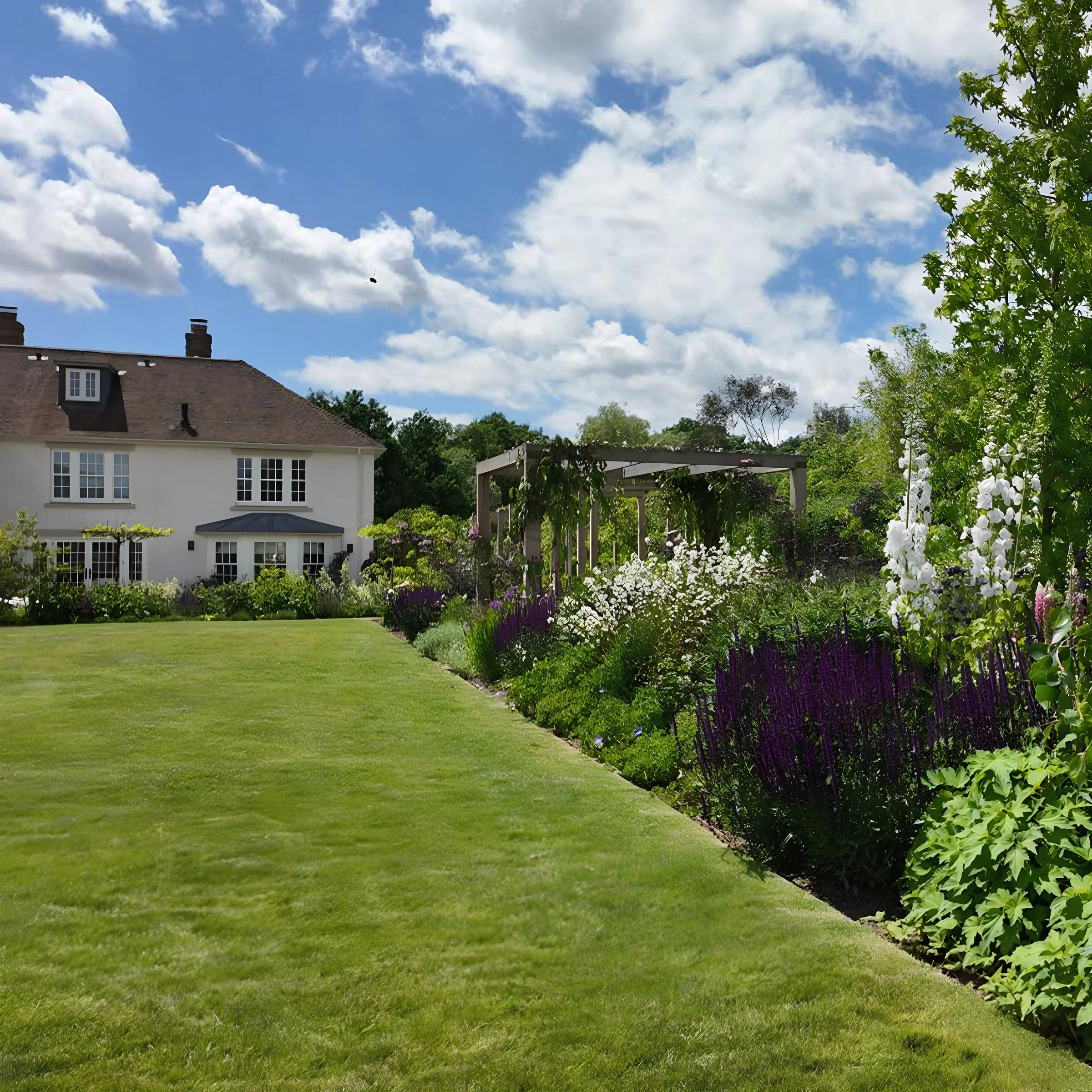
A broad estate lawn edged with deep planted borders

The houses

The Houses Here, and the Plots They Stand In

The plots are the first thing you notice, and they are the reason an Oxshott garden is worth designing properly rather than tidying. On the Crown Estate, which takes in the Birds Hill Estate and Bevendean with Pinewoods between them, Elmbridge's character assessment describes houses set within very large plots often completely obscured from view by mature beech hedges and trees, generally between two and three storeys, varying in orientation and in where they sit within the plot. Those gardens are deep and wooded at the edges, with specimen beech, oak and Scots pine, long drives and high front hedges rather than walls.

Then the village steps down in scale several times over. The interwar and post war estate roads off the Heath give generous rectangular plots with the house set well back behind a deep front garden. The mid century cul de sacs cut out of older grounds give irregular, often wedge shaped plots that inherited the mature trees of the house that stood there before. The post war streets near the station and the High Street are shorter and narrower, gardens square or oblong, front gardens often given over to parking, and those are the ones where a small, tightly resolved design and proper drainage do more than planting volume ever will.

The constraint is rarely space and it is almost always one of three things: the trees, the water and the way the work gets in. Tree cover is described by the council as a strong characteristic of this part of the settlement area, with houses often partially obscured by the vegetation and fine specimen trees surviving in front gardens, so dry root shade and leaf litter are standing conditions here rather than one off problems. Topography adds to it, because Elmbridge notes significant variations in topography to this part of the settlement area with steeper sections often wooded, which is why barrow runs off the Heath side are uphill and spoil removal takes longer than the plot size suggests.

  1. Interwar and post war, following the railway
    Large Detached Houses on Crown Estate Land, the Design Often Classically InspiredThe Crown Estate, taking in the Birds Hill Estate on Birds Hill Road, Birds Hill Drive and Birds Hill Rise, and Bevendean, with Pinewoods between them

    Very large plots, deep and wooded at the edges, with specimen beech, oak and Scots pine, long drives and high front hedges rather than walls. The ground is mostly Claygate Member sandy loam to clayey loam, with Bagshot sand proper on the Warren Lane and The Warren side, so this is good working ground rather than droughty sand and beech genuinely performs. Rear access is usually generous because the plots are wide and the drives long, but the estate is recorded as a private estate with limited access and no through public access, so deliveries are timed and nothing stands on the carriageway. Owners here ask for structure first: a terrace that suits a large house, and planting that can live under mature trees.

  2. Interwar and post war, 1920s to 1950s
    Two Storey Detached Houses on Private and Semi Private Estate RoadsQueens Drive, Stokesheath Road, High Drive, Kings Warren, Charlwood Drive, Broomfield Ride, Parkfields and the Birds Hill fringes

    Generous rectangular plots, houses set well back behind a deep front garden, with the mature landscape structure that came with the original estate layout. This is where the soil genuinely changes road by road. Queens Drive is on Bagshot sand, Stokesheath Road, High Drive, Kings Warren, Broomfield Ride and Parkfields on the Claygate Member, and Charlwood Drive on London Clay, so two neighbouring streets can need different drainage solutions. Boundaries are soft, and the council notes houses are often partially obscured by the vegetation. Side access to the rear is usually workable but narrow, and the ground slopes noticeably on the roads coming off the Heath.

  3. Mid to late 20th century
    Cul De Sac and Crescent Infill Built in the Grounds of Demolished Large HousesDanes Way, Danes Close, Knott Park and Oakshade Road, the Waverley Road estate, Oxdowne Close, Midgarth Close, Oaksend Close, Fernhill and Lyfield

    Plots are irregular, often wedge shaped off the turning head, and they inherited the mature trees of the old grounds, so many have one or two specimen trees that set the shade pattern for the whole garden. The council's own guide captions a fine specimen tree to the front garden of a house in Fernhill, and that is the usual picture. Ground is mixed, London Clay on Danes Close, Oakshade Road, Waverley Road, Oxdowne Close and Lyfield, Claygate Member on Danes Way, Midgarth Close and Fernhill, so winter wet and root competition in dry shade are the standing problems on the clay roads. Access is often the biggest constraint, because the houses sit close to their side boundaries on a tight turning head.

  4. 2000s to present
    Replacement Detached Houses, Considerably Larger Than What They Replaced, With Garaging and Further OutbuildingsThe Crown Estate, the Birds Hill Estate, Steel's Lane, Fairoak Lane and the larger Oakshade Road plots

    These are the hardest gardens to inherit and the most rewarding to put right. Elmbridge records much relatively recent replacement of existing houses with considerably larger houses, often with garaging and further outbuildings, and says this is slowly changing the character of the sub area, particularly of the Birds Hill Estate. The garden consequence is heavy plant across the whole plot, so what is left is a compacted subsoil pan with builder's rubble in it, a garden room already placed and a terrace footprint taking the sunniest part of the plot. On the London Clay examples at Steel's Lane and the Fairoak Lane side that compaction does not recover on its own. The plots are big and the boundaries are usually high hedging that gives an immediate frame, so decompaction and soil rebuilding come first and the design follows.

The ground

The Ground Under Oxshott

Oxshott sits in the London Basin and the village is built across three different grounds, so one specification cannot serve all of it. Sand caps the high ground around the Heath, London Clay takes over on the lower southern side, and the Claygate Member in between covers most of the built up village.

RAINTopsoil and turfBlack Park Gravel MemberBagshot Formation sandClaygate Memberwater stops here

Layer 1

Topsoil

Whatever else differs between one road and the next, one thing holds across the whole village. BGS soil parent material data records all three units under Oxshott at nil calcium carbonate, so every garden here is working with lime free ground. What changes is the texture, running from sand to sandy loam on the Heath side, through sandy loam to clayey loam across the middle of the village, to clay and silt on the lower southern ground. We test rather than guess, because a reading taken on one road tells you very little about the next.

Layer 2

Black Park Gravel

Over part of the high ground, around The Gables and the Heathfield Pond side of the Heath, BGS maps a patch of Black Park Gravel Member sand and gravel laid over the Bagshot sand. Where it turns up the dig is slower and the spoil heavier than a sand garden suggests, so footings, drainage runs and cart away volumes get priced for gravel rather than for soil. BGS also maps worked ground on Oxshott Heath where the old pits were dug, and Heathfield Pond is the former brickworks pit, once called Brick Pond, which is why plots bordering the common and the old workings are the ones to survey before a design rather than after a demolition.

Layer 3

Bagshot Sand

The Bagshot Formation, part of the Bracklesham Group, caps the high ground around Oxshott Heath, Warren Lane, Queens Drive, Goldrings Road, Oaksend Close and the Crown Estate side at The Warren and The Gables. BGS classes the parent material as sand to sandy loam, light to medium and deep, with the water erosion risk recorded as high, noting that rills are likely to form during very wet periods with sediment seen in run off, and that the soil is prone to wind erosion. In practice water drains away fast, new planting dries out quickly, nutrients leach straight through and bare soil on a slope or an open bed moves. It is how this ground became podsolised heath in the first place.

Layer 4

Claygate and London Clay

The Claygate Member is the most widespread unit under the built up village, running beneath the High Street and village centre, the Birds Hill Estate roads, Stokesheath Road, Heath Road, Kings Warren, High Drive, Broomfield Ride, Parkfields, Holtwood Road, Leys Road, Moles Hill, Highfield Close, Uplands Drive, Furze Field, Fernhill, Midgarth Close and Englemere Park. Recorded as sandy loam to clayey loam with a low water erosion risk, it is the kindest ground in the village to build and plant in. Below and south of it the London Clay Formation takes over, under the station and Silverdale Avenue, Steel's Lane, Oakshade Road, Danes Close, The Ridgeway, Waverley Road, Oxdowne Close, Pond Piece, Sheath Lane, Lyfield, Northcote Park, Spinneycroft, Charlwood Drive, the Leatherhead Road side and Fairoak Lane. There water is held at the surface, so lawns stand wet through the winter and then the ground shrinks and cracks open in a dry summer.

Recently had the back garden landscaped, including new lawn, raised flower bed, new path, fencing and hedges trimmed. Was very pleased with all the work and the guys were very friendly.

Patrick Dawson · Google review

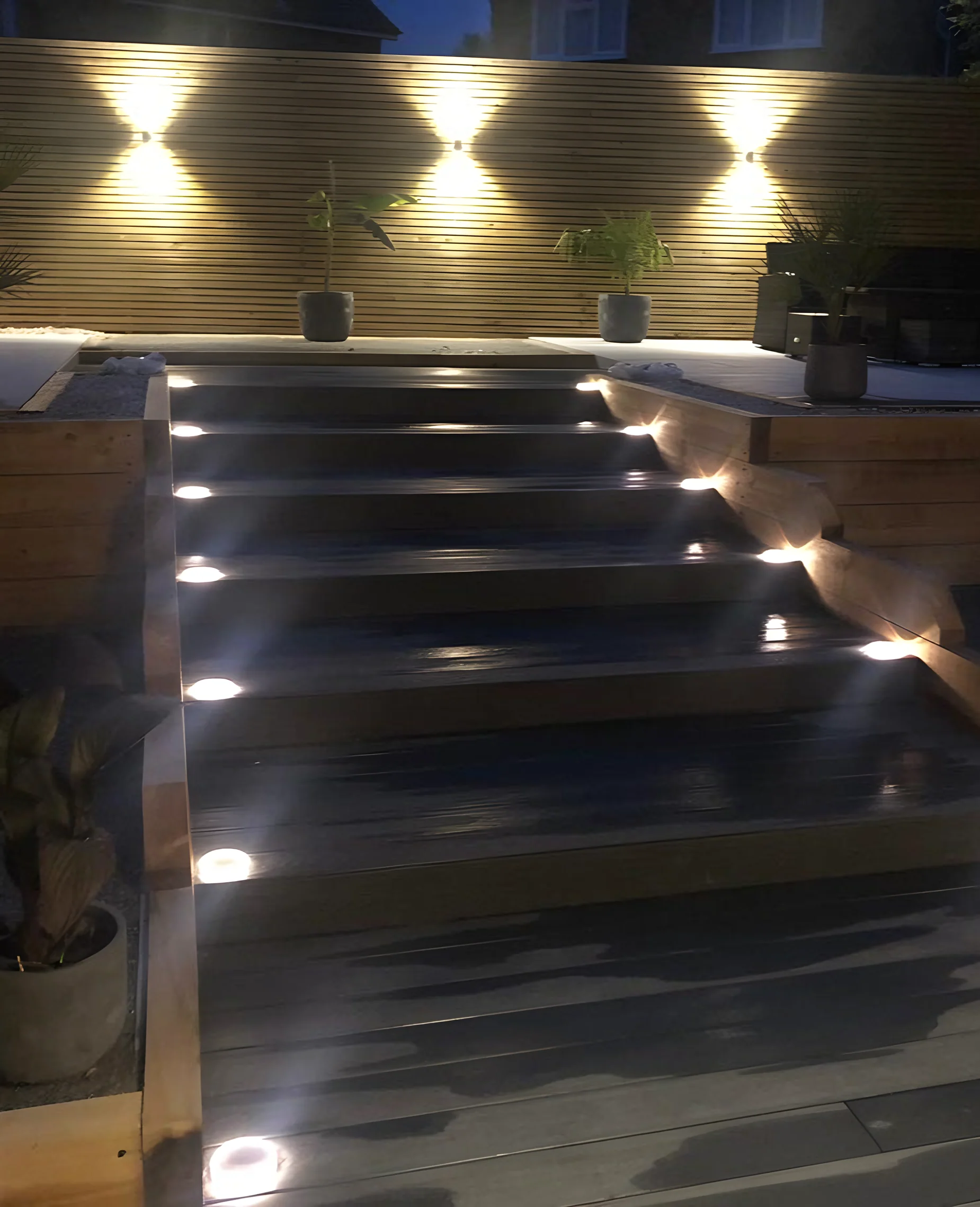
Stone steps lit from the wall above after dark

Landscape construction

Building on Three Different Grounds, and Getting the Plant In

Construction in Oxshott is decided by which of the three grounds the garden sits on, and that gets settled before a line is drawn. On the Bagshot sand the question is retention and erosion, because open soil on a slope moves and the sediment ends up on the drive, on the terrace and in the estate soakaways. On the London Clay it is movement, so terraces, steps and retaining walls are built to take seasonal shrink and swell rather than to sit on it and crack. On the Claygate Member in between we get the easiest working ground in the village and the fewest surprises in the dig.

The escarpment below the Heath has a detail of its own that catches people out. Permeable sand sits over less permeable ground there, so water moving down through the sand comes out sideways as seepage, and a sloping plot can be free draining at the top and permanently wet at the bottom. Terraces, retaining walls and lawn levels set without allowing for that come back as a wet bottom third of the garden. The water gets intercepted above the wet band and taken somewhere useful before any hard landscaping is set out, not after.

Access is the other half of the job and it gets designed with the garden rather than after it. Several of the residential areas are private estates with limited access and no through public route, and where an estate has a residents' association that association often owns the road surface, the verges and the islands rather than the householders. So we plan on a skip or a grab standing on your own driveway, deliveries timed and tipped straight onto boards, and nothing left on the carriageway overnight. Where gates exist we measure the gateway and its swing arc rather than the drive, because that is what decides which machine gets in, and on some estates the gates are at the estate entrance rather than on the individual property. On the cul de sacs off Danes Way, Knott Park, Waverley Road and Oxdowne Close, and on the smaller streets near the station, access is often a narrow side path only, which means barrow work and a conveyor.

  • Terraces, steps and levels built for the ground they sit on
  • Slope seepage intercepted above the wet band below the Heath
  • Retaining and level changes designed for shrink and swell on the clay
  • Verge protection, plant measured to the gateway, conveyors and barrow routes where there is no rear access
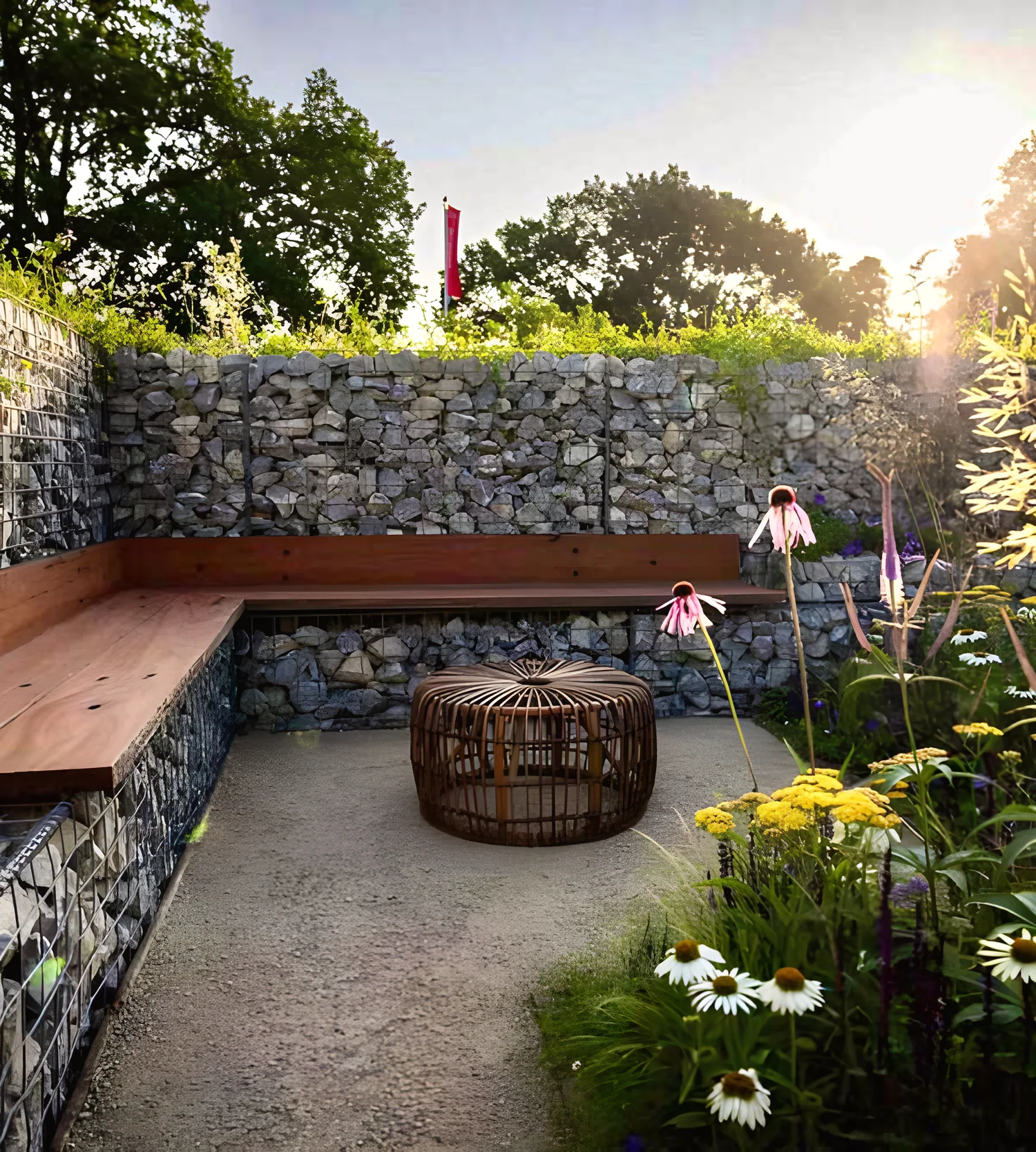
A gabion bench and fire bowl surrounded by flowering perennials

Soil repair, drainage and irrigation

One Village, Two Opposite Water Problems

The high ground around the Heath cannot hold water and the lower southern ground cannot get rid of it, while the Claygate Member under most of the village sits between the two, and the commonest thing we are asked to put right is a sand garden planted as if it were clay, or a clay garden drained as if it were sand. On the Heath side we build the soil up, hold moisture at root depth and design zoned irrigation into the construction so lawns and borders are fed without waste. On the clay side we deal with the water first and plant second.

Compaction is the standing job on the replacement house plots, and there are a lot of them here. Where a whole plot has carried heavy plant, the profile left behind is a compacted pan with rubble in it, and on clay it does not recover unaided. The grass goes thin, water sits on a surface that looks perfectly sound, and the roots of the mature trees the council wants kept begin to suffocate. Deep soil aeration fissures the ground with compressed air and holds those fissures open with enriched biochar, so it decompacts to depth with no digging, which is exactly what you want when the lawn runs under a tree that may be protected.

Private estate roads drain to surface water soakaways maintained by the association, so soil and slurry run off from a build has to be contained on site rather than left to find the gully. That matters more on the sand than people expect, because BGS records the water erosion risk there as high, with rills likely to form during very wet periods and sediment seen in run off. New borders get mulched and planted rather than left open, and bare slopes get held while they establish.

  • Zoned irrigation built in during construction
  • Deep soil aeration with compressed air and enriched biochar
  • Winter wet and summer cracking dealt with before planting on the clay
  • Run off contained on site so nothing reaches the estate soakaways
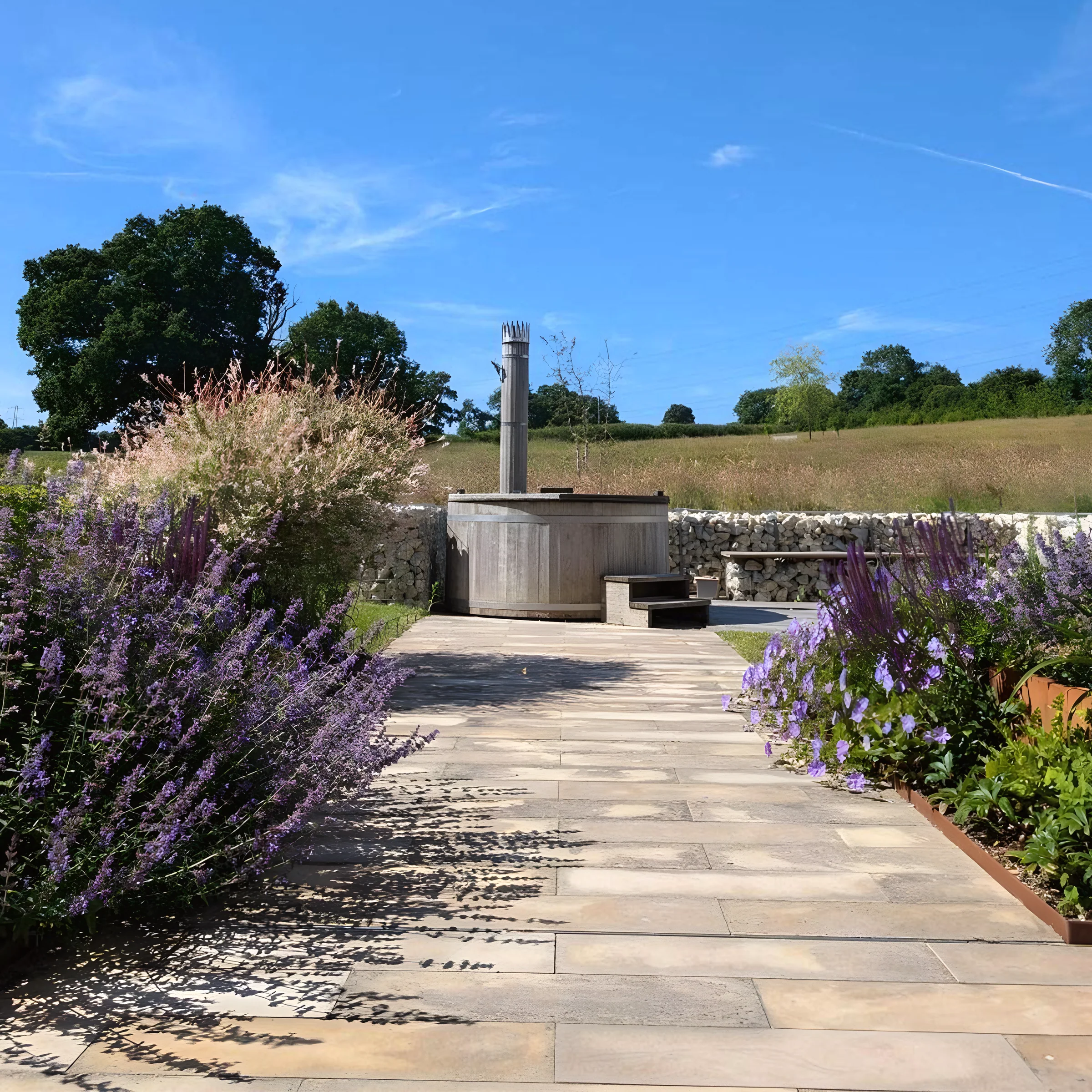
Lavender in flower along a stone path

Planting and long term care

Genuine Rhododendron Country, If You Plant to the Right Ground

Nothing in Oxshott is chalky. All three units are recorded at nil calcium carbonate, so the acid loving palette performs here and this is genuine rhododendron and azalea country. Camellias, pieris, magnolias, Japanese maples, skimmia and hydrangeas all do well, and anything specified for alkaline ground is money thrown away anywhere in the village.

After that it splits by ground. On the Bagshot sand the local history is the brief: Elmbridge's own account of the Esher Commons records that the soil soon became impoverished, or podsolised, as the mineral and organic matter was washed out, leading to the appearance of heathland with heather, grasses and birch trees being the dominant plants, with Scots pine introduced later because the heathland soils were regarded as unproductive. So heather, cistus, phlomis, grasses, pines and silver birch thrive on that side, while anything thirsty sulks unless organic matter is built in and irrigation is designed from the start. On the London Clay the strong performers are roses, hornbeam, oak, cornus, viburnum, mature shrub planting and long lived trees, while lavender, rosemary, bearded iris and the Mediterranean look fail unless the bed is raised and the drainage engineered.

Hedging is where this gets expensive if it is specified off a plan. Beech is the signature boundary across the Crown Estate and the Birds Hill Estate, where Elmbridge records very large plots completely obscured by mature beech hedges and trees, and most of that ground is Claygate Member loam, so beech works. The same hedge put in on the genuinely wet London Clay lower down sulks, browns and gaps, and hornbeam is nearly always the right substitute for an almost identical look. Where a plot backs onto the common the edge wants an ongoing management plan rather than a one off clearance, because silver birch, Scots pine, oak and beech are the dominant trees on the Heath and bracken and heather ground runs right up against private boundaries.

Then the garden has to be kept. The same in house team that designs and builds stays on the garden afterwards, which is how a planting scheme under oak and beech root shade reaches maturity instead of being replaced in its third year. Garden maintenance plans start from £160 per month on a twelve month agreement with a minimum four hour visit each month, and the larger Crown Estate and Birds Hill grounds run on a planned seasonal calendar rather than a weekly mow. Leaf litter under this much tree cover needs a composting plan rather than a removal cost.

  • Planting plans written for lime free sand, for Claygate loam or for London Clay
  • Dry root shade planting under mature oak, beech and Scots pine
  • Beech and hornbeam hedging specified to the ground it stands in
  • Monthly garden maintenance and estate scale grounds care

On the ground

Where We Work in and Around Oxshott

Oxshott reads as a handful of separate places rather than one. The village centre and the High Street sit in the middle of it, with the Crown Estate, the Birds Hill Estate and Bevendean to one side, and Clarendon Park, Knott Park, the Danes Way estate and the Waverley Road estate around them. Fairoak Lane and south Oxshott run out towards the Leatherhead Road, Englemere Park sits on the Claygate Member with most of the built up village, and Oxshott Heath and Oxshott Woods sit on the doorstep of all of it.

Beyond the village we are regularly in Stoke D'Abernon, Downside, The Tilt and Fairmile on the Cobham side, and in Claygate, Weston Green and Hinchley Wood towards Esher. The green space around the village sets the tone clients ask us to carry into the garden: Oxshott Heath and Woods with their sand escarpment and views south towards Box Hill near Dorking, Prince's Coverts east of the village, Arbrook Common at Claygate, Black Pond on Esher Common, Claremont Landscape Garden at Esher, Painshill Park at Cobham, Knowle Hill Park at Stoke D'Abernon and the River Mole corridor running down towards Cobham.

On the road network the A244 runs through the village as the High Street, Warren Lane, Leatherhead Road and Copsem Lane, Fairoak Lane is the B280 heading north east, the A3 Esher bypass crosses the commons to the north, and the M25 is reached at junctions nine and ten. The Heath and the railway both sever what look on a map like through routes, and some of the semi rural lanes have no pavement and no street lighting, which is another reason an Oxshott day gets planned around one estate at a time. We cover the whole of KT22, and we work next door in Cobham, Esher and Claygate.

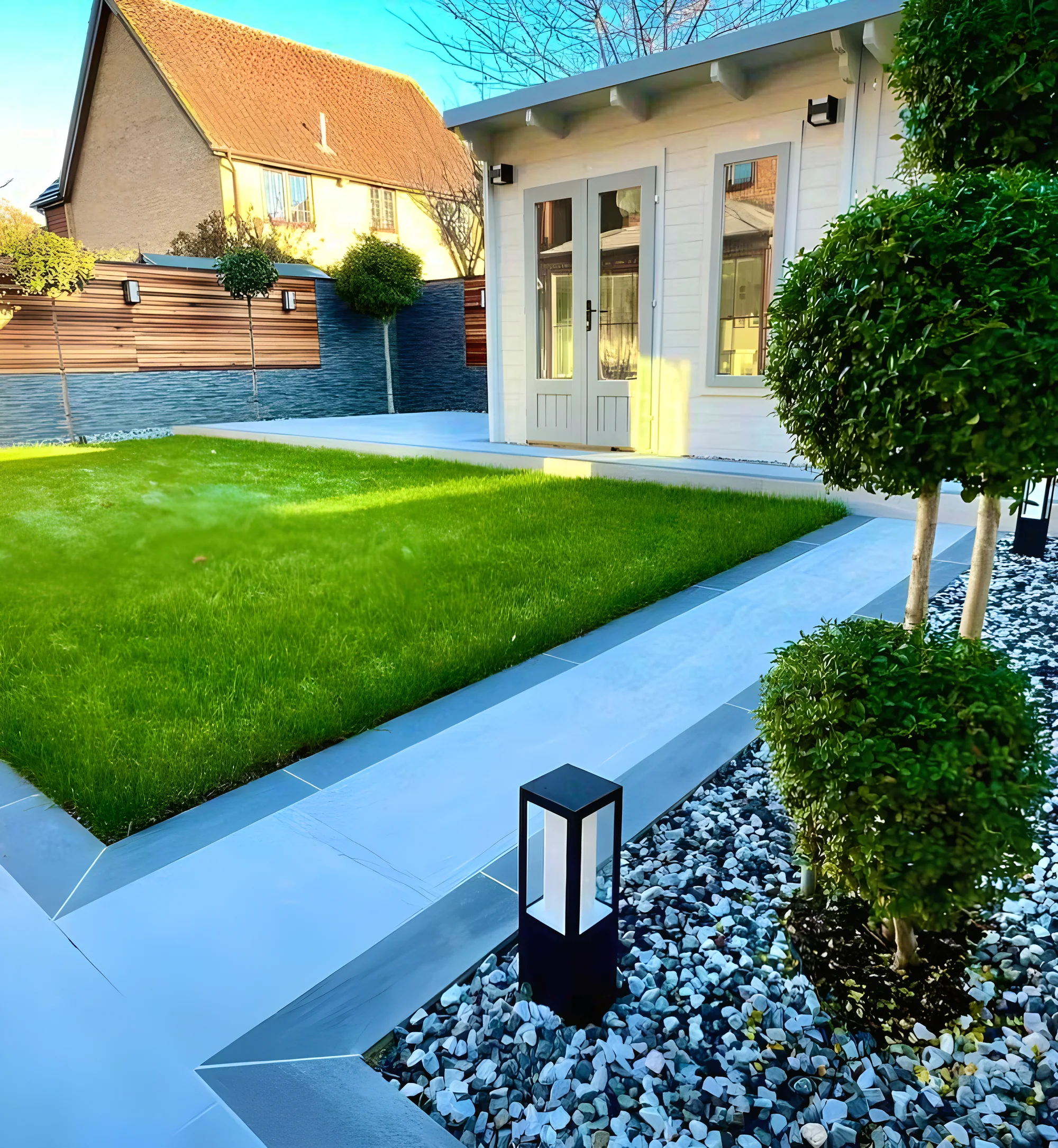
A shaped lawn with a path light and clipped topiary

Neighbourhoods and villages

  • Oxshott village centre and High Street
  • The Crown Estate
  • Birds Hill Estate
  • Bevendean
  • Clarendon Park
  • Knott Park
  • Danes Way estate
  • Waverley Road estate
  • Oxshott Heath and Oxshott Woods
  • Englemere Park
  • Fairoak Lane and south Oxshott
  • Stoke D'Abernon
  • Downside
  • The Tilt
  • Fairmile
  • Weston Green
  • Hinchley Wood

Postcodes we cover

KT22

Planning and trees

Oxshott is not within one of Elmbridge's designated conservation areas, and that changes where the control sits rather than removing it. The borough's published list of conservation areas runs to twenty one across Elmbridge and none of them is in Oxshott, so the extra conservation area controls on demolition, hard surfacing and tree work do not generally apply here. It is still worth knowing the rule, because several of the surrounding villages a client might also own property in are designated, among them Claygate, Cobham, Downside Village, Stoke d'Abernon, The Tilt, Weston Green and Esher, and Elmbridge's conservation area guide states that before any work is carried out to trees in a conservation area, including pruning, uprooting or felling, six weeks written notice must normally be given to the council.

Across Oxshott itself the protection that bites is individual. The council states that trees are protected by conservation area, tree preservation order, ancient woodland designation or planning conditions attached to granted planning permissions where a tree is identified for retention or new planting, that where a tree is already subject to a Tree Preservation Order the formal permission of the council is required before any works to the tree can be undertaken, and that normally any preserved tree which is removed must be replaced. Oxshott has a very high density of mature specimen trees in private gardens.

Elmbridge calls tree cover a strong characteristic of this part of the settlement area, notes that in places particularly fine specimen trees survive adding to the landscape quality, and asks for retention of the landscape qualities of the area specifically with regards to trees and mature hedges and boundaries. So the sensible assumption on any Oxshott plot is that a mature tree may be protected and is worth checking with Elmbridge before a design is drawn rather than after. The council also runs a high hedges complaints route, which matters in a village where beech hedges of real height are the standard boundary.

Beyond trees, three things shape garden projects here. Green Belt wraps around the settlement and constrains what can be built beyond the existing residential curtilage. Oxshott Heath forms part of the Esher Commons Site of Special Scientific Interest, so nothing should be tipped, stored or encroached onto it.

And the Crown Estate land, meaning the Birds Hill Estate and Bevendean, is recognised in Policy CS17 of the Elmbridge Core Strategy as being an area of special low density residential development, which is why the guidance asks that development should seek to retain the established landscape character, particularly in relation to front boundaries. Several estates then add a private layer on top of the planning system. Elmbridge refers to long standing covenants present on some housing estates, and on the neighbouring Oxshott Way Estate at Cobham, whose residents' association owns the roads, verges and islands, written permission is needed before any planting, trimming or cutting down of trees and shrubs on a verge, and before altering access from a house to the road.

None of this is legal advice and the position differs plot by plot, so we treat all of it as a case by case check, and we would always rather settle a question with Elmbridge, and with the residents' association where there is one, before the machines arrive.

Recent work

Gardens We Have Designed and Built

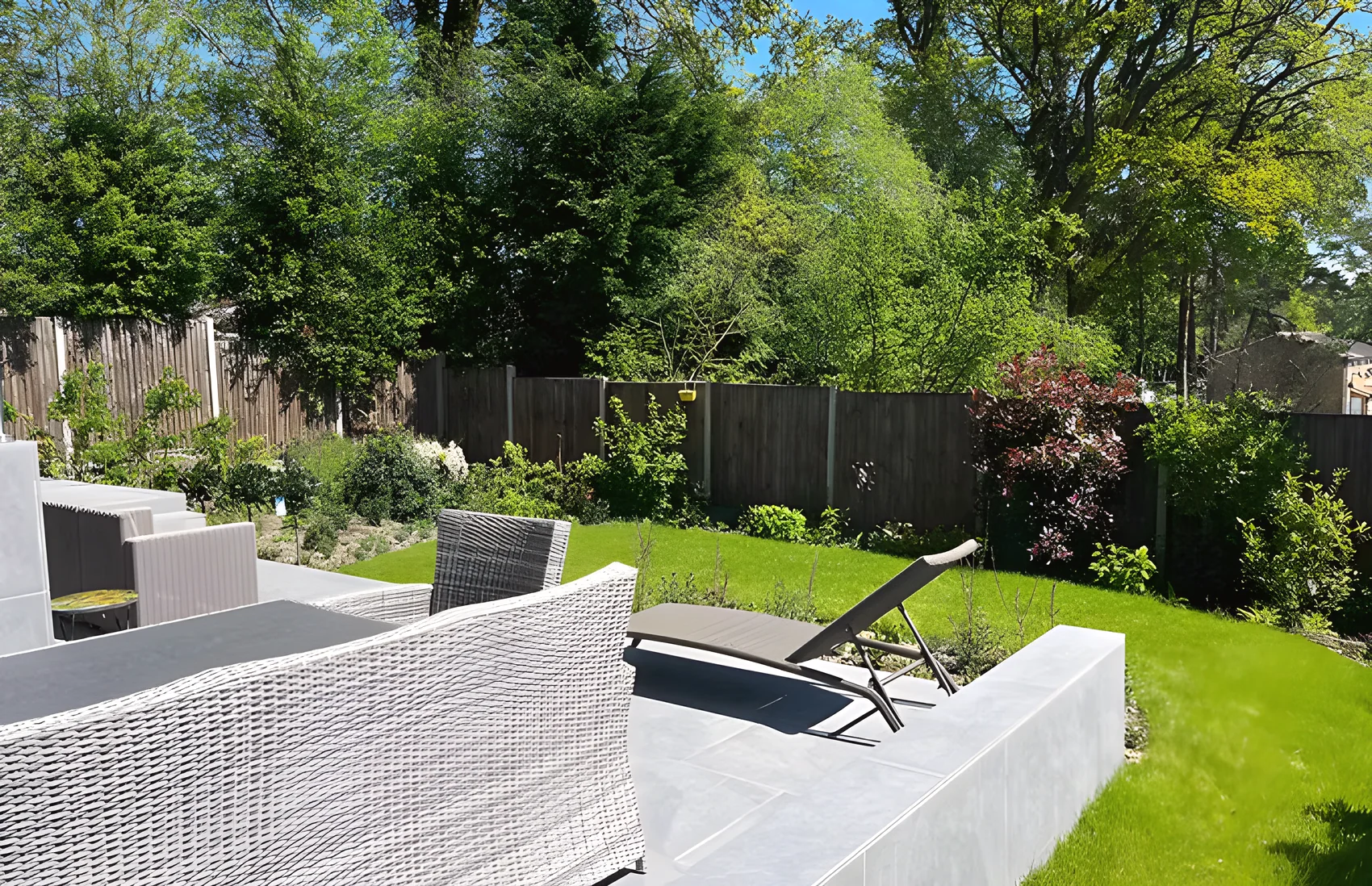
  • Garden furniture and sun loungers beside a lawn
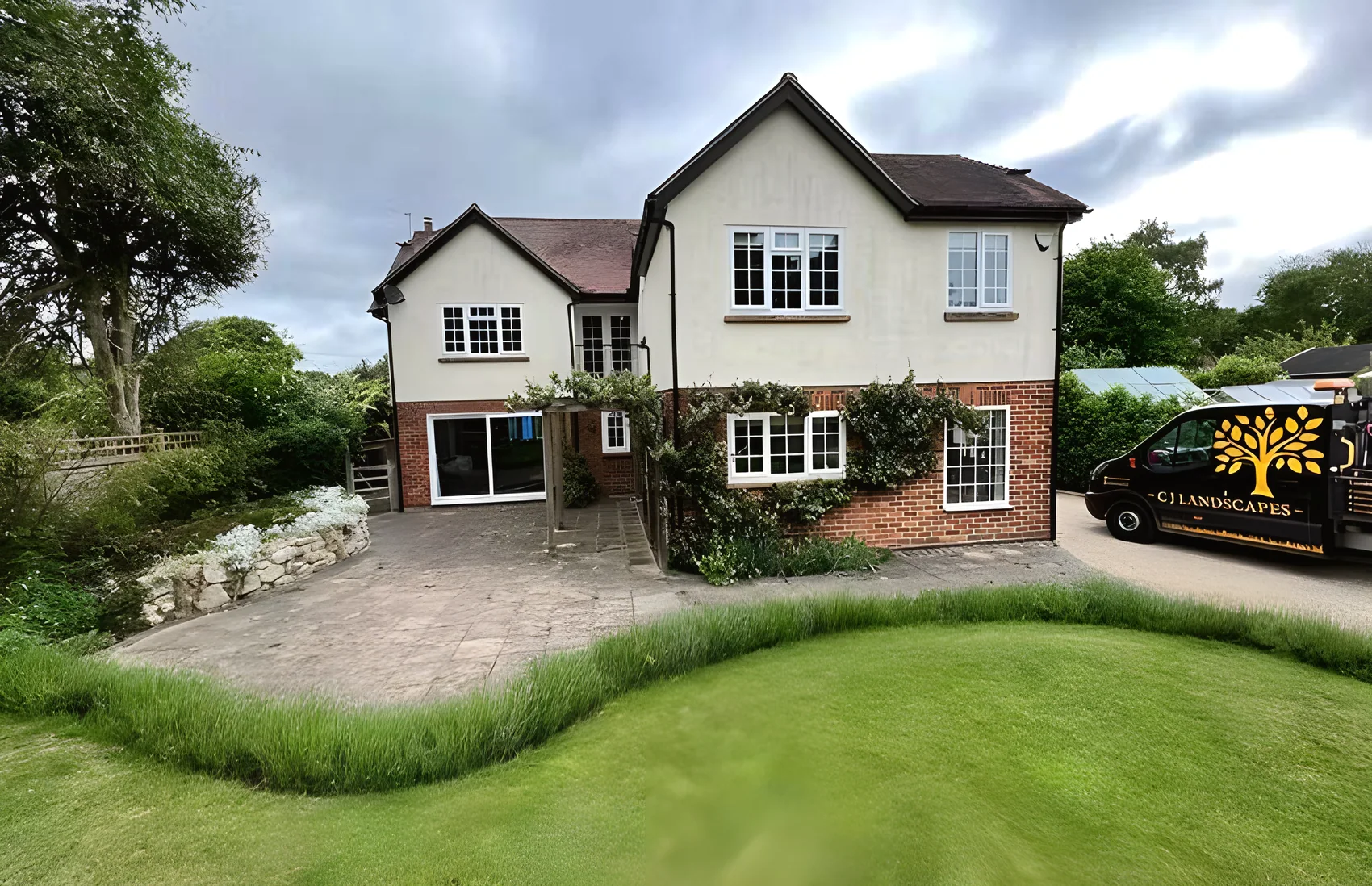
  • A block paved drive and lawn in front of a large house
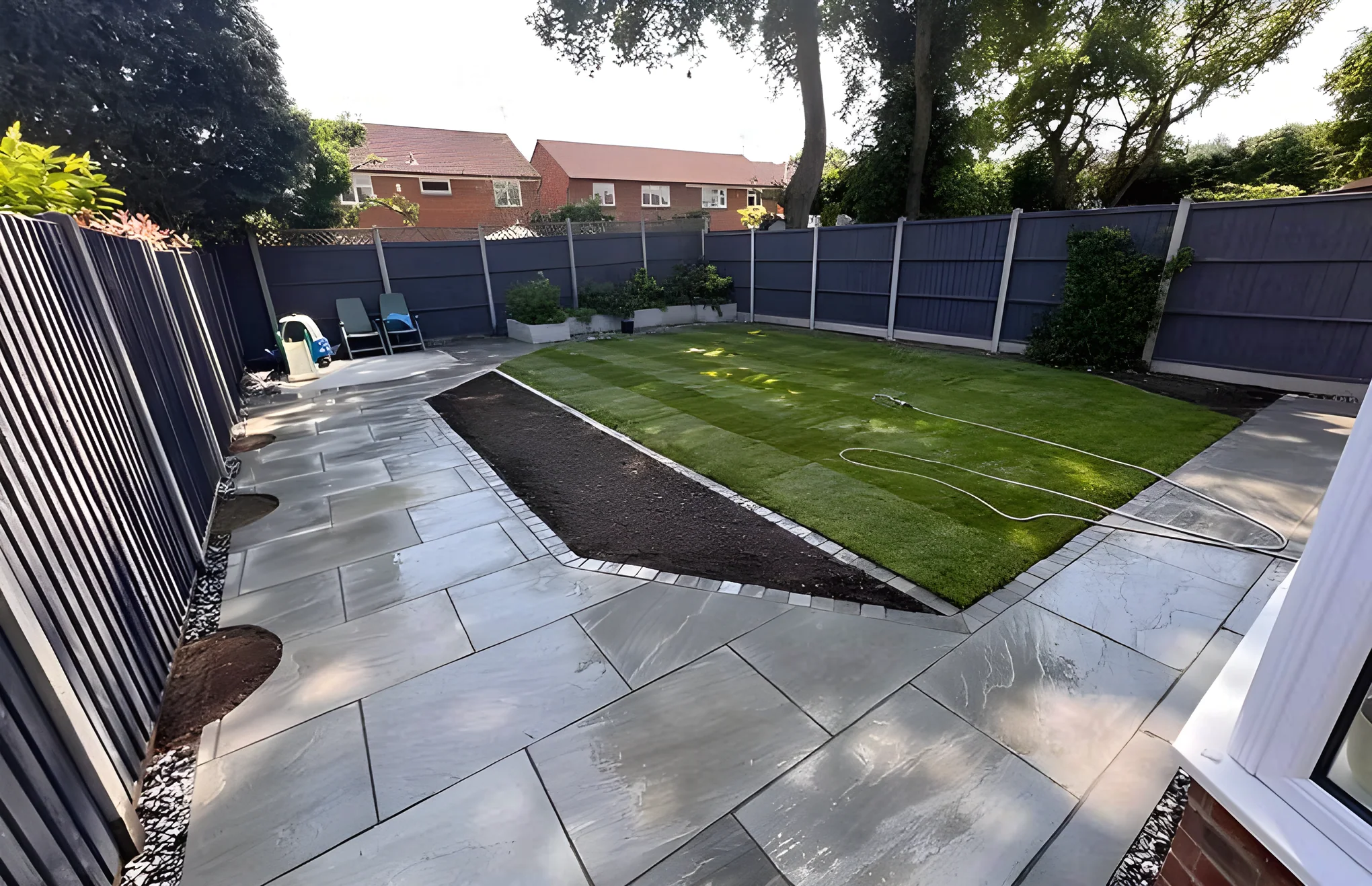
  • Natural sandstone paving laid on creative angles beside a lawn

Good to know

Oxshott Garden Questions, Answered

Is My Oxshott Garden on Sand or on Clay?

It depends on the road, and it is worth settling before anything is specified. Bagshot sand caps the high ground around the Heath, Warren Lane, Queens Drive, Goldrings Road, Oaksend Close, The Warren and The Gables, and it drains dry fast. London Clay takes over on the lower southern side, under the station and Silverdale Avenue, Steel's Lane, Oakshade Road, Waverley Road, Pond Piece, Spinneycroft, Charlwood Drive and the Fairoak Lane plots, and it holds water. Most of the village in between, including the High Street and the Birds Hill Estate, sits on the Claygate Member, sandy loam to clayey loam. We test on the first visit rather than reading it off a map, because two neighbouring streets here can need completely different drainage.

There Is a Permanently Wet Strip Across My Sloping Garden Below the Heath. Is It a Leak?

Usually not. On the escarpment below Oxshott Heath permeable sand sits over less permeable ground, so water moving down through the sand meets the tighter ground beneath and comes out sideways as seepage. The result is a plot that is free draining at the top and permanently wet at the bottom, which gets misread as a burst pipe or a failed land drain, and digging up a sound pipe does not cure it. The answer is to intercept the water above the wet band, take it somewhere useful, and plant the band itself for the conditions it actually has.

Will Rhododendrons and Azaleas Do Well Here?

Yes. All three soil units under the village are recorded at nil calcium carbonate, so this is genuine rhododendron and azalea country. BGS records all three soil units under the village at nil calcium carbonate, so every garden here is working with lime free ground and the acid loving palette performs. Camellias, pieris, magnolias, Japanese maples, skimmia and hydrangeas do well too. The other side of that is that lime loving planting is wasted money anywhere in the village, and on the London Clay a lavender and rosemary border is a fight unless the bed is raised and the drainage is engineered.

Do I Need Permission to Cut Back the Big Trees in My Garden?

Quite possibly, and in Oxshott it is the first thing to check, because the protection here is tree by tree rather than area wide. Elmbridge says trees are protected by conservation area, tree preservation order, ancient woodland designation or planning conditions attached to granted planning permissions, that where a tree is subject to an Order the formal permission of the council is required before any works are undertaken, and that normally any preserved tree which is removed must be replaced. With this much mature specimen planting in private gardens we assume a significant tree may be protected until the position has been checked with the council, and we do that checking with you before any part of a plan depends on it. Finding out after the terrace is set out is an expensive way to learn it.

Can You Get Machinery Into a Garden on One of the Private Estates?

Often yes, and where we cannot there are other ways in. On the larger Crown Estate and Birds Hill plots the drives are long and the plots wide, so rear access is usually fine, but the Birds Hill Estate is recorded as a private estate with limited access and no through public access, and some estates have gated entrances. Where an estate has a residents' association the association often owns the road surface, the verges and the islands, and the rules are real: on the published guidelines for the neighbouring Oxshott Way Estate skips are not permitted on the roads, crossovers or verges, and no one is permitted to deposit garden waste, rubbish, building materials, tools or equipment on them. So we plan on a skip or grab standing on your own driveway, deliveries tipped straight onto boards, and nothing left out overnight. On the cul de sacs off Danes Way, Knott Park, Waverley Road and Oxdowne Close, and on the streets near the station and the High Street, it is usually a narrow side path only, so it is barrow work and a conveyor.

Our New House Has Just Been Finished and the Garden Is Bare, Compacted Ground. Where Do We Start?

With the soil, before anything is drawn in hard materials. A plot that has carried heavy plant through a build is left as a compacted pan with builder's rubble in it, and on the London Clay at Steel's Lane or the Fairoak Lane side it will not recover on its own. We would decompact and rebuild the profile first, using deep soil aeration where the lawn runs under trees that need to stay undisturbed, then set levels and drainage, then plant. It is also worth a survey before design on plots bordering the commons and the old workings, because BGS maps worked ground on Oxshott Heath and Heathfield Pond is the former brickworks pit.

Close by

We Also Work In

Start your garden

Talk to Us About Your Garden in Oxshott

Tell us the road and what you want from the garden, and we will come and look at the ground. The same in house team designs, builds and then looks after the garden, so the person who set the levels is the one who watches the planting mature. Call 01276 582095 or 07717 058646, or email info@cjlandscapesltd.co.uk. We work right across Oxshott and KT22, and next door in Cobham, Esher and Claygate.

  1. 01
    We Call You BackWithin one working day, to talk the garden through.
  2. 02
    The First VisitA walk round the garden to take in the levels, the access and where the water sits.
  3. 03
    A Written ScopeA specification and a programme, with samples to see in your own light.
Prefer to talk?01276 582095info@cjlandscapesltd.co.uk
1 Webbs Mews, High Street
Hartley Wintney, Hook RG27 8NZ
What Would You Like Help With?

Choose as many as you like.

Tell Us About the Project

Roughly is fine. It helps us bring the right people to the first visit.

Your Details
Photographs Optional, up to five

Thank You

Your enquiry has come through and we will call you back within one working day.

Step 1 of 3

We only use your details to reply to this enquiry.