C J LANDSCAPES 01276 582095Get in touch

Claygate · KT10 · Surrey

Landscaping in Claygate, on the Ground It Is Named For.

The village that gave its name to the Claygate Beds, where sandy topsoil sits over clay and almost no two gardens drain the same way.

Where we work

A Village That Knows What It Values

Claygate does not feel like a suburb, and that is not an accident. Open countryside almost completely surrounds the built up area, which is why Elmbridge's own character assessment says this part of the borough feels like and functions as a separate village. It is also the only civil parish in the borough with its own parish council, and that council has published a Village Design Statement which Elmbridge treats as a companion to its own design guidance.

The village has two centres rather than one. The Old Village around The Green holds the church, the village hall, the school, the surgery and the sports grounds, while The Parade by the station is the commercial hub, a purpose built row of shops with accommodation above that still runs to a butcher, a fishmonger, a greengrocer, a baker, shoe repairs and a newsagent. Where a garden sits between those two centres tells us a good deal about it before we have seen it.

What that means for garden work is straightforward. The housing runs from large to very large detached and semi detached houses in generous regular plots, the village says in writing what it values about its trees, hedges and front boundaries, and the ground underneath changes from sand to clay and back again inside a single garden. We design, build and then look after gardens here with the same team, which is how the drainage decisions taken in the first week still make sense years later.

See the work
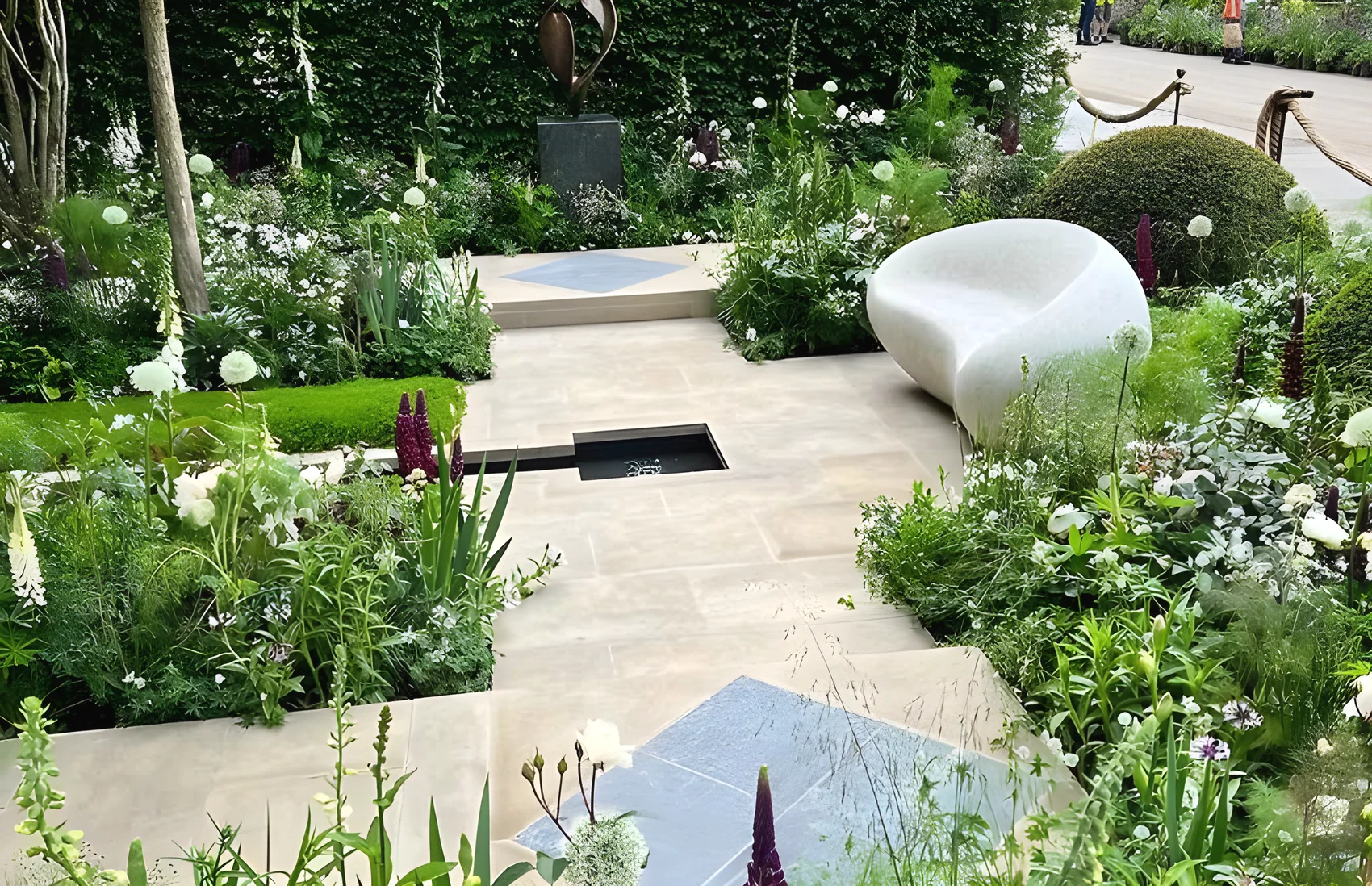
Inset stone paving and perennial planting at RHS Chelsea 2024

The houses

The Houses in Claygate and the Plots Behind Them

Elmbridge describes the Claygate housing stock as predominantly ranging from large to very large semi detached or detached houses in generous regular plots, with pockets of older workers' cottages around the old village core and on Coverts Road. That is accurate, and it still hides how different two neighbouring briefs can be. The village was built out in small and medium groups rather than as one estate, and post war infill has noticeably smaller rear gardens than its pre war neighbours, so one street can hold a deep pre war plot and a shallow later one side by side.

There is also a strong design pedigree here, and it raises what a garden is expected to do. It runs from the Arts and Crafts houses of the Foley Estate through exemplar designs promoted at Ideal Home exhibitions, Garden City derived plans and layouts and self build projects, to the contemporary houses at Ruxley Heights. Claygate also has areas of bungalow type housing rarely seen elsewhere in the borough, at Glenavon Close, where gardens tend to be wide rather than deep, with low boundaries and a lot of visible fence.

Claygate is easier to reach than it is to work in. Vehicular access is restricted to three key routes, with a clearly defined gateway at Hare Lane Green, and the railway runs straight through the middle and severs the village, with limited crossing points including a footbridge at the western end of Claremont Road. Commuter parking takes the kerbside space a skip or a grab lorry needs on a weekday morning, and on Coverts Road and Foxwarren the fine grain, the lost front gardens and the on street parking leave very little room to stand plant. We plan deliveries, storage and protection around all of that before the first load arrives.

  1. Victorian, roughly 1840s to 1900
    Workers' Cottages, Small Terraces and Village HousesThe Green, parts of Elm Road and the High Street, the cottages at the rear of Elm Road, Church Road, and the older cottage scale houses on Coverts Road

    Modest cottage plots, usually a narrow strip running a long way back behind the house, with brick walls, close boarded fence or clipped hedge and neighbours tight on both sides, so overlooking and borrowed shade matter. Access is the real constraint, because for most of these cottages everything goes through the house or down a shared side alley and stone, soil and spoil are barrowed. The Green group and the Church Road group both sit inside the Claygate Village conservation area, where boundary treatments and hard surfacing are looked at closely, while Coverts Road is outside it and has already lost much of its front gardens to parking.

  2. Victorian and Edwardian, most of the Foley Estate houses built around 1900
    Large Detached and Semi Detached Houses With a Strong Arts and Crafts InfluenceFoley Road, Beaconsfield Road, Beaconsfield Gardens, Albany Crescent, Gordon Road, Fitzalan Road, Claremont Road and Foley Mews, with Dalmore Avenue and Athlone nearby

    The best gardens in the village, wide and deep regular plots laid out as an informal grid partly defined by the path of the railway, in red brick, timber framing and clay tiles under hugely expressive roofs and chimneys. Elmbridge records that the presence of mature street trees and of trees and hedges to front and rear gardens is of great significance to the character of this part of Claygate, with houses often partially obscured or framed by vegetation. Claremont Road and Gordon Road look out over open countryside, so what goes on a rear boundary genuinely changes the garden, and access is from the front drive only because the plots back onto each other.

  3. Interwar and post war, 1920s to 1960s
    Bay Fronted Semis and Detached Suburban Houses on Consistent Building LinesHare Lane, Oaken Lane, Oaken Drive, Telegraph Lane, St Leonard's Road, Loseberry Road, Torrington Road, Aston Road, The Roundway, Vale Road, Holroyd Road, Blakeden Drive, Common Road and Trystings Close

    Deep regular plots on shared building lines, small front gardens with a front boundary, and long rear gardens that give a build somewhere to work. The soft front boundaries of hedge and small trees are what makes Claygate read green, and many of them have already gone to hard standing for cars. Some of these streets keep brick pavements, Torrington Road among them, which Elmbridge calls a valuable and increasingly rare surface treatment in this part of Surrey and which no tracked machine should ever cross, so protection is planned before plant arrives.

  4. Twentieth century estate development around the Ruxley Towers site, with substantial modern replacement houses
    Large Detached Houses on Private Estate Roads, Often Split LevelRuxley Heights, Ruxley Ridge, Ruxley Crescent, Tower Gardens and Red Lane

    The largest and most interesting plots in Claygate. Elmbridge records that a widely varied topography adds interest to the pattern of development and often means houses are split level within their site, so retaining walls, terraces, steps and drainage behind structures are standard here rather than exceptional, and plots are generally tree and hedge lined with houses partly or occasionally fully screened by natural landscaping. The roads are private or privately maintained, and the Village Design Statement asks that anyone building off a privately maintained road liaise with the appropriate committee first and make good surfaces and verges on completion, which is how we work.

The ground

The Ground Under Claygate

Claygate gives its name to the ground beneath it, the Claygate Member, long known as the Claygate Beds, which is the sandier and siltier top of the London Clay Formation. It is a true transition bed that alternates sand and sandy clay, so it never behaves like one thing across a whole garden.

RAINSandy topsoilBagshot Formation sandThe Claygate MemberLondon Clay Formationwater stops here

Layer 1

The Topsoil

Sandy, hungry and not always original. The village clay was dug for brick making from Roman times to the nineteenth century and the old brick fields were later built on, so on those parts of Claygate the levels, the topsoil depth and what a planting pit opens into are things we check on site rather than assume.

Layer 2

The Sand Caps

On the higher southern ground the Bagshot sand caps the clay, and that ground drains freely, dries out fast and loses nutrients. It runs acid, along with the leached upper horizons, which is why this corner of Surrey is rhododendron country and why lime lovers struggle in it.

Layer 3

The Claygate Member

Sand and clay in alternating bands, recorded in old exposures through Claygate and Oxshott as the alternate beds of sand and clay. Water soaks through the sand and then stops dead on the first clay band, which is why a soakaway can fail a few paces from ground that bakes hard in August.

Layer 4

The London Clay

Under all of it, slowly permeable and seasonally wet. It holds water against the back of a retaining wall and under a lawn, it shrinks and swells close to buildings and trees, and it is why drainage and tree work near a house are design questions here rather than details.

CJ Landscapes remodelled our back garden with a new patio, paths and lawn. It looks fantastic and we are really happy with it. Carl was friendly, professional, hardworking and conscientious.

Kathy Moriarty · Google review

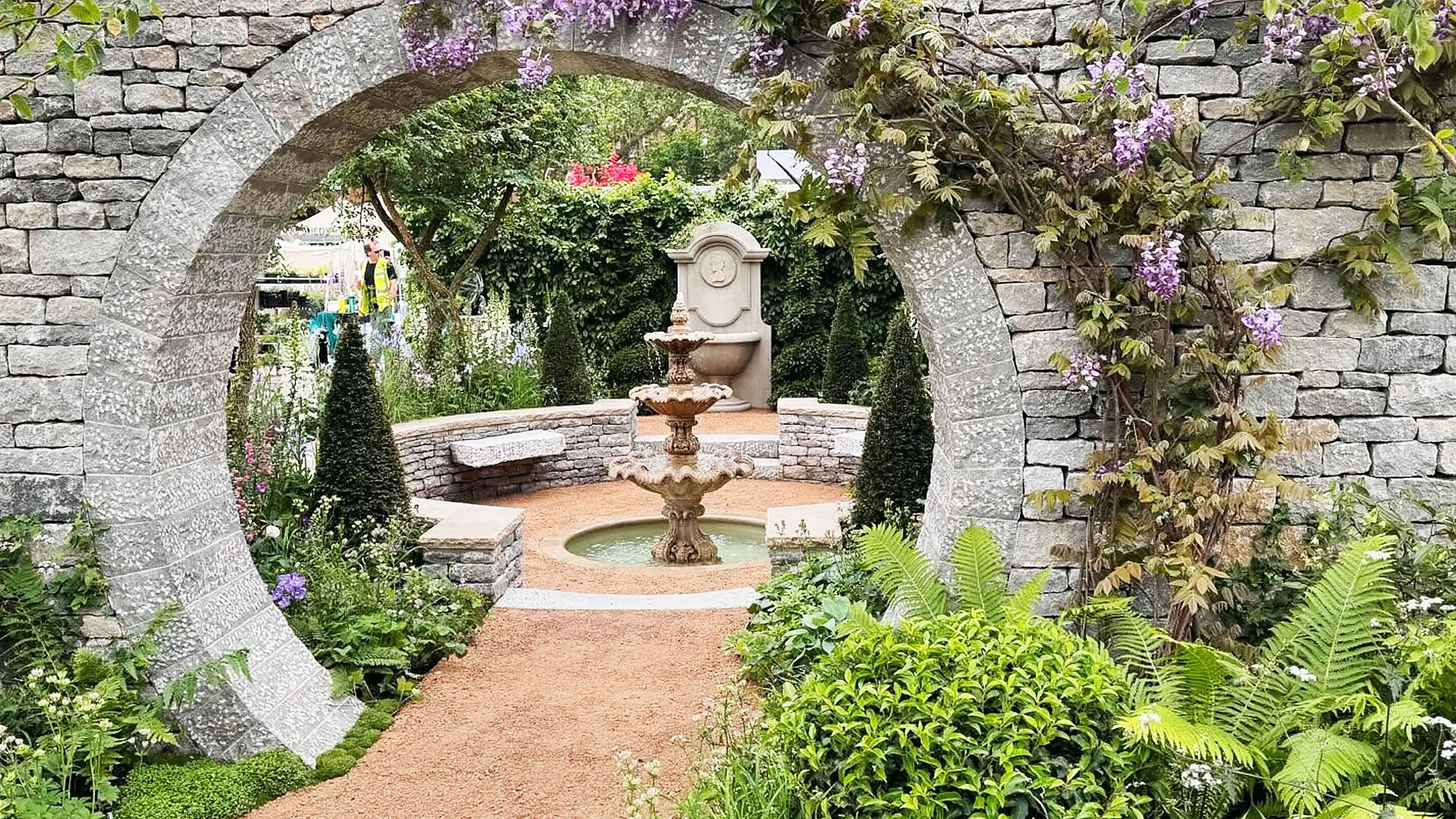
The stone moongate and fountain from the RHS Chelsea 2022 show garden

Drainage and ground

Ground That Drains Two Different Ways in One Garden

The national soil mapping puts this ground in the class of slowly permeable seasonally wet acid loamy and clayey soils, with impeded drainage and low fertility. That is the technical description of what Claygate owners already know: lawns that sit wet through the winter, borders that sour, turf that compacts under foot and machine traffic, and soakaways that quietly stop taking water.

At the low end of the village the Rythe makes it worse. The stream has many clay banks, and its lack of depth and width at pinch points has been implicated in flash flooding in gardens and drainage systems, particularly for its mid course headwaters here in Claygate. The low lying fields at Loseberry Farm, Hare Lane Green and Beasley's Farm form a floodplain beside the river, and some of its course is owned by landowners, so a rear boundary can turn out to be your responsibility.

The answer is rarely one trench. Deep soil aeration decompacts the ground with compressed air and holds the new fissures open with enriched biochar, so waterlogged ground drains again without the garden being dug up, and it has a clear job to do on plots that have had building work, parking or years of mowing on wet ground. Where a front garden has already gone to hard standing, planting it back gives the water somewhere to go and gives the street back the greenery the parish asks for.

  • Trial holes before we price drainage, because the sand and clay bands move within one plot
  • Deep decompaction and enriched biochar on compacted lawns and post build ground
  • Permeable, planted terraces and paths instead of sealed slabs
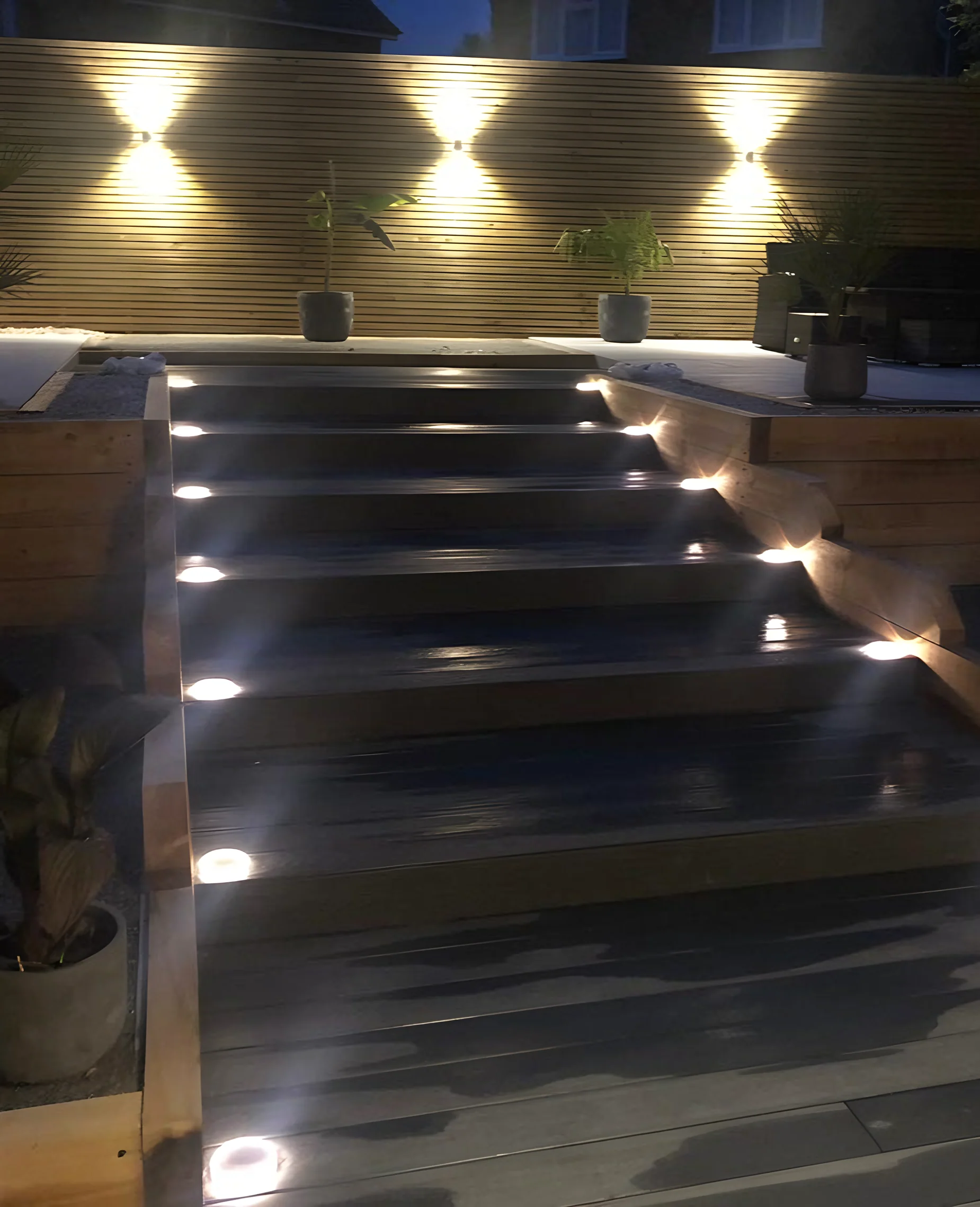
Stone steps lit from the wall above after dark

Levels and structure

Terraces, Steps and Walls on a Split Level Plot

Through Ruxley the topography varies widely and houses are often split level within their site, so retaining walls, terraces, steps and the drainage behind a structure are ordinary parts of the job here. On this ground the drainage behind the wall matters as much as the wall itself, because the clay holds water against whatever you build and then moves as it wets and dries.

Materials have to answer the house. The vernacular on the Foley Estate is red brick, timber framing and clay tiles, and a terrace in the wrong stone argues with all three, while a sawn sandstone or a quiet porcelain does more for most Claygate gardens than a busy pattern. We detail the falls and the joints for a wet winter rather than for the day the photographs are taken.

The parish guidance is worth designing with rather than against. It asks that large areas of hard surfacing be avoided, that garden forms and traditional rural settings be preserved, and that hard surfaces for car parking and terraces stop short of adjacent walls to leave space for planting, which also keeps damp off the wall. On the Foley Estate the concern raised locally was structures sitting close to boundaries and creating a terracing effect, so proximity to a side boundary is looked at carefully there.

  • Retaining walls drained and detailed for clay that holds water
  • Steps, levels and terraces set out for split level plots at Ruxley
  • Stone and brick chosen to sit with the house, not against it
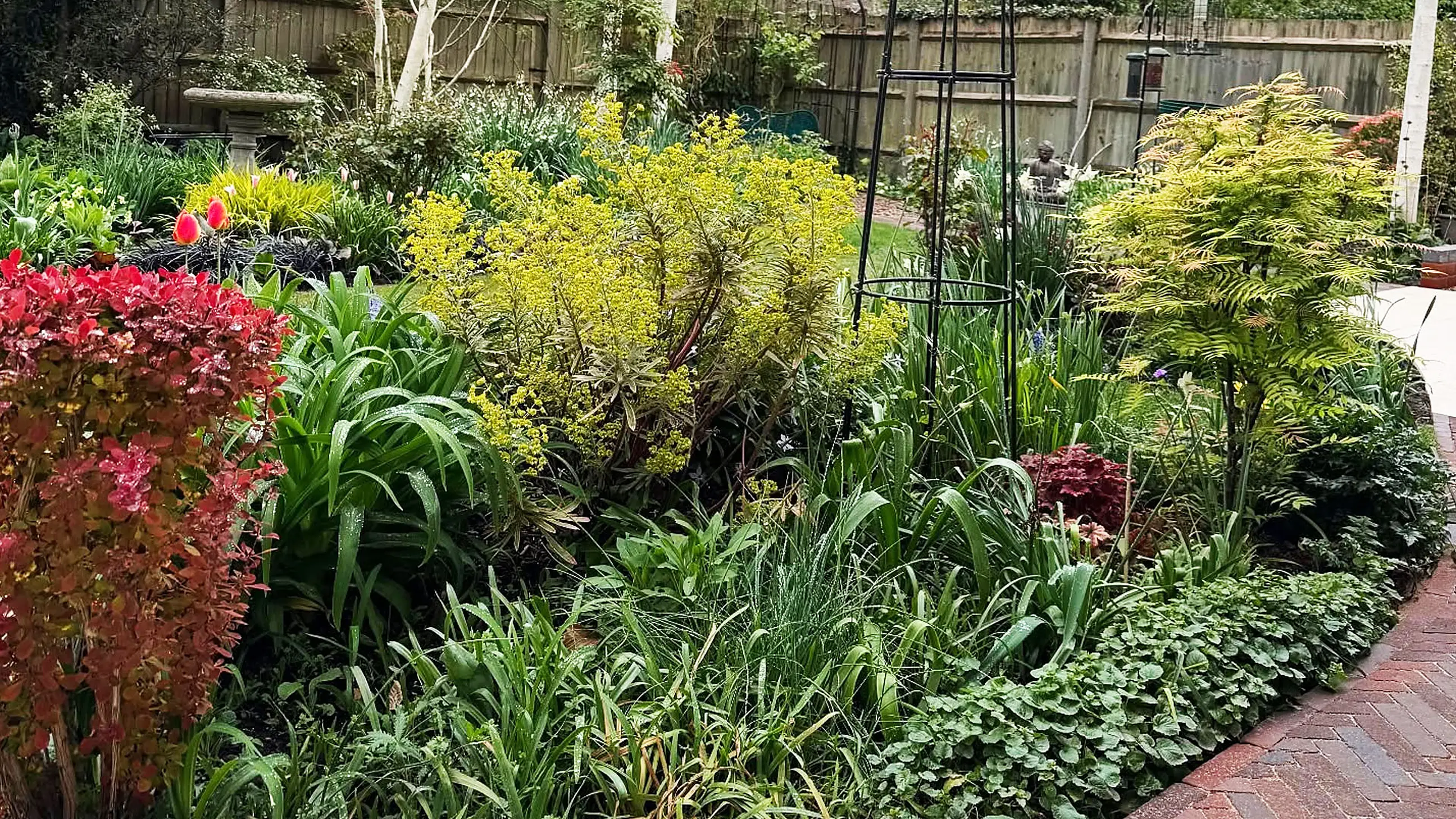
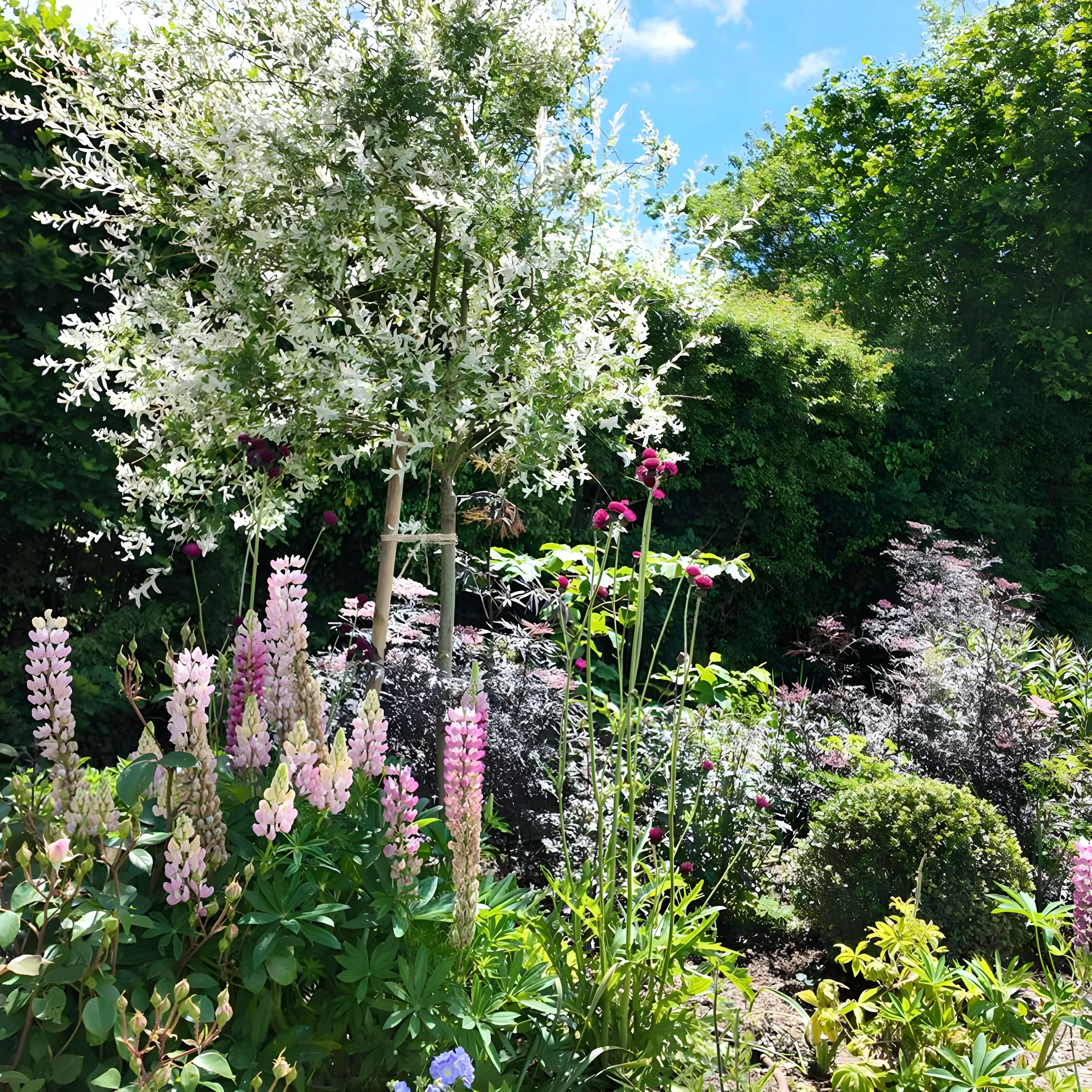
Dense mixed planting running the length of a garden

Planting

Planting for Acid Sand and Heavy Clay

The sandy caps and the leached upper horizons run acid, which is why this corner of Surrey is rhododendron country. Rhododendron, azalea, camellia, pieris, magnolia and acers all take happily here, and the acidic sands and plateau gravels on the neighbouring commons carry birch, pine and heathy ground. Lime loving and Mediterranean planting sulks unless the bed is built up and sharply drained, so a soil test before a planting plan saves money.

The geology shows in the trees if you look for it. A Geologists' Association excursion through Claygate and Oxshott recorded it plainly at Stoke Woods, where the trees are deciduous and mostly oak on the London Clay, and as soon as you leave the clay and pass onto the Bagshot Sands and passage beds, conifers replace them. On the heavier clay the reliable garden performers are oak, hornbeam, beech, viburnum, cornus, roses and hydrangea, which hold their nerve through a wet winter.

Two local conditions shape most planting plans here. Oak, beech and hornbeam are everywhere in and around the village, in private gardens as much as on the commons, so dry shade and root competition decide what can grow under them, and a lawn is often the wrong answer. The larger Foley Estate and Ruxley gardens can also be decades into runaway laurel and rhododendron, so renovation starts with clearance, stump work and rebuilding soil structure rather than with new beds.

  • Soil tested for pH before the planting plan is drawn
  • Acid lovers on the sand, tough structure planting on the clay
  • Dry shade schemes for ground under mature oak, beech and hornbeam

On the ground

On the Ground in Claygate

The Old Village around The Green is the historic and administrative heart, with the mature trees and landscaping that give it its strong sense of identity, the horse trough and the drinking fountain presented to the village by Lord Foley, and the Hare and Hounds on The Green. The Parade and the station area is the other centre, a successful group of independent retailers. Around them sit the Foley Estate, Ruxley Heights and Ruxley Ridge, Coverts Road and Foxwarren, Kings Mead Park, Telegraph Hill, Hare Lane Green and Arbrook, and the gardens in each of them ask for something different.

The green edges are part of the brief rather than the backdrop. Claygate Common is a Local Nature Reserve owned and managed by Elmbridge, wooded with oak, beech and hornbeam, with kestrels, green woodpeckers and sparrowhawks. Arbrook Common is the easternmost of the Esher Commons and part of the Esher Commons Site of Special Scientific Interest, Prince's Coverts is managed Crown Estate woodland open to walkers, and Claygate Recreation Ground between Church Road and Foley Road is a flat, grassed expanse with some fine old oaks. A garden that backs onto any of that inherits its shade, its roots and its wildlife, and the planting plan has to allow for all three.

We work across the parish and the places around it, from Hinchley Wood, Thames Ditton, Long Ditton and Weston Green to Littleworth, Fairmile and Stoke D'Abernon, and on into Chessington, Hook and Malden Rushett. Claygate sits in KT10, and the whole village is inside the area our own teams cover from Hartley Wintney, including the Rythe corridor at the low end and the wooded ground up at Telegraph Hill.

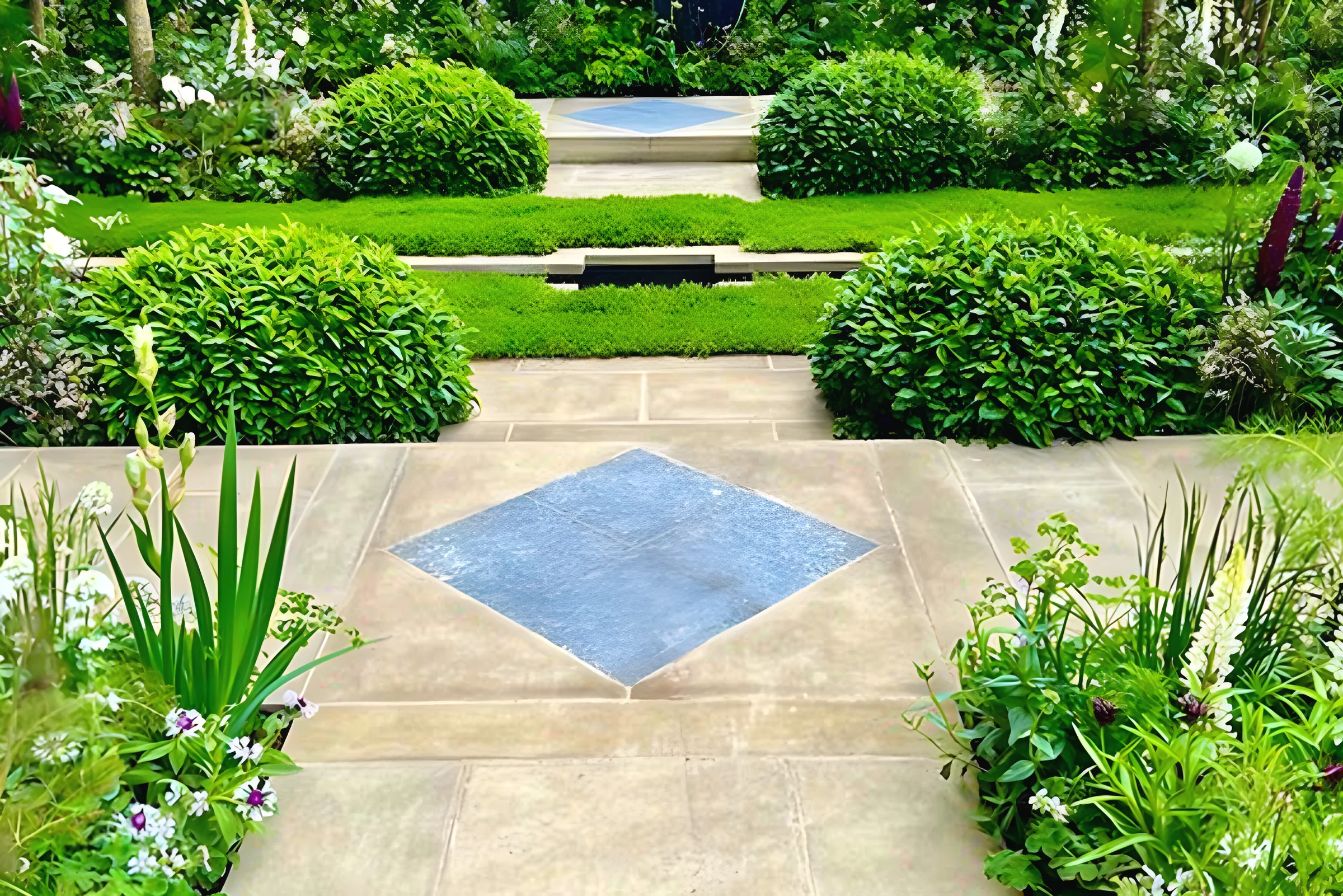
Clipped hedging and inset stone paving in a formal show garden

Neighbourhoods and villages

  • The Old Village and The Green
  • The Parade and the station area
  • The Foley Estate
  • Ruxley Heights
  • Ruxley Ridge
  • Coverts Road and Foxwarren
  • Hare Lane, Oaken Lane and Telegraph Lane
  • Telegraph Hill
  • Hare Lane Green
  • Arbrook
  • Ruxley
  • Kings Mead Park
  • Hinchley Wood
  • Thames Ditton
  • Long Ditton
  • Weston Green
  • Littleworth
  • Fairmile
  • Stoke D'Abernon

Postcodes we cover

KT10

Planning and trees

Trees are the biggest planning consideration for garden work in Claygate, and the village means them to be. There are two conservation areas: Claygate Village, which covers the group around The Green with parts of Elm Road and the High Street and the cottages at the rear of Elm Road, together with the group of buildings in Church Road bordered by the Recreation Ground, and Claygate (Foley Estate), which takes in the west half of Beaconsfield Road, all of Claremont Road, the south end of Gordon Road and the straight section of Foley Road. Elmbridge says you will need to apply to the council if trees are protected by a conservation area or a tree preservation order, and its guidance generally expects the trees identified on a sketch or digital plan, an accurate objective description of the works requested with the reasons for them, and written advice from an appropriate expert where disease or possible subsidence is the concern.

It warns that an application has to carry all the necessary and correct information to be registered and valid, and it offers a pre application service, so asking first is time well spent. In certain circumstances removing trees may also need a felling licence from the Forestry Commission. The parish Village Design Statement adds its own asks: high priority to landscape design, boundary trees and hedges retained, no overall loss of tree cover, front boundaries screened with planting or low open wood fences rather than high brick walls, and large areas of hard surfacing avoided.

Some rear boundary hedges here follow the Rythe, its tributary and the old green lanes such as Old Claygate Lane and Birchwood Lane and are genuinely ancient, so a hedge that looks scruffy on a plot line can be a heritage feature. Claygate is almost entirely ringed by Metropolitan Green Belt, and the parish asks that buildings visible from it be screened. None of this stops a garden being built.

It does mean tree and hedge work is worth checking and documenting before anyone starts.

Recent work

Gardens We Have Built and Still Look After

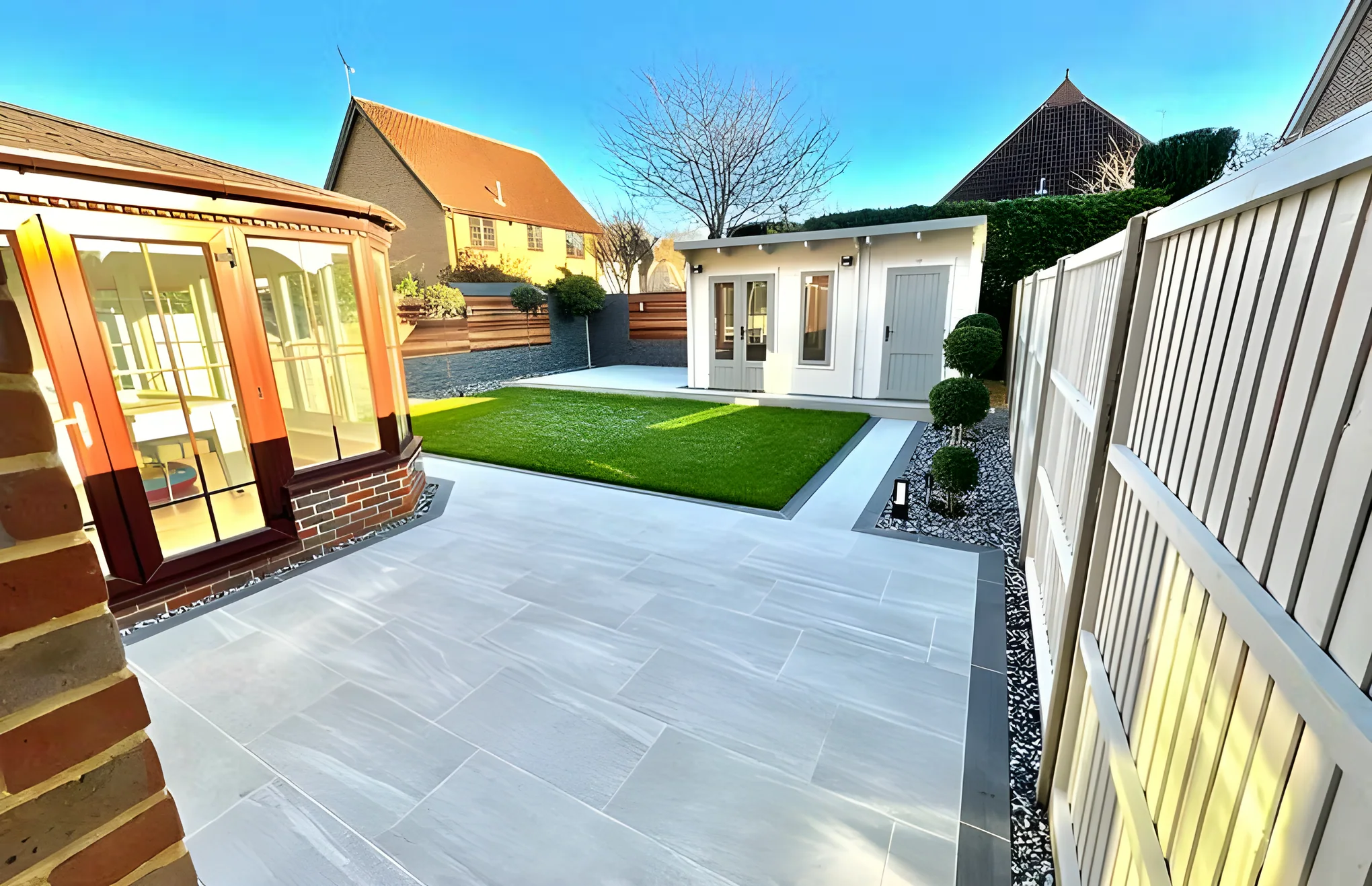
  • An orangery, lawn and paving lit at dusk
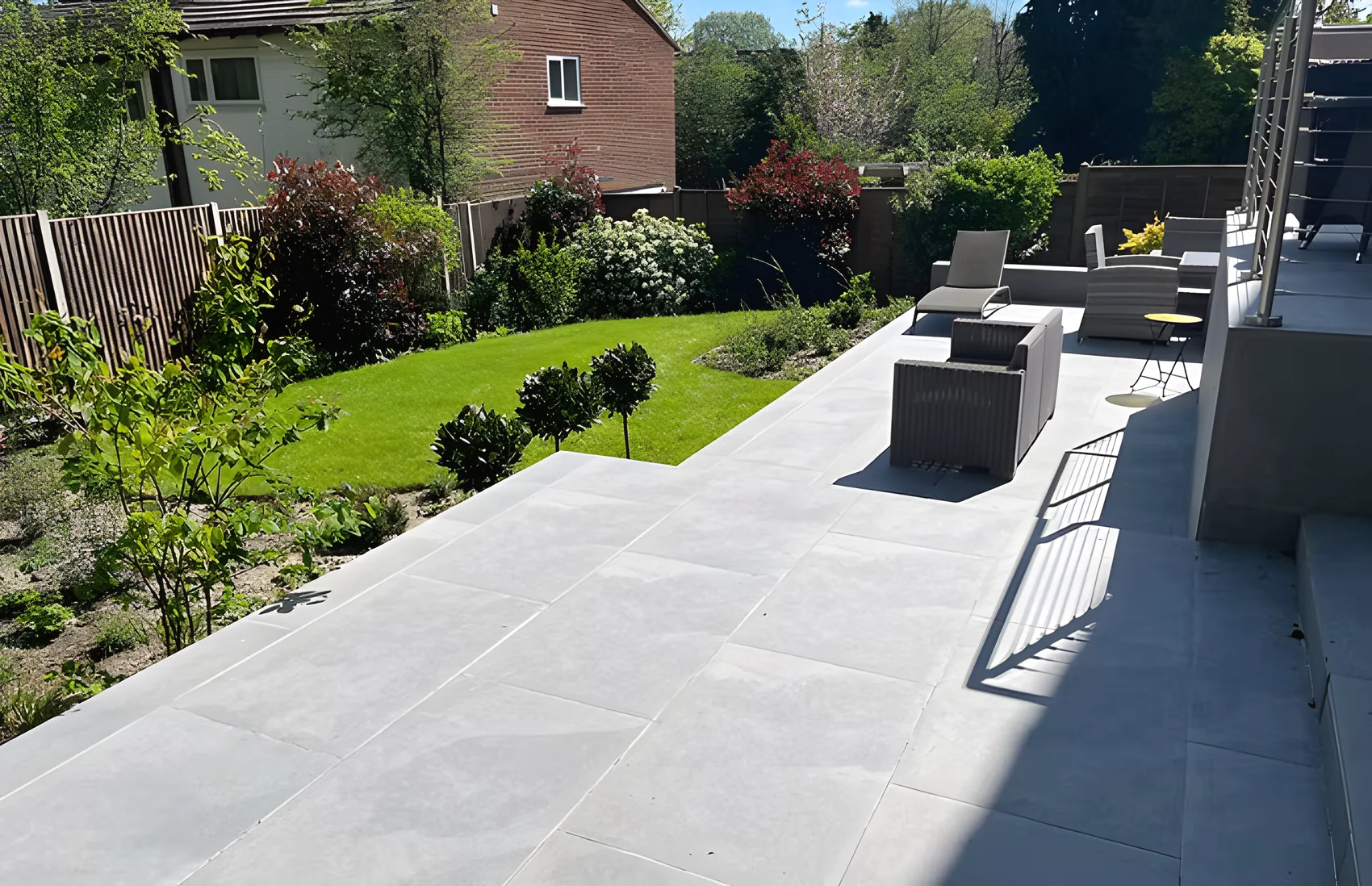
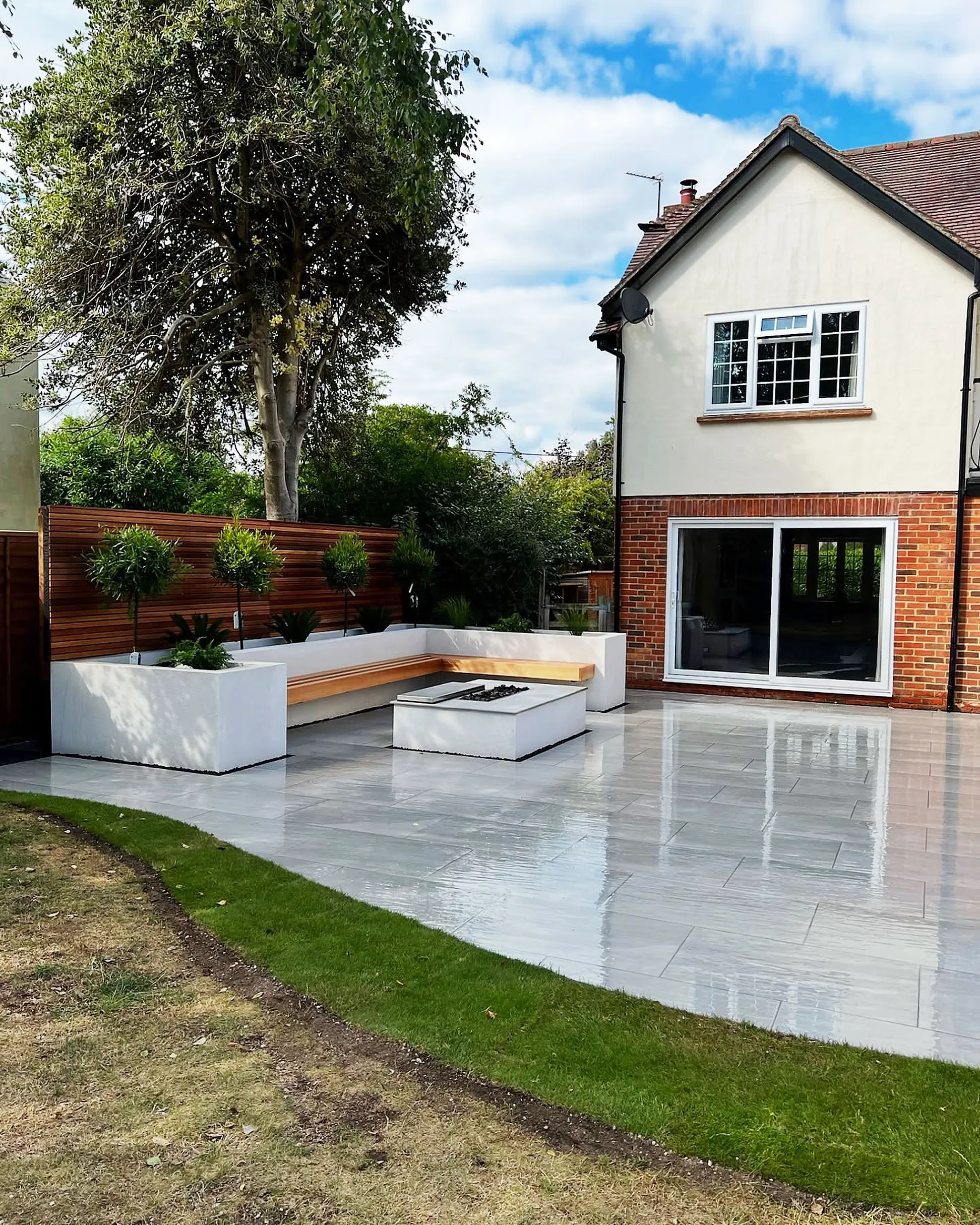
  • Outdoor seating on a large porcelain terrace
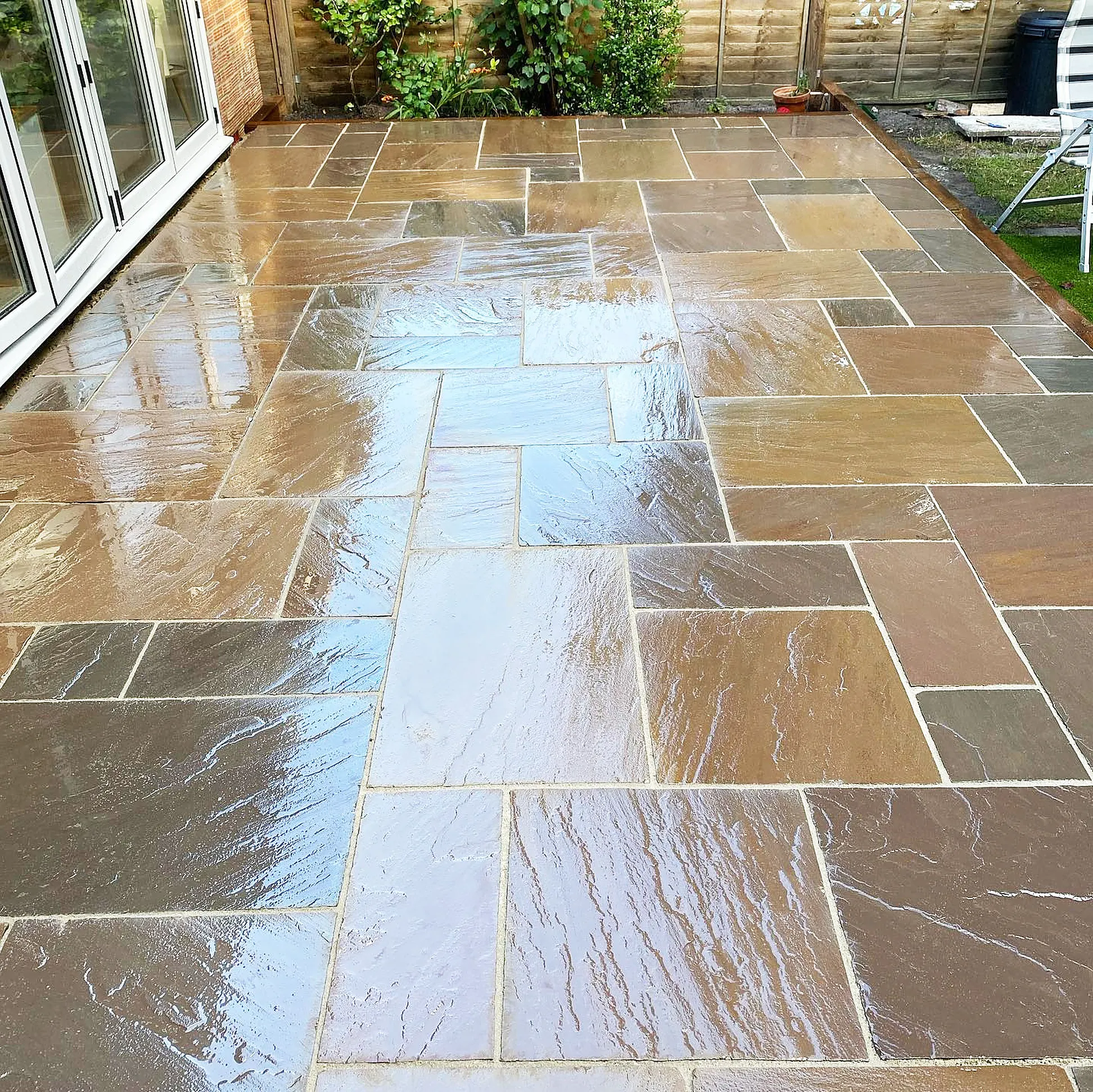
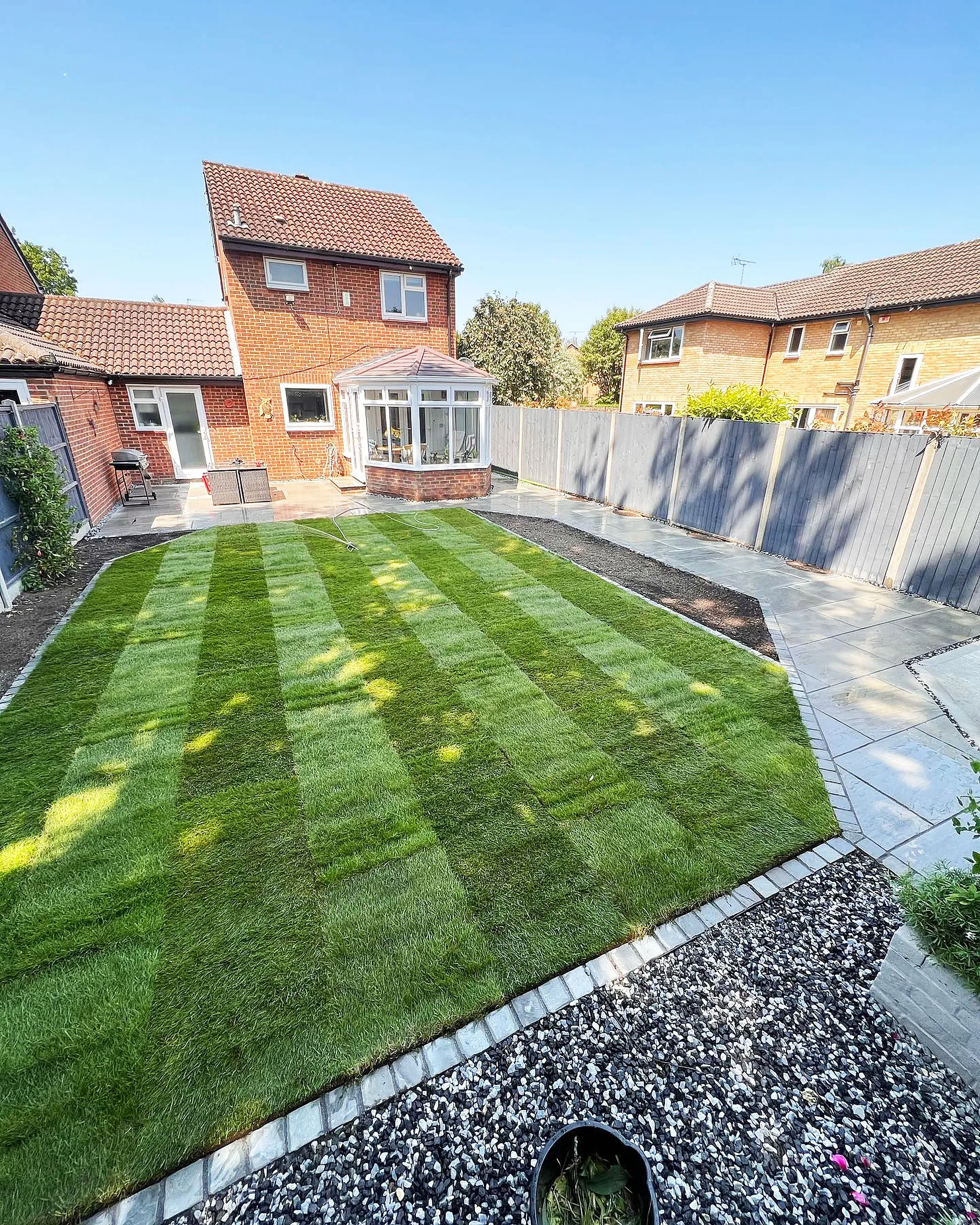
  • Natural sandstone paving, freshly laid and washed down

Good to know

Questions We Get Asked in Claygate

Why Does My Lawn Hold Water in One Corner and Burn Off in Another?

That is the Claygate Member doing what it does. The sand and clay in it alternate in bands, so water soaks through the sandy topsoil and then perches on the first clay layer it meets, while a few paces away a sandier rise drains freely and bakes hard by August. It means drainage here has to be designed from what we find on your plot rather than from a general assumption about Surrey clay, which is why we dig trial holes before we price any drainage work.

Do I Need Permission Before You Touch the Trees?

Quite possibly, and it is worth finding out first. Elmbridge says an application is needed where trees are protected by a conservation area or a tree preservation order, and both Claygate conservation areas are tree rich. Their guidance generally expects the trees identified on a plan, an objective description of the works with the reasons for them, and supporting evidence from an appropriate expert where disease or possible subsidence is the reason given. Elmbridge offers a pre application service, and in certain circumstances a felling licence from the Forestry Commission can come into it as well.

Will a Soakaway Work in My Garden?

Sometimes, and sometimes it is the wrong tool for this ground. The national mapping classes the soils here as slowly permeable and seasonally wet with impeded drainage, which is exactly the condition in which a soakaway fills and then stops taking water. Where there is a usable sand band under the plot, a properly sized and sited soakaway can work well. Where there is not, we would rather spend the budget on decompaction, permeable surfaces and a considered route for the water to take.

What Actually Grows Well in Claygate?

On the acid sands, rhododendron, azalea, camellia, pieris, magnolia and acers, which is a large part of why the village and the commons around it look the way they do. On the heavier clay, oak, hornbeam, beech, viburnum, cornus, roses and hydrangea hold up through a wet winter. Lime loving and Mediterranean planting is the one to be careful with, because it needs the bed built up and sharply drained to stand a chance. A soil test at the start settles the argument, because the ground changes across the village and sometimes across one garden.

How Do You Get a Build Into a Garden With No Rear Access?

Carefully, and with the access worked out before the design is signed off. For most of the cottages around The Green and at the rear of Elm Road there is no rear access at all, so stone, soil and spoil go through the house or down a shared alley, boarded and sheeted, and everything is barrowed. On the Foley Estate the plots back onto each other and access is from the front drive only, so a whole garden strip comes and goes through a side gate. Where a street keeps its brick pavement, Torrington Road among them, we board and protect the crossing instead of running plant over it.

Do You Look After the Garden Once It Is Built?

Yes, and on Claygate ground it earns its keep. A scheme set on the sandy caps goes hungry and dries out, while the same planting over a clay band a few paces away sits wet all winter, so the first few seasons are where it is won or lost. Garden maintenance plans start from £160 per month on a twelve month agreement, with a minimum four hour visit each month, and for the larger Foley Estate and Ruxley gardens we run a planned grounds maintenance and estate calendar instead of a mow and go. The team that built the garden is the team that looks after it, so nobody has to explain your drainage to a stranger.

Close by

We Also Work In

Start your garden

Talk to Us About Your Claygate Garden

Tell us where you are in the village and what you want the garden to do. We will dig trial holes before we price anything, because the sand and clay bands under Claygate change inside a single garden and they decide most of the rest.

  1. 01
    We Call You BackWithin one working day, to talk the garden through.
  2. 02
    The First VisitA walk round the garden to take in the levels, the access and where the water sits.
  3. 03
    A Written ScopeA specification and a programme, with samples to see in your own light.
Prefer to talk?01276 582095info@cjlandscapesltd.co.uk
1 Webbs Mews, High Street
Hartley Wintney, Hook RG27 8NZ
What Would You Like Help With?

Choose as many as you like.

Tell Us About the Project

Roughly is fine. It helps us bring the right people to the first visit.

Your Details
Photographs Optional, up to five

Thank You

Your enquiry has come through and we will call you back within one working day.

Step 1 of 3

We only use your details to reply to this enquiry.