C J LANDSCAPES 01276 582095Get in touch

Hook, Hampshire

Landscaping in Hook on London Clay

Design, construction and long term care for private gardens at Jubilee Green, Newnham Road, Raven Road, Elms Road, Whitewater Rise and the new estates at Green Hart Park, on ground that is clay almost everywhere.

Landscaping in Hook

What Makes a Hook Garden Different

Hook is a large Hampshire village that has quietly become a small town. It sits on the A30 just north of Junction 5 of the M3, with a mainline station that puts London Waterloo, Basingstoke and Southampton within commuting reach, and it grew in three bursts: first as a cluster of farms and coaching inns on the London to Exeter stage coach route, where the White Hart and Old White Hart still stand; then around the railway station; and then estate after estate, most recently eastward into Holt Park and northeastward into Green Hart Park and Oakwood Grange.

Its own Neighbourhood Plan describes the village as characterised by relatively low density residential developments, punctuated with green spaces, with open frontages and inter connecting footpaths, and records that no house in Hook village is more than a few minutes walk from the Village Centre or from the open countryside. That setting is the thing residents value most and the thing it is worth designing a garden to borrow: wet heathland and ancient wood pasture at Hook Common and Bartley Heath to the south, the Whitewater valley and its small hedged fields to the east, fragments of old coppice to the north, and a protected gap of open land to the west keeping Hook and Newnham apart.

What decides a garden here, though, is not the view. It is the clay. Hook is a London Clay village from one end to the other, and that single fact governs the lawn, the borders, the footings under a terrace, the cost of carting spoil away and the plants that will still be alive in three years. We work on the free draining sands around Camberley and on clay here, and the two want opposite things. So this page is about the ground and the houses in Hook, because between them they decide what a garden can be.

See the work
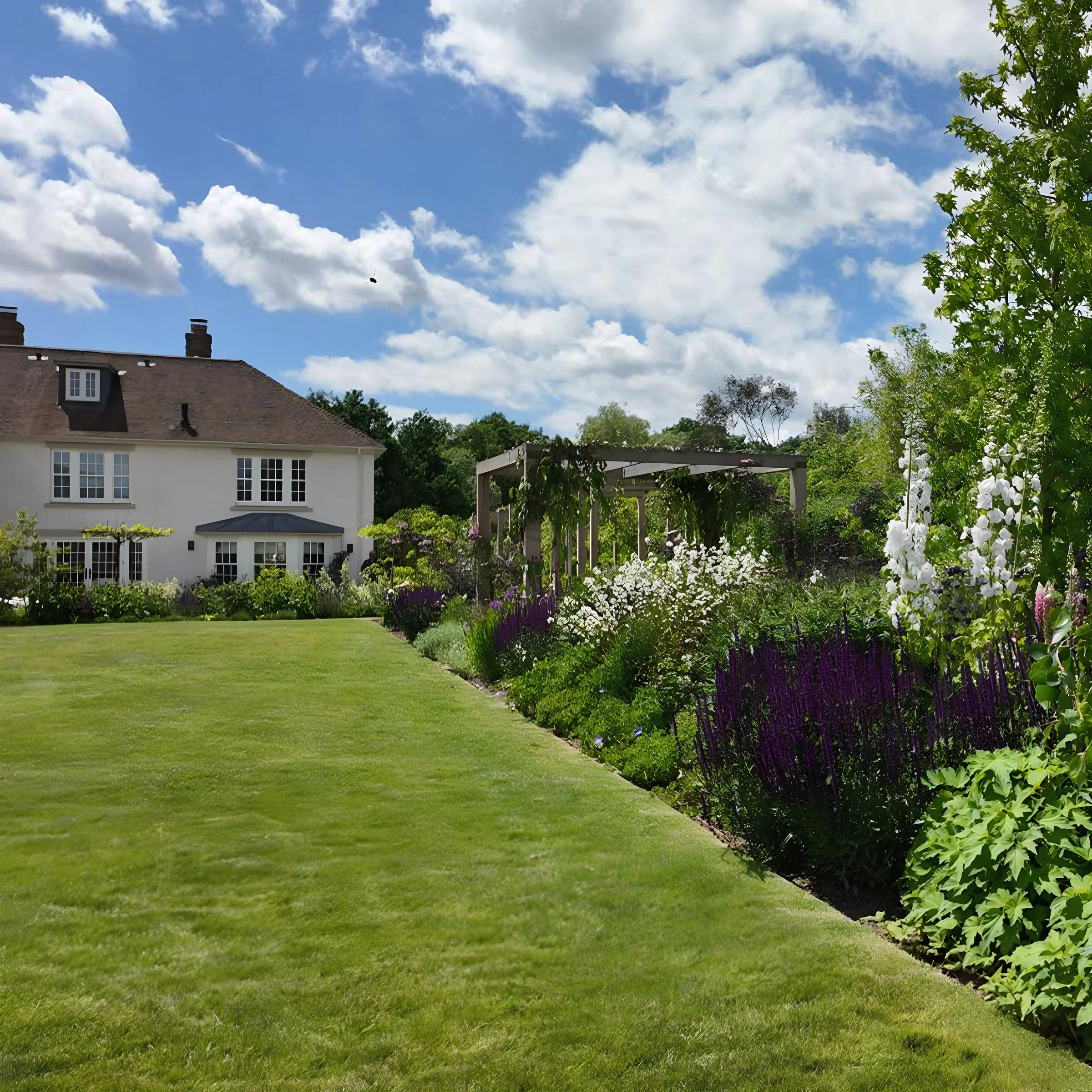
A broad estate lawn edged with deep planted borders

The houses

The Houses Here, and the Plots They Stand In

Hook reads by era rather than by street, and each era hands you a different kind of garden. The oldest plots are the red brick cottages, terraces and villas around Jubilee Green, Newnham Road, Morris Street, Dorchester Road and the older London Road frontage. The Neighbourhood Plan describes these buildings as closely spaced with small front gardens, with a particularly consistent Newnham Road frontage, in smooth faced red brick with hipped Welsh slate and plain tiled roofs, low brick arches over the windows and doors and prominent brick chimney stacks. Behind them the rear plots are long, narrow and rectangular, so the aspect is fixed by the terrace and a whole run of gardens is either reliably sunny or permanently shaded.

The municipal semis on Raven Road are the opposite proposition. Straight rear gardens considerably longer than anything built since, open frontages, and side access down the flank of the house, which is why they are the best plots in the village for a full redesign: a machine can actually reach the rear. The higher density pocket at Bramshott Drive, Compton Close and Valmeade Close, with Selborne Close adjoining, is harder. Plots are irregular and often pie shaped, thrown off the heads of the cul de sacs, so no two gardens on the same street share a shape or an aspect, and the open plan frontages read as one continuous space, so anything built at the front is highly visible. The plan treats that pocket as an area of high sensitivity to change, and front garden work there sits better when it reflects the prevailing open character.

Then there are the two ends of the scale. Elms Road and Whitewater Rise carry the largest private plots in the village and the real design potential: mature specimen trees, established boundary planting, and enough width for genuine garden structure rather than one lawn and a path round it. At the other end, the newest estates hand over a flat rectangle of thin imported topsoil over clay subsoil that plant has driven across for the whole build. Those gardens look like a blank canvas and behave like a car park until the compaction is dealt with.

  1. Late Victorian and Edwardian
    Red Brick Cottages, Terraces and VillasThe Jubilee Green and village green area off Newnham Road, Newnham Road itself, Morris Street, Dorchester Road and the older London Road frontage

    Long, narrow, rectangular rear plots, often running back to a shared boundary with a mature hedge or neighbours' trees, which leaves a strip at the far end that is dry, rooty and sunless. The soil is old garden soil improved by generations of cultivation, with a high chance of buried brick rubble and old path foundations waiting under the turf. Rear access is usually a narrow side path or through the house, so what can realistically be built is set by what can be carried in, and gardens around the old core and on Morris Street may sit on the gravel cap, which gives a lighter, stonier topsoil than the rest of the village.

  2. 1940s and 1950s
    Municipal Semi Detached HousingRaven Road, identified in the Hart Urban Characterisation and Density Study as municipal housing of that period

    Generous straight rear gardens, considerably longer than anything built since, with open frontages and side access down the flank of the house. Usually one or two mature trees that have had decades to put roots across the whole plot, so a design has to work with the root plate rather than around a drawing. The mapping shows no superficial deposit here, so these gardens sit directly on London Clay and the back third is often the wettest part, which is exactly where owners want the seating. The length and the side access make them the best plots in Hook for a full rebuild, because machines and materials can reach the rear.

  3. Interwar to 1980s detached and chalet style
    Detached Houses and Chalet Bungalows on Larger PlotsElms Road, described in the Neighbourhood Plan as an area of mixed period large houses, and Whitewater Rise, described as detached uniform chalet style housing

    The largest private plots in Hook, with mature specimen trees, established boundary planting, width for real structure and in several cases frontages deep enough to matter. Clay subsoil throughout, and mature trees close to new work, so shrinkage and heave have to be thought about before a terrace, a retaining wall or a flight of steps is specified rather than after the first dry summer. Elms Road carries several locally significant heritage assets, including Courtlands, The White House, The Lodge and Maryfield Convent, so the setting of neighbouring buildings is a live consideration, and both roads are areas of high sensitivity to change in the plan.

  4. 1990s to 2020s
    New Build Estate Housing, From Large Detached to Small Modern PlotsWest of Great Sheldons Coppice, Holt Park and Holt Way, and the recent northeastward expansion at Green Hart Park and Oakwood Grange taking in Blacksmith Avenue, Papermill Avenue, Pantile Drive, Brick Work Lane, Barton Row, Maynard Drive, Rowlandson Way and Northington Way

    This is where the ground causes the most trouble. The mapping confirms bare London Clay with no superficial cover across Great Sheldons Coppice, Papermill Avenue, Blacksmith Avenue, Barton Row, Brick Work Lane, Pantile Drive and Holt Way, and the plots are handed over flat and rectangular with a thin layer of imported topsoil spread over subsoil that has been tracked over by plant for the duration of the build. Boundaries are close boarded fence panels, there is little or no mature planting and the aspect varies house by house, so screening and structure have to be designed rather than inherited. Rear access on the newest and smallest plots is often a single gate beside the house, and that sets the maximum machine size before anything else does.

The ground

The Ground Under Hook

Hook is a London Clay village, and the geological mapping returns the London Clay Formation, described as clay, silt and sand, at every point tested across it, from Newnham Road and Morris Street in the south west to Blacksmith Avenue and Barton Row on the northern edge and out east towards the Whitewater. The only thing sitting on top of it is a discontinuous cap of flinty sand and gravel over the old village core, and everywhere else there is no superficial deposit mapped at all, so the clay starts immediately under the topsoil.

RAINTopsoilSurrey Hill Gravel MemberLondon Clay FormationLambeth Group and Seaford Chalkwater stops here

Layer 1

Topsoil

There are two completely different topsoils in one village. On the newest estates it is a thin skin of imported material spread over clay subsoil that plant drove across for the whole build, which is why a new lawn there sits on a pan rather than on soil. Around Jubilee Green, Newnham Road, Morris Street and Dorchester Road it is old garden soil improved by generations of cultivation, and the surprise under the turf is buried brick rubble and the foundations of old paths. We dig inspection holes on the first visit instead of reading the soil off a map.

Layer 2

Surrey Hill Gravel

One thing sits on the clay in places and it matters more than its size suggests. The mapping shows a discontinuous cap of early to mid Pleistocene sand and gravel, the Surrey Hill Gravel Member, over the old village core around the White Hart and running west from there along Newnham Road and Morris Street. It is recorded as deposits of the ninth terrace of the pre diversionary River Thames, within the Sudbury Formation, composed largely of angular and rounded flint with sporadic Lower Greensand. It does not extend east along London Road and it stops well short of Nately Scures. Where it is present you garden a thin, stony, sandy topsoil that dries out and scorches at the surface while the clay below stays saturated, so the same garden wants irrigation and drainage, which is a confusing combination to work in and a very easy one to get wrong.

Layer 3

London Clay

Everywhere else, the clay runs from immediately under the topsoil down. There is no Alluvium and no River Terrace Deposits mapped anywhere in the parish, including in the Whitewater corridor and on the Bartley Wood side, so there is no forgiving layer in between. The clay is nutrient rich and typically neutral to slightly alkaline, which is genuinely good news for the right planting, but it is slowly permeable, so water sits on it from November through to March, and it shrinks and cracks open in a dry summer then lifts again in winter. That movement is what governs footing depth for terraces, retaining walls and steps, and it is what wrecks rigid paving that was never designed to take it.

Layer 4

Lambeth Group, Seaford Chalk and the Trap on the Commons

Seaford Chalk and Lambeth Group appear along the southern fringe beyond the commons, and the Bagshot Formation only at the far northern and eastern margins of the parish, so for practical purposes a Hook garden is a London Clay garden whatever the neighbours believe. This is where the commons mislead people. Heather, gorse and cross leaved heath thrive on Hook Common and Bartley Heath a few minutes away, but the mapping shows London Clay with no superficial cover under both commons as well. The heath is there because of management history and surface conditions, not because of a sandy subsoil, and that is why camellias, rhododendrons and pieris die in a clay border a few streets from a thriving heath.

CJ Landscapes remodelled our back garden with a new patio, paths and lawn. It looks fantastic and we are really happy with it. Carl was friendly, professional, hardworking and conscientious.

Kathy Moriarty · Google review

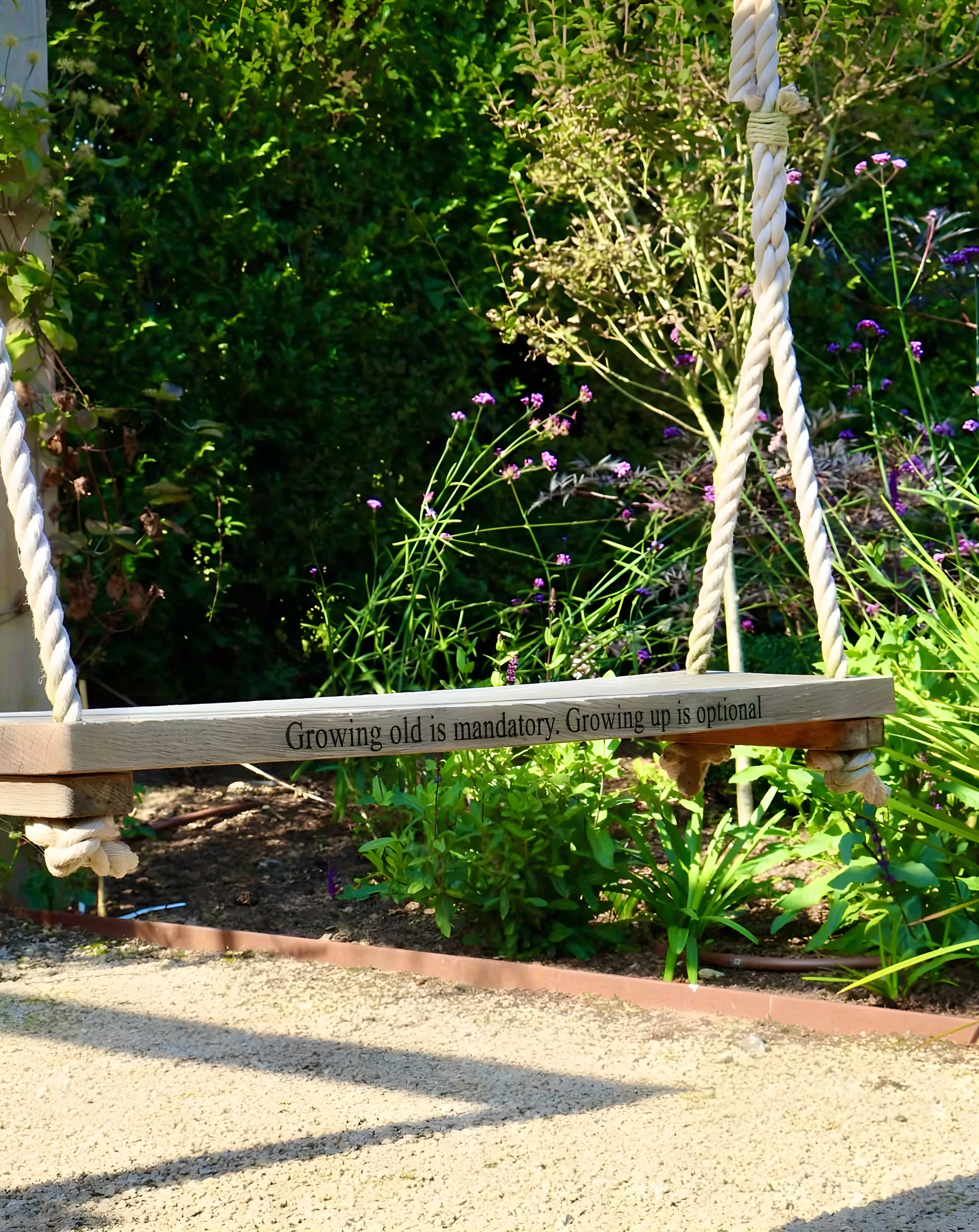
A timber swing seat set on gravel under mature trees

Drainage, aeration and soil repair

Getting the Water Off a Clay Garden

The Neighbourhood Plan calls this a poorly draining landscape, dissected by a network of often wooded streams and minor tributaries, and that is exactly how a Hook garden behaves. Almost every newer estate sits on bare London Clay with no sand or gravel cover at all, and the mapping returns no superficial deposit at Raven Road, Hop Garden Road, Papermill Avenue, Blacksmith Avenue, Goose Green, Whitewater Rise and Great Sheldons Coppice. The result is standing water on lawns from November through to March, a lawn that squelches underfoot for months, and borders that cannot be worked for half the year.

Compaction is the other half of the problem and it is the one owners least expect. On the new build gardens at Green Hart Park, Oakwood Grange, Holt Park and the Great Sheldons Coppice estate, a thin skin of topsoil was spread over subsoil that had been driven over by plant for the duration of the build, and that pan is the single most common reason a new Hook lawn never establishes. More topsoil does not fix it, and nor does scarifying the surface. Deep soil aeration fissures the ground with compressed air and holds those fissures open with enriched biochar, so it decompacts to depth with no digging and no access damage, which is what you want on a finished garden and under established trees.

Then the water has to go somewhere. The plan records a risk of groundwater flooding throughout the parish which may result in flooding both at surface level and within basements, alongside properties at risk of surface water flooding and others at risk from the Whitewater itself, so a soakaway on Hook clay is often a hole that fills up and stays full. A new terrace or hard surface here usually wants attenuation and a positive outfall designed in from the start, with levels set so surface water runs to a lawn or a border rather than off a sealed slab towards the house.

  • Land drainage and levels designed for slowly permeable clay
  • Deep soil aeration with compressed air and enriched biochar, no digging
  • Attenuation and a positive outfall rather than a soakaway on its own
  • Lawn rebuilds that start with the pan and not with the turf
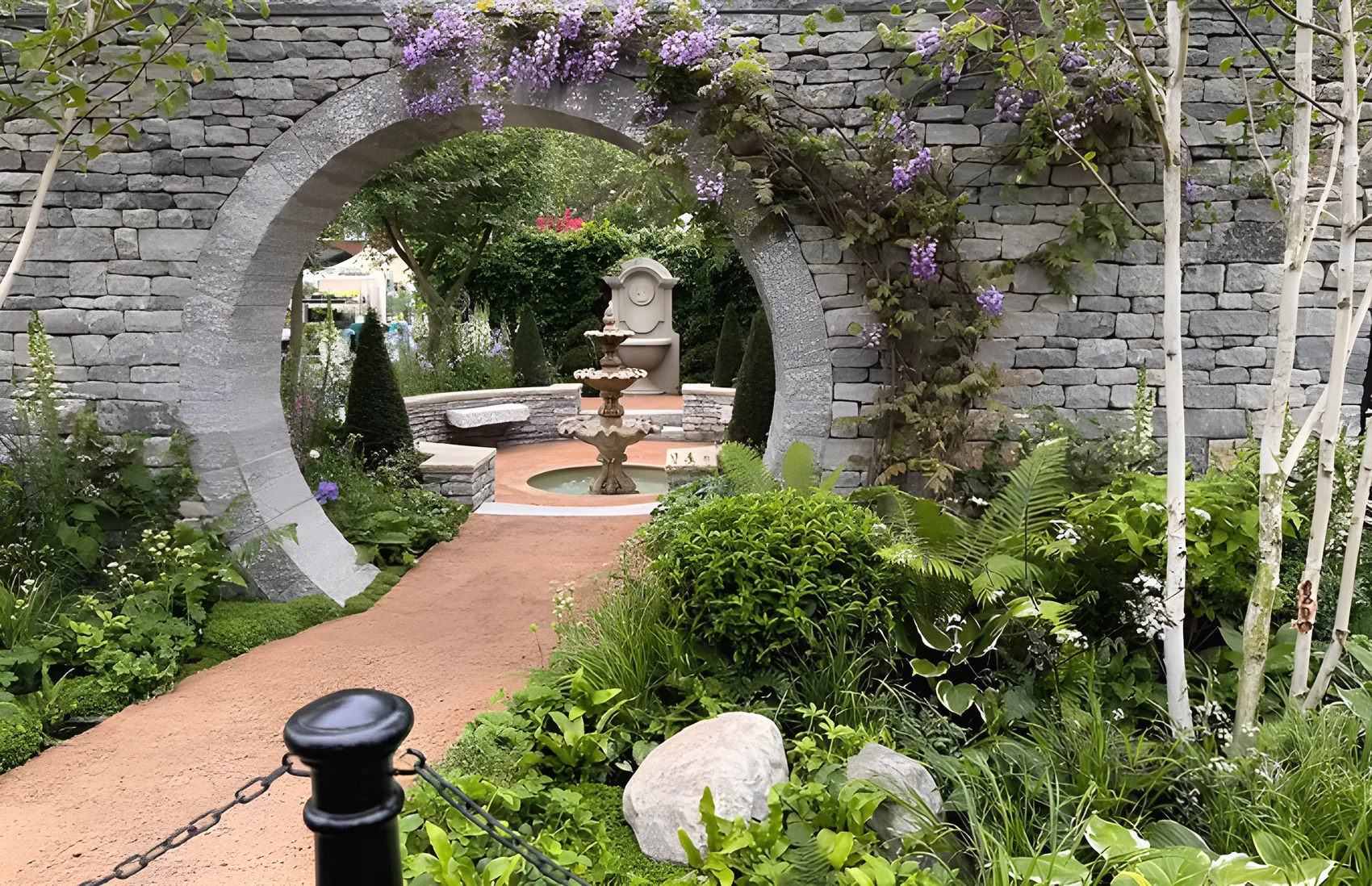
The stone moongate and fountain at the heart of the RHS Chelsea 2022 show garden

Landscape construction

Building on Ground That Moves

Clay shrinks and swells through the year, so construction in Hook is decided by the subsoil before it is decided by the drawing. Terraces, retaining walls and steps are built to take seasonal movement rather than to sit on it and crack, and foundation depth is set for the ground that is actually there. On the Elms Road and Whitewater Rise plots, where mature trees stand close to where the new work wants to go, that stops being a theoretical risk and becomes the first thing we survey.

Spoil is the other line on a clay job that deserves an honest answer at the quote. Clay will not re use as topsoil and cannot simply be spread on site, so a sunken terrace or a pond on a Hook plot carries a materially bigger disposal cost than the identical garden on free draining sand. We would rather price the cart away properly at the start than discover it in week two, and where the gravel cap sits over the old core there is flint in the dig as well, which slows excavation and makes the spoil heavier again.

Access is designed at the same time as the garden. Junction 5 of the M3 and the A30 mean stone, topsoil and skips arrive without difficulty, and then the difficulty starts. The plan records that the A30 and the B3349 through Griffin Way North and Griffin Way South carry heavy flows of through traffic including many large HGVs, with a lack of safe surface level crossings, so standing a grab lorry or a tipper on those routes needs traffic management rather than optimism. Station Road is constrained by its position in the village centre and station parking is limited; many local roads have so little off road parking that residents park on the pavements; the cul de sacs at Bramshott Drive, Compton Close and Valmeade Close and the close spaced terraces at Jubilee Green, Newnham Road and Morris Street need kerbside space arranged in advance and usually a conversation with the neighbours. On the rural lanes, Holt Lane, Searl's Lane and the outer western end of Newnham Road towards Owens Farm, the verges are soft and the passing places few, so a long delivery goes on a smaller vehicle in a booked slot.

  • Terraces, paths, levels and retaining walls built for shrinkage and heave
  • Footings designed around mature trees before the layout is fixed
  • Clay and flint spoil, cart away and traffic management priced at the quote
  • Small tracked plant and barrow routes where a single side gate is the only way in
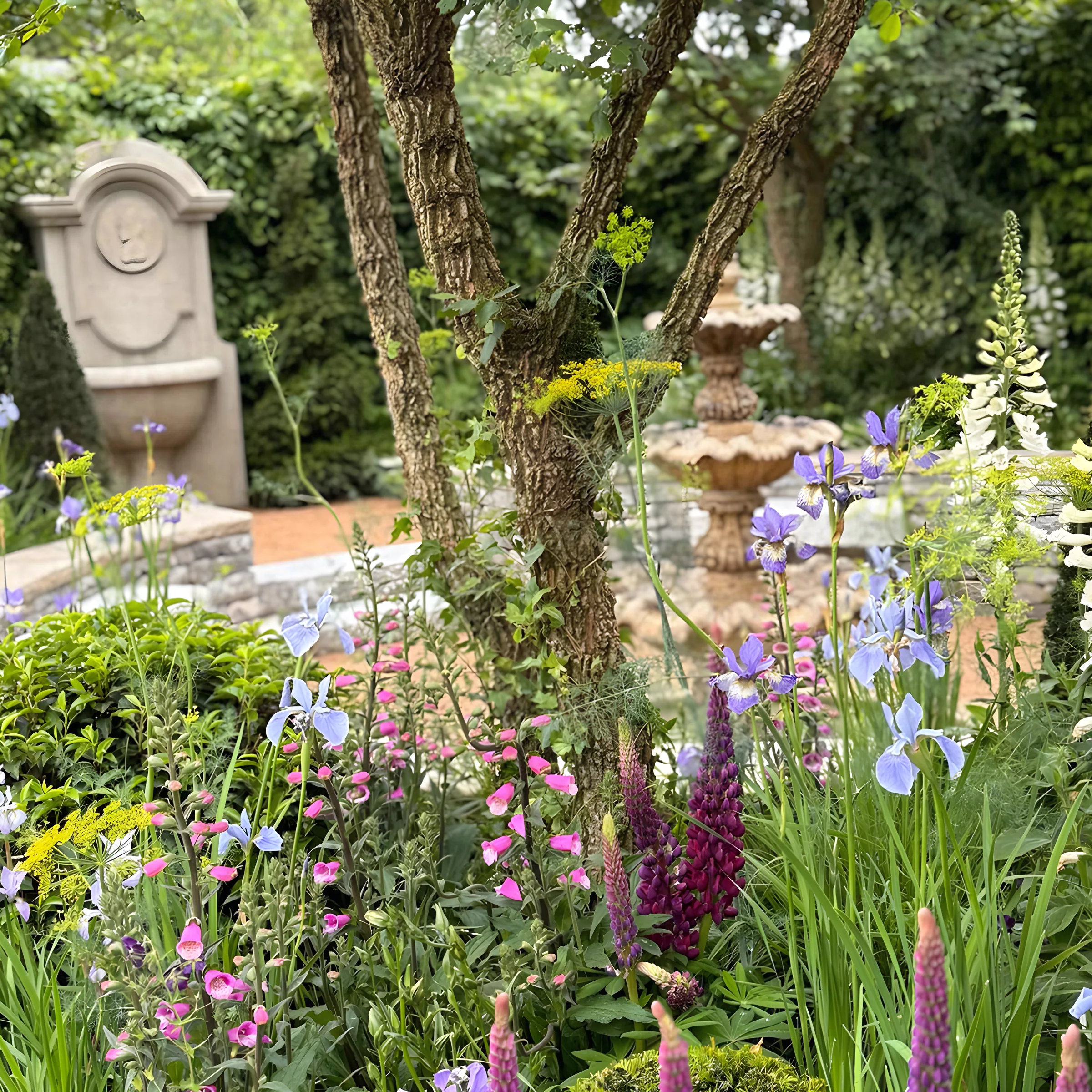
Cottage garden borders in full flower around a stone water feature

Planting, water and long term care

Planting That Suits Hook Clay

London Clay is nutrient rich and typically neutral to slightly alkaline, so the reliable performers here are the clay tolerant ones: roses, hornbeam, field maple, oak, viburnum, cornus, hydrangea, Persicaria, hardy geranium and Alchemilla. Once established they will outgrow the same plants on the free draining sands around Camberley, because the clay holds both moisture and nutrition. The catch is the first two years, when a root ball sitting in a clay planting pit is effectively sitting in a bucket, so the pit, the backfill and the first two summers of aftercare matter more here than the plant list does.

Two kinds of planting go wrong in Hook with great regularity. Lavender, rosemary, cistus and santolina look right in a scheme and then rot off over a wet winter unless the bed is genuinely raised and grit mulched. Acid lovers are the other one: camellias, rhododendrons and pieris need a bed built specifically for them, or a confirmed position on the gravel cap over the old core, rather than a hopeful change of corner. Where the ground is permanently moist, along the Whitewater and the stream corridors, the honest answer is to stop fighting the water and plant willow, alder, dogwood, Iris, Ligularia and Rodgersia, which is also where a pond earns its place: Policy HK4 supports more ponds, and wet clay holds water readily, which on this ground is a gift rather than a problem. Any work to an existing pond, or excavation close to one, wants an ecological check before a machine is booked, because the plan records Great Crested Newt and the nationally rare wild flower Starfruit among the ponds in the parish.

Two practical things then keep a Hook scheme alive. Deer, rabbits and badgers come off the commons and the woodland fringe, so new planting on the southern and northern edges of the village is worth protecting from the day it goes in rather than after the first losses. And the same in house team that designs and builds the garden stays on it afterwards, which is how a planting plan on heavy ground reaches maturity instead of being replaced in its third year. Garden maintenance plans start from £160 per month on a twelve month agreement with a minimum four hour visit each month, and the larger plots on Elms Road and Whitewater Rise, with their mature specimen trees and established boundary planting, suit a planned seasonal calendar rather than a weekly mow. Our work at RHS Chelsea Flower Show 2024 took a Silver Medal, and the same people are in the vans.

  • Planting plans written for clay, for the gravel cap and for permanently wet ground
  • Raised and grit mulched beds where Mediterranean or acid planting is wanted
  • Ponds and wet ground planting, with an ecological check before any excavation
  • Monthly garden maintenance, grounds maintenance and estate scale care

On the ground

Where We Work in and Around Hook

Hook works as a set of pockets rather than one town, and we plan a day around them. The Historic Core sits around the White Hart and Hook Village Centre, with Jubilee Green and the village pond on Newnham Road just west of it. North Hook, West Hook, East Hook and South Hook spread out from there, the Griffin Way Estate sits against the B3349, Holt and Holt Park run eastward with the Sedges sculpture and Bassetts Mead Country Park, and the newest ground is at Green Hart Park and Oakwood Grange on the northeastern edge, with Murrell Green beyond.

Outside the village we work through the lanes in every direction. Newnham sits across the protected open land of the Hook to Newnham Gap to the west, with Nately Scures, Up Nately, Mapledurwell, Greywell, North Warnborough and Odiham among the parishes we reach from there. Rotherwick, Phoenix Green, Mattingley, West Green, Dipley, Heckfield, Hartley Wespall, Bramshill and Stratfield Turgis sit on the same lane networks, along with Winchfield, Dogmersfield and Hartley Wintney. Those are small lane networks with soft verges, so deliveries get planned rather than assumed.

The green space around Hook sets the tone clients ask us to carry into the garden: Hook Common and Bartley Heath immediately south, Butter Wood, the ancient woodland fragments north of the parish, Hartletts Park and its playing fields, Wellworth Park, Hook Village Garden in the centre of the village, and the River Whitewater and its floodplain east of the village, a classic chalk stream in its upper reaches. We cover the whole of RG27, and we work next door in Hartley Wintney, Fleet and Reading.

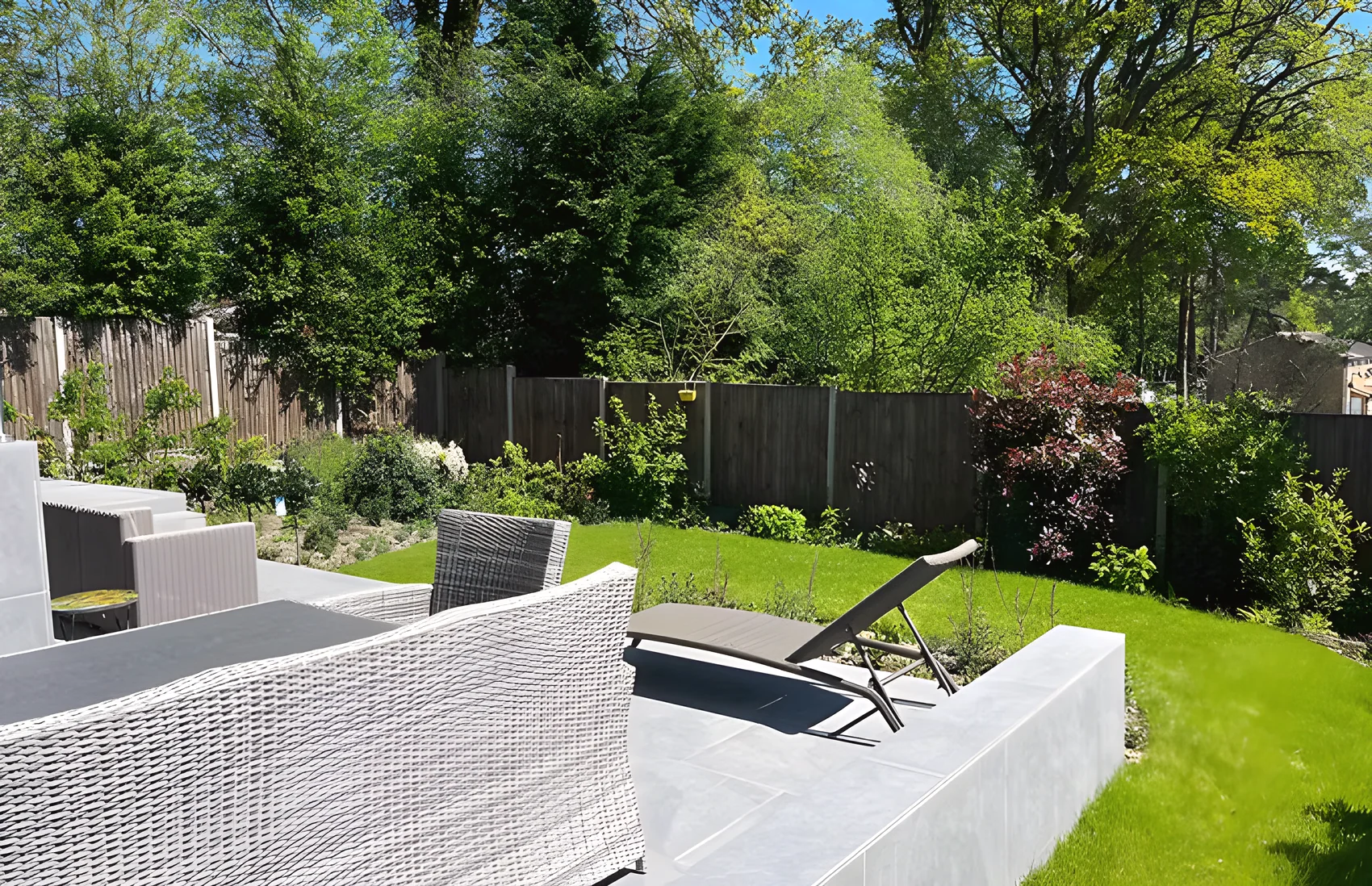
Garden furniture and sun loungers beside a lawn

Neighbourhoods and villages

  • The Historic Core
  • Hook Village Centre
  • Jubilee Green
  • North Hook
  • West Hook
  • East Hook
  • South Hook
  • Griffin Way Estate
  • Holt
  • Holt Park
  • Green Hart Park
  • Oakwood Grange
  • Murrell Green
  • Newnham
  • Nately Scures
  • Up Nately
  • Mapledurwell
  • Greywell
  • North Warnborough
  • Odiham
  • Rotherwick
  • Phoenix Green
  • Mattingley
  • West Green
  • Dipley
  • Heckfield
  • Hartley Wespall
  • Bramshill
  • Stratfield Turgis
  • Winchfield
  • Dogmersfield
  • Hartley Wintney

Postcodes we cover

RG27

Planning and trees

Hook has no conservation area of its own, which is the first useful thing to know and the easiest to misread. Hart District Council's published list of conservation areas covers Odiham and North Warnborough, Greywell, Rotherwick, Dipley, Hartley Wintney, Mattingley Green and West End, Dogmersfield, West Green, Hazeley Bottom, Bramshill, Heckfield and the Basingstoke Canal among others, and Hook does not appear on it. So the six weeks of written notice Hart requires before work to trees in a conservation area will not normally apply to a garden in the village itself, although it generally will apply on a job a few minutes away in Odiham, Greywell, Rotherwick or Hartley Wintney.

Individual trees anywhere in Hook can still be covered by a Tree Preservation Order. Hart states that it is an offence to cut down, uproot, prune, damage or destroy protected trees without the Council's consent, warns that unauthorised lopping or felling can bring a fine of up to 20,000 pounds, and publishes an interactive map at maps.hart.gov.uk so owners can check before work starts. Where a protected tree is dead or dangerous without presenting an immediate risk, Hart requires a Five Day Notice, and it notes that the burden of proof rests with the tree owner to prove that the tree is dead or dangerous, so we assume a significant tree is protected until that has been checked.

Ancient woodland and ancient or veteran trees are among the designations the Neighbourhood Plan treats as material, which is relevant on the northern edge of the parish where fragments of predominantly neglected hazel coppice with oak standards and ash woodland survive. The Hook Neighbourhood Plan, made by Hart District Council, then adds local guidance that is worth reading before a design is finalised. Policy HK12 points towards suitable boundary treatments such as low brick walls, metal railings and native hedges, asks for high quality routes for people and wildlife connecting green infrastructure and footpaths, expects good quality well designed outdoor green space as private gardens or shared communal space including native tree cover, and expects attention to design detail with discrete siting of features such as bin stores, recycling storage, cycle stores, meter boxes, flues and ventilation ducts.

Policy HK4 asks that development take into account the importance of existing gardens, open space and features that provide ecological connectivity such as hedgerows, supports the provision of more ponds, asks that work affecting ponds retain existing wildlife buffer zones and connections to other habitats, asks that species rich or historic hedgerows and important trees be protected, and asks that anything adjoining the River Whitewater or other watercourses does not harm water flow or water quality. Policy HK8 asks that external lighting demonstrate that the impacts from light pollution are minimised, and the supporting text adds that particular care should be taken on edge of village locations to prevent light spillage into the countryside, which is a direct consideration for any garden lighting scheme on the village fringe and the reason we aim light down at paths, steps and planting rather than out across a boundary. Drawing on the Hart Urban Characterisation and Density Study, the plan also identifies areas of high sensitivity to change where new work is expected to reflect the prevailing character, among them Elms Road, Bramshott Drive with Compton Close and Valmeade Close, Whitewater Rise, Holt Lane, part of Hook Village Centre, the village green area including Newnham Road, London Road and Newnham Road, Dorchester Road and surroundings, Raven Road, Morris Street, west of Great Sheldons Coppice and Little Sheldons Farm.

Policy HK13 lists locally significant heritage assets and asks that proposals affecting them set out the effect on their significance; these include Courtlands, The White House, The Lodge and Maryfield Convent on Elms Road, Kew Villa and The Raven Hotel on Station Road, Oaklea and Old White Hart on London Road, the Farmhouse and Granary at Owens Farm on Newnham Road, the Barn and Granary at Scutts Farm on Borough Court Road, Cherry Tree Barn and Searles Farmhouse on Searles Lane, Little Sheldons House and Little Sheldons Cottage on Sheldons Lane, St John's Church, the War Memorial, the Hook Plough, the Hook Mosaic and Sedges at Holt Park. The same policy recognises Jubilee Green for the quality of its individual buildings and its strong collective character, and it is also referred to as the Jubilee Green Area of Special Character, so work in that pocket needs more care than the absence of a conservation area suggests. On water, the plan notes risk alongside the Whitewater and a groundwater flood risk across the parish, so any significant new hard landscaping is generally better designed with attenuation and a route for water from the outset.

All of the above is local guidance and policy rather than settled law, and the position on any particular garden is worth checking with Hart District Council before work begins.

Recent work

Gardens We Have Designed and Built

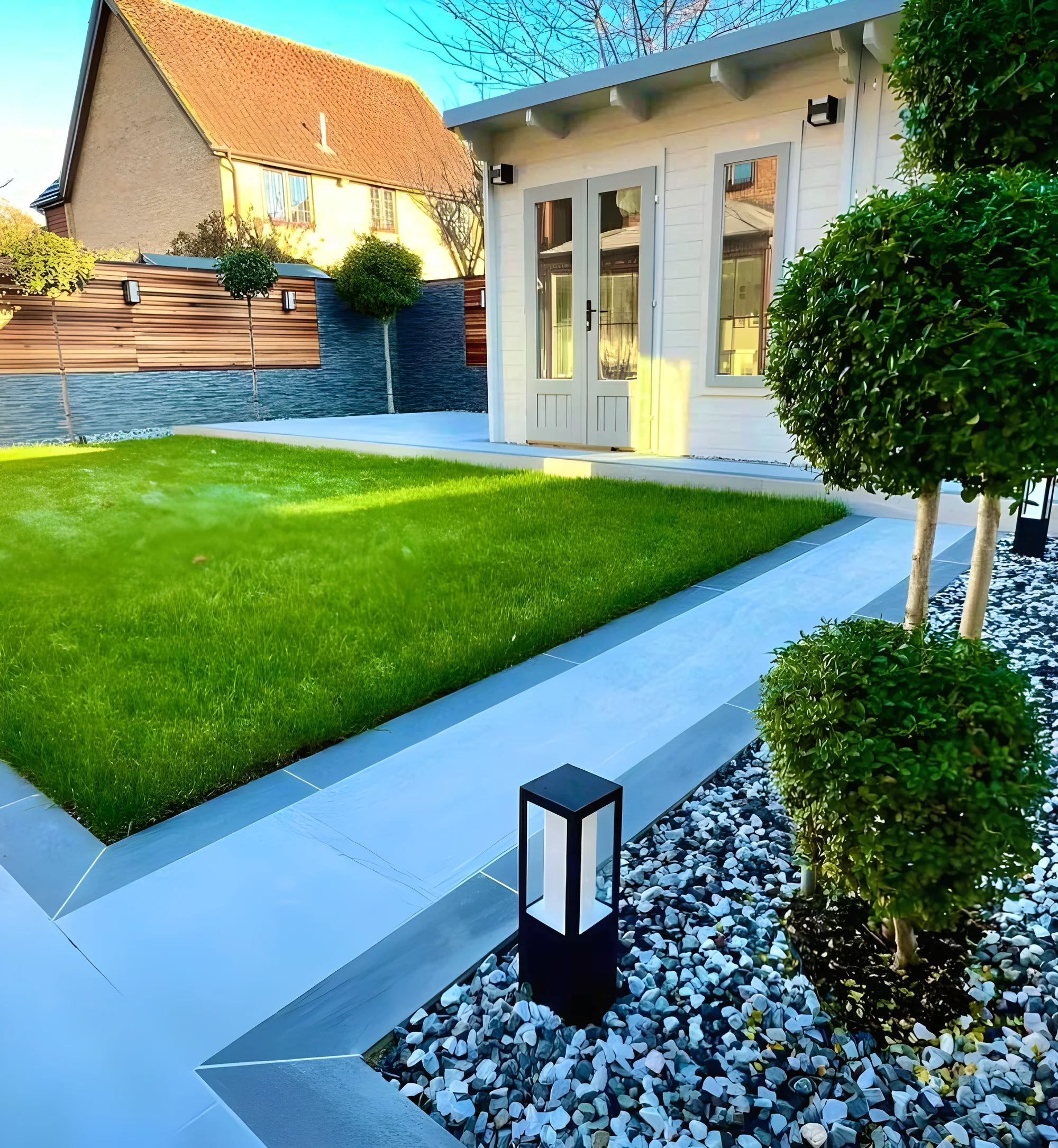
  • A shaped lawn with path lighting, clipped topiary and a gravel border
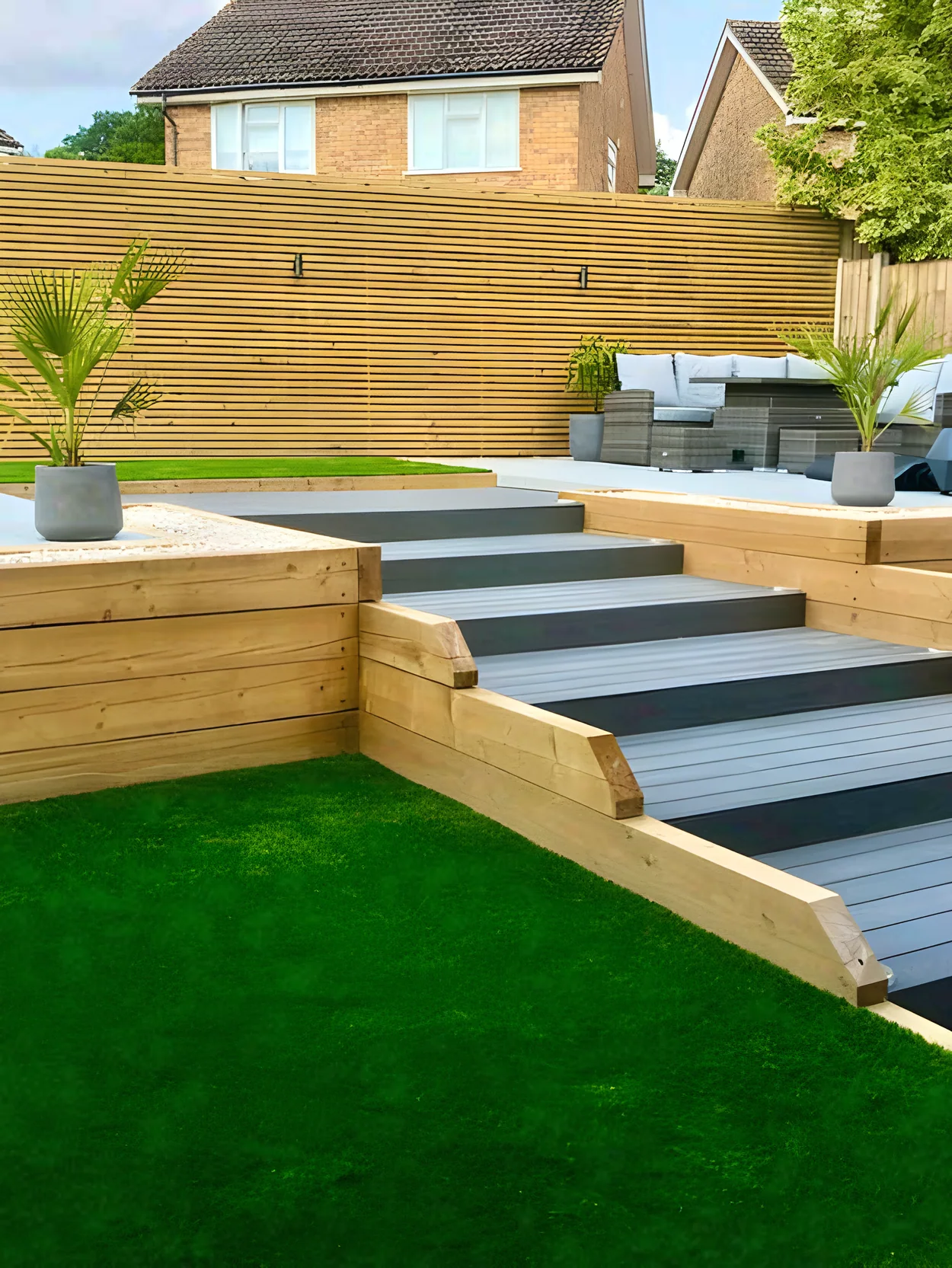
  • A tiered deck and lawn stepping down through a sloping garden
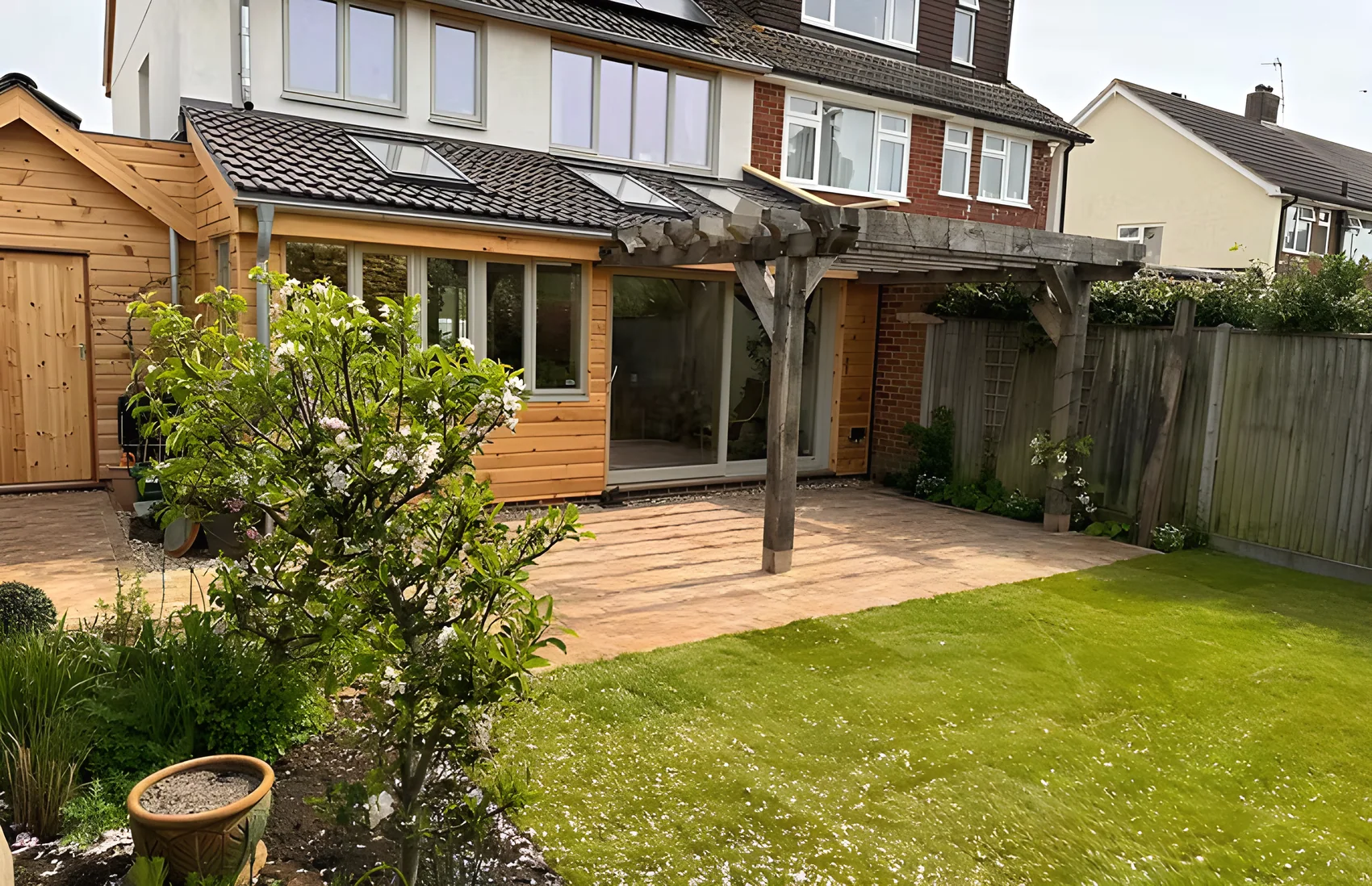
  • Stone paver stepping stones running across a lawn to the house

Good to know

Hook Garden Questions, Answered

Is My Hook Garden on Clay?

Almost certainly. The geological mapping returns the London Clay Formation at every point tested across the village, from Newnham Road and Morris Street in the south west to Blacksmith Avenue and Barton Row on the northern edge. The one exception is a discontinuous cap of flinty sand and gravel over the old core and west along Newnham Road and Morris Street, which gives a thin, stony, sandy topsoil over the same clay. We confirm which of the two you have with inspection holes on the first visit, because the drainage design and the planting plan both change with the answer.

Why Does Our Lawn Stand Under Water From November to March?

Because it is sitting on slowly permeable clay with nothing between, and usually on a compaction pan as well. The mapping returns no superficial deposit at Raven Road, Hop Garden Road, Papermill Avenue, Blacksmith Avenue, Goose Green, Whitewater Rise or Great Sheldons Coppice, so there is no sand or gravel layer to take the water away. The Neighbourhood Plan also records a groundwater flood risk throughout the parish. The fix is drainage, levels and soil structure rather than another load of topsoil, and it is worth doing before a new lawn goes down rather than after it fails.

Our Garden Is a New Build and the Turf Never Took. What Is Wrong With It?

The same thing that is wrong with most new gardens at Green Hart Park, Oakwood Grange, Holt Park and the Great Sheldons Coppice estate. A thin layer of imported topsoil was spread over clay subsoil that plant had tracked over for the whole build, so the roots reach a pan just below the surface and stop. Deep soil aeration is designed for exactly this: compressed air opens fissures through the compacted layer and enriched biochar holds them open, with no digging and no damage to a finished garden. After that, feeding and a planting plan start to work the way they are supposed to.

Heather and Gorse Grow on Hook Common, So Why Do My Camellias Keep Dying?

This is the commonest planting mistake in Hook and it is an understandable one. The mapping shows London Clay with no superficial cover under Hook Common and Bartley Heath as well, so the heath is there because of management history and surface conditions, not because of a sandy acid subsoil a few streets from your border. Camellias, rhododendrons and pieris in Hook need a bed built specifically for them, or a confirmed position on the gravel cap over the old core. Lavender, rosemary and cistus fail for the opposite reason, which is winter wet, and they need genuinely raised beds and a grit mulch.

Do We Need Permission to Cut Back the Big Trees in the Garden?

Possibly, and it is worth checking before a plan depends on it. Because Hook has no conservation area of its own, the six weeks of written notice Hart requires for trees in a conservation area will not normally apply in the village, but any individual tree can still carry a Tree Preservation Order. Hart states that it is an offence to cut down, uproot, prune, damage or destroy protected trees without consent, warns that unauthorised lopping or felling can bring a fine of up to 20,000 pounds, and publishes an interactive map at maps.hart.gov.uk. If the job is over in Odiham, Greywell, Rotherwick or Hartley Wintney, that notice generally does apply, and we check the position with you first either way.

Can You Get a Machine and a Skip Into Our Garden?

Usually, with planning. Junction 5 of the M3 and the A30 make deliveries into Hook straightforward, and then the local roads decide what happens next. The plan records heavy through traffic and large HGVs on the A30 and the B3349 through Griffin Way North and Griffin Way South, limited station parking, and many local roads where a lack of off road parking leaves residents parked on the pavements, so kerbside space for a skip, a grab or a tracked machine is arranged in advance. On the terraces around Jubilee Green and Morris Street there is often no rear access at all, and on the newest plots at Green Hart Park and Oakwood Grange a single side gate sets the machine size, so we work out the route in before we price the garden.

Close by

We Also Work In

Start your garden

Talk to Us About Your Garden in Hook

Tell us where the garden is and what you want from it, and we will come and dig inspection holes before anything is drawn, because on Hook clay, and on the flinty gravel cap over the old core, the ground decides the drainage, the footing depth and the planting plan. We design, build and then look after the garden with the same in house team. Call 01276 582095 or 07717 058646, or email info@cjlandscapesltd.co.uk. We work right across Hook and RG27, and next door in Hartley Wintney, Fleet and Reading.

  1. 01
    We Call You BackWithin one working day, to talk the garden through.
  2. 02
    The First VisitA walk round the garden to take in the levels, the access and where the water sits.
  3. 03
    A Written ScopeA specification and a programme, with samples to see in your own light.
Prefer to talk?01276 582095info@cjlandscapesltd.co.uk
1 Webbs Mews, High Street
Hartley Wintney, Hook RG27 8NZ
What Would You Like Help With?

Choose as many as you like.

Tell Us About the Project

Roughly is fine. It helps us bring the right people to the first visit.

Your Details
Photographs Optional, up to five

Thank You

Your enquiry has come through and we will call you back within one working day.

Step 1 of 3

We only use your details to reply to this enquiry.