C J LANDSCAPES 01276 582095Get in touch

Reading, Berkshire

Landscaping in Reading on Clay, Chalk and River Gravel

Design, construction and long term care for private gardens in Caversham, Redlands, South Park, Tilehurst and Lower Earley, on ground that changes street by street.

Landscaping in Reading

Why Reading Is Not One Garden Brief

Reading sits on a low ridge between the River Thames and the River Kennet, close to where the two meet, and almost everything about gardening here follows from that. The suburbs climb west onto the high ground at Tilehurst and north across the water into the Chiltern foothills at Caversham and Emmer Green, while the valley floors beside both rivers stay flat, damp and gravelly. The borough is a unitary authority, and the urban fringes run into Wokingham Borough at Earley, Lower Earley and Woodley, and into West Berkshire at Calcot and the western edge of Tilehurst.

Reading does not feel like a Berkshire market town. It feels like a small city in the Thames Valley made up of genuinely separate places. Caversham reads as a leafy village on the far bank with long views back across the valley, Redlands, South Park and Downshire Square are substantial Victorian villa suburbs with street tree avenues and deep gardens behind the walls, Katesgrove and Newtown are tight terraced streets with no back gate at all, and Lower Earley is a late twentieth century private estate out on the Wokingham fringe.

So Reading is not one brief repeated with a different address on it. Within a few miles there is a walled terrace strip where every slab comes through the hall, a sloping chalk plot with a view, a mature villa garden governed by protected trees, and a compacted estate lawn that ponds every winter. The ground changes under all of them, which is why this page is about the soil and the houses rather than a list of places we cover.

See the work
An orangery, lawn and paving lit at dusk

The houses

The Houses Here, and the Plots They Stand In

The best garden making stock in Reading is the Victorian and Edwardian villa belt that rings the centre. The council's own appraisals describe the same pattern again and again: a small front garden on a uniform building line behind a brick wall, iron railings or a clipped evergreen hedge, with a long and often very generous rear garden hidden behind. The Kendrick appraisal says the late Victorian properties in Kendrick Road and Redlands Road have long rear gardens which, though not visible to the public, make an important contribution to the spacious character of the area.

On that stock the constraint is almost never space. It is the trees, the boundaries and the consents. The South Park appraisal records extensive tree cover throughout and a significant number of Tree Preservation Orders, Downshire Square has mature tree cover including good avenues of street trees, and in Redlands there are recorded orders at 76 Elmhurst Road, 17 and 19 Redlands Road and 37 Upper Redlands Road. Boundaries carry the same weight, because some of them are listed in their own right, among them the wall between 57 and 59 The Mount and the gatepiers, walls and railings on Allcroft Road and The Lower Mount.

Everything else in Reading pulls the other way. The terraces of Katesgrove and Newtown and the streets around Russell Street and the Oxford Road have long narrow walled strips and no rear access whatsoever. On the Tilehurst hill the interwar semis sit on levelled platforms over the plastic clay that made the bricks the terraces were built from, with kilns at Grovelands and Kentwood and clay pits dug on Norcot Hill in the area still called The Potteries. On the newest estates the garden is a thin skim of imported topsoil over subsoil a machine drove over. Aspect has to be checked rather than assumed as well, because the Redlands appraisal records that in the Marlborough Avenue and Elmhurst Road block all properties front south, so the backs of the Elmhurst Road houses look onto high brick walls and garage entrances.

  1. Mid Victorian to Edwardian, roughly 1860 to 1914
    Large Detached and Semi Detached Villa, Several Now in Institutional or University UseKendrick Road, Redlands Road and Upper Redlands Road, Elmhurst Road and Marlborough Avenue, Alexandra Road, Erleigh Road, Addington Road, Denmark Road, Donnington Road and Lydford Road, Eastern Avenue, Hamilton Road, Crescent Road and Bulmershe Road in South Park, Downshire Square, Brownlow Road and Maitland Road off Tilehurst Road, and Glebe Road, Cintra Avenue, Milman Road and Christchurch Gardens

    A small front garden on a uniform building line, then a long rear garden wide enough for real structure: a terrace that suits the house, a lawn with shape to it and borders with depth. The Kendrick appraisal treats those hidden rear gardens as part of what makes the area feel spacious, and records that the larger early twentieth century houses on Redlands Road sit slightly elevated from the road behind a boundary wall or railings and a small front garden often planted with evergreen shrubs. What governs the design is what is already growing there, because mature specimen trees, listed boundary walls and conservation area notice periods decide where a wall can go and when the work can begin.

  2. Victorian and Edwardian, roughly 1850s to 1910
    Bay Fronted and Flat Fronted Terrace, Including Many Converted to Flats and HMOsKatesgrove and Newtown in RG1, the streets around Russell Street, Castle Hill and the Oxford Road, Prince's Street, Victoria Street and Montague Street near Eldon Square, and Whitley Street, Highgrove Street and Basingstoke Road on the Christchurch ridge, where Brighton Terrace, St Leonard's Terrace and Weymouth Terrace stand

    Long narrow rear strips, commonly walled or close boarded on both long sides, with the house throwing shade across the first third of the garden for most of the year. There is usually no rear vehicle access at all, so every tonne of spoil and every slab goes through the hall or over a boundary wall, and that, not the drawing, sets the practical limit on what can be built. On the Christchurch and Whitley slopes these gardens often fall or rise away from the house, so anything usable means a retaining wall and steps rather than a simple patio. Parts of this stock sit under Article 4 directions, including an HMO direction and St Leonard's Terrace at 2 to 16 Basingstoke Road, and the Eldon Square appraisal records that nearly all the terraced houses there have a small front garden between the building line and the pavement, and that increasingly these are being lost to car parking.

  3. Mostly twentieth century, with Victorian and older cottages at the old village cores
    Large Detached House on the Chiltern Slope, Plus the Surviving Cottage Groups of the Old Caversham HamletsCaversham Heights on the high western ground, Emmer Green around Peppard Road, Kidmore End Road and Grove Road, the Surley Row and Donkin Hill lanes, Buckingham Drive, and Lower Caversham down on the Thames flat

    Caversham climbs from the Thames floodplain to the top of Caversham Park, so these plots slope, sometimes steeply, and the long southerly views across the valley are the thing the garden has to be built around. Expect terracing, retaining walls, steps and drainage behind the walls rather than a flat lawn, with thin flinty soil over chalk near the top and the real possibility of a dissolution hollow under a wall footing. The chalk is close enough to the surface here to have been mined, and the disused Hanover Chalk Mine has its principal access at the junction of Peppard Road and Kiln Road. The Surley Row appraisal describes a narrow lane with no footpaths bounded by high brick walls, relatively small plots for the domestic scale, some with quite deep rear gardens, and several Tree Preservation Orders inside that one small conservation area. Lower Caversham has the opposite problem, level and damp with a high water table.

  4. Late 1970s onward, with 1960s and 1970s parkland estates and 2000s brownfield schemes
    Private Estate House and Cul De Sac Detached, Plus Riverside Apartment and Townhouse DevelopmentLower Earley, the Maiden Erlegh and Radstock Lane side of Earley, Calcot and western Tilehurst in RG31, Caversham Park Village on former parkland, and Kennet Island in Whitley

    Modest to small plots on curved cul de sac layouts, close boarded fence on all three sides, and little or no mature tree cover, with almost none at all on the newest schemes. The ground is typically a thin skim of imported topsoil over subsoil that was tracked over by plant during construction, which is why the lawn ponds and the shrubs stall for years. Aspect is whatever the road geometry gave the plot, so a garden can be in shade by the middle of the afternoon and the planting has to be chosen for it. Older parkland estates such as Caversham Park Village are the exception and inherited genuinely good mature trees, while the brownfield and riverside schemes bring made ground, buried rubble and flood constrained levels, Kennet Island having been built on a former sewage works, and their landscape is usually communal courtyard, podium or roof terrace with very little soil depth.

The ground

The Ground Under Reading

Reading gives its name to the rock underneath it. The Reading Formation of the Lambeth Group is dominantly clay or silty clay with lensoid channel fill bodies of sand running through it, red hued this far west, and around that core the town carries chalk on the Chiltern flank at Caversham and Emmer Green and river terrace gravel and alluvium on the Thames and Kennet floors.

RAINTopsoil and turfClay with Flints on the plateauLondon ClayReading Formationwater stops here

Layer 1

Topsoil

What the topsoil is depends entirely on where you are standing. On the Reading Formation clay it is heavy, neutral to alkaline and genuinely nutrient rich once it has been opened up. On the Caversham Heights and Emmer Green tops it is shallow, flinty and alkaline and dries out hard in summer. On the newer estates it is barely topsoil at all, just an imported skim over subsoil that plant has tracked over. That is three different starting points inside one town, so we test it rather than guess.

Layer 2

Clay With Flints and River Gravel

Clay with Flints caps the plateau tops on the Chiltern flank and the valley floors along both rivers are river terrace gravel and alluvium, and the two behave as opposites. The gravel takes surface water quickly but lies under a high water table on a floodplain that adjoins the Thames and the Kennet, so depth of excavation and winter working matter far more than permeability. The Clay with Flints is droughty and uneven, and the base of it often fills dissolution hollows in the chalk, which is why ground levels and bearing can change sharply across a single plot.

Layer 3

London Clay

Above the Reading Formation, in places, sits the London Clay. Where it is there the garden behaves the way people expect Reading clay to behave: water standing on the surface all winter, the lawn turning to mud by the back door, borders staying cold and late, and then the same ground cracking open in a dry July. That movement is what lifts patios, leans retaining walls and shifts garden room bases, so terraces, walls and bases here are founded for it rather than laid on a thin sub base and left to find it.

Layer 4

The Reading Formation

The unit under much of the town is named after the town. The British Geological Survey lexicon describes it as dominantly clay or silty clay with lensoid channel fill bodies of bioturbated or cross bedded sand, with red hues dominating this far west. The brick and tile industry dug its clay over on the Tilehurst side, with kilns at Grovelands and Kentwood and pits on Norcot Hill in the area now known as The Potteries, where the subsoil is the plastic clay that made the bricks the terraces were built from. Where its sand channels reach the surface, usually on the Tilehurst and Norcot side, you get free draining acid pockets in the middle of clay streets, which is why a planting plan can succeed on one side of a road and fail on the other.

From start to finish with CJ Landscapes was smooth. Carl attended site to take our scope and day one to kick off the project and was communicative throughout. The chaps on site were polite and very hard working and did an excellent job.

Emma Boyling · Google review

A stone moon gate framed by climbers and mature planting

Landscape construction

Building on Clay, on Chalk and on the River Flat

What gets built in Reading is decided by which of the three grounds the garden sits on. On the clay the issue is movement, because the ground that stands wet from November to March shrinks and cracks in a dry July, and that is why patios lift and retaining walls lean when they are laid on a thin sub base instead of founded properly. On the chalk and Clay with Flints at Emmer Green and the Caversham Heights tops the issue is bearing, because the base of the deposit often fills dissolution hollows in the chalk and levels can change sharply across one plot. Down on the Thames and Kennet floors the gravel takes water quickly but the water table is high, so how deep we dig matters more than how well it drains.

Access is designed at the same time as the garden, because the town is split by water and by its own road and rail network. Everything north of the Thames, which means Caversham, Caversham Heights, Lower Caversham and Emmer Green, is reached over Caversham Bridge or Reading Bridge, so deliveries coming up from the south funnel through the centre and across one of those crossings. The lanes in the old hamlet cores make the last part harder again: the Surley Row appraisal describes a narrow lane lacking footpaths and bounded by high brick walls, the Routh Lane appraisal says that lane still has a rural character with no kerbs or footpaths, and at Horncastle the roads have no kerbs except where they abut the central green, which the council treats as an essential feature to be retained.

Then there are the gardens with no way in at all. In the terraced streets of Katesgrove, Newtown and the Oxford Road and Russell Street area there is typically no rear access whatsoever, frontages sit hard against the pavement and resident parking pressure is heavy, so skips, grab lorries and machine access get booked and planned rather than assumed. The Mount is a case of its own, because the through route between Christchurch Road and Allcroft Road was closed off as part of a conservation area enhancement scheme, so vehicle access to those listed houses is limited by design. Gradient does the rest: barrow runs uphill on the Caversham and Tilehurst slopes, and no heavy plant on the floodplain in winter, because that is when the ground beside both rivers gives way.

  • Terraces, steps and retaining walls founded for clay that shrinks and swells
  • Terracing, level changes and drainage behind the wall on the Caversham and Tilehurst slopes
  • Excavation depth set around a high water table on the river gravel
  • Small tracked plant, conveyors and barrow routes where the only way in is through the house
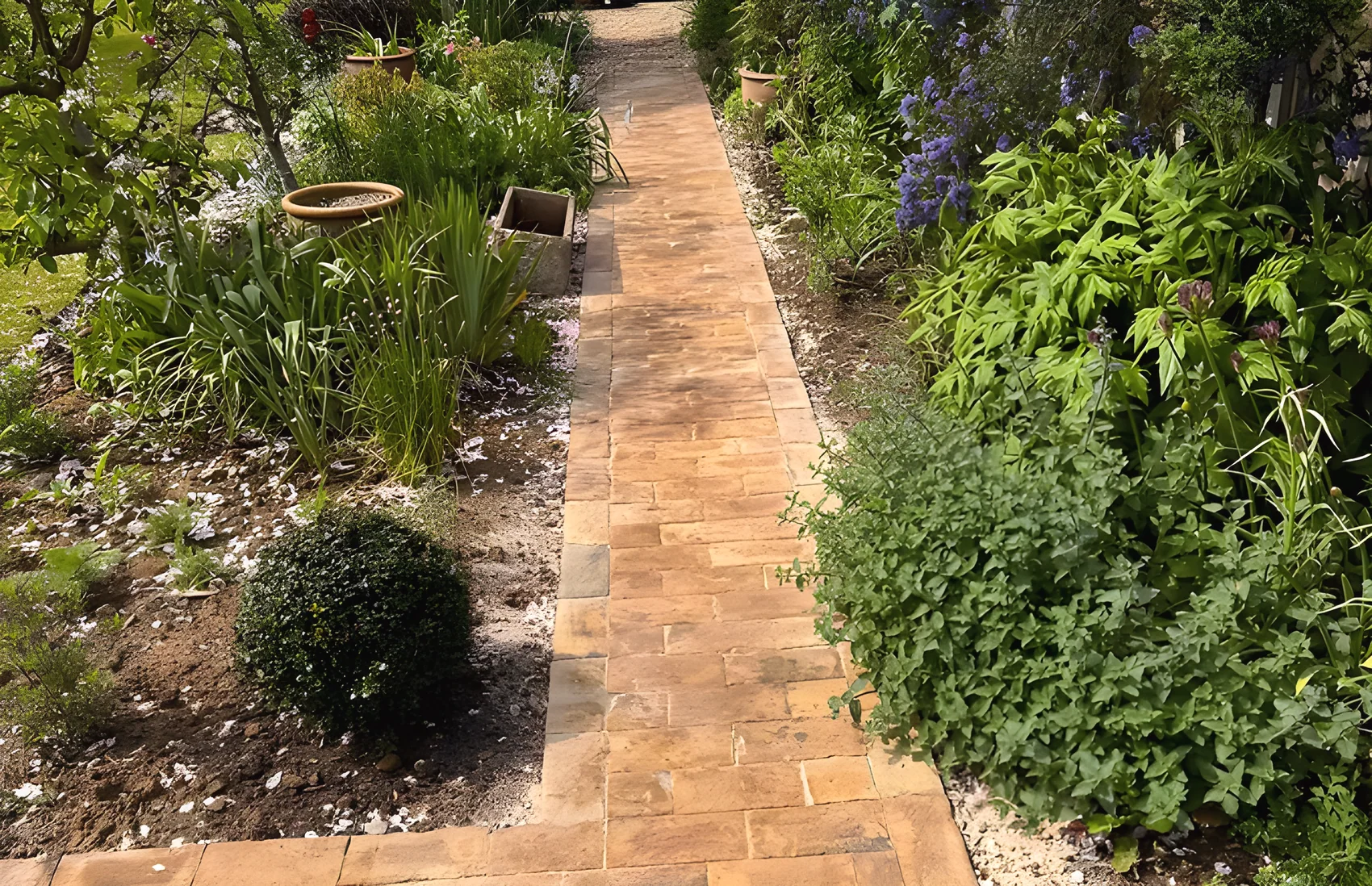
A stone paver path running through planted borders

Water, drainage and soil repair

Three Different Water Problems in One Town

Reading has three drainage problems inside one boundary, and using the same detail on all of them is the commonest thing we are asked to put right. On the Reading Formation clay under much of the town water stands on the surface all winter and the borders stay cold and late. On the clay over gravel ridge running through Christchurch Road, Whitley Street and Highgrove Street the junction between the two beds daylights on the slopes and throws springs and persistent winter seepage, which is why a soakaway dug on one side of a garden works and an identical one a short distance away never empties. North of the river the thin flinty soils over chalk at Emmer Green and the Caversham Heights tops do the opposite again and dry out hard in summer.

That ridge has a long history of behaving like this. The council's own Christchurch appraisal says the geology of the ridge, with clay over gravel beds, has produced natural features such as ponds and springs, and that the medieval Conduit, which most likely supplied Reading Abbey with water, was a spring in the gravel. It is the reason land drainage here is designed on site, with the wet band intercepted above where it surfaces and taken somewhere useful, rather than copied from the last job across town.

Compaction is the other recurring job, and it is concentrated on the newer estates at Lower Earley, Calcot and Kennet Island, where a thin layer of imported topsoil sits on subsoil that construction plant tracked and smeared. The grass goes thin, water sits on a surface that looks perfectly sound, and planting stalls for years. Deep soil aeration fissures the ground with compressed air to around a metre down and holds those fissures open with enriched biochar, around one kilogram per square metre, so it decompacts to depth with no digging at all, which is exactly what you want when the lawn is under protected trees. The hard surfaced front gardens of Tilehurst and Norcot have the same compacted ground under them, and a surface water problem where there used to be a planted frontage.

  • Land drainage designed on site where clay sits over gravel
  • Deep soil aeration with compressed air and enriched biochar
  • Zoned irrigation built in during construction on the chalk and gravel ground
  • Levels and planting that can take a flood beside the Thames and the Kennet
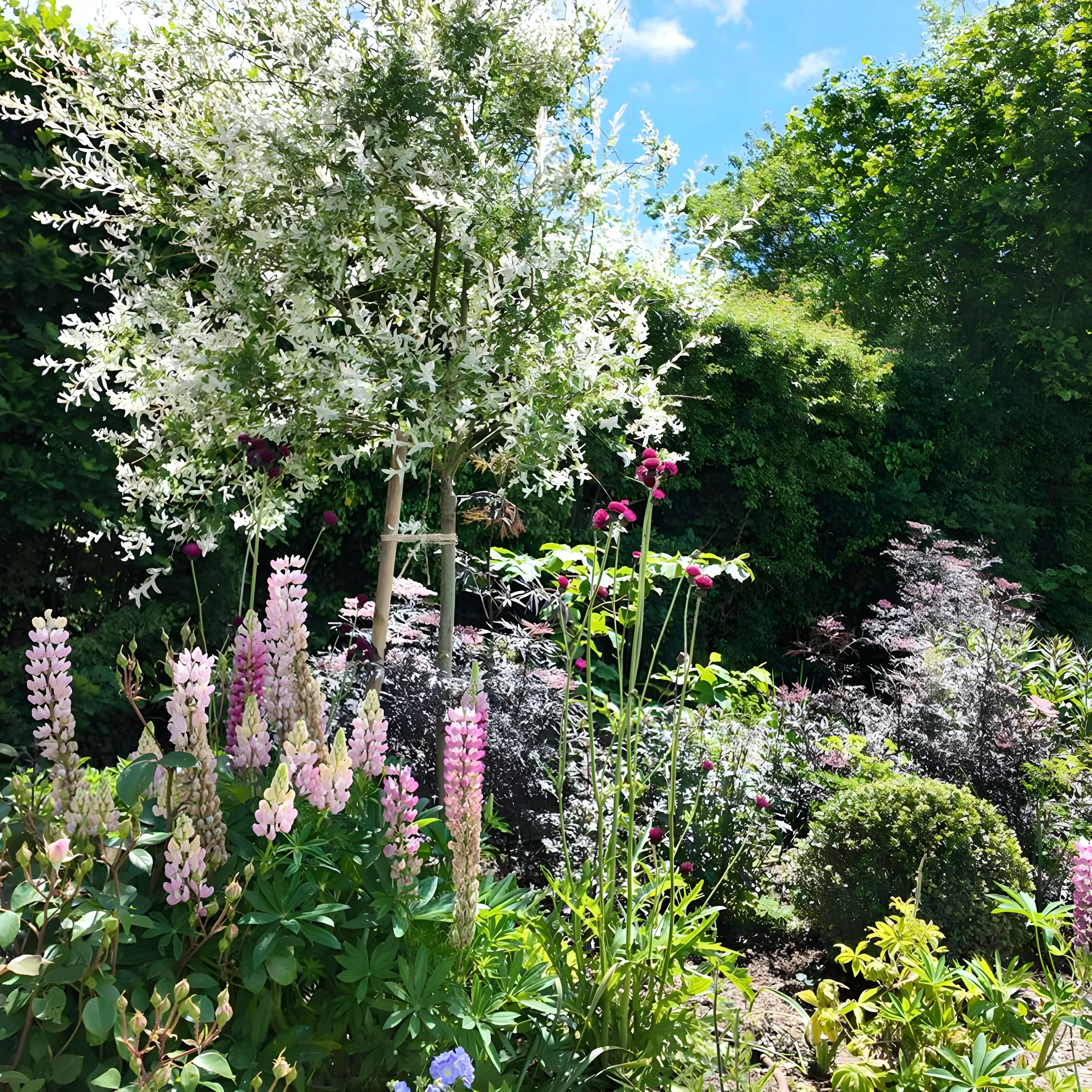
Lupins and mixed perennials in a deep border

Planting and long term care

Planting to the Ground You Actually Have

On the Reading Formation clay the ground is heavy, neutral to alkaline and nutrient rich once it is opened up, so roses, hornbeam, yew, viburnum, hellebore, Cornus and a full herbaceous border all do genuinely well. What fails is the silver leaved Mediterranean planting that people ask for first. Lavender hedging rots off in a wet winter here unless it is raised and heavily gritted, and we would rather say so while the plan is being drawn than replace it in its third year.

Then the ground changes. Where the formation's sand channels reach the surface, usually on the Tilehurst and Norcot side, there are pockets of free draining acid sand in the middle of clay streets, so a planting plan drawn for one half of a road can fail in the other. On the chalk and Clay with Flints at Emmer Green and the Caversham slopes the soil is shallow, flinty and alkaline, so chalk tolerant planting earns its place, Clematis, Dianthus, Scabiosa, box, yew and Cotinus among them, while rhododendron, camellia, pieris and blueberry go chlorotic in open ground and belong in pots or imported raised beds. On the gravel terraces beside both rivers the surface bakes and drains, which suits grasses, drought planting and a gravel garden, but the high water table means deep rooted trees and thirsty hedging want thinking about before they go in.

After that the garden has to be kept, and the same in house team that designed and built it is the one that looks after it. That is how a border under the protected trees of South Park or Redlands reaches maturity instead of being replaced, and how a new lawn on a decompacted estate plot gets through its first dry summer. Garden maintenance plans start from £160 per month on a twelve month agreement with a minimum four hour visit each month, and the larger houses and grounds run on a planned seasonal calendar rather than a weekly mow. Our work at RHS Chelsea Flower Show 2024 took a Silver Medal, and the same people are in the vans.

  • Planting plans written for clay, for chalk or for river gravel
  • Dry shade planting under mature protected trees
  • Monthly garden maintenance and estate scale grounds care
  • Low impact lighting for paths, steps and planting

On the ground

Where We Work in and Around Reading

The centre and the inner suburbs are one kind of job. Reading town centre, Katesgrove and Newtown sit tight around the ridge, with Redlands, South Park, Whiteknights and the university grounds east of them, Downshire Square and the Bath Road to the west, and Whitley and Kennet Island running south towards the river floor. Southcote and West Reading lead out to Tilehurst, Norcot and The Potteries on the hill, with Calcot beyond them on the West Berkshire edge.

North of the Thames is a different town again. Caversham, Caversham Heights, Lower Caversham, Emmer Green and Caversham Park Village each have their own gradient, their own soil and their own way in, and the green spaces there set the tone clients ask us to carry into the garden: Caversham Court Gardens on the Thames, Christchurch Meadows and the Thames Path, Balmore Walk, and Clayfield Copse and Blackhouse Woods at Emmer Green. East of the centre, Earley, Lower Earley, Maiden Erlegh and Woodley take in Maiden Erlegh Nature Reserve and its lake, Sol Joel Park, Meadow Park and Bulmershe Park, while Prospect Park, Arthur Newbery Park and the Tilehurst nature reserves at McIlroy Park, Blundell's Copse, Lousehill Copse and Rounds Copse hold the western side.

Beyond the built edge we work out through the villages on every side: Sonning, Charvil and Twyford in Wokingham Borough and Sonning Eye in South Oxfordshire, Shinfield and Arborfield to the south, Kidmore End, Sonning Common and Mapledurham up on the Chiltern flank, Whitchurch on Thames, Goring, Streatley and Pangbourne upriver, and Theale, Burghfield Common, Bradfield, Beenham and Aldermaston out to the west. Deanery Garden at Sonning, a Lutyens house with planting by Gertrude Jekyll, is privately owned and not open to the public, but it is a fair reminder of what this valley will grow. We cover RG1, RG2, RG4, RG5, RG6, RG7, RG30 and RG31, and we work next door in Henley on Thames, Windsor and Hook.

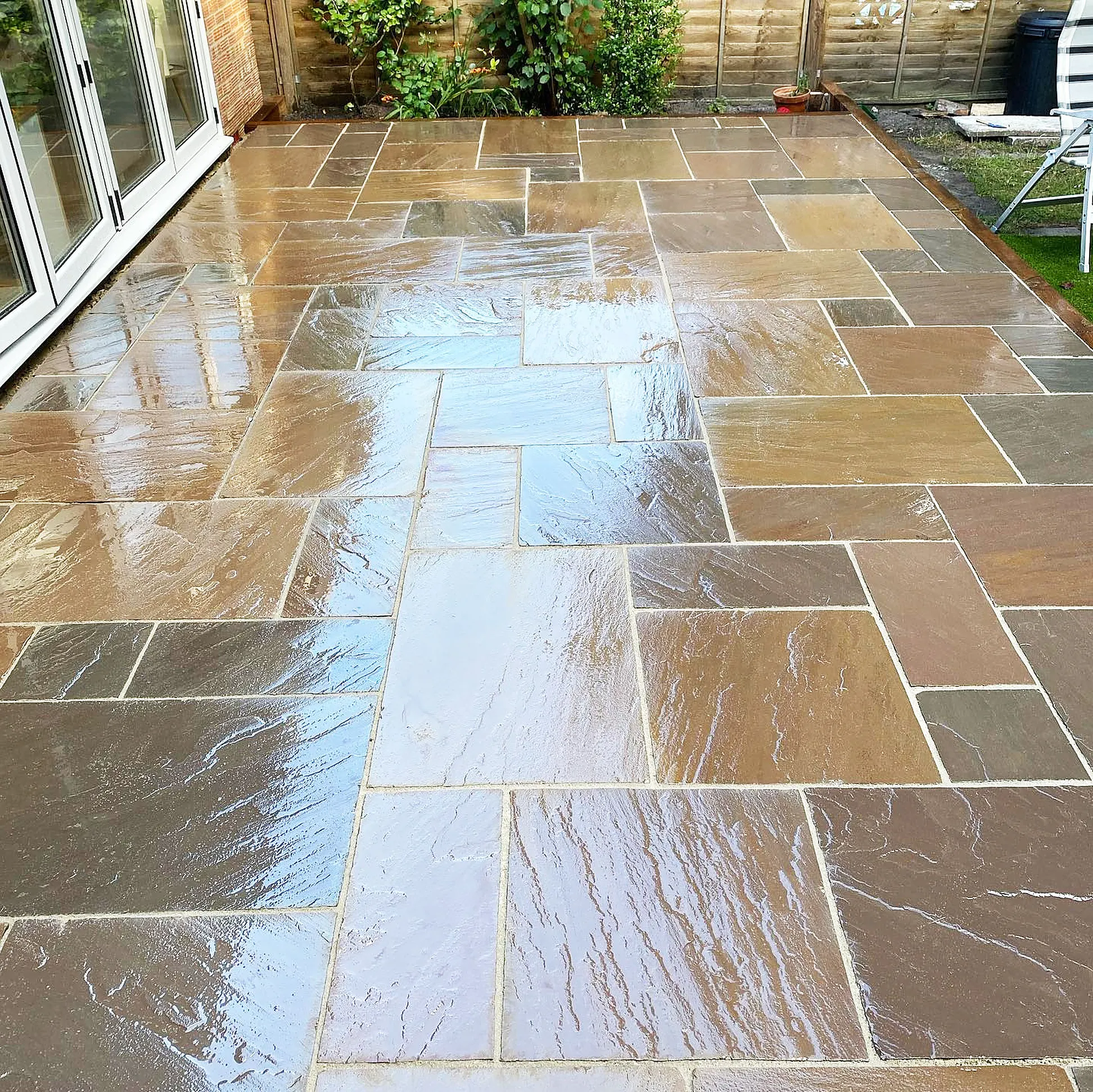
Natural sandstone paving, freshly laid and washed down

Neighbourhoods and villages

  • Reading town centre
  • Katesgrove
  • Newtown
  • Redlands
  • South Park
  • Downshire Square and Bath Road
  • Whitley
  • Kennet Island
  • Southcote
  • West Reading
  • Tilehurst
  • Norcot
  • The Potteries
  • Calcot
  • Caversham
  • Caversham Heights
  • Lower Caversham
  • Emmer Green
  • Caversham Park Village
  • Earley
  • Lower Earley
  • Maiden Erlegh
  • Woodley
  • Whiteknights
  • Sonning
  • Sonning Eye
  • Charvil
  • Twyford
  • Shinfield
  • Arborfield
  • Kidmore End
  • Sonning Common
  • Mapledurham
  • Whitchurch on Thames
  • Goring
  • Streatley
  • Theale
  • Burghfield Common
  • Bradfield
  • Beenham
  • Aldermaston
  • Pangbourne

Postcodes we cover

RG1, RG2, RG4, RG5, RG6, RG7, RG30, RG31

Planning and trees

Trees and boundaries are the two things that set the programme for garden work in Reading. The council lists fifteen conservation areas and publishes a character appraisal for each, with significant trees, tree groups and important spaces marked on a townscape appraisal map, and its guidance is that six weeks of written notice, a Section 211 Notice, must be given before cutting down, topping or lopping any tree in a conservation area. That notice can go by email to planning.naturalenvironment@reading.gov.uk or by letter, and it should identify the trees and the proposed work; it also gives the council the chance to consider making a Tree Preservation Order.

Work to a tree already covered by an Order is a separate matter, and the council's own wording is that you must apply for its permission using the Planning Portal website, following the procedure for submitting a planning application, with a Tree Preservation Order Directory available to check whether a tree is protected and pre application advice offered where the position is unclear. The appraisals give a useful sense of where the protected trees cluster: a significant number of Orders across South Park, several inside the small Surley Row area, a number in Routh Lane covering trees at St Michael's Church and Hall, Iris Court, The Rectory and St Michael's Cottage, three in Redlands at 76 Elmhurst Road, 17 and 19 Redlands Road and 37 Upper Redlands Road, orders at 55 Christchurch Road, the Progress Theatre and 79 to 81 The Mount, and apparently only one in Downshire Square, at 6 Brownlow Road. The Horncastle appraisal records none inside that conservation area, although trees immediately to the west, in the West Berkshire Council area, are protected by Orders there.

Boundaries need the same care, because garden structures here are sometimes listed in their own right: the wall between 57 and 59 The Mount is separately listed, Hillside on Allcroft Road and the gatepiers, walls and railings on Allcroft Road and The Lower Mount are listed grade II, and the brick boundary wall around The Acacias on London Road is grade II listed along with the wall to 41 London Road. The council's own wording is that you will probably have to get planning permission for the demolition of unlisted buildings in conservation areas and for many changes to buildings and structures, for example walls, so a garden wall, a pier or a run of railings is not safely assumed to be permitted development. Reading also operates Article 4 directions, including an HMO direction and one covering St Leonard's Terrace at 2 to 16 Basingstoke Road, so the position is worth checking address by address rather than reading it off the street.

None of this is a prohibition on garden work, it is guidance and a consent process, and the practical point is that notice periods and applications belong at the front of the programme rather than being discovered halfway through. We would always rather confirm a position with Reading Borough Council before any part of a plan depends on it, and nothing here is legal advice.

Recent work

Gardens We Have Designed and Built

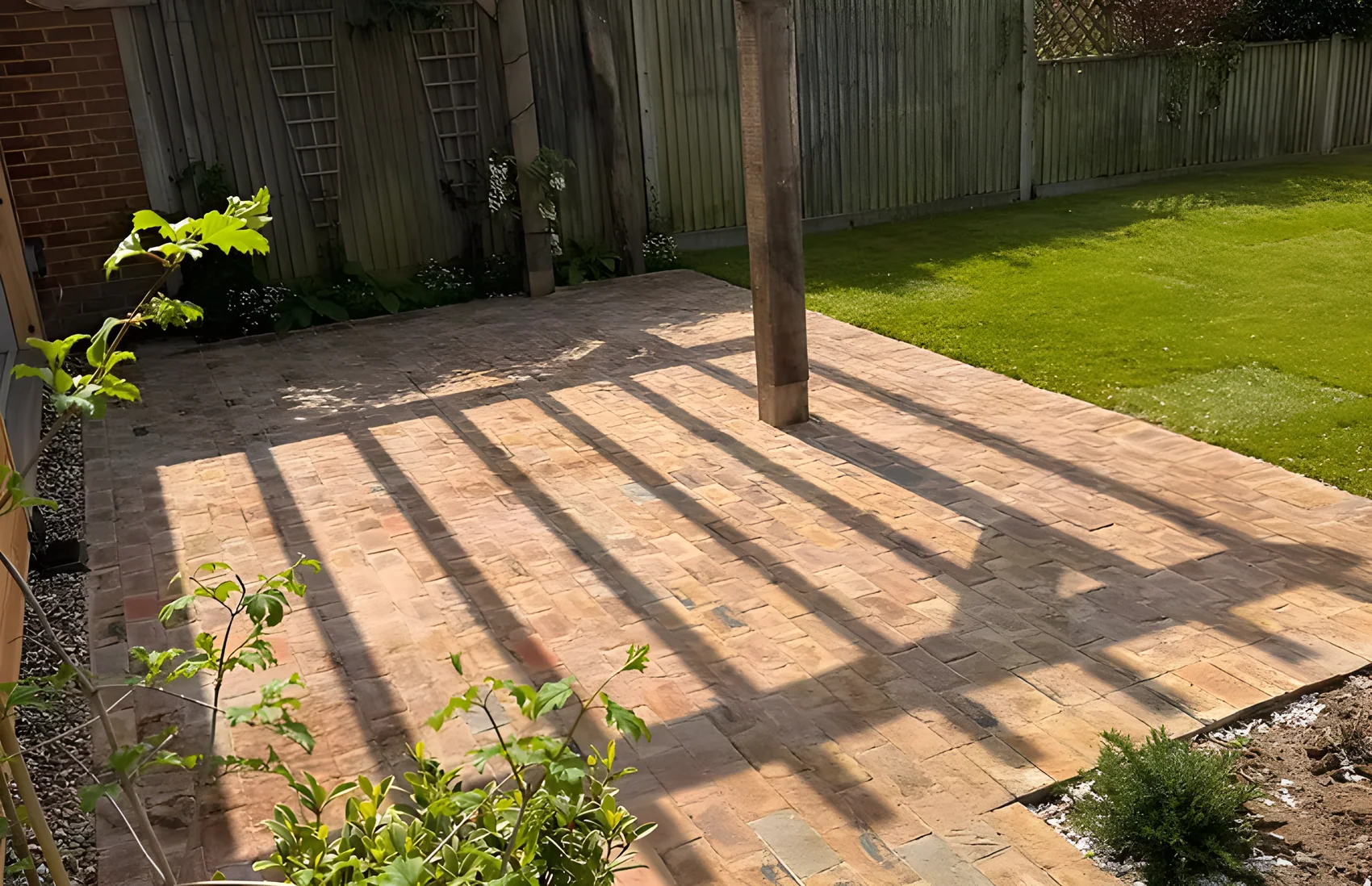
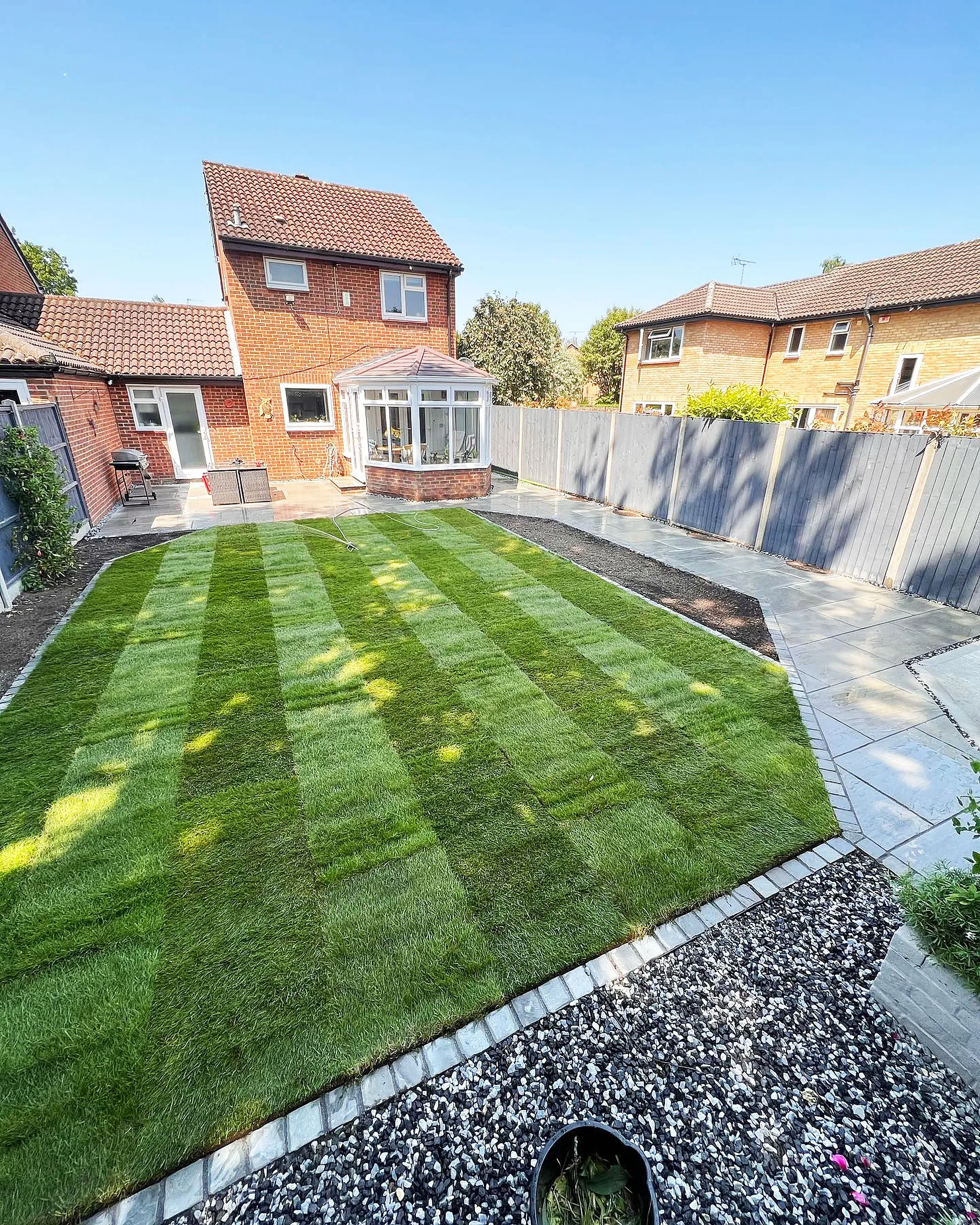
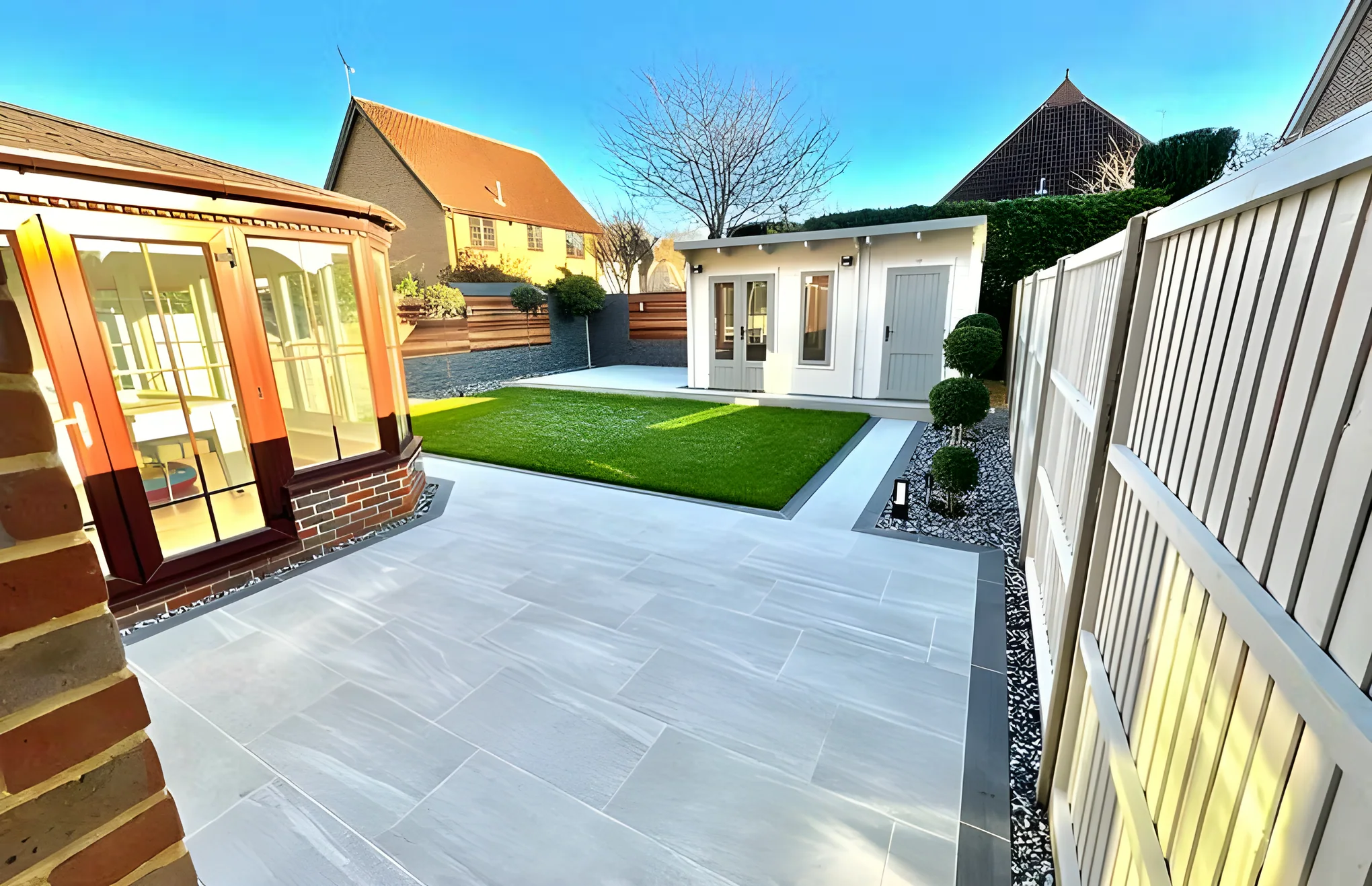
  • Stone paving laid in long bands beside a lawn
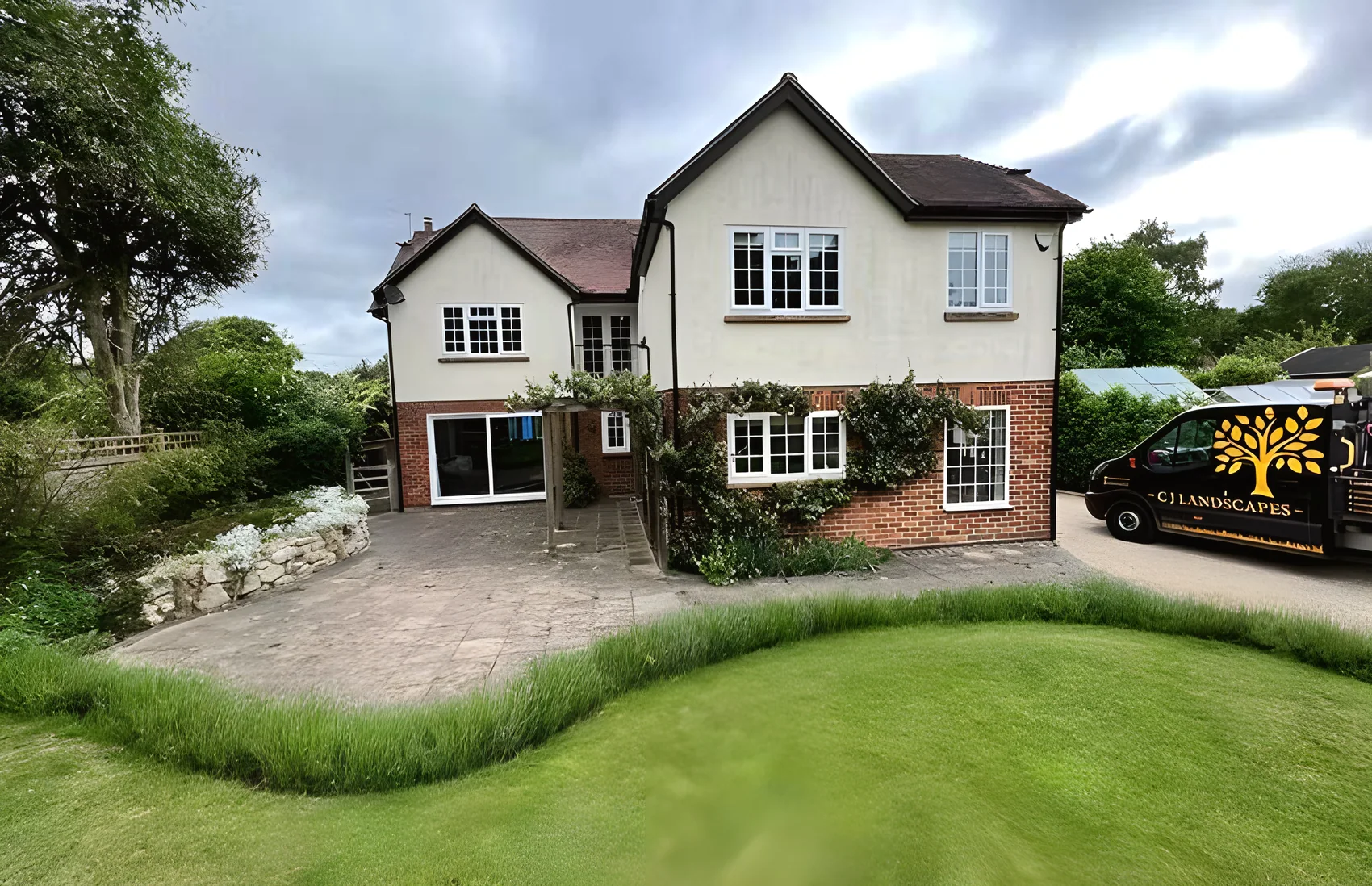
  • A block paved drive and lawn in front of a large house
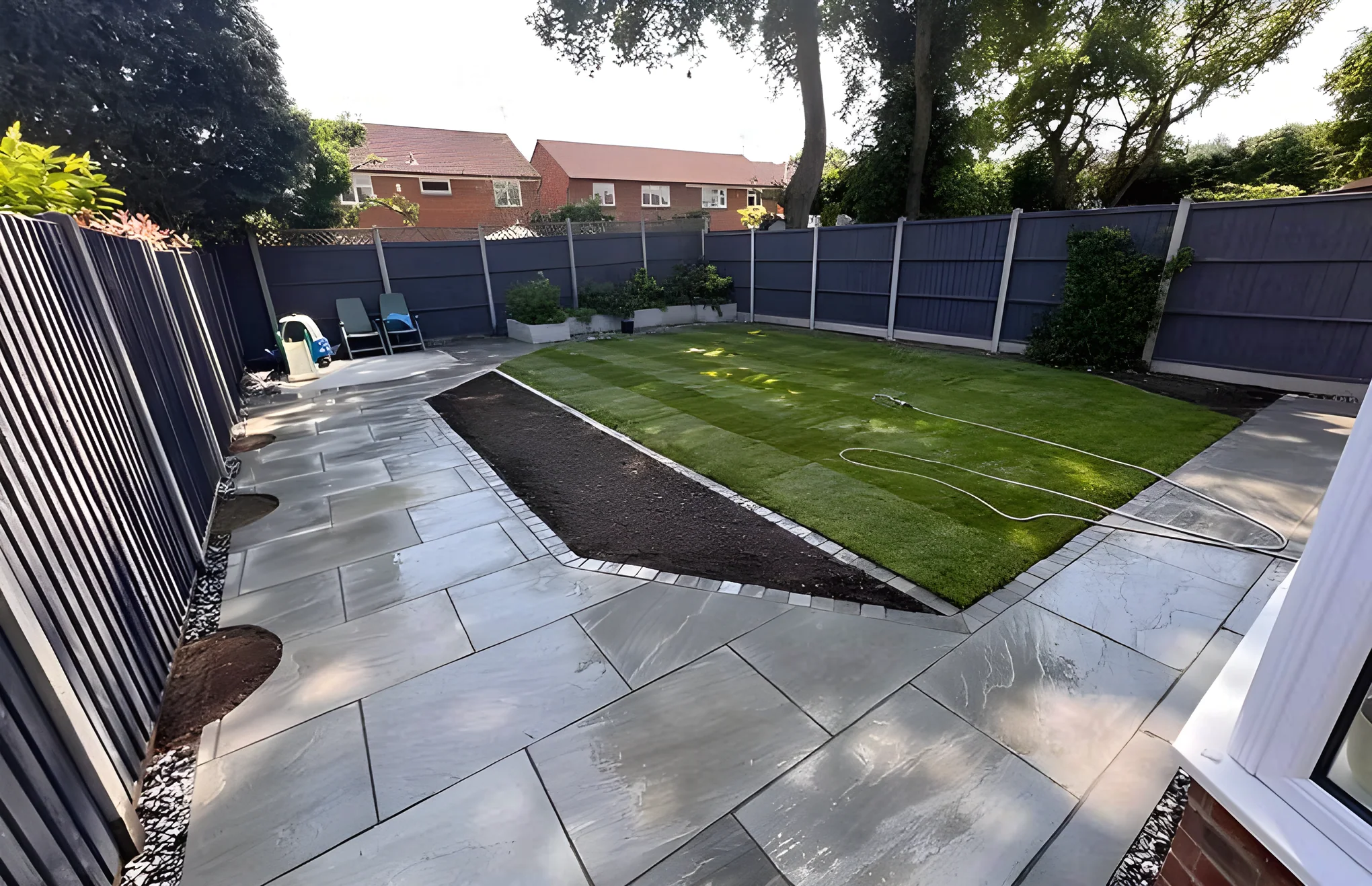
  • Natural sandstone paving laid on creative angles beside a lawn

Good to know

Reading Garden Questions, Answered

Is My Reading Garden on Clay, on Chalk or on Gravel?

All three exist inside the town, and it is worth knowing which you have before anything is specified. Much of Reading sits on the Reading Formation, the clay unit named after the town, which the British Geological Survey describes as dominantly clay or silty clay with lensoid channel fill bodies of sand, red hued this far west. North of the river the Chalk Group rises under Caversham and Emmer Green with Clay with Flints capping the plateau tops, and the valley floors beside the Thames and the Kennet are river terrace gravel and alluvium. Because the sand channels break the surface in places, usually on the Tilehurst and Norcot side, we test the soil on the first visit rather than reading it off a map.

Our Soakaway Never Empties but the Neighbours' Works Perfectly. Why?

If you are on the ridge running through Christchurch Road, Whitley Street and Highgrove Street, that is the clay over gravel junction daylighting on the slope. Where the two beds meet, springs and persistent winter seepage come to the surface, so an identical soakaway a short distance along can behave completely differently. The council's own Christchurch appraisal links the ponds and springs in that area to exactly this geology, and the medieval Conduit there was a spring in the gravel. The answer is not a bigger soakaway. It is land drainage designed on site, intercepting the water above the wet band and taking it somewhere useful.

Our Caversham Garden Slopes Steeply and We Want to Keep the View. What Is Possible?

A great deal, as long as the structure comes first. Caversham rises from the Thames flat to the top of Caversham Park, so a garden here works as a sequence of terraces, retaining walls and steps with drainage behind the walls, set out so the long southerly views across the valley open from where you actually sit. Two things get checked before the levels are fixed: the soil near the top is thin and flinty over chalk, and the base of the Clay with Flints often fills dissolution hollows in the chalk, so bearing can change sharply across one plot. Access is the other half of the answer, because everything north of the river comes over Caversham Bridge or Reading Bridge and then up the hill, so where materials stand and how spoil leaves is planned before anyone starts.

The Lawn on Our Lower Earley Estate Garden Ponds All Winter. Can That Be Fixed Without Digging It Up?

Usually, yes. On Lower Earley, Calcot and Kennet Island the normal condition is a thin skim of imported topsoil over subsoil that construction plant tracked and smeared, so water sits on ground that looks perfectly sound and roots have nowhere to go. Deep soil aeration treats that without excavation: compressed air fissures the profile to around a metre down and enriched biochar, around one kilogram per square metre, holds the fissures open. One treatment, and the change is permanent. Where there is also made ground or buried rubble underneath, as the brownfield and riverside schemes often have, we open an inspection hole first so the work is priced on what is actually down there.

Do We Need Permission to Cut Back the Big Trees in the Garden?

Quite possibly, and in Reading it is the first thing to check. The council's guidance is that six weeks of written notice, a Section 211 Notice, must be given before cutting down, topping or lopping any tree in a conservation area, and there are fifteen conservation areas in the town. Work to a tree already covered by a Tree Preservation Order is a separate application through the Planning Portal, and the council publishes a Tree Preservation Order Directory so you can check whether a tree is protected. Orders are recorded across South Park, inside Surley Row, in Routh Lane and Redlands and at Brownlow Road, so on the better Victorian plots we assume a significant tree is protected until that has been confirmed, and we do the checking with you before any part of a design depends on it.

We Back Onto the Kennet and Think There Is Japanese Knotweed on the Boundary.

Get it identified before any soil is moved. The Thames and Kennet corridors, the Kennet and Avon Canal and the railway land are the classic routes for knotweed to travel into back gardens here, so a boundary onto any of them is worth a proper look rather than a guess. A new plant can grow from a very small piece of rhizome, which is how excavating first and identifying afterwards turns a small problem into a large one, and contaminated soil cannot simply leave with the rest of the spoil. We identify and remove it with our specialist invasive weed partners at AIR8, and the order matters: identify first, excavate second.

Close by

We Also Work In

Start your garden

Talk to Us About Your Garden in Reading

Tell us where the garden is and what you want from it, and we will come and look at the ground, because in Reading that is the part that decides everything else. We design, build and then look after the garden with the same in house team, so the person who set the levels is the one who watches the planting mature. Call 01276 582095 or 07717 058646, or email info@cjlandscapesltd.co.uk. We work right across RG1, RG2, RG4, RG5, RG6, RG7, RG30 and RG31, and next door in Henley on Thames, Windsor and Hook.

  1. 01
    We Call You BackWithin one working day, to talk the garden through.
  2. 02
    The First VisitA walk round the garden to take in the levels, the access and where the water sits.
  3. 03
    A Written ScopeA specification and a programme, with samples to see in your own light.
Prefer to talk?01276 582095info@cjlandscapesltd.co.uk
1 Webbs Mews, High Street
Hartley Wintney, Hook RG27 8NZ
What Would You Like Help With?

Choose as many as you like.

Tell Us About the Project

Roughly is fine. It helps us bring the right people to the first visit.

Your Details
Photographs Optional, up to five

Thank You

Your enquiry has come through and we will call you back within one working day.

Step 1 of 3

We only use your details to reply to this enquiry.