C J LANDSCAPES 01276 582095Get in touch

Putney, London Borough of Wandsworth

Landscaping in Putney, From the River to the Heath

Three different grounds inside one postcode, and back gardens you reach through the house. We design, build and look after gardens across SW15 and SW18.

Putney, SW15 and SW18

Gardens Built on Three Different Grounds

Putney climbs. At the bottom, by the bridge and the Embankment, there are tight Victorian terraces and shop fronts sitting on river gravel. In the middle there are wide Edwardian avenues of bay fronted semis on clay and on Head. At the top, looking out over Putney Heath, there are large villas and 1930s mansion blocks on heath gravel, and away to the west the 1920s London County Council cottage estate at Dover House with its privet hedges and communal greens.

That climb is not scenery, it is the brief. The bedrock under all of it is London Clay, but the material lying on top of the clay changes completely with height, and it is the covering that decides whether a garden holds water all winter or runs dry by June. Two gardens a few streets apart in SW15 can need opposite treatment, and the one thing you cannot do here is design from the postcode.

We are a landscape design, construction and maintenance company based in Hartley Wintney, and on ground like this it matters that one team does the lot. The same people dig the trial pit at each end of a Head garden on Carmalt Gardens, set the levels around it, and are still there for the annual mulch the gravel streets need. Nothing is handed to a subcontractor. We are members of the Association of Professional Landscapers and Checkatrade members, and the show garden work behind the team includes a Silver Medal at the RHS Chelsea Flower Show 2024 for the Bridgerton garden, sponsored by Netflix and designed by Holly Johnston, and a Silver Gilt Medal at the RHS Hampton Court Palace Garden Festival 2023.

See the work
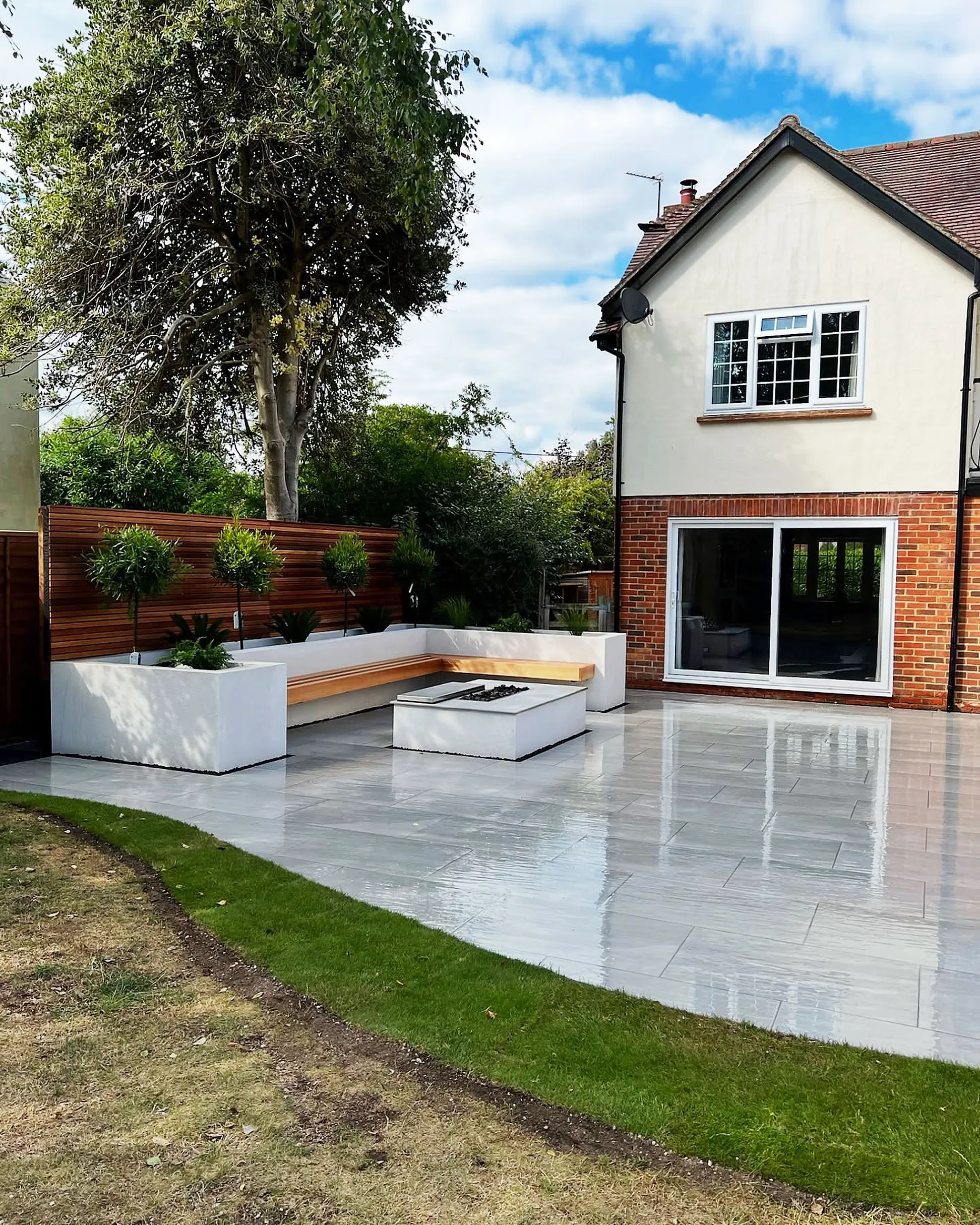
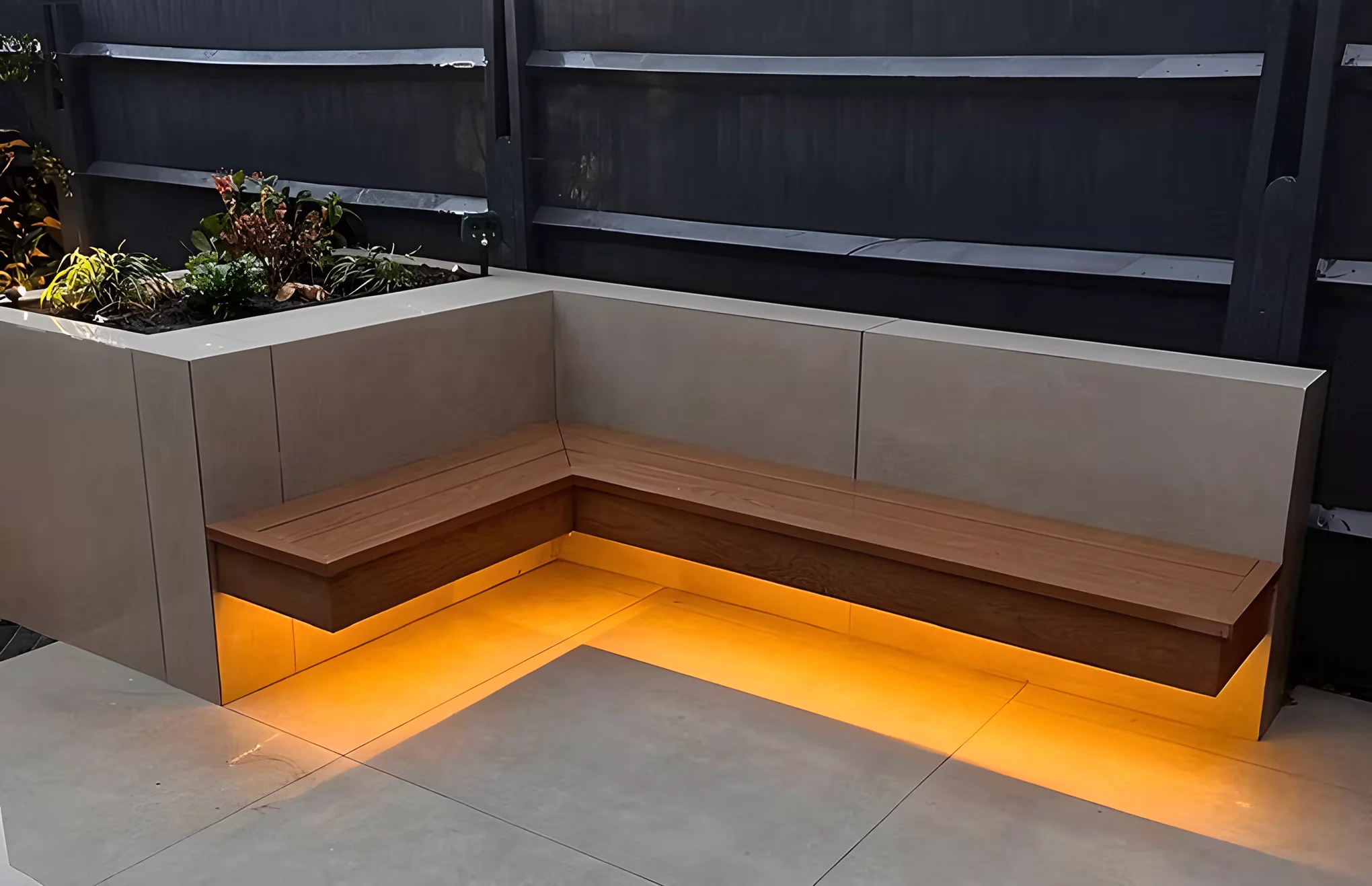
Outdoor seating on a large porcelain terrace

The houses

The Houses and Their Plots

What shapes a Putney garden most is the shape of the plot, and in lower Putney the plots are medieval. Wandsworth Council's West Putney appraisal records that the plots available to developers were limited to single narrow strips, which preserved the medieval field pattern, and that the narrow strips of the Lower Shott field system were followed in the streets built out from the Upper Richmond Road. The gardens behind those streets are therefore much longer than they are wide, overlooked down both boundaries, with a slim front garden and no rear vehicle access at all.

Climb the hill and the plots open out. On the Westbury Estate and the Gwendolen Avenue streets the houses sit forward on a common building line, which the appraisal describes as leaving relatively small front gardens but generous rear ones, and it notes that the trees in those rear gardens are considerable and often mature, a weeping willow among them. Higher again, around Putney Heath and in the Westmead streets, front gardens are wide and deep behind walls, railings and heavy planting, and the appraisal singles out Dover Park Drive, Westmead and Longwood Drive for rear gardens long enough to give a marked feeling of spaciousness.

What every one of them shares is a boundary question. Front gardens paved over for a car are criticised in appraisal after appraisal, a hedge rather than a wall with thin metal railings is the expected treatment, and the council encourages the reinstatement of original brick walls, railings and timber gates. So a Putney scheme usually starts with the trees and the boundaries, then the levels and the drainage, and only then the planting plan. Access, not design, tends to set the shape of the build programme.

  1. Victorian, from the 1840s at Parkfields through to 1900, with the Oxford Road streets built mainly in the 1870s and 1880s
    Terraced Houses and Narrow Plot Semis and VillasOxford Road, Werter Road, Montserrat Road, Rockland Road, Winthorpe Road, Burstock Road, Atney Road, Disraeli Road, Erpingham Road, Egliston Road, Felsham Road, Charlwood Road, Hotham Road, Holroyd Road, Chelverton Road, Balmuir Gardens, Carmalt Gardens, Coalecroft Road, Parkfields and the riverside houses of Deodar Road

    These plots still follow the field strips they were built on, so the garden is long, thin and overlooked down both sides, with a slim front garden and nothing resembling rear access. Under the Oxford Road and riverside streets the ground is Kempton Park gravel over clay, free draining and quick to dry out, while the Balmuir Gardens and Carmalt Gardens end of the group sits on Head and is far less predictable. Party walls and neighbours' trees throw long shade down one boundary for most of the day, so the work is screening, sequence and levels that stop the space reading as a corridor. Deodar Road is the exception: the council calls the relationship of those houses to the river unique in Wandsworth, with long front gardens and longer rear gardens running down to the tidal Thames on alluvial ground of clay, silt, sand and peat.

  2. Edwardian, roughly 1900 to 1914
    Bay Fronted Semi Detached and Detached Houses on Planned Estate StreetsThe Westbury Estate and the Gwendolen Avenue area of West Putney: Gwendolen Avenue, Chartfield Avenue, St. Simon's Avenue, Luttrell Avenue, Montolieu Gardens, Hazlewell Road, Howard's Lane, Larpent Avenue, Dryburgh Road, Colinette Road, Genoa Avenue, Solna Avenue and Westleigh Avenue

    Generously sized houses on a regular grid, set forward in their plots with small front gardens and much larger rear ones, and mature rear garden trees that are visible through the gaps between the houses. The ground is London Clay at the surface on Chartfield Avenue and the higher streets and Head on the slope around Howard's Lane, so winter wet and summer shrinkage are both in play on the same avenue. Side returns between semis are narrow and the rear garden is reached down a passage, which decides what plant can get in. Many front gardens have been paved for driveways, and reinstating a planted front with its wall, railings and gate is one of the most common briefs we are asked for here.

  3. Nineteenth century villas, with 1930s and 1950s rebuilds on the same plots
    Large Detached Houses and Villas in Substantial GroundsPutney Hill, Telegraph Road, Wildcroft Road, Heathview Gardens, Bowling Green Close, Kersfield Road and Wimbledon Parkside around Putney Heath, the Putney Park Estate streets of Woodborough Road, Briar Walk and Woodthorpe Road, and the Westmead streets of Westmead, Parkmead, Longwood Drive, Dover Park Drive, Rodway Road, Nepean Street, Umbria Street, Akehurst Street and Beech Close

    Wide, deep front gardens on a regular building line, some with carriage drives, screened from the road by high walls, railings and planting, and rear gardens that are large and in the Westmead streets particularly long. The front gardens hold serious trees, Norway maple, birch, sweet chestnut, lime, sycamore, laburnum and yew among them, with a strawberry tree and a blue cedar for ornament, so dry shade and root competition are the governing constraint rather than the plant list. On the heath plateau the soil is Black Park Gravel, fast draining and acid, over London Clay at depth, which makes the ericaceous palette the easy win. Bound gravel drives mark easily under tracked plant and the Heath itself cannot be used for access or storage, so plant, materials and spoil all have to be planned around the front gates.

  4. 1920s, built by the London County Council
    Cottage Estate Houses in Terraces and PairsThe Dover House Estate: Dover House Road, Huntingfield Road, Pleasance Road, Crestway, Castello Avenue, Dungarvan Avenue, Langside Avenue, Daylesford Avenue, Hawkesbury Road, Swinburne Road, Highdown Road, Elmshaw Road, Torwood Road, Greenstead Gardens, Eliot Gardens and Putney Park Avenue

    A Garden City influenced layout in which the gardens are the design, with cottage style houses in terraces and pairs, privet hedges to the front and large side gardens set around greens that carry mature forest size trees, sycamore, lime, Atlas cedar, oak, ash and horse chestnut, with flowering cherries in some front gardens and tall elms on Dover House Road. London Clay sits at the surface, so these are heavy, winter wet gardens that bake hard in a dry summer. The estate has an Article 4 direction and the council considers new hardstandings in these front gardens harmful to the character of the conservation area, so most houses have no drive and materials come in from the street. Two large backland allotment sites survive behind the houses, which tells you what the ground will grow once it is opened up.

The ground

The Ground Under Putney

The bedrock under the whole of Putney is the London Clay Formation, mapped as clay and silt and returned at every point sampled from the riverside up to Putney Vale. What sits on top of it changes with height, and that single fact is the difference between a garden that holds water all winter and one that scorches by June.

RAINTopsoil and turfTerrace gravel and sandHeadLondon Clay Formationwater stops here

Layer 1

Topsoil and the Compacted Layer

Thin and variable, and on the clay side of Putney the topsoil over a small family lawn is usually compacted. Basement and rear extension work makes it worse, because plant, stone and spoil have all crossed the same strip of garden. This is the ground deep aeration and enriched biochar were made for, and it is worth knowing what you have before anyone orders a plant list.

Layer 2

The Terrace Gravels

On the low ground through the town centre, the Embankment, the Oxford Road streets, Parkfields and Putney Lower Common the clay is covered by the Kempton Park Gravel Member, a sand and gravel river terrace. Water disappears through it, beds are dry by midsummer and new turf scorches. The Putney Heath plateau above the town is capped instead by the Black Park Gravel Member at Telegraph Road, Wildcroft Road and Heathview Gardens, fast draining and acid. Two local exceptions matter: Roehampton Village sits on Boyn Hill Gravel and the Oakhill Road area of East Putney on Hackney Gravel and Head, so neither behaves like the clay around it.

Layer 3

Head on the Mid Slopes

On the mid slopes the cover is Head, a mantle of clay, silt, sand and gravel moved downhill by freeze and thaw. Howard's Lane, Woodborough Road and West Hill are mapped as Head, and so is the whole Lower Shott belt of Carmalt Gardens, Balmuir Gardens, Dealtry Road, Colinette Road and Malbrook Road, along with Lytton Grove, Putney Park Lane and Putney Vale. Because four materials are mixed in one deposit it behaves unpredictably, and one end of a garden can drain freely while the other sits wet all winter. A trial pit at each end is the only honest way to set the levels.

Layer 4

London Clay

On Putney Hill, Chartfield Avenue, Kersfield Road, the Dover House Estate and the Alton Estate there is no superficial cover at all, so London Clay is the parent material of the topsoil. It holds water all winter, goes sticky and unworkable for months, then shrinks and cracks open in a dry August, and that movement is what lifts paving and pushes path edges out of line. The reaction is near neutral and the ground is fertile but airless, which suits roses, yew, hornbeam, viburnum, hydrangea, Japanese anemone and box, while silver leaved Mediterranean planting rots at the crown unless the bed is raised and the structure opened up with grit and organic matter. Where the porous heath gravels meet this clay, water issues at the contact, the London Geodiversity Partnership site guide recording that the valleys running down to the Beverley Brook were formed by those springs, Caesar's Well the best known of them, so a heath side garden can be fast draining at the top and permanently damp at the bottom.

Carl and his team built us a fantastic patio and new path to our greenhouse this summer. They were the only landscaping company we could find who supported our attempts to use minimal concrete in the build.

Cammie Czuchnicki · Google review

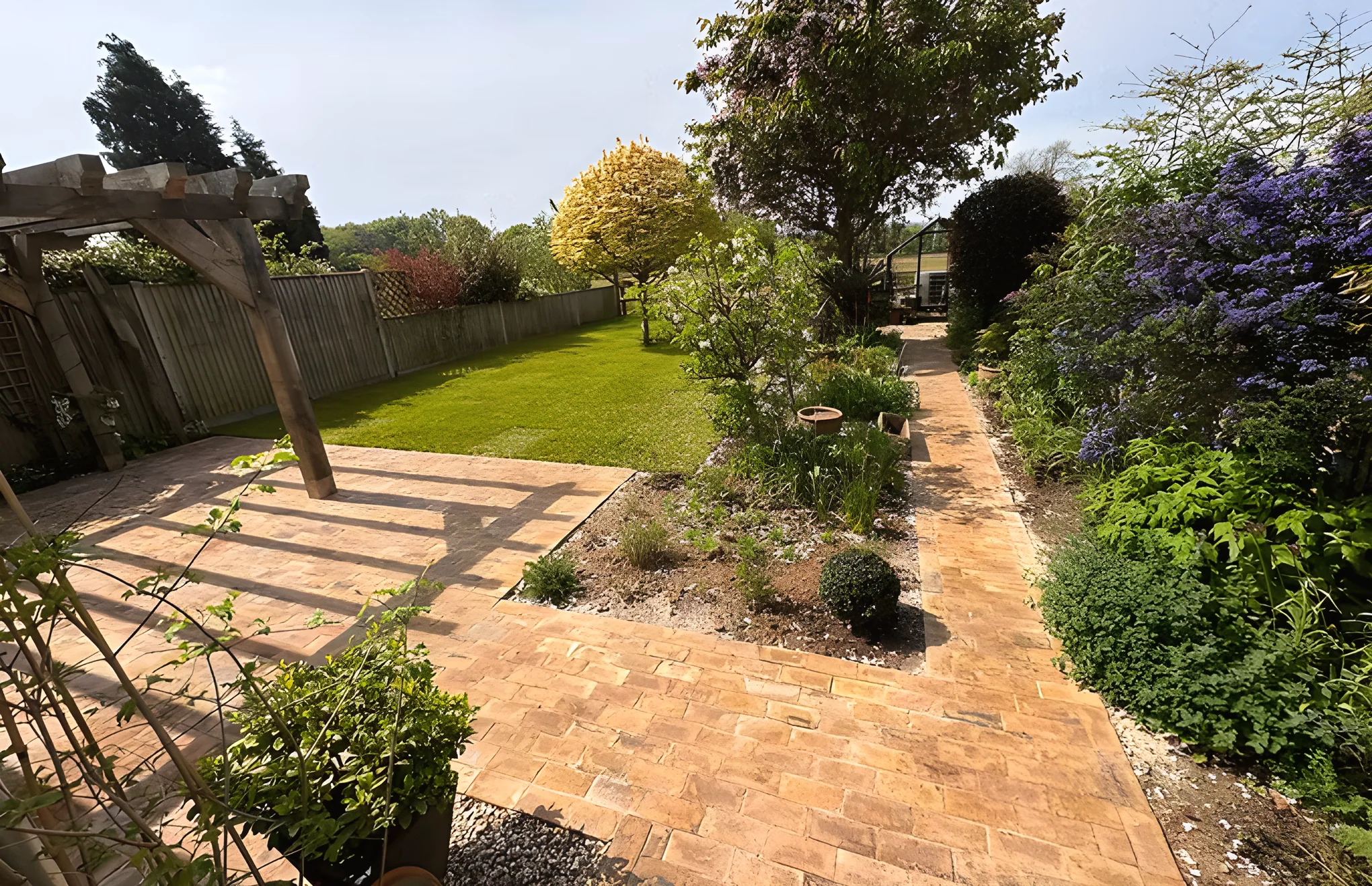
A gravel garden with stone paving and drought tolerant planting

Lower Putney and the Embankment streets

Long, Narrow Plots and No Way in From the Back

The strip plots of lower Putney, around Oxford Road, Werter Road, Montserrat Road, Atney Road and Disraeli Road, have no rear access, so soil, stone, aggregate and machinery go in through the house or down a hall, and the spoil comes out the same way. Resident parking bays line most residential streets, so a permit and a suspended bay are booked before the first delivery rather than chanced on the morning. The High Street approach to Putney Bridge is congested and the A3 at West Hill and Tibbet's Corner is the other pinch point, which makes early starts and off peak drops worth the trouble.

Deodar Road is the extreme version. The back gardens run down to the tidal Thames, the railway bridge cuts across the street part way along, and everything is barrowed from the front. Several streets in east Putney are dead ends against railway land, and the Beverley Brook severs the western edge towards Putney Vale, so the route in is worth checking before the design is signed off.

On a plot like this the real design problem is screening and sequence, not the plant list. We break the length into rooms with changes of level, material and width so the garden stops reading as a corridor, and we set the terrace where the sun actually lands rather than where the back door is.

  • Materials in and spoil out through the house, planned as part of the programme
  • Parking suspensions and permits arranged before the first delivery
  • A trial pit at each end where the garden sits on Head
  • Screening, levels and sequence on an overlooked strip plot
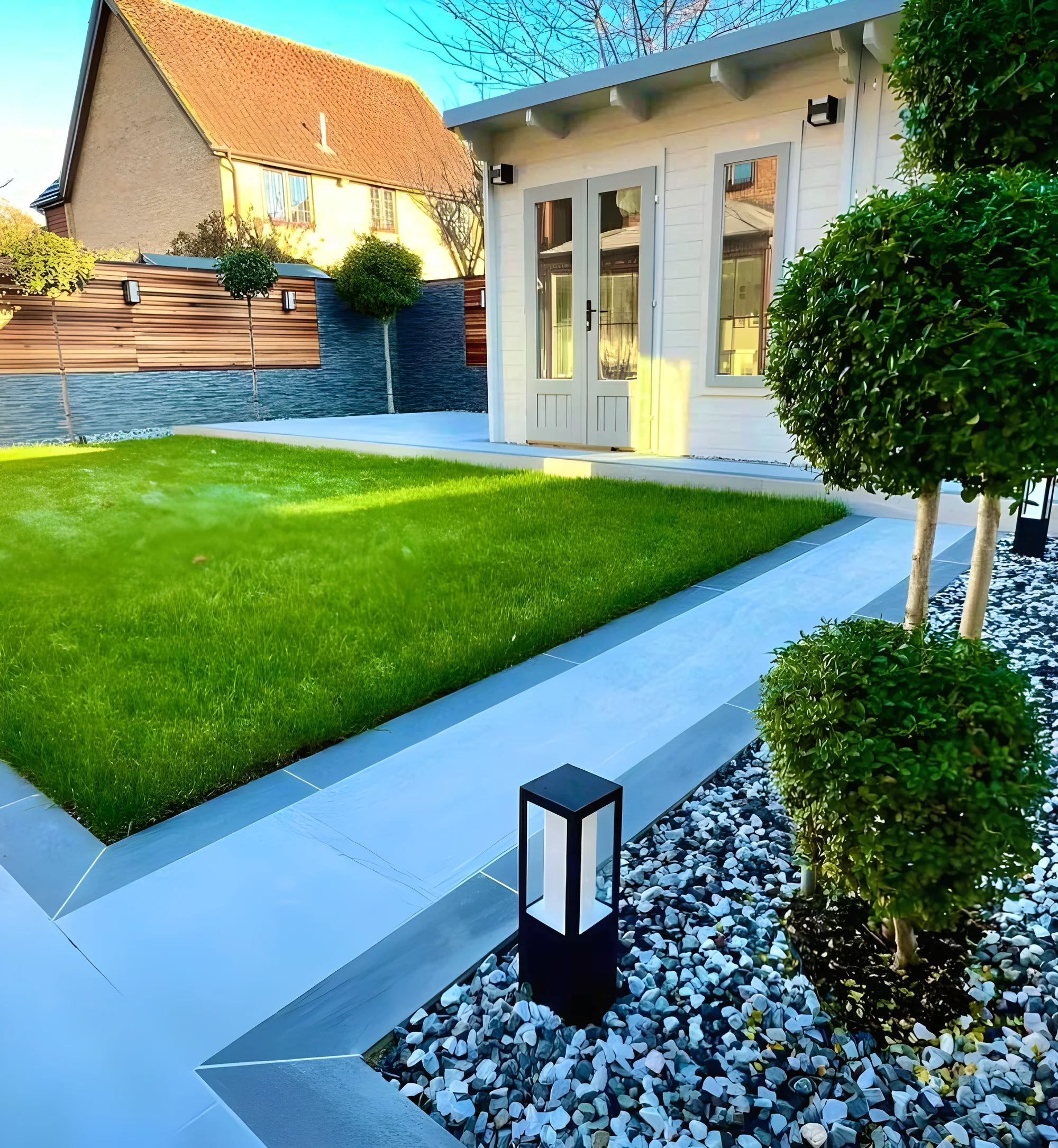
A shaped lawn with path lighting, clipped topiary and a gravel border

Putney Hill and the Dover House Estate

Ground That Holds Water All Winter and Cracks in August

Where London Clay is the surface, on Putney Hill, Chartfield Avenue, Kersfield Road, the Dover House Estate and the Alton Estate, the year runs to two extremes. Lawns stand in water through the winter and the ground is sticky and unworkable for months. Then a dry August shrinks it, the cracks open, and the same movement tips paving slabs and shoves path edges out of true.

So we build for the clay instead of hoping. That means falls and drainage designed in from the groundworks, foundations and sub bases sized for ground that moves, permeable surfaces where a front garden is being planted back, and edges detailed so they stay where they were set. On lawns and compacted ground, deep soil aeration decompacts the profile with compressed air and holds the new fissures open with enriched biochar, which cures waterlogged ground with no digging and no need to lift the garden.

Planting on the clay is generous once the structure is opened up. Roses, yew, hornbeam, viburnum, hydrangea, Japanese anemone and box all do well in ground that is fertile but short of air, and anything silver and Mediterranean goes into a raised bed with grit through it, because at ground level it rots at the crown.

  • Falls, drainage and sub bases designed for ground that moves
  • Deep soil aeration and enriched biochar for compacted lawns
  • Permeable surfaces where a paved front garden is being planted back
  • Planting chosen for fertile but airless clay
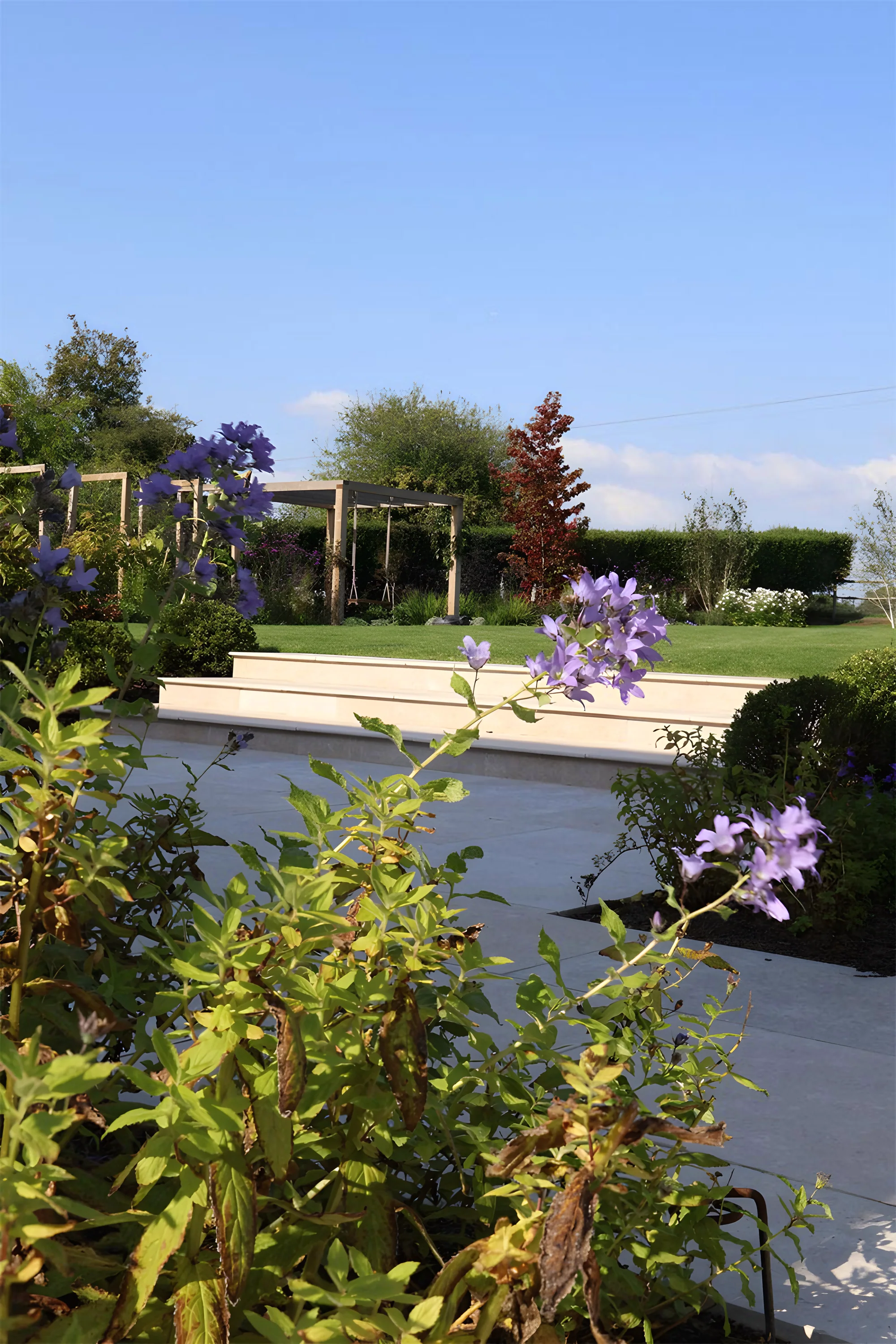
Planted borders running down to a swimming pool in a large garden

Putney Heath, Westmead and the mansion grounds

Acid Gravel, Spring Seepage and Very Large Trees

On the heath fringe at Telegraph Road, Wildcroft Road and Heathview Gardens the soils are acid gravel, which the geodiversity guide describes as poor agricultural ground supporting wet and dry heath, acid grassland, scrub and birch woodland. In a garden that is an advantage. Rhododendron, azalea, camellia, pieris, heather, birch and Japanese maple are genuinely at home, while lime lovers sulk, and the palette inverts a few streets downhill on the clay.

The spring line complicates it. Because water issues where the porous gravel meets the clay beneath, a garden can be free draining at the top of the slope and carry wet flushes and seepage at the bottom, so levels, drainage and planting get designed for two conditions on one site. The big front garden trees add a third, since a lawn under a sweet chestnut or a lime will never establish and the planting has to be chosen for the root plate it is sharing.

Manor Fields, Highlands Heath and Wildcroft Manor are grounds rather than gardens, and they are a maintenance contract rather than a private plot. Manor Fields alone has formal pathways, a miniature wood and an ornamental pond, with a small flower garden, a formal lawn and a rectangular pond in front of each block, and no single soil type across the site. These are gated estates with long internal access roads, so deliveries are arranged with the managing agent and the work runs to a planned calendar. Garden maintenance plans start from £160 per month on a twelve month agreement, with a minimum four hour visit each month.

  • Ericaceous planting where the gravel is acid, and the opposite list on the clay below
  • Drainage designed for seepage at the foot of the slope
  • Planting and lawns chosen for dry shade under mature canopy
  • Grounds maintenance and estate management on a planned calendar

On the ground

Where We Work in Putney

We work right across Putney and Roehampton. Putney Town, East Putney and the Embankment streets at the bottom of the hill, West Putney and Lower Shott through the middle with the Westbury Estate and the Gwendolen Avenue avenues, then Putney Hill, Putney Heath, Heathview Gardens, Bowling Green Close and Tibbet's Ride at the top. Out to the west there is the Dover House Estate, the Putney Park Estate streets of Woodborough Road and Briar Walk, Westmead, and the gated grounds at Manor Fields, Highlands Heath and Wildcroft Manor.

Beyond that we cover Putney Lower Common, Putney Vale, Roehampton and Roehampton Village, the Alton Estate and the Ashburton Estate. Putney Park Lane runs through the middle of that side as an unmade road and public park, gated at both ends and designated a Site of Local Importance for Nature Conservation, so it works as a wildlife corridor between Putney Heath and Putney Lower Common and has no vehicle approach at all.

The same team carries on across the river and along it, so if you are in Barnes, Wimbledon or Richmond, or in Southfields, Earlsfield, Wandsworth Town, East Sheen, Fulham or Hammersmith, we are already working on your side of the map.

A porcelain terrace and lawn behind a white rendered house

Neighbourhoods and villages

  • Putney Town
  • East Putney
  • West Putney
  • Putney Hill
  • Putney Heath
  • Tibbet's Ride
  • Lower Shott
  • Putney Park Estate
  • Westbury Estate
  • Dover House Estate
  • Westmead
  • Manor Fields
  • Highlands Heath
  • Wildcroft Manor
  • Heathview Gardens
  • Bowling Green Close
  • Putney Lower Common
  • Putney Vale
  • Roehampton
  • Roehampton Village
  • Alton Estate
  • Ashburton Estate
  • Southfields
  • Earlsfield
  • Wandsworth Town
  • Barnes
  • East Sheen
  • Wimbledon

Postcodes we cover

SW15, SW18

Planning and trees

Putney is unusually heavily designated, with fourteen of Wandsworth's conservation areas falling in or immediately around the town, so the trees and the boundaries are the first thing to look at on most projects here. Wandsworth's guidance is that trees in a conservation area are protected by the designation itself, and the council generally asks for six weeks written notice, by way of a section 211 notice, before a tree that is not already covered by a Tree Preservation Order is cut or pruned. A tree can carry an Order whether or not it stands in a conservation area, and unauthorised felling, pruning or root pruning of a protected tree is a criminal offence, so we check before anything comes near a canopy or a root plate.

Three local conservation areas also have Article 4 directions, the Dover House Estate, Putney Lower Common and Roehampton Village, which means work to publicly visible elevations that would be permitted development elsewhere may need permission. On the Dover House Estate in particular the council considers new hardstandings in front gardens harmful to the character of the area, with exceptions only in limited circumstances, and it publishes guidance on growing a privet hedge instead. The appraisals across Putney consistently discourage paving a front garden for parking and encourage replanting hedges, and removing a taller front boundary wall where it fronts a highway usually needs permission and is unlikely to be allowed if it is judged harmful.

On the heath side, Putney Heath and Wimbledon Common are managed by the Wimbledon and Putney Commons Conservators rather than the council, and are designated a Site of Special Scientific Interest and part of a Special Area of Conservation, so nothing happens on or across that land. The Alton Estate landscape is registered as a Historic Park and Garden at Grade II, there are Tree Preservation Orders on the trees around Mount Clare, Parkstead and Downshire House, and the Putney Embankment conservation area sits wholly within an Archaeological Priority Area, which is worth knowing before any deep excavation near the river. All of this is local policy and guidance rather than a fixed set of permissions, and the only reliable answer on a particular tree, wall or front garden is the one the council's conservation and tree officers give for that address.

We make those enquiries as part of the design, and we would rather find out early than redraw a scheme later.

Recent work

Gardens We Have Designed, Built and Looked After

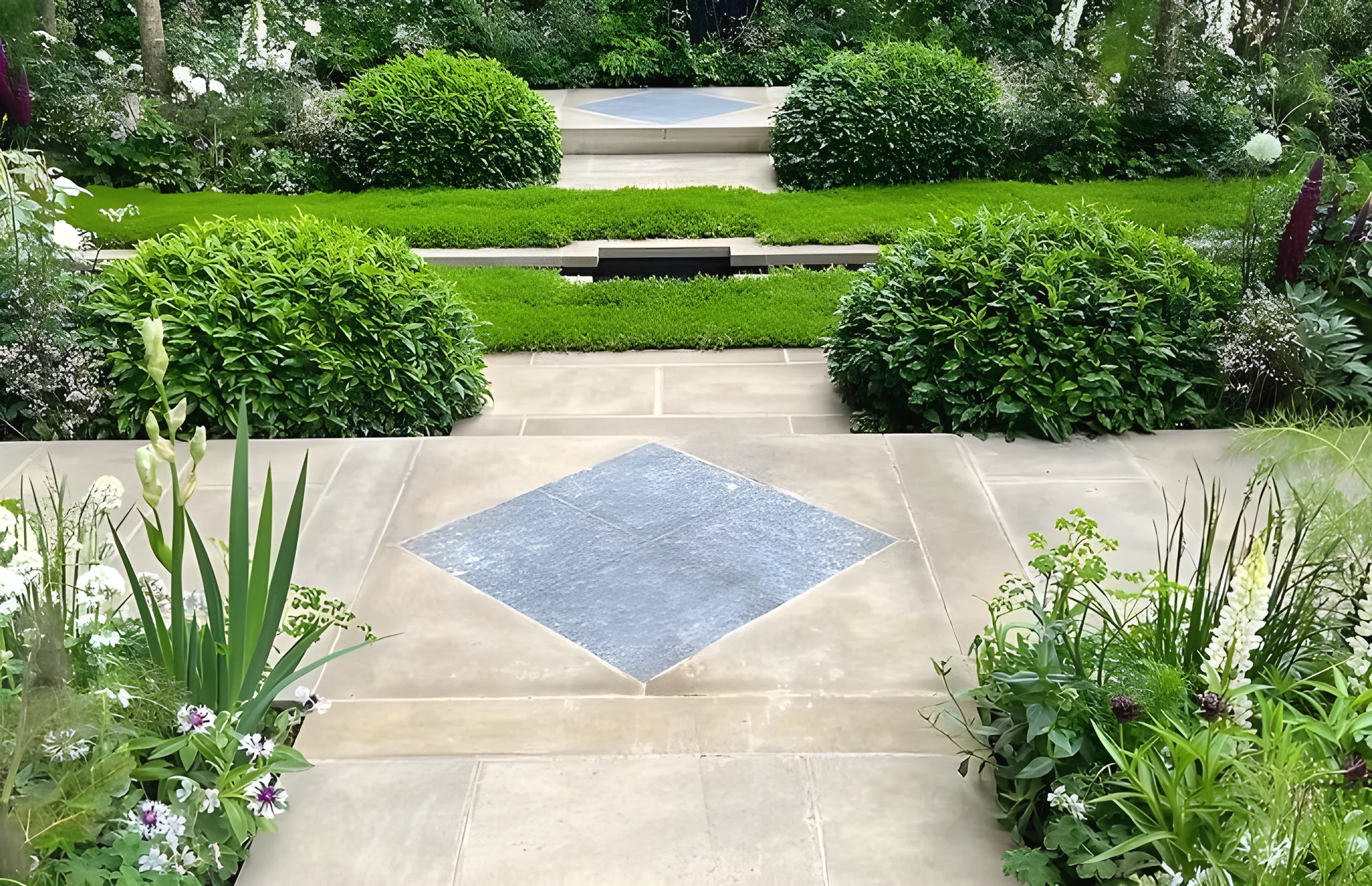
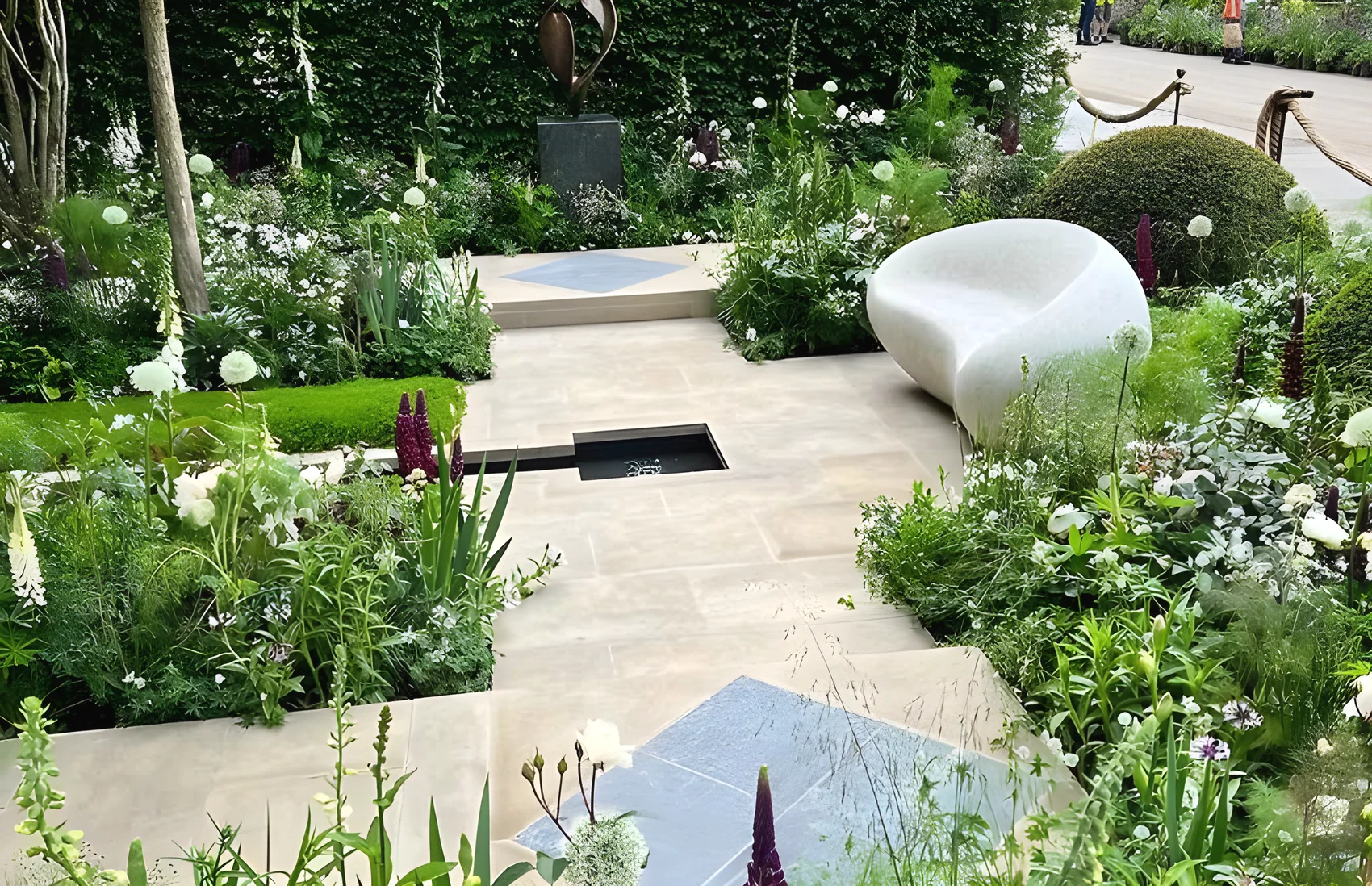
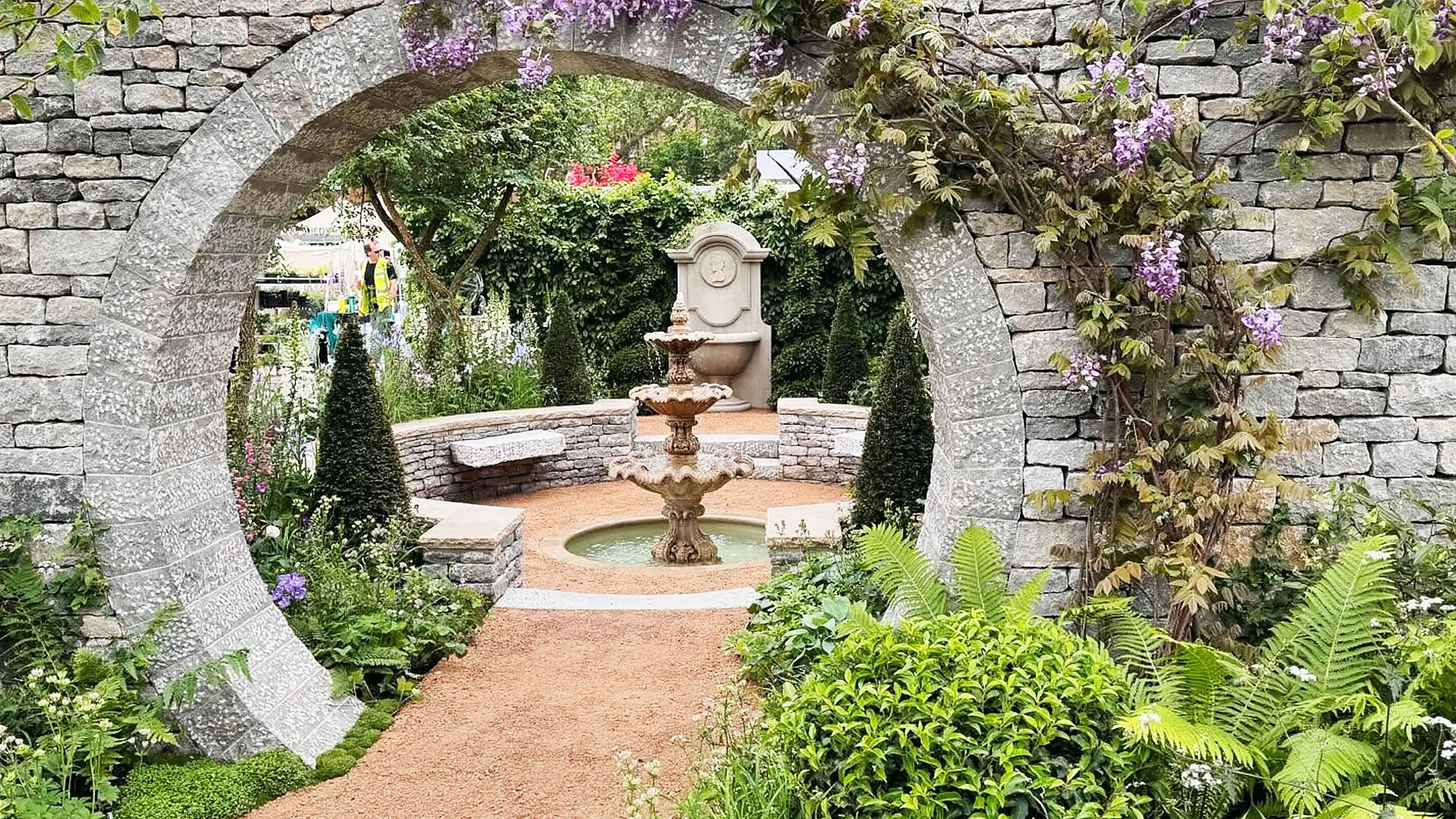
  • Stone paving, clipped box and a bench in the Bridgerton garden at RHS Chelsea 2024
  • Inset stone paving and perennial planting at RHS Chelsea 2024
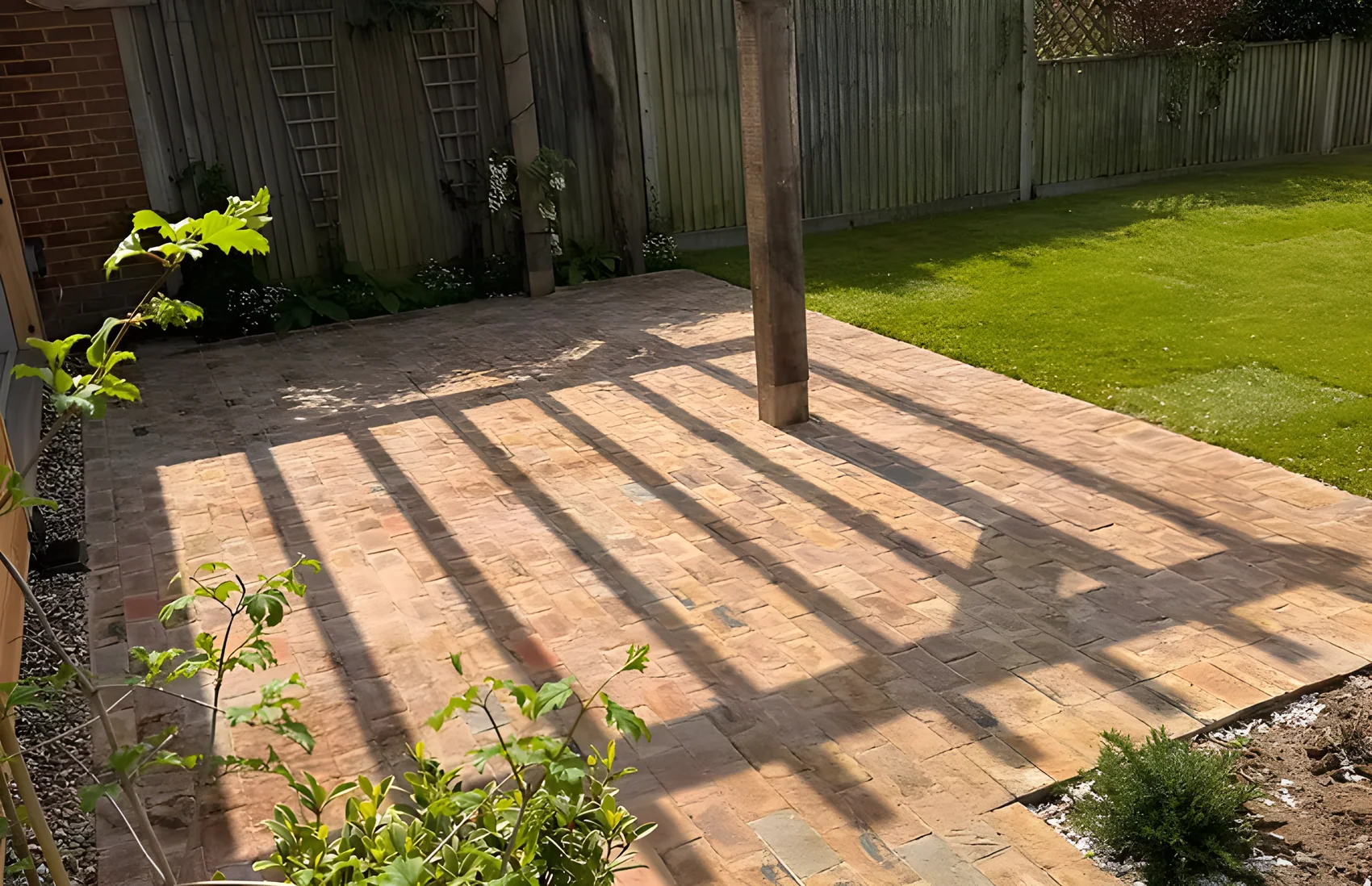
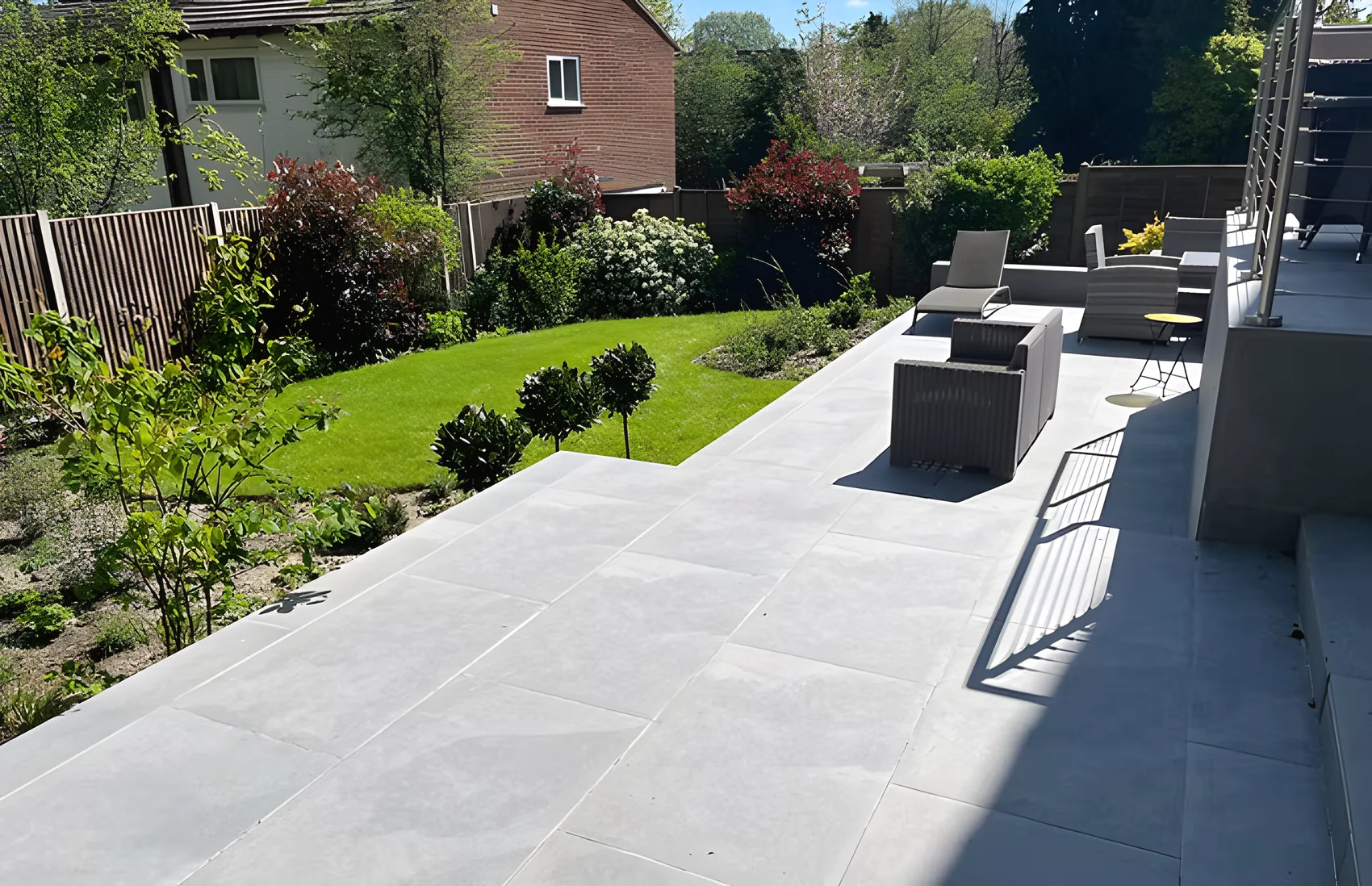
  • Stone paving laid in long bands beside a lawn

Good to know

Common Questions About Gardens in Putney

Can You Get Materials and Machinery Into a Back Garden With No Rear Access?

Yes, and it is the normal way of working in lower Putney. The strip plots around Oxford Road, Werter Road, Montserrat Road, Carmalt Gardens and Balmuir Gardens have no rear access at all, so materials go in through the house or down a side hall on protection, and the spoil comes out the same way. We size the plant to the route rather than to the job, book the parking suspension and permit in advance, and work off peak where the High Street approach to the bridge would otherwise eat the day. On Deodar Road, where the railway bridge cuts the street and the gardens end at the river, everything is barrowed from the front.

Why Does My Lawn on Putney Hill Flood All Winter and Then Crack in Summer?

Because there is nothing between your topsoil and the London Clay. On Putney Hill, Chartfield Avenue, Kersfield Road and the Dover House Estate the clay is the parent material of the soil, so it holds water all winter and then shrinks and cracks in a dry summer. The usual answer is not more topdressing, it is air: deep soil aeration decompacts the profile with compressed air and holds the fissures open with enriched biochar, without digging the lawn up. Where the water has nowhere to go we design falls and drainage as part of the groundworks instead.

What Actually Grows Well Near Putney Heath?

The gravel on the heath plateau is acid, and that opens a palette the rest of Putney cannot grow well. Rhododendron, azalea, camellia, pieris, heather, birch and Japanese maple are all genuinely at home at Telegraph Road, Wildcroft Road and Heathview Gardens, while lime lovers sulk. The catch is water, both too little at the surface and too much lower down, since springs issue where the gravel meets the clay beneath. We plant the top of the slope for drought and the bottom for seepage, and the two lists are not the same.

Do I Need Consent to Prune a Tree in My Putney Garden?

Very possibly, and it is worth finding out before the saw comes out. Trees in a conservation area are protected by the designation, and the council generally wants six weeks written notice by way of a section 211 notice for a tree that is not already under a Tree Preservation Order. An Order can apply anywhere, in or out of a conservation area, and unauthorised felling, pruning or root pruning of a protected tree is a criminal offence. Wandsworth's tree officers will advise on an individual tree, and we make that enquiry as part of the design rather than after it.

Can I Pave the Front Garden for Parking on the Dover House Estate?

The estate has an Article 4 direction and the council takes the view that new hardstandings in its front gardens are harmful to the character of the conservation area, with exceptions only in limited circumstances, so most houses here have no drive. It was not designed with the car in mind, and the council publishes guidance on growing a privet hedge, which is the boundary the layout was built around. Where parking genuinely cannot be solved another way, the appraisals favour keeping the original wall, railings and gate and adapting them rather than losing the planted front. It is a conversation to have with the conservation officers early, and we will put the question for your address.

There Is Japanese Knotweed on the Land Behind Us. Is That Our Problem?

It is the common pattern here, because Putney has the three classic routes for knotweed in one place: the Thames towpath and foreshore, the Beverley Brook corridor, and the railway embankments cutting through east Putney. If it is coming over a boundary, identification and a clear record of what is actually there matter more than anything you do to the visible growth. We identify it and handle removal with our specialist invasive weed partners at AIR8, and we plan the construction sequence around the treatment rather than building over the problem.

Close by

We Also Work In

Start your garden

Talk to Us About Your Putney Garden

Tell us the street and we can usually tell you what you are standing on before we arrive. Call 01276 582095 or 07717 058646, or email info@cjlandscapesltd.co.uk, and we will come and look at the garden, the access and the boundaries together.

  1. 01
    We Call You BackWithin one working day, to talk the garden through.
  2. 02
    The First VisitA walk round the garden to take in the levels, the access and where the water sits.
  3. 03
    A Written ScopeA specification and a programme, with samples to see in your own light.
Prefer to talk?01276 582095info@cjlandscapesltd.co.uk
1 Webbs Mews, High Street
Hartley Wintney, Hook RG27 8NZ
What Would You Like Help With?

Choose as many as you like.

Tell Us About the Project

Roughly is fine. It helps us bring the right people to the first visit.

Your Details
Photographs Optional, up to five

Thank You

Your enquiry has come through and we will call you back within one working day.

Step 1 of 3

We only use your details to reply to this enquiry.