C J LANDSCAPES 01276 582095Get in touch

Barnes, Richmond upon Thames

Landscaping in Barnes on Gravel Over London Clay

Design, construction and long term care for gardens from The Terrace and Castelnau to the walled plots behind Elm Grove Road.

Barnes, SW13 and SW15

Almost an Island, on Sand and Gravel

Barnes is almost an island. A long meander of the tidal Thames wraps round it, two branches of the railway cut across it, and Hammersmith Bridge is closed to motor traffic, so the side streets carry almost nothing. At the centre of it is a genuine village arrangement of a green, a duck pond, a High Street and Church Road, with sandy Thames gravel under the High Street and softer alluvium round the Green and the pond.

The houses run from Georgian riverside frontages on The Terrace to very large Victorian villas on Castelnau and Vine Road, and down to the two storey cottages of Little Chelsea with their front doors opening straight onto the pavement. That range matters, because two gardens on neighbouring streets can be entirely different jobs: a deep walled plot with a mature plane standing over it, then a small shaded court that can only be reached by barrowing through the house.

We design, build and then look after gardens here with the same team, which is the only sensible way to work on ground that behaves like this. The first visit is spent reading the plot rather than the drawing: where the gravel stops and the clay starts, how material will get in and spoil will get out, which trees are protected, and which conservation area the garden sits inside.

See the work
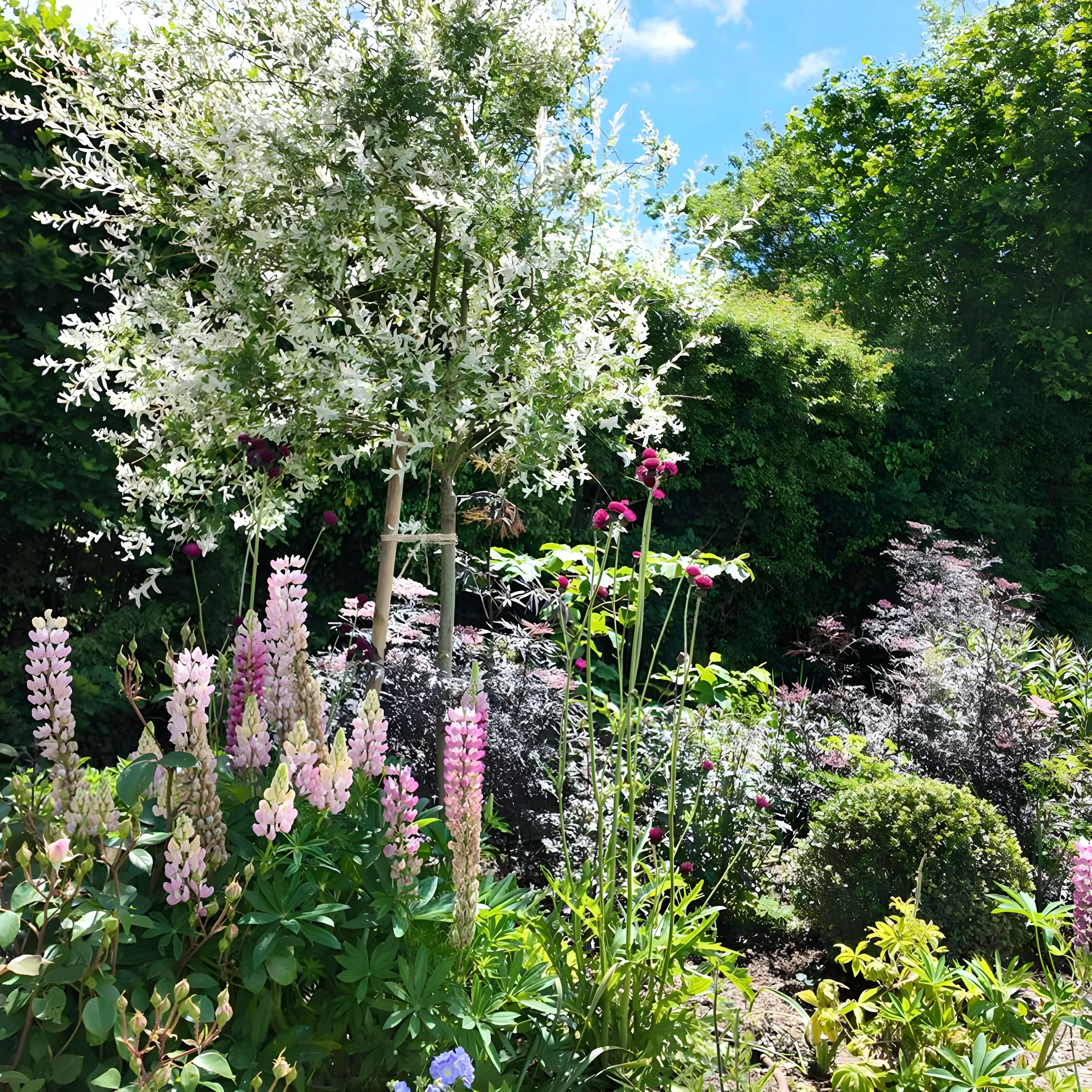
Lupins and mixed perennials in a deep border

The houses

What the Houses and Their Gardens Are Like in Barnes

The constant in a Barnes garden is enclosure. Rear gardens are walled, usually in old brick, often shared with three or four neighbours, and behind the three and four storey Victorian houses they read as tall enclosed courts with one side in shade for most of the day. Almost every plot has a dominant tree, a lime, plane, cedar, oak, cherry or apple, big enough to set the design and to dry the ground beneath it.

The second constant is access, and in Barnes it drives cost and programme harder than the stone does. With Hammersmith Bridge shut to motor traffic, lorries, grab wagons and plant have to come round by Chiswick Bridge, Kew Bridge or Putney Bridge, then crawl through congestion on Castelnau, Church Road, Rocks Lane and the High Street. The level crossings on Vine Road and White Hart Lane hold deliveries up, several of the best addresses sit on unmade gravel roads with timber gated entrances, and Thorne Passage, Beverley Path and Malthouse Passage take no vehicles at all.

The ground changes inside the district as well. Most of Barnes sits on the gravel terrace, but there are pockets of soft alluvium around Barnes Green and the pond and along the Beverley Brook towards Barn Elms, and head along the southern fringe of Barnes Common towards Upper Richmond Road and the Rocks Lane junction. We open trial holes and establish which of those we are on before any hard landscaping is designed, because the drainage strategy, the sub base and the planting all follow from it.

  1. Mid Victorian to Edwardian, roughly 1850 to 1914
    Large Detached and Semi Detached Villas of Three and Four Storeys, Set Well Back Behind Defined BoundariesCastelnau, Lonsdale Road, Vine Road, Scarth Road, St Mary's Grove, Gipsy Lane, Station Road, Beverley Road, Queen's Ride and Mill Hill

    These are the biggest private plots in Barnes and the main market for a full garden build. Front gardens are deep, with original gravel in and out driveways, surviving gate piers and low walls or mature hedges that the council asks to be kept, while the rear gardens are generous and strongly enclosed, with lime, plane, cedar and oak frequently large enough to dominate a design and to dry the ground under it. What owners want is usually a proper terrace at the house, levels resolved sensibly along a long plot, and planting that will cope with deep shade on one side and dry root competition under the canopy.

  2. Georgian and early Victorian, roughly 1720 to 1850
    Grand Riverside Houses and Individual Villas, Many of Them Individually ListedThe Terrace, the Lonsdale Road frontage near Barnes Bridge, Church Road and Barnes Green around Milbourne House, and Grange Road and Kitson Road around The Grange

    The usable garden is almost entirely at the rear: long, narrow, walled plots with high old brick boundaries, often stepped or terraced, under very mature trees. The whole frontage is in the tidal floodplain with gravel terrace and alluvium close together, so levels, drainage runs and anything sunken have to be thought through properly rather than assumed. Listed status and conservation area consent shape nearly every decision, down to gate piers and paving, and because The Terrace is itself a classified main road between the houses and the river wall, parking, loading and skip placement have to be managed on it.

  3. Late Victorian and Edwardian, roughly 1880 to 1914
    Two and Three Storey Terraces and Semis With Canted or Square Bays, Including the Lion HousesCleveland Gardens, Grove Road, Ellison Road, Lyric Road, Melrose Road, St Ann's Road, Rectory Road, Bellevue Road, Elm Grove Road, Beverley Gardens, Brook Gardens, Ranelagh Avenue and Cedars Road, with the Lion Houses on The Crescent and Cleveland Road

    The classic Barnes garden: a small walled front, many still with a tiled entrance path and a low brick or stuccoed wall, and a modest rectangular rear garden completely enclosed by brick and timber. Rear access is almost always through the house or a shared side passage, which makes spoil removal and material delivery the single biggest practical cost, and one dominant cherry, lime or apple usually sets what is possible. These are jobs about a well made terrace, honest level changes, lighting and shade planting, and getting a front boundary back where it has been opened up for a car.

  4. Interwar, roughly 1920 to 1939, with post war and later infill
    Semi Detached and Short Terrace Houses on Regular Plots, Plus the Boot House Estate in North BarnesNowell Road, Kilmington Road, Stillingfleet Road and Boileau Road in north Barnes, Gerard Road, Nassau Road, Madrid Road, Byfield Gardens, Ferry Road, Westmoreland Road, Baronsmead Road, Melville Road, Ellerton Road, Lowther Road and Suffolk Road west of Castelnau, Westwood Road, Rosslyn Avenue, Treen Avenue, Tudor Gardens and Priory Gardens at Priest's Bridge, and Limes Avenue, Brookwood Avenue, Willow Avenue and Cambridge Road behind the Green

    These are the most workable plots in Barnes and the best ground to build on. Rear gardens are regular rectangles of real size, often with a side path or an attached garage, which means genuine machine and material access, the thing that is missing almost everywhere else in the district. The soil is sandy gravel terrace with reasonable depth, free draining and hungry, and the recurring problems are front gardens paved over for cars with the boundary walls taken out, side extensions that have eaten the access route, and ground compacted by years of vehicles standing on what used to be lawn.

The ground

The Ground Under a Barnes Garden

Barnes sits inside a long meander of the tidal Thames, on a river terrace of sand and gravel laid over London Clay. The gravel drains very fast and the clay underneath it barely drains at all, which is what gives a garden here two speeds.

RAINThin sandy topsoil and turfMade groundKempton Park Gravel MemberLondon Clay Formationwater stops here

Layer 1

Thin Sandy Topsoil

Over the gravel the topsoil is thin, sandy and hungry, and Richmond's conservation area study describes the ground on Barnes Common as thin and sandy with outcrops of gravel and pebbles. A fine lawn here browns off before anything else in the street. Beds need real depth of organic matter rather than a dusting, and new trees need two or three seasons of watering before they can be left to themselves.

Layer 2

Made Ground

Barnes has been lived on and built up for a very long time, and ground investigation at Hammersmith Bridge recorded made ground sitting over the river terrace deposits. In an old garden the first thing a spade meets is often not natural ground at all but old surfaces, rubble and imported fill, which is why we open trial holes before pricing excavation, drainage or a retaining wall.

Layer 3

Kempton Park Gravel Member

This is the river terrace most of Barnes stands on, recorded by the British Geological Survey as sand and gravel, locally with lenses of silt, clay or peat, and mapped at The Terrace, Castelnau, Harrods Village, Barn Elms, the High Street, Vine Road, Mill Hill, Queen's Ride, Gipsy Lane, Rocks Lane, Westfields and Priest's Bridge. It drains very fast and holds almost nothing, so gardens over it are parched in a dry summer and the soil leans acid and low in nutrient rather than alkaline. It is good ground to build on, with shrinking and swelling clay rated no hazard where this gravel caps the clay.

Layer 4

London Clay Formation

Below the gravel is the London Clay, a marine clay and silt the British Geological Survey describes as blue grey or grey brown, slightly calcareous silty clay with thin courses of carbonate concretions. It is effectively impermeable, so water running down through the gravel perches on top of it and reappears wherever it cannot get away, and Richmond's flood risk assessment states that infiltration techniques including soakaways are unlikely to be effective within areas overlying London Clay. Around Barnes Green and the pond, in the southern part of the Wetland Centre and along the Beverley Brook the picture flips, with soft alluvium of clay, silt, sand and peat at the surface, holding water all winter and settling under paving.

Absolutely delighted with all the work CJ Landscapes has done in our garden. Carl quickly understood the issues we had with ground water and knew how to resolve them. He and his team executed all the extensive work with great care and professionalism.

Gloria Prest · Google review

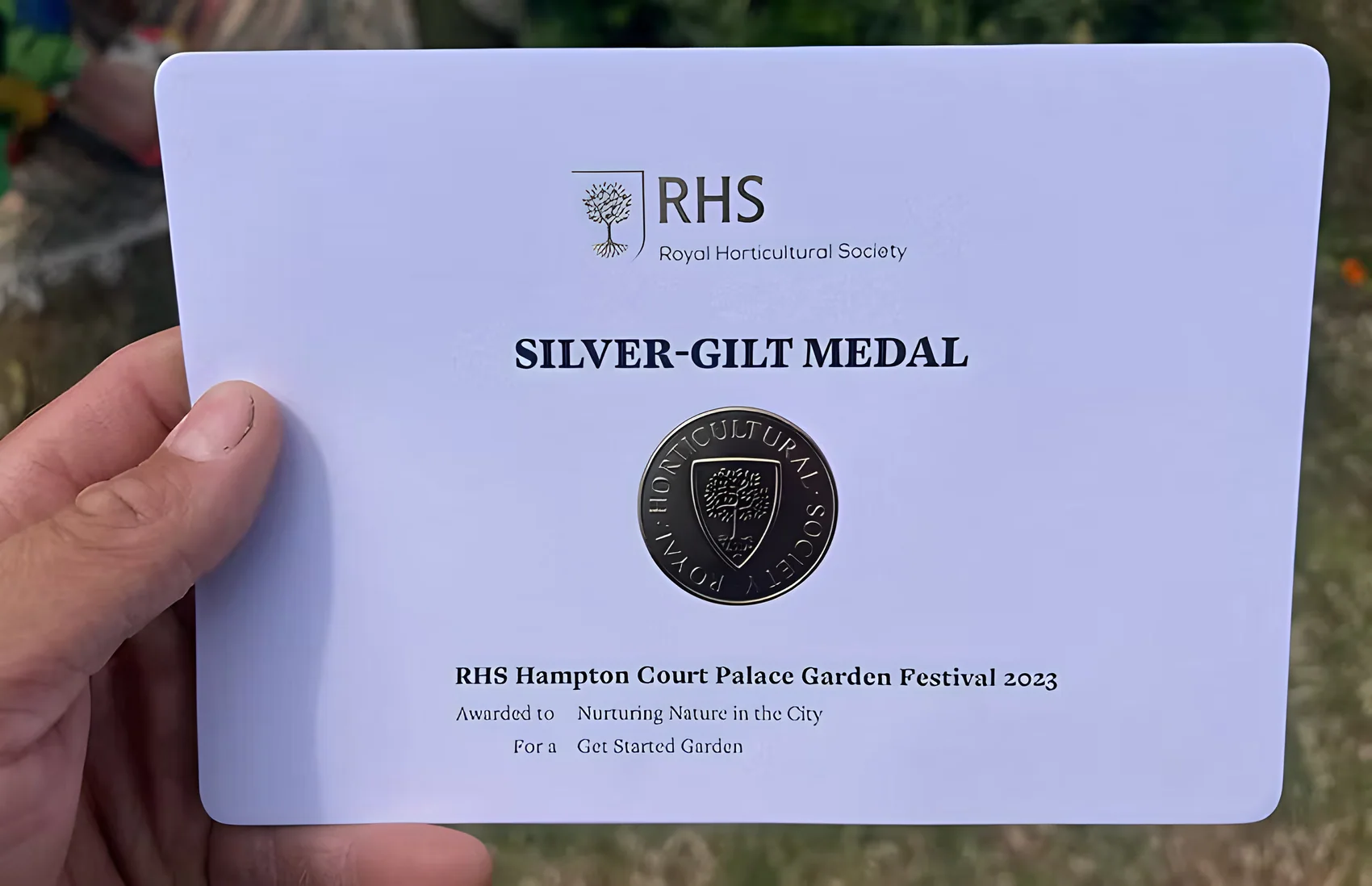
The RHS Silver Gilt medal card from Hampton Court Palace Garden Festival 2023

Access and programme

Building a Garden the Lorry Cannot Reach

Most of our Barnes jobs start with a plan for getting in and out. With Hammersmith Bridge closed to motor traffic, deliveries come round by Chiswick Bridge, Kew Bridge or Putney Bridge and then crawl along Castelnau, Church Road, Rocks Lane or the High Street, so a load that misses its slot can cost a day. Vine Road has level crossings, Westfields is signed for destination traffic only, Railway Side is part footway, and Thorne Passage, Beverley Path and Malthouse Passage carry no vehicles at all.

Harrods Village is gated and Barnes Waterside is managed, so access, parking and skip placement are agreed with the estate before we arrive. On the villa streets with unmade gravel roads and timber gated entrances, St Mary's Grove, Scarth Road and Woodlands Road among them, we keep plant off the soft verges and leave the gravel as we found it, because the road surface is a character feature in its own right.

  • Barrow routes, floor protection and dust control planned before anything is ordered
  • Materials chosen so they can be handled through a house or down a passage
  • Spoil taken out in small loads where a grab wagon cannot stand
  • Delivery slots booked around the Vine Road and White Hart Lane crossings
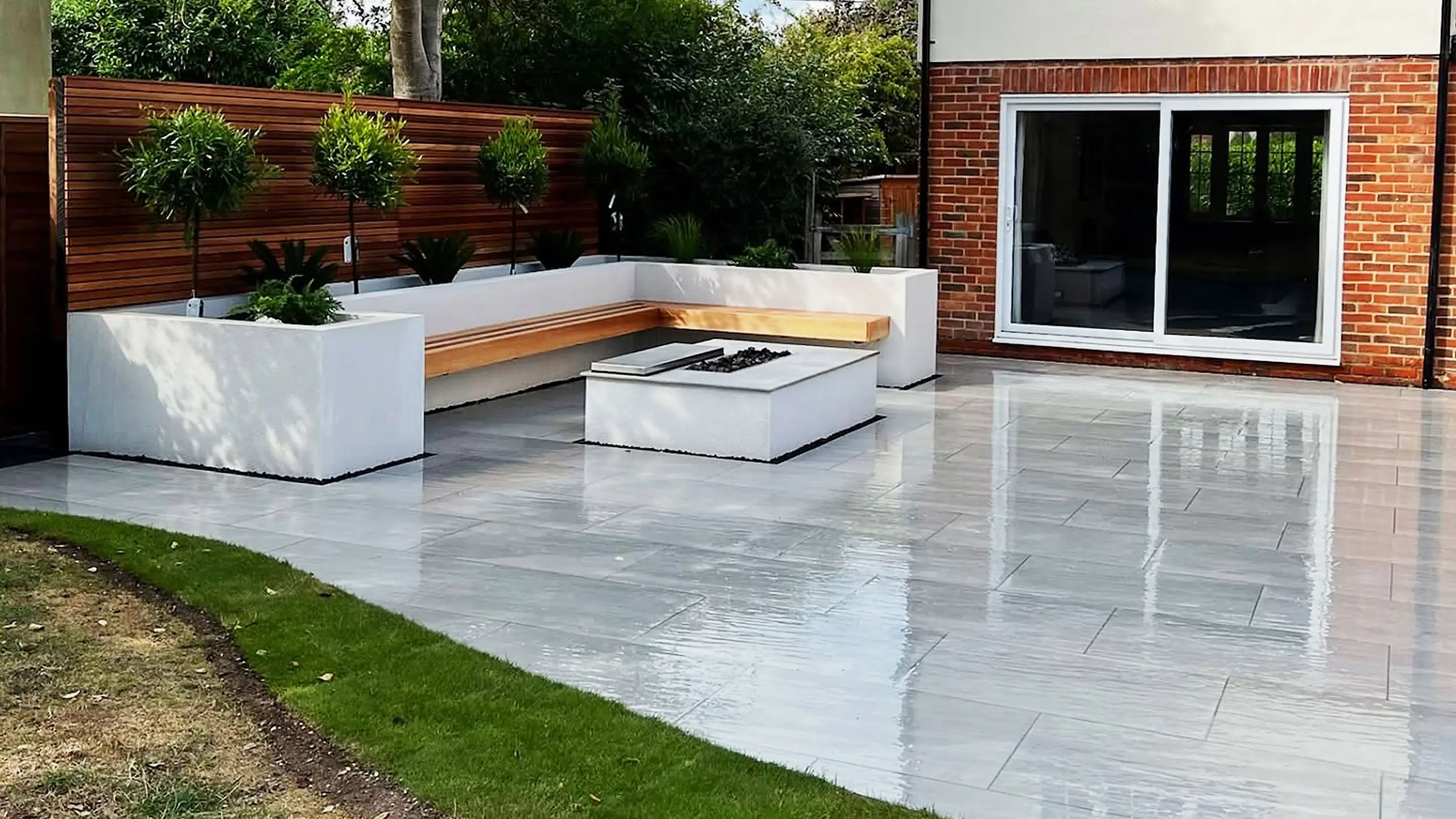
A polished porcelain terrace with white rendered seating and a fire table

Drainage and levels

Gravel on Top, Clay Underneath

The two speed ground is the technical problem to solve in nearly every Barnes garden. We test before we design, because a trial hole can drain beautifully in the gravel and stop dead the moment it reaches the clay, and Richmond's flood risk assessment is plain that soakaways are unlikely to be effective over London Clay. Where infiltration will not perform we attenuate instead, use permeable surfaces and find a positive outfall.

A large part of Barnes is in the high probability flood zone, with functional floodplain alongside the river, and the Borough has recorded local drainage flooding on Lonsdale Road, by Rocks Lane and on The Terrace. That turns finished levels, raised beds and anything sunken from a detail into a design decision. Where the real fault is compaction, from parking on what used to be a lawn or from vehicles standing on soft ground, deep soil aeration decompacts the profile with compressed air and holds the fissures open with enriched biochar, with no digging and nothing to put back.

  • Trial holes and infiltration tests before the drainage is designed
  • Attenuation, permeable paving and a positive outfall where a soakaway will not work
  • Levels set for a tidal floodplain rather than against it
  • Deep soil aeration for compacted lawns and standing water
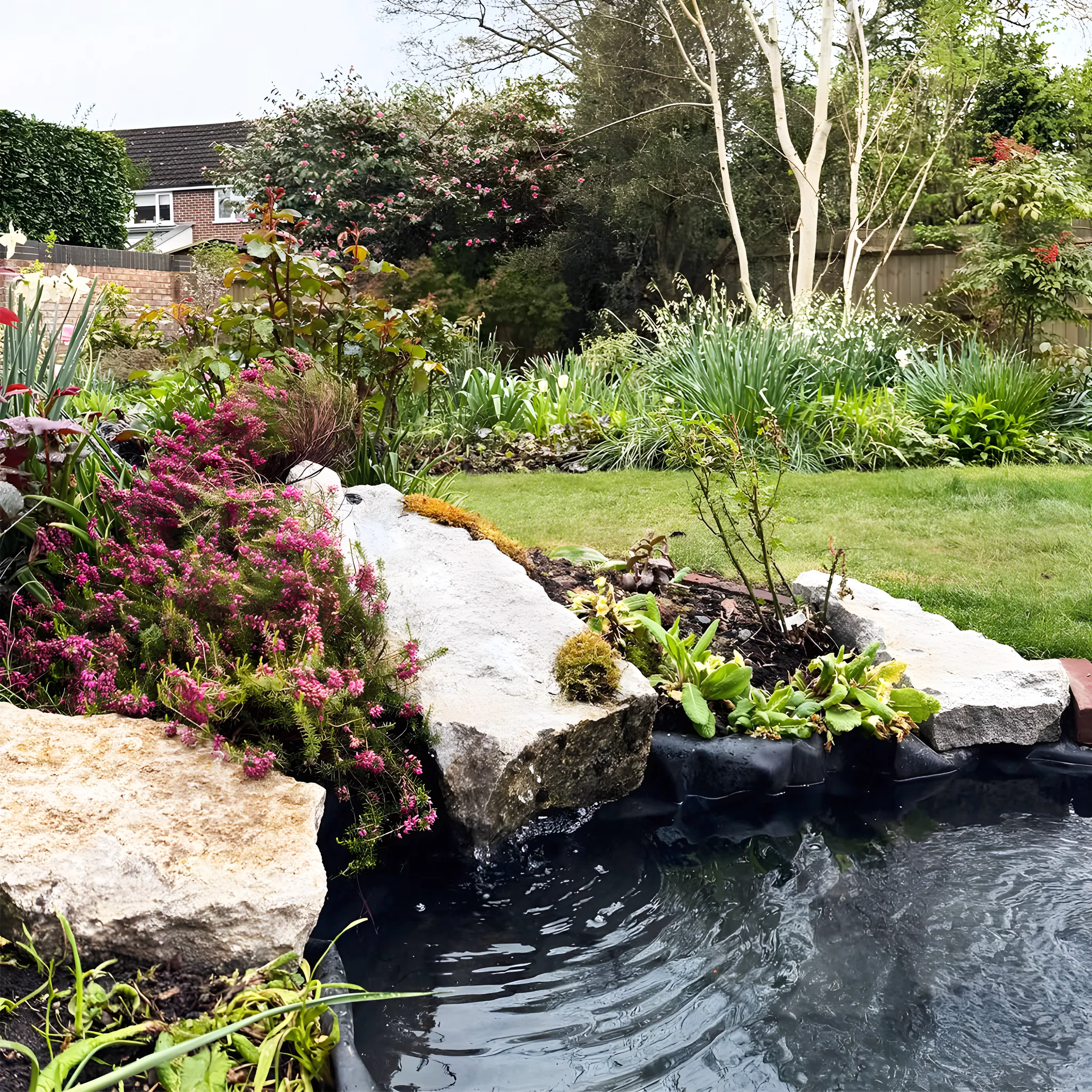
A pond and rockery planted with alpines and marginals

Planting and care

Planting for Hungry Gravel

Barnes is a sandy, low nutrient, slightly acid garden, the opposite of the chalk gardens on the Surrey downs, and the plant list should say so. Birch, Scots pine, rowan, holly, hawthorn and amelanchier all do well, cistus, lavender, rosemary, euphorbia, hardy geranium and grass led planting enjoy the drainage, and camellia, rhododendron and pieris are happy here where they would sulk on chalk. Hydrangea, astilbe, hosta, rodgersia and Japanese maple scorch unless the soil is seriously improved and irrigated, which is better said at the design stage than discovered in August.

Our team built the Bridgerton show garden at RHS Chelsea Flower Show 2024, Silver Medal, sponsored by Netflix and designed by Holly Johnston, and the same people plant and then maintain gardens in Barnes. Zoned irrigation goes in during construction so lawns and borders get water without waste, and the programme that follows is written around the gravel: organic matter going on every year, and green waste leaving site rather than being tipped on a boundary, which matters next to the acid grassland on the Common.

  • Beds built up with real depth of organic matter, not a surface dressing
  • Shade planting chosen for tall walled gardens rather than fought
  • Willow, alder, dogwood and iris where the ground holds winter water
  • Zoned irrigation built in while the garden is under construction

On the ground

Where We Work in and Around Barnes

We work right across the district: the village itself around the Green, the pond and the High Street, Castelnau and the Suffolk Road streets west of it, Madrid Road, the Lowther Estate and north Barnes, Harrods Village and Barnes Waterside on the river, and Elm Bank, Barnes Bridge and The Terrace along the riverside.

South and east of the centre the gardens sit against open ground, and that changes how they are designed. Mill Hill, the Barnes Common fringe, Queen's Ride, Barn Elms and Rocks Lane all look onto the Common, Barn Elms or the Beverley Brook corridor, so lighting, planting and green waste all need handling with those in mind. Little Chelsea, also known as Westfield, is the courtyard and small garden end of Barnes, where the work is level changes, walls and vertical planting rather than lawn and border. Priest's Bridge is the opposite: Westwood Road, Rosslyn Avenue, Treen Avenue, Tudor Gardens and Priory Gardens are interwar streets with regular rear gardens of real size, often with a side path or an attached garage, which is the machine access missing almost everywhere else in Barnes. We cover Warwick Drive and South West Barnes as well.

Mortlake adjoins to the west, with East Sheen, Kew and Richmond beyond it, while Putney and Roehampton are in Wandsworth, with Putney Lower Common adjoining Barnes Common to the east across an historic ditch. Chiswick, Hammersmith and Fulham face Barnes across the river. We also work in Richmond, Putney and Wimbledon, so the team is often already on this side of the water.

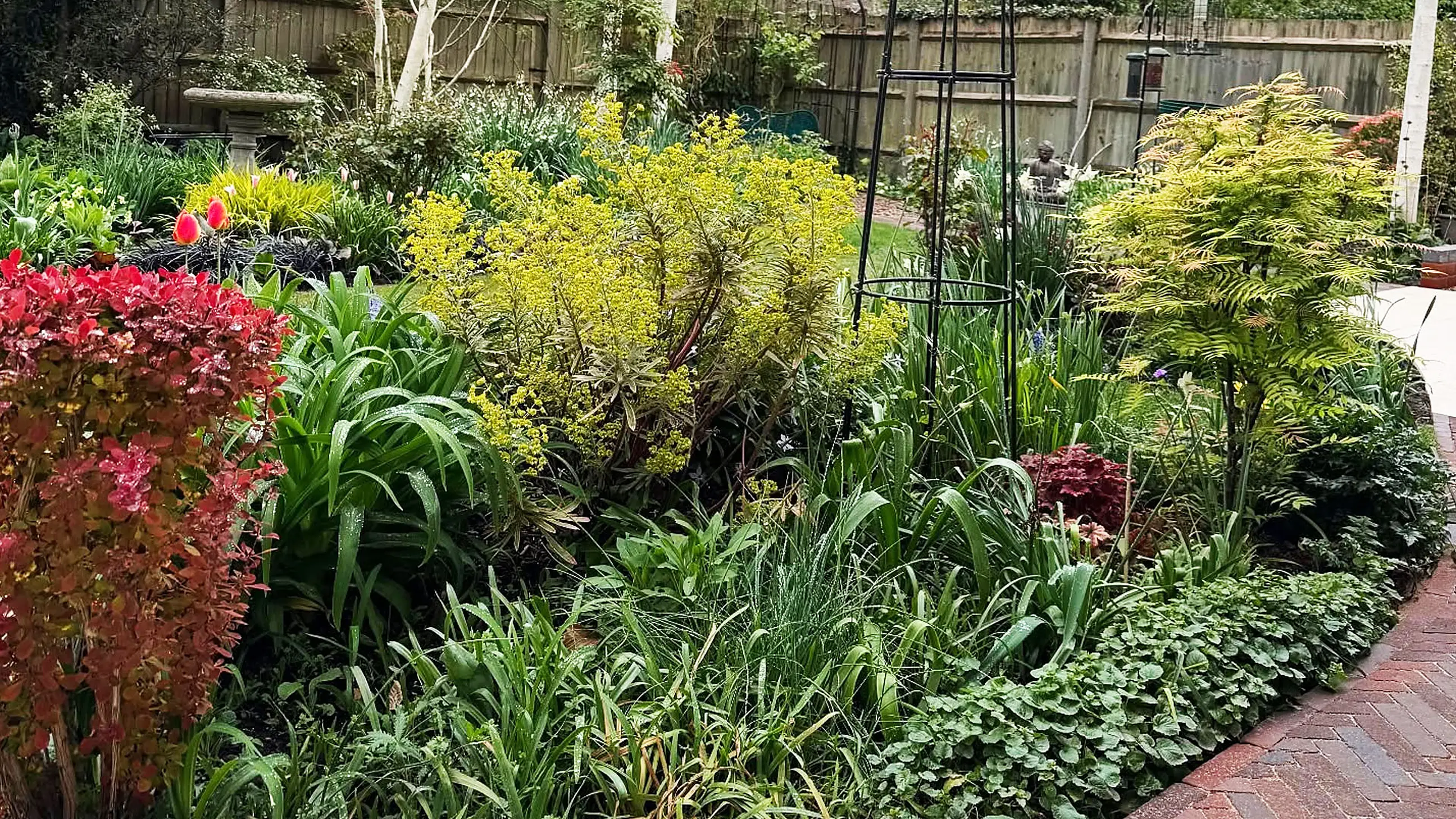
Dense mixed planting running the length of a garden

Neighbourhoods and villages

  • Barnes Village, the Green, the pond and the High Street
  • Castelnau
  • Harrods Village
  • Barnes Waterside
  • The Terrace and the Barnes riverside
  • Barnes Bridge
  • Little Chelsea, also known as Westfield
  • Elm Bank
  • Mill Hill
  • Barnes Common fringe
  • Priest's Bridge
  • Suffolk Road and west of Castelnau
  • Lowther Estate and north Barnes
  • Warwick Drive
  • Barn Elms and Rocks Lane
  • Queen's Ride
  • South West Barnes
  • Madrid Road
  • Mortlake
  • East Sheen
  • Kew
  • Richmond
  • Putney
  • Roehampton

Postcodes we cover

SW13, SW15

Planning and trees

Very little of Barnes sits outside some form of designation, so it pays to check before anything is ordered. Seven conservation areas cover the district, Barnes Green, Mill Hill, Thorne Passage, Castelnau, Barnes Common, White Hart Lane and Madrid Road, with Mortlake adjoining to the west. Richmond's conservation area studies explain that designation brings control over the felling and lopping of trees as well as demolition, and that a tree in a conservation area which is not already subject to a Tree Preservation Order is generally protected by a requirement to give six weeks' notice before work.

At Mill Hill many of the mature trees carry Tree Preservation Orders in their own right. Listed buildings on The Terrace, at The Grange and around Barnes Green bring consent into play for things as small as gate piers and paving, and the towpath itself lies inside the conservation area. A few local policies come up repeatedly on garden projects.

The council's guidance discourages the conversion of front gardens for car parking, and its conservation studies repeatedly ask for front boundary walls, gate piers, original gravel driveways and tiled entrance paths to be retained. Gardens, including larger blocks of back gardens, are treated as greenfield sites under the infill and backland policies of the Development Management Plan, and private gardens, street verges and mature trees can be designated Other Open Land of Townscape Importance. Barnes Common is Metropolitan Open Land and a Local Nature Reserve, the Harrodian School playing fields are Metropolitan Open Land and the WWT London Wetland Centre is a Site of Special Scientific Interest, so new built structures near them meet a strong steer in policy.

The riverside falls within the Thames Policy Area, and basements are flagged as a particular development pressure in Barnes. The floodlighting policy matters too: the Barnes guidance says the effect of lighting from sources outside but close to Barnes Common, Barnes Wetlands and the Beverley Brook corridor will be taken into account, including from an ecological perspective, so a lighting scheme in a garden backing onto those spaces should be designed with that in view. Deep excavation on the Mill Hill side of the Common can raise archaeological questions, as flint tools near Mill Hill, a lowland hillfort of the Middle Iron Age at Barn Elms, Roman discoveries and a burial urn found just below the modern surface are all on record.

None of this is a prohibition. It is guidance and a notification regime, and it is worth raising with the council early rather than after the stone has arrived.

Recent work

Gardens We Have Built

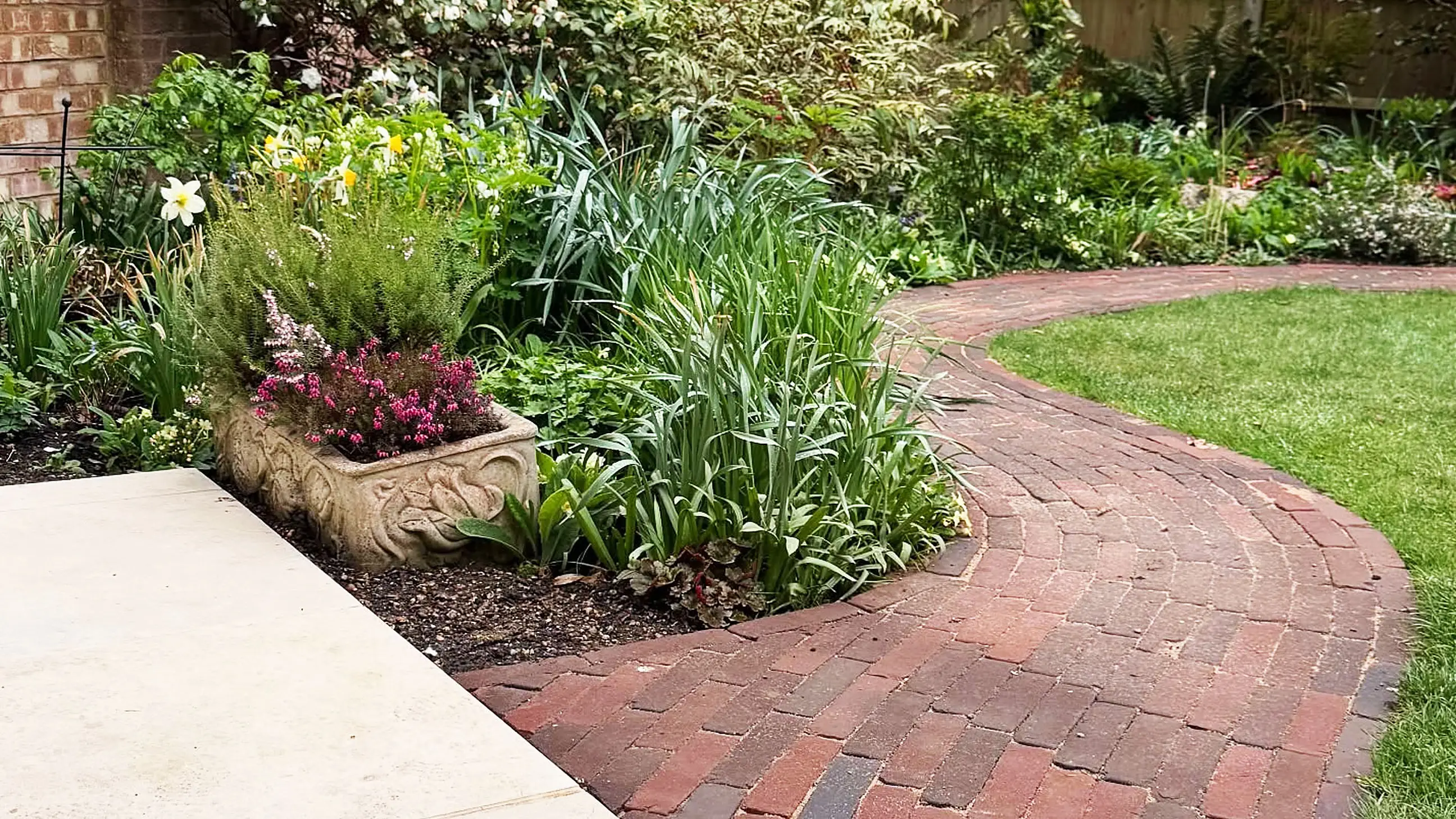
  • A curving brick path running through deep mixed planting
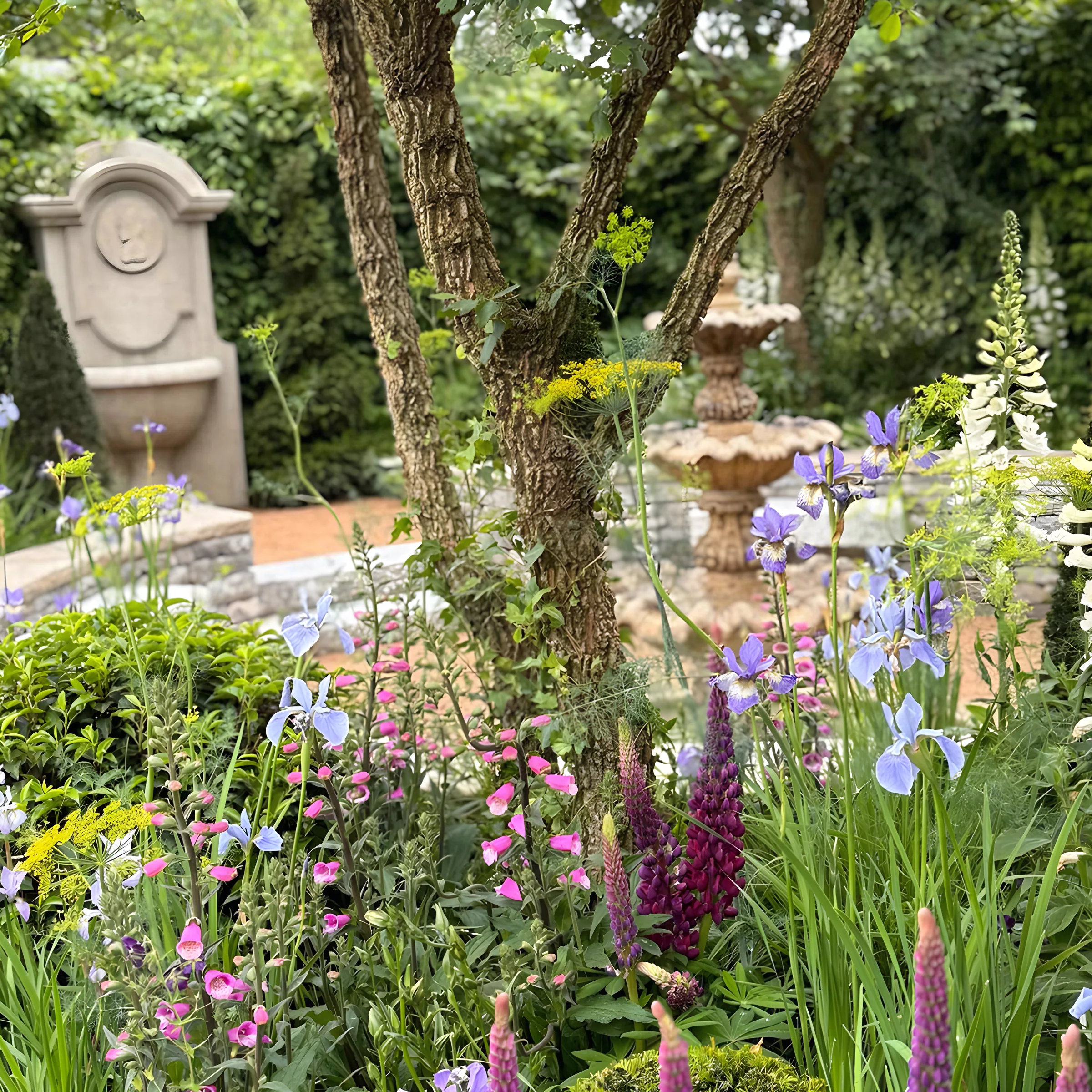
  • Cottage garden borders in full flower around a stone water feature
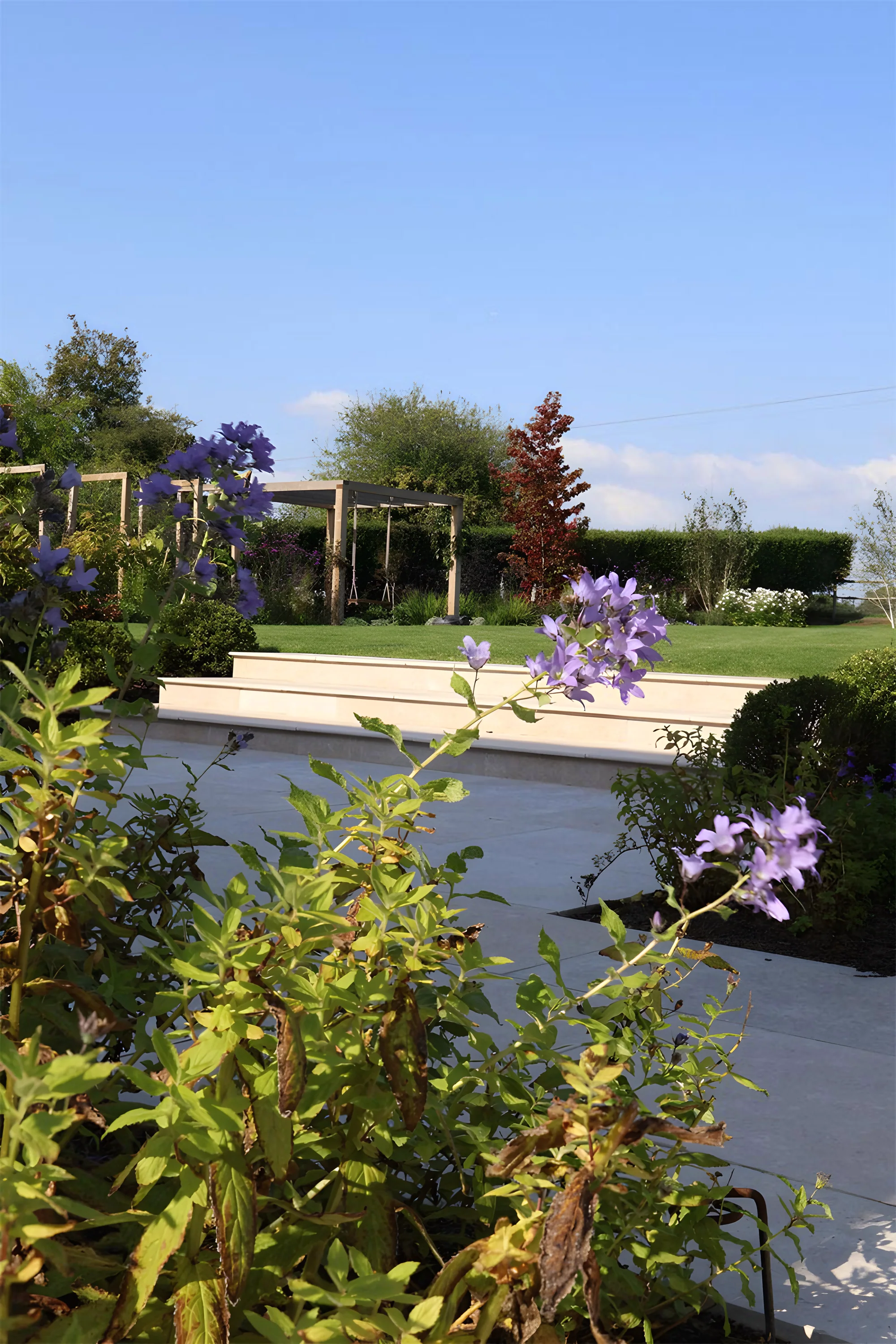
  • Planted borders running down to a swimming pool in a large garden

Good to know

Questions We Are Asked About Gardens in Barnes

Will a Soakaway Work in My Garden in Barnes?

Sometimes in the gravel, and rarely once you reach the clay beneath it. Richmond's own flood risk assessment states that infiltration techniques including soakaways are unlikely to be effective within areas overlying London Clay, and a trial hole that drains beautifully in the Kempton Park Gravel can stop dead the moment it meets the clay. We dig and test before the drainage is designed, and where infiltration is not reliable we use attenuation, permeable surfaces and a positive outfall instead.

Why Is My Lawn Brown in July and the Bottom of the Garden Wet in January?

That is the signature of Barnes ground. Thin sandy topsoil over fast draining gravel gives up its water quickly in a dry summer, and because the London Clay below is effectively impermeable, winter rain moving down through the gravel perches on the clay and reappears where it cannot get away. Years of compaction make both ends worse. The fix is usually a combination of real depth of organic matter, decompaction where the ground has been squeezed, and zoned irrigation so the lawn and borders are not relying on the weather.

We Have No Rear Access. Can You Still Build the Garden?

Yes, and a good share of our Barnes work is exactly that. On the terraces and the Westfields streets the only route in is through the house or a shared side passage, and Thorne Passage, Beverley Path and Malthouse Passage take no vehicles at all, so every bag, slab and skip load is barrowed. Because it is the single biggest driver of cost and programme we plan the barrow route, the protection and the spoil removal before anything is ordered, and we choose materials in sizes that can actually be carried.

Do I Need Permission for a Garden Project in Barnes?

Usually something applies, because most of Barnes lies in one of the conservation areas: Barnes Green, Mill Hill, Thorne Passage, Castelnau, Barnes Common, White Hart Lane or Madrid Road. Designation generally brings control over felling and lopping trees, and a tree that is not already covered by a Tree Preservation Order normally needs six weeks' notice to the council before work. Around The Terrace and the Green, listed building and conservation area consent can reach as far as gate piers and paving, so it is worth a conversation with the council early.

What Actually Grows Well Here?

Over the gravel the soil is sandy, low in nutrient and leans acid, which is the opposite of the chalk gardens on the Surrey downs. Birch, Scots pine, rowan, holly, hawthorn, amelanchier, broom, cistus, lavender, rosemary, euphorbia, hardy geranium and grass led planting all suit it, and camellia, rhododendron and pieris will sit happily where they would sulk on chalk. Hydrangea, astilbe, hosta, rodgersia and Japanese maple want constant moisture and feeding, so they need seriously improved soil and irrigation. Round Barnes Green and along the Beverley Brook the advice flips to willow, alder, dogwood and iris for ground that holds winter water.

Do You Look After the Garden Once It Is Finished?

Yes, with the same team that built it. Garden maintenance plans start from £160 per month on a twelve month agreement, with a minimum four hour visit each month, and for larger houses and grounds we run grounds maintenance or full estate management on a planned calendar. In Barnes the programme has to allow for green waste leaving site rather than being tipped on a boundary, because nutrient enrichment is a recognised cause of loss of the acid grassland on the Common.

Close by

We Also Work In

Start your garden

Talk to Us About Your Garden in Barnes

Tell us what you have, what you would like and roughly what you have in mind to spend, and we will come and read the ground with you. Call 01276 582095 or 07717 058646, or email info@cjlandscapesltd.co.uk, and you will be speaking to the team that would design, build and then look after the garden.

  1. 01
    We Call You BackWithin one working day, to talk the garden through.
  2. 02
    The First VisitA walk round the garden to take in the levels, the access and where the water sits.
  3. 03
    A Written ScopeA specification and a programme, with samples to see in your own light.
Prefer to talk?01276 582095info@cjlandscapesltd.co.uk
1 Webbs Mews, High Street
Hartley Wintney, Hook RG27 8NZ
What Would You Like Help With?

Choose as many as you like.

Tell Us About the Project

Roughly is fine. It helps us bring the right people to the first visit.

Your Details
Photographs Optional, up to five

Thank You

Your enquiry has come through and we will call you back within one working day.

Step 1 of 3

We only use your details to reply to this enquiry.