C J LANDSCAPES 01276 582095Get in touch

Weybridge, Surrey

Landscaping in Weybridge Built for the Ground It Stands On

Three soils inside one town, five conservation areas and a gated estate at the top of the hill. We design, build and then look after gardens across Weybridge with the same team.

Weybridge, Surrey

A Town With Three Different Soils in It

Weybridge is several places sharing one name. There is the compact High Street and Monument Green at the bottom of the hill, the separate village centre at Oatlands with its own shops and its own loyalty, the cul de sac estates and Span houses laid out across the old Oatlands parkland, the heathy sandy south around Weybridge Heath, and St George's Hill behind its gates. Elmbridge describes the town as a well established residential area providing for the larger family house set in mostly generous mature gardens, and that is exactly the kind of garden we are usually asked to work on here.

The town grew out of large estates broken up and sold in stages. Oatlands went first, then Portmore Park, then St George's Hill after Walter George Tarrant bought the land. That history is why the housing jumps from Victorian terrace to Edwardian villa to Arts and Crafts mansion within a short walk, and why a garden brief in Weybridge can mean a short shaded rectangle behind a terrace or a wooded plot with a fall across it and mature pine at every boundary.

What really changes the work, though, is the ground. The high ground south of the railway is acid sand that will not hold water. The centre and Oatlands sit on flint river terrace gravel under a skin of silt. The riverside, where the Wey meets the Thames, is alluvium that stays wet all winter. We design, build and then maintain with the same in house team, which means the person who specifies the drainage is the one who has to live with it afterwards.

See the work
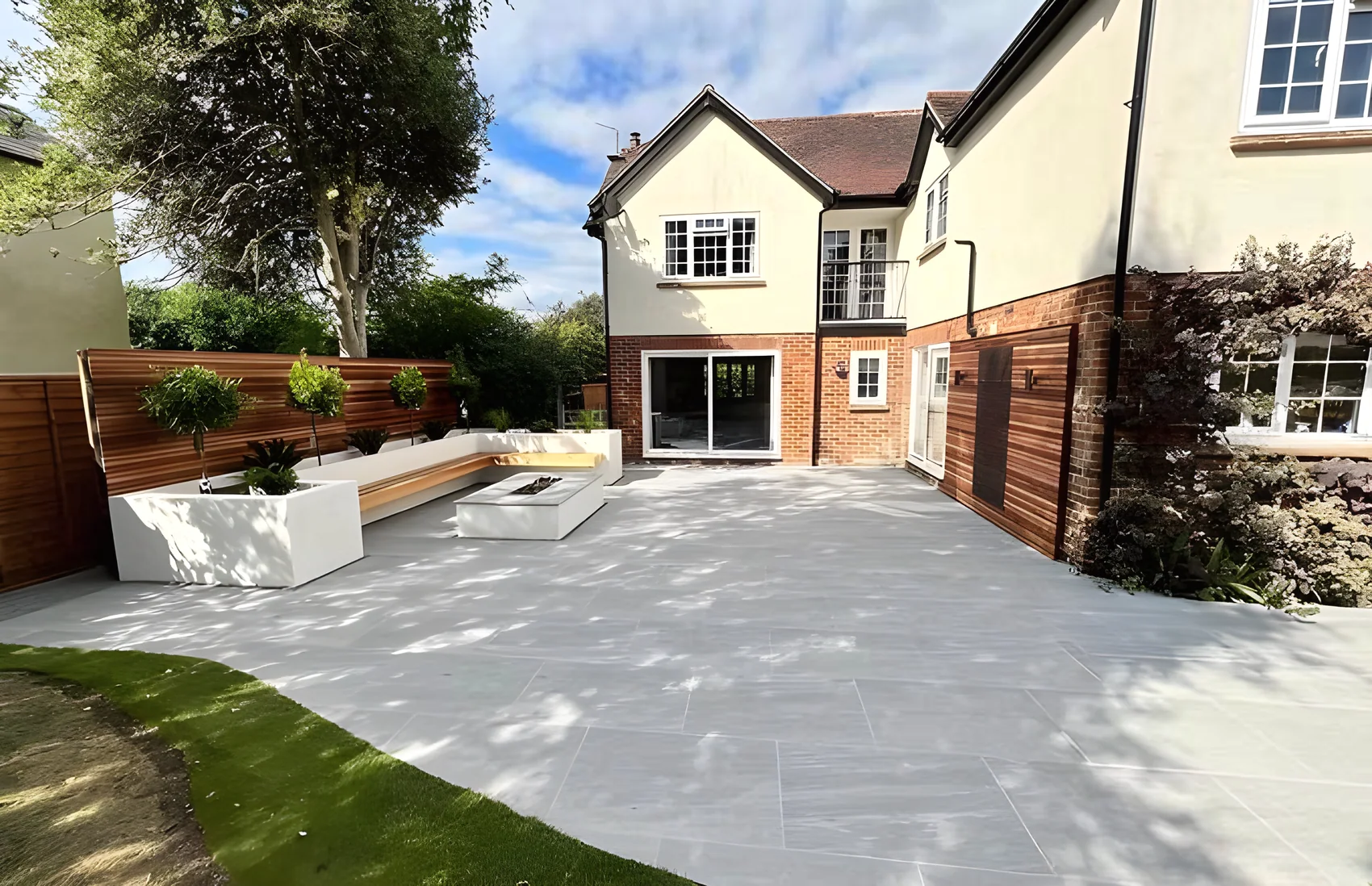
White rendered seating around a bespoke fire table on porcelain

The houses

The Houses and What Their Plots Are Like

The signature Weybridge job is a large house in a wooded plot where the landscape does more work than the architecture. On St George's Hill, a special low density residential area in Elmbridge's own designation, houses sit well back from the road concealed by vegetation, with large front and rear gardens on plots that have always been unusually generous. Many of the original Tarrant houses have been replaced by much larger dwellings, and that almost always means a garden starting again around retained mature trees.

At the other end of the scale are the Victorian and Edwardian terraces and semi detached houses off the High Street, around Balfour Road and Springfield Lane, and along the old village spine of St Mary's Road in Oatlands Village. Narrow side boundaries, short rear rectangles, fence or wall edges and no vehicular access of any kind. Everything comes in and goes out by barrow, often straight through the house, and that has to be priced honestly at the quoting stage rather than discovered in week two.

In between sit the generous villa plots on Portmore Park Road, Wey Road, Thames Street, Heath Road, Mayfield Road, Curzon Road, Dorchester Road and Brooklands Lane, and the interwar and postwar cottage scale streets around Grotto Road, Monument Road and Old Palace Road. Elmbridge records that most of the front gardens in that last group are now laid over to parking, with a significant impact on the character of some roads. Putting planting back into a frontage that still has to park a car, and getting it to drain and to suit the street, is one of the jobs we are asked about most often in this town.

  1. 1911 onwards, with a steady run of modern replacement houses
    Large Gated Detached Houses and Arts and Crafts Mansions on a Private EstateSt George's Hill, reached from Old Avenue, East Road, Camp End Road and Cavendish Road

    Very generous wooded plots, with large front and rear gardens and a spacious landscape dominated layout of mature hedges, trees and gardens. Expect falls across the plot, heavy shade and root competition from established pine, oak and rhododendron, and a real need for irrigation on ground that sheds water almost as fast as it arrives. Elmbridge states that boundaries form a significant part of the character of the estate, so boundary treatment here is a design decision rather than a detail.

  2. Early twentieth century Arts and Crafts and later large detached
    Large Detached Houses and Some Flats in Generous Wooded PlotsWeybridge Park, and Lower St George's Hill around Bridgewater Road and Gower Road, east of Brooklands Road

    Weybridge Park has a semi rural feel, with older mature broadleaf trees deliberately retained and the building line set back beyond the driveway, so the front garden is genuinely a screen rather than a forecourt. Lower St George's Hill is laid out on a more formal grid, with traditional style boundary walls, railings and gate piers backed by hedges and mature broadleaf trees, a semi open treatment Elmbridge calls attractive and consistent and therefore worth matching. Rear gardens are private and enclosed by mature hedging, on the Bagshot sand and Claygate transition, so drainage has to be assessed plot by plot rather than assumed.

  3. Late Victorian and Edwardian, with some large postwar houses and modern infill
    Grand Two Storey Villas and Suburban Villas on Large PlotsPortmore Park Road, Wey Road, Thames Street, Heath Road, Mayfield Road, Curzon Road, Dorchester Road and Brooklands Lane

    Long rear gardens on generous, mostly low density plots, with mature broadleaf trees and low front brick walls or hedges to the street, and distinctly semi rural settings on Brooklands Lane. The usual constraint is rear access, because many have no side route wide enough for machinery, so soil, stone and spoil travel through the house or over a narrow alley. On street parking has a significant impact near the district centre, with cars often part lining one or both sides of a road, and that decides where a skip or a grab lorry can sit on the day.

  4. Early twentieth century through to the late twentieth century, including the Span houses at Templemere
    Two Storey Detached Houses, Modernist Estate Housing and Some Three Storey Flatted DevelopmentOatlands Park, York Road, Oatlands Chase, Oatlands Drive, Oatlands Avenue, Vale Road, Oatlands Close, Tower Grove, The Paddocks, Beechwood Avenue, Broom Way, Cleves Wood, Churchill Drive, Vaillant Road, Marlborough Drive and Templemere

    Consistent building lines and front gardens give these streets an even rhythm that Elmbridge calls uniform and pleasing, and the self contained Beechwood Avenue, Broom Way and Cleves Wood pocket has good tree coverage, grass verges and a genuinely rural aspect in the stretch close to Oatlands Avenue. Much of the Templemere, Churchill Drive, Vaillant Road and Marlborough Drive ground is former parkland of Oatlands Park, a registered park and garden, so trees in these gardens are often parkland survivors, and Templemere itself was deliberately built around fine specimen Cedar of Lebanon. North of Oatlands Drive the land sits above the Thames valley plain with an escarpment dropping to the edge of Broadwater from the rear of Oatlands Park Hotel towards Walton Bridge, so level changes, retaining and terracing are common, and the crescents and cul de sacs there are markedly less permeable than the informal grids south of Oatlands Drive.

The ground

The Ground Under Weybridge

Weybridge sits on Palaeogene sand that leaks water, river terrace gravel that hides it, and clay and alluvium that hold on to it right through winter. Which of the three you have decides almost everything about how a garden here is built and planted.

RAINChert rich sand and gravelBagshot Formation sandClaygate MemberLondon Clay Formationwater stops here

Layer 1

The Gravel Capping

The summit of St George's Hill carries its own capping of Greensand chert rich gravel, mapped by the British Geological Survey as sand and gravel of uncertain origin and probably laid down by a stream draining from the south. In the garden it means stone in every spade, slow going for footings and tree pits, and drainage so sharp that a newly planted bed can be dry days after heavy rain.

Layer 2

Bagshot Formation Sand

This is the main outcrop south of the town centre, at Brooklands and beneath St George's Hill. It is described as a pale yellow brown to pale grey or white, fine to coarse grained sand, frequently micaceous and locally clayey, with sparse seams of gravel, and it is the ground that gives this part of Surrey its heather, gorse and pine. Water simply disappears into it, nutrients leach straight through, and new planting is far more likely to be lost to drought than to wet feet. Clay dominated beds sit inside the top of the formation on the west side of the hill, which is why soil can change sharply across a single plot and wants testing in more than one place.

Layer 3

Claygate Member

Below the sand the topmost member of the London Clay forms the transition into it, giving loamy soils and in places a slight rise. It behaves differently again, with perched water tables and spring lines where it meets the base of the Bagshot sand. A wet patch halfway up an otherwise parched slope is usually this, and not a leak.

Layer 4

London Clay, Terrace Gravel and Alluvium

Where the London Clay proper surfaces the position reverses entirely: heavy, slow, fertile ground that holds water all winter with a high water table and lawns that sit sodden. From the centre northwards towards the Thames the upper part of this section is replaced by river terrace gravel of rounded flint, the Kempton Park and Shepperton gravels, usually blanketed by the Langley Silt, a brown silt or brickearth flagged as metastable when wet, so a lawn can sit wet on the surface while the subsoil below it is dry. Along the Wey, the Thames and around Broadwater it is alluvium with thin peat, and excavation hits flint gravel or soft ground almost at once.

We have had a fantastic experience with CJ Landscapes. From start to finish their approach has been professional and collaborative.

Ellie Wilson · Google review

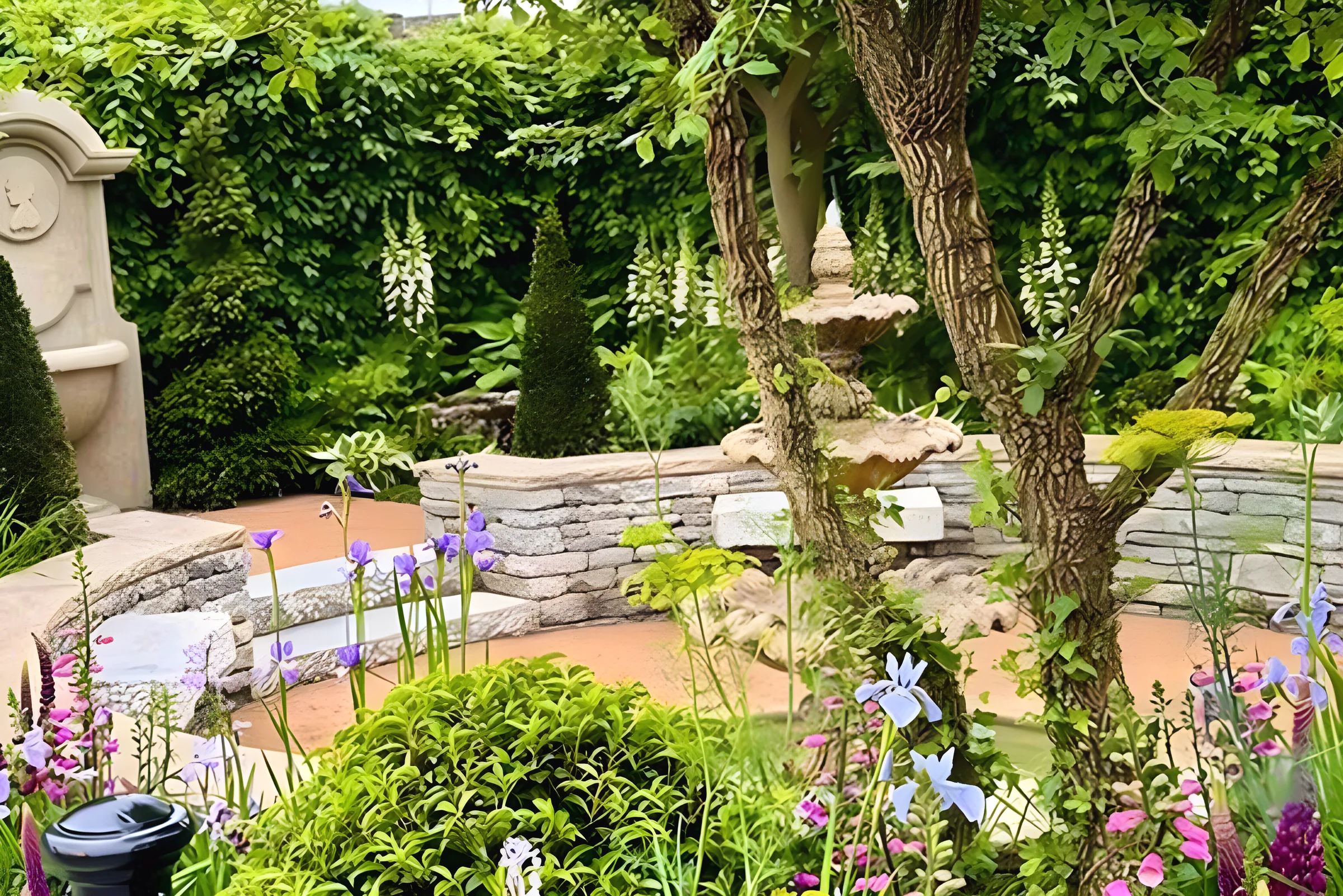
A moon gate and stone wall with mature trees and perennial planting

Landscape construction

Building on a Plot With a Fall

St George's Hill rises away from the town and the ground falls across most of its plots, and north of Oatlands Drive the land sits above the Thames valley plain with an escarpment running down to the edge of Broadwater from the back of Oatlands Park Hotel towards Walton Bridge. On both, level changes want engineering rather than grading out. Retaining walls, terraces and steps set out from the house give you flat usable ground where you actually sit, instead of a lawn that tips away from the garden doors.

Retaining in Bagshot sand is not the same job as retaining in clay. The sand is free draining but it moves, so what happens behind a wall matters as much as the wall itself, and the sandstone, porcelain or stone that finishes it has to be bedded on something that will not settle afterwards. We do the groundworks and the final joint with the same team, which is the only honest way to stand behind a terrace in ten years.

  • Levels set out from the house and the terrace doors, not from the boundary
  • Drainage designed in behind every retaining wall rather than added later
  • Plant, deliveries and skips arranged through the estate where access is controlled
  • Spoil routes agreed before a price, because on many plots every tonne is barrowed
  • Invasive species survey before groundworks on riverside, railside and former industrial ground
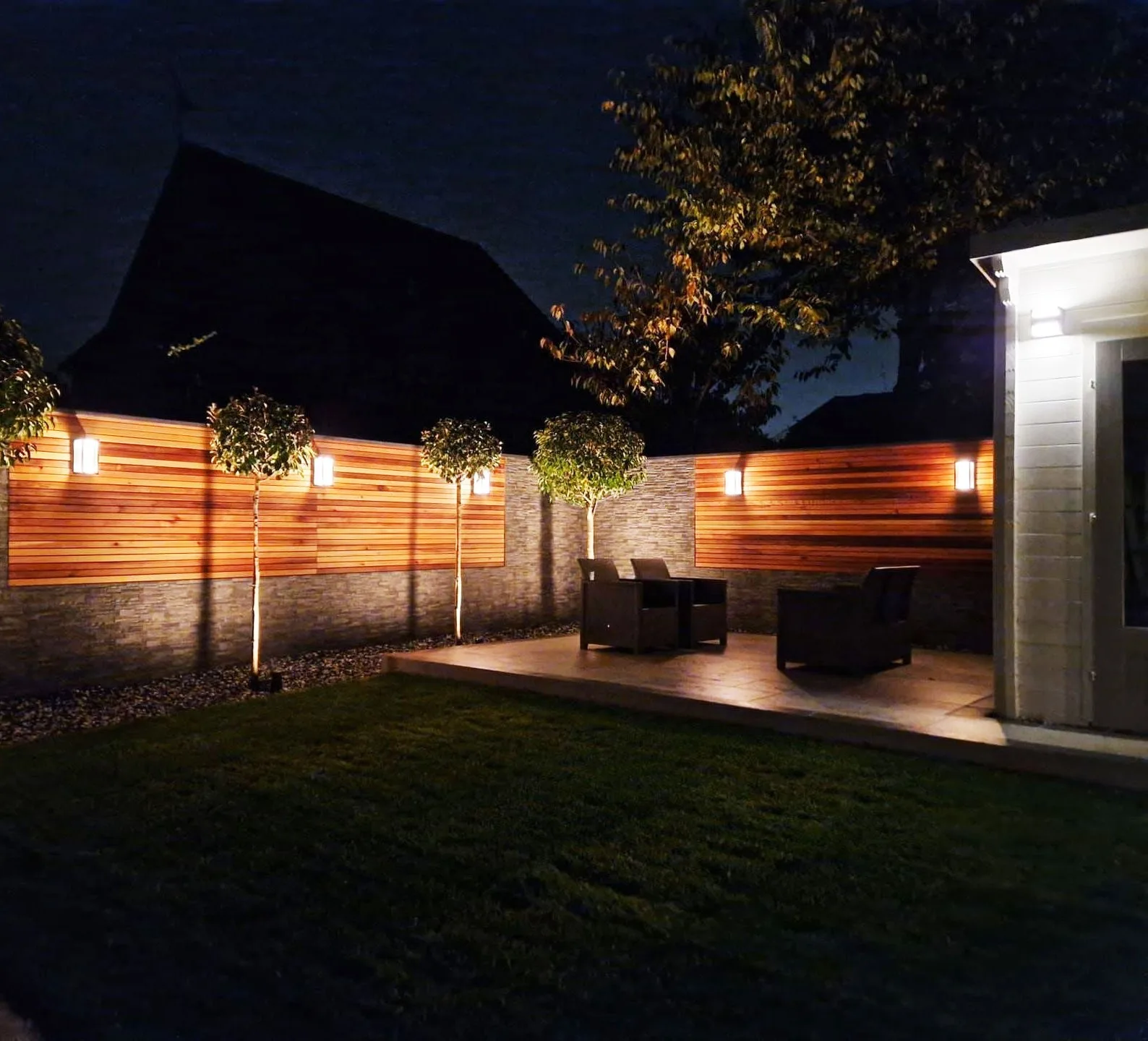
A cedar clad garden lounge lit after dark

Irrigation and drainage

Water Goes Two Ways in This Town

On the sand around Weybridge Heath, across St George's Hill and along the Brooklands fringe the whole problem is keeping water in the ground. Beds are dry within days of rain and feed leaches straight past the roots, so zoned irrigation built in during construction, and organic matter and mulch in real volume, are the baseline here rather than an upgrade. More fertiliser is almost never the answer on this ground.

Cross the centre towards the river and it inverts. On the alluvium along the Wey and the Thames and around Broadwater the water table is high and lawns sit sodden through the winter, and because Weybridge is where the Wey and Thames flood plains combine, that also governs when heavy plant can safely come onto soft ground at Wey Meadows, Hamm Court and the Thames Street end of town. Raised levels, proper land drainage and planting chosen for wet feet beat any attempt to dry that ground out.

  • Zoned irrigation installed while the garden is open, so nothing is retrofitted through finished paving
  • Land drainage and raised levels where the ground holds water rather than sheds it
  • Soil tested in more than one place where the geology changes across a single plot
  • Groundworks timed around soft ground on the flood plain
Raised beds and a porcelain terrace behind a Silchester house

Planting and soil

Planting the Ground Will Actually Keep

Over most of the high ground south of the railway the soil is acid, hungry and sharply drained, and it rewards the planting that belongs there: Scots pine and birch, heather, gorse and broom, rhododendron, camellia, azalea and Japanese maple, with the drought tolerant silvers and grasses once they are established. Brooklands Community Park next door has naturalised as dry acid grassland with hoary cinquefoil and yellow rattle, with small copper and common blue butterflies in it, which tells you plainly what this ground wants to grow. Lime lovers sulk on the sand, and box or hornbeam hedging needs real soil preparation to get away at all.

On the terrace gravels through the centre and Oatlands the ground is more neutral and far more forgiving, and a conventional mixed border performs. On the London Clay fringes and the river alluvium it suits hornbeam, roses, cornus, amelanchier, willow and moisture tolerant perennials. Compacted sand under mature pine, cedar and rhododendron is the classic St George's Hill problem, and deep soil aeration answers it better than another layer of imported topsoil: compressed air opens fissures deep into the profile and enriched biochar holds them open, with no digging and no damage to the roots you are trying to keep.

  • Plant lists written for the soil the plot has, not the one a drawing assumed
  • Deep soil aeration for ground compacted by years of mowing, parking and building traffic
  • Organic matter and mulch at the volume this sand needs, repeated rather than done once
  • Acid loving and drought tolerant schemes on the hill, or imported and improved soil in defined beds

On the ground

Where We Work in Weybridge

We work right across the town: the centre and the district centre around the High Street, Church Street and Baker Street, Monument Green and Monument Hill, Portmore Park, Weybridge Park, Weybridge Heath, Hanger Hill and Queens Road with Pine Grove, Princes Road and Castle Road behind them, Grotto Road and Monument Road, Oatlands, Oatlands Village, Oatlands Park and Oatlands Chase, Templemere, the Beechwood Avenue, Broom Way and Cleves Wood pocket, St George's Hill and Lower St George's Hill, and the Wellington Way Estate.

The rivers sever the town, so a Weybridge address does not always mean a Weybridge route. The Wey and the Thames meet north of the centre and there is no direct way between the Hamm Court and Wey Meadows side and the rest of Weybridge without going round, and those addresses fall wholly or partly in Runnymede rather than Elmbridge. Desborough Island is reached over two bridges from Walton Lane, and the deep railway cutting between St George's Hill and Weybridge Heath splits the south of the town. Brooklands, next door, is the employment, retail and leisure area rather than a residential neighbourhood, and the Brooklands Road and Byfleet Road approaches carry heavy traffic for a residential area.

Beyond the town we are regularly in Whiteley Village, Hersham, Burwood Park, Downside and Stoke d'Abernon, in Byfleet, West Byfleet and Pyrford, in New Haw, Woodham and Ottershaw, and out at Wisley, with Walton on Thames, Addlestone, Chertsey and Shepperton all close by. Cobham and Oxshott are in Elmbridge, as Weybridge is, while Byfleet, West Byfleet and Pyrford sit in Woking, and New Haw, Woodham, Ottershaw, Addlestone and Chertsey are over in Runnymede.

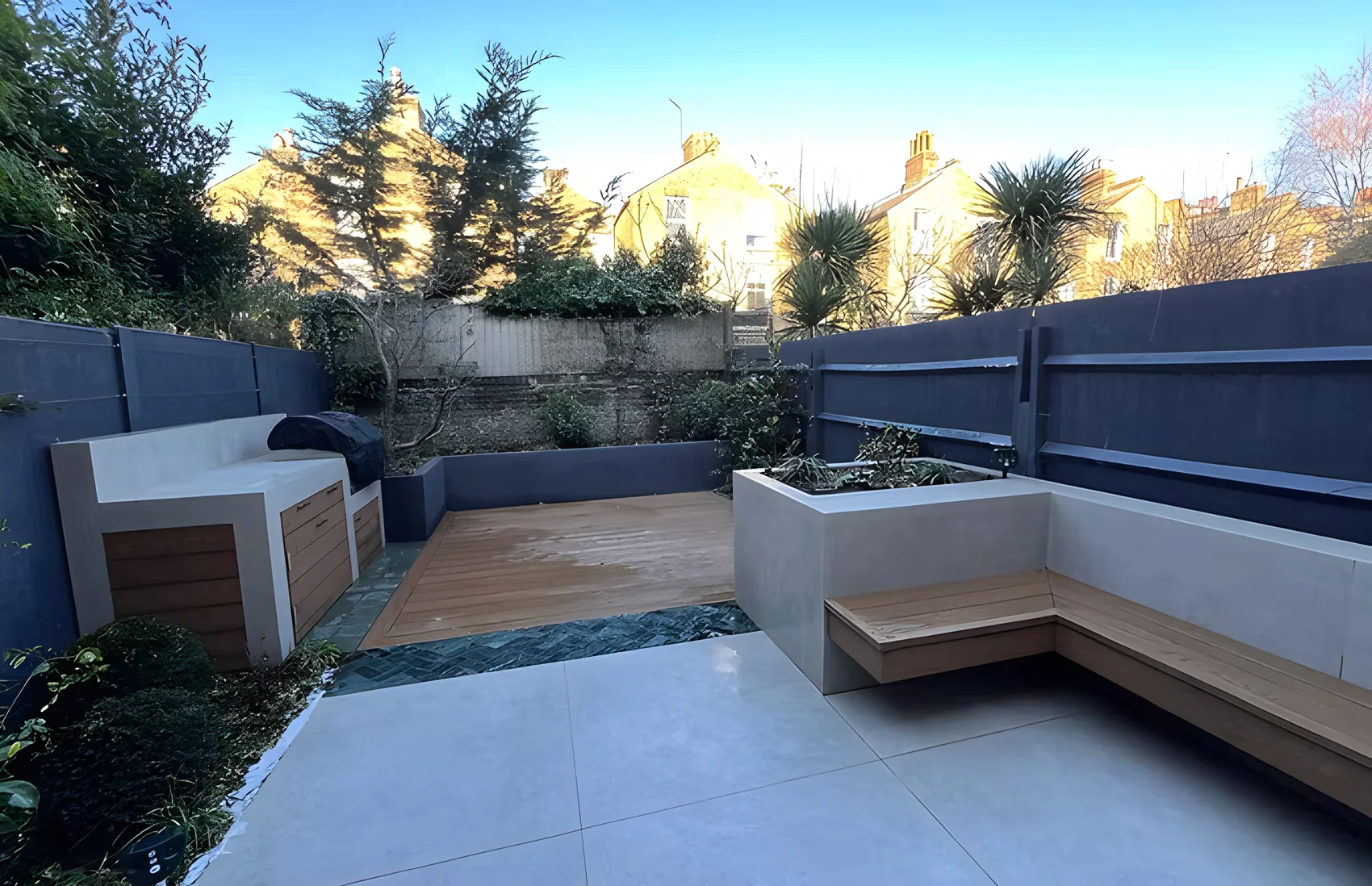
A dark fenced courtyard with porcelain paving and a timber deck

Neighbourhoods and villages

  • Weybridge town centre and the High Street
  • Monument Green and Monument Hill
  • Portmore Park
  • Weybridge Park
  • Weybridge Heath
  • Hanger Hill and Queens Road
  • Grotto Road and Monument Road
  • Oatlands
  • Oatlands Village
  • Oatlands Park
  • Oatlands Chase
  • Templemere
  • Beechwood Avenue, Broom Way and Cleves Wood
  • St George's Hill
  • Lower St George's Hill
  • Wellington Way Estate
  • Desborough Island
  • Broadwater
  • Hamm Court
  • Wey Meadows
  • Brooklands
  • Whiteley Village
  • Hersham
  • Burwood Park
  • Downside
  • Stoke d'Abernon
  • Oxshott
  • Byfleet
  • West Byfleet
  • Pyrford
  • New Haw
  • Woodham
  • Ottershaw
  • Wisley

Postcodes we cover

KT13, KT11, KT12, KT14, KT15, TW17

Planning and trees

Trees are the single biggest planning consideration for garden work in Weybridge, because the character of the town is explicitly a wooded one. Elmbridge's own character assessment records large areas of tree cover, mostly in private gardens and particularly on St George's Hill, Lower St George's Hill and parts of Oatlands, and it lists loss of trees and landscaping among the issues raised at its community workshops. Trees are protected through tree preservation orders and through conservation area designation, and Weybridge has five conservation areas: the town centre, Monument Green, Templemere, Brooklands and the Wey Navigation.

Trees inside a conservation area attract their own notification requirements, so on any plot with established trees it is generally worth establishing the position with the council before the design is fixed rather than after. Where consent for tree work is needed, Elmbridge asks for applications through the Planning Portal with clear identification of the trees including a sketch or digital plan, accurate objective descriptions of the works requested, and reasons and justification for them. Supporting evidence is expected where possible subsidence is claimed, and written advice from an appropriate expert where a tree is thought diseased or liable to break and fall.

Good photographs are said to help officers decide, and incomplete applications are not processed until they are corrected. Felling may also need a licence from the Forestry Commission, which is a separate matter again. Several Weybridge gardens carry extra layers on top of that.

St George's Hill is designated a special low density residential area and is governed by long standing covenants as well as planning policy, and Elmbridge states that boundary treatments form a significant part of the character of the estate. The remains of Oatlands Palace lie largely below ground between Grotto Road and Old Palace Road and are a scheduled ancient monument, as are the remnant banked sections of the Brooklands racing track and the ramparts of the Iron Age fort south of St George's Hill, and groundworks in or near a scheduled monument run through a different consent regime from ordinary planning, so they are worth checking early. The grounds of Oatlands Park Hotel are a registered park and garden, much of the modern housing at Templemere, Churchill Drive, Vaillant Road and Marlborough Drive was built in that former parkland, and green belt wraps the town north and east of the Thames Street area, west of the Heath Road and Brooklands Lane area and across much of the hotel grounds.

All of this is guidance and policy rather than a bright line, and the position on any individual garden is worth confirming with Elmbridge, or with Runnymede for Hamm Court and the Runnymede side of Wey Meadows.

Recent work

Gardens We Have Designed and Built

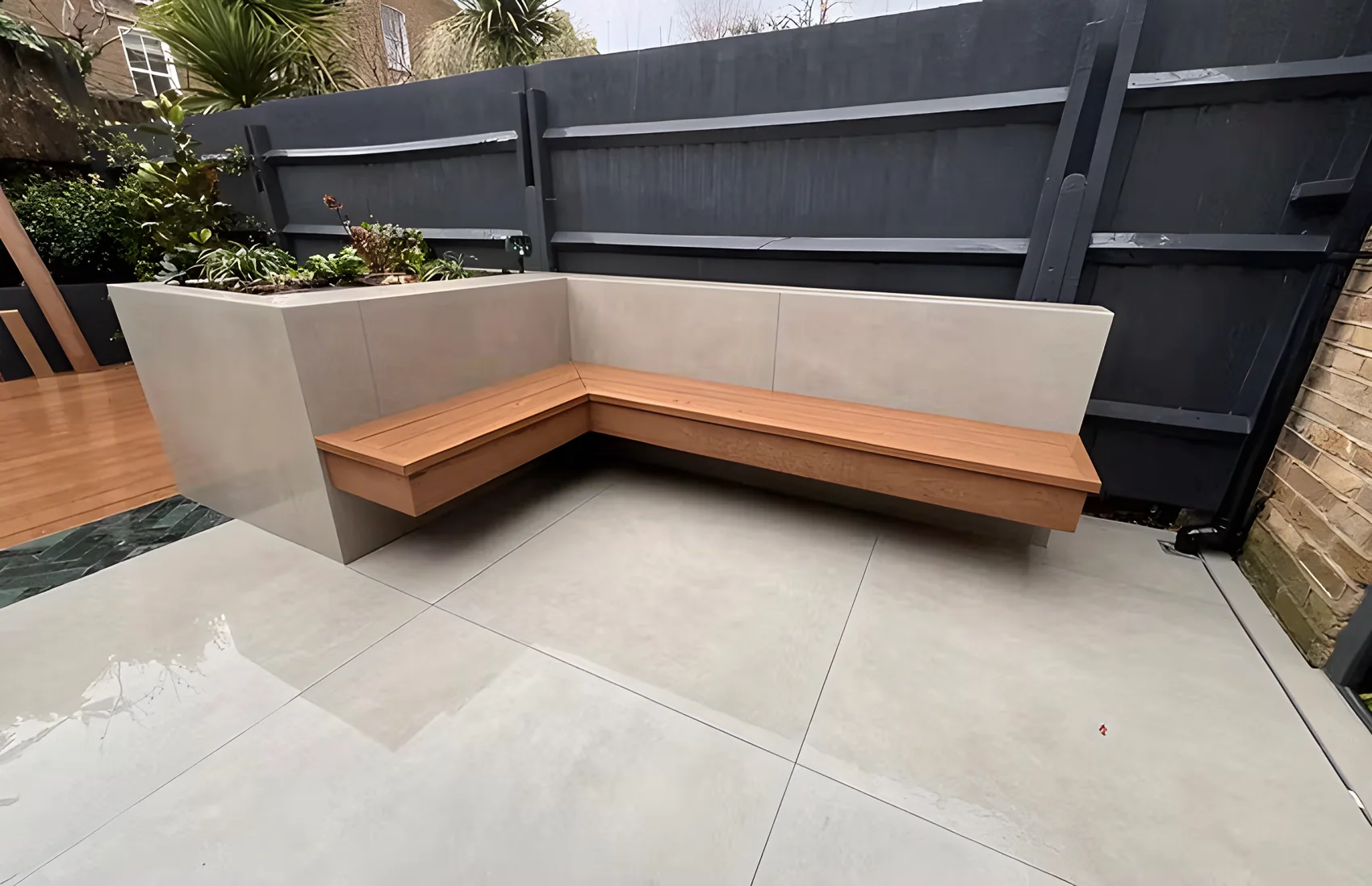
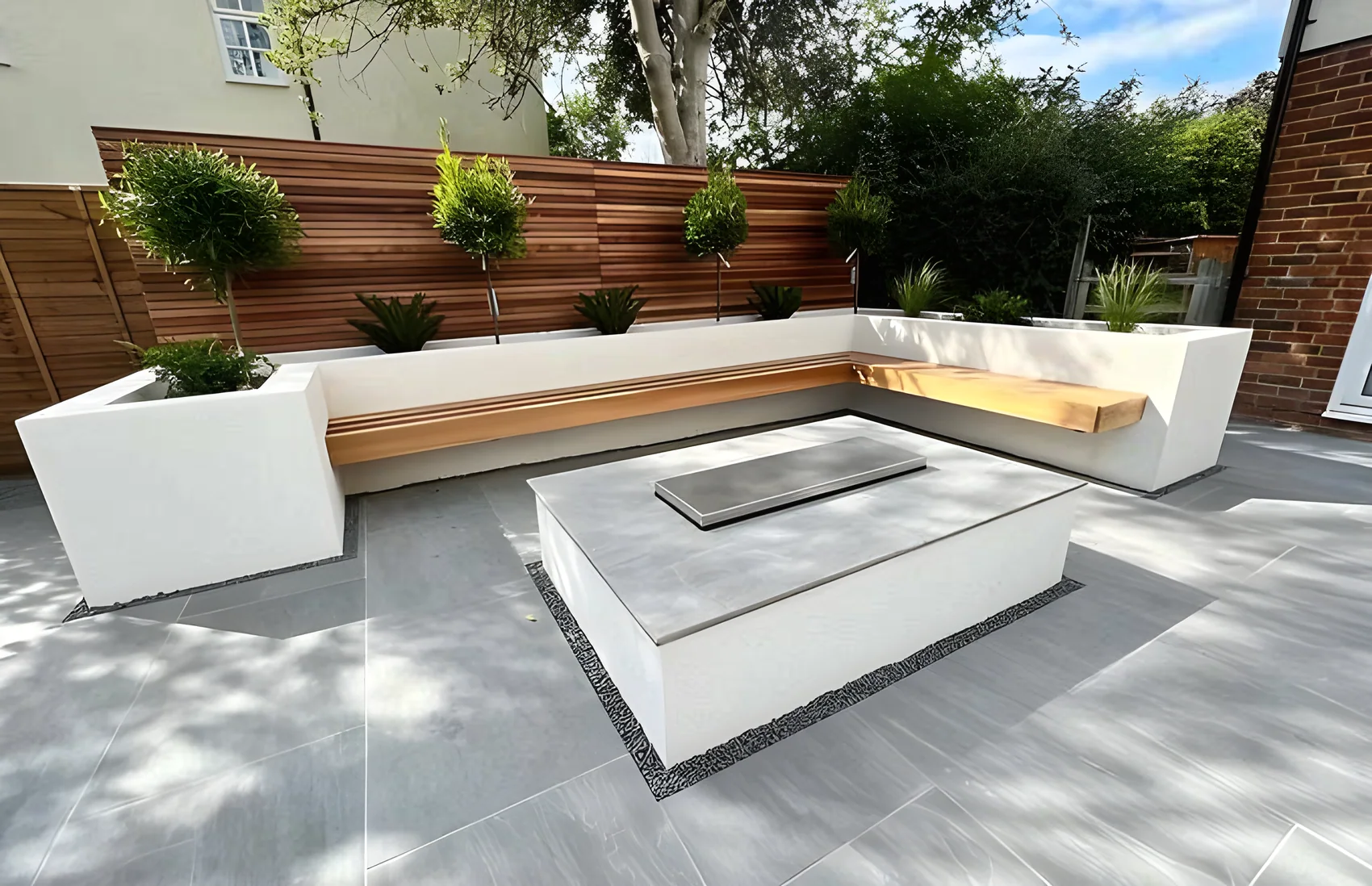
  • A built in corner bench with timber seat on porcelain paving
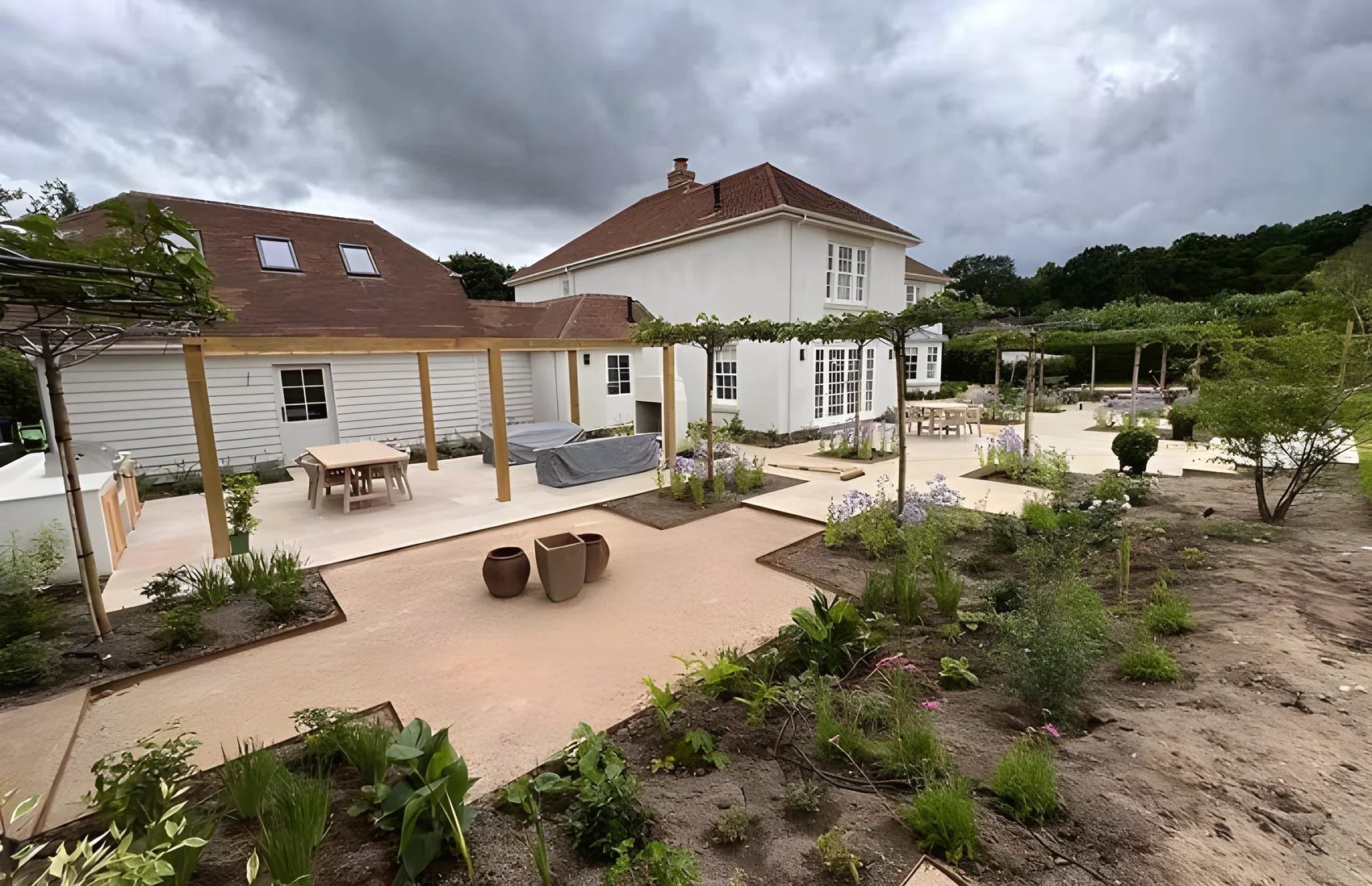
  • A natural limestone terrace with a pergola and outdoor seating
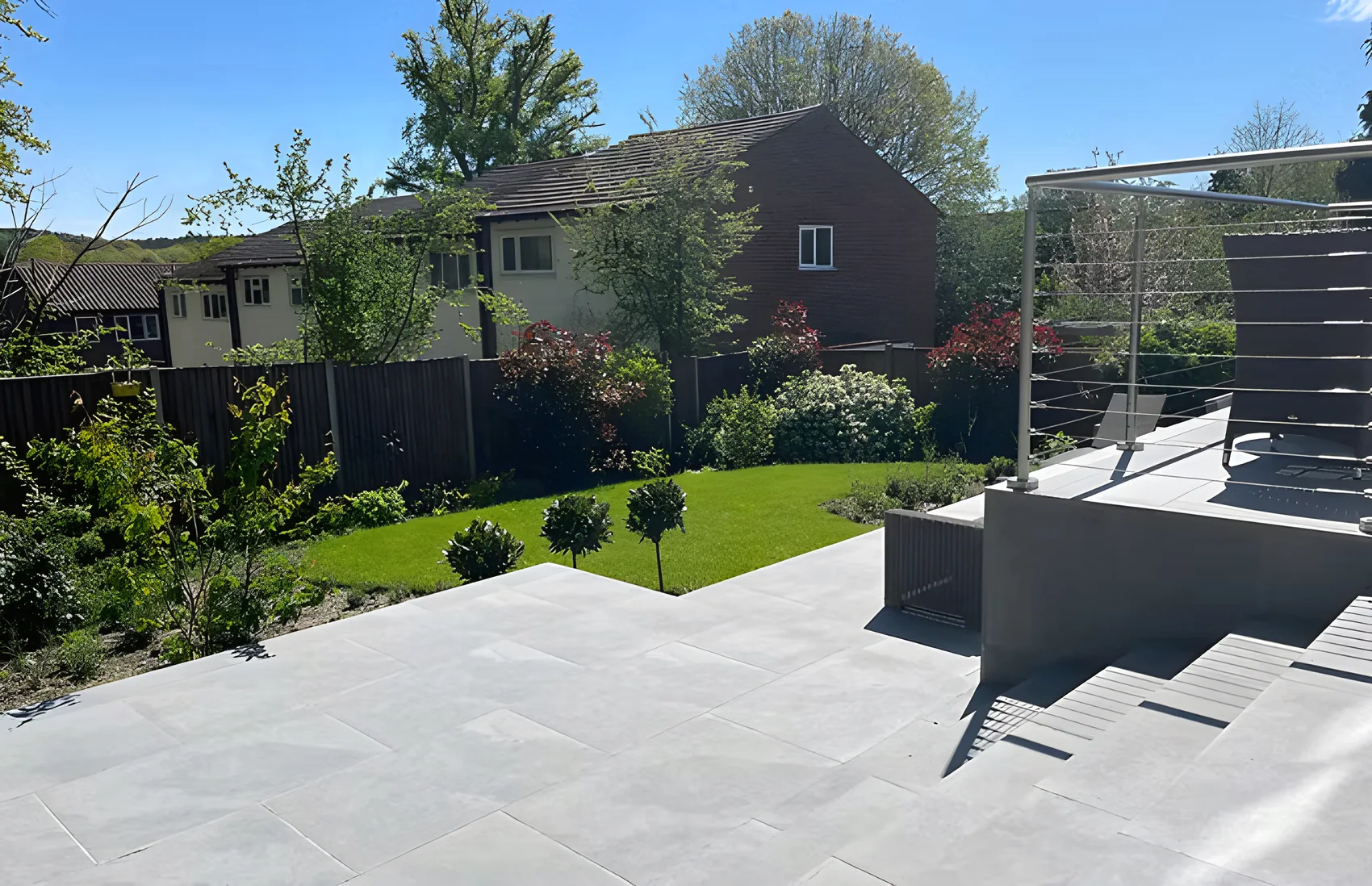
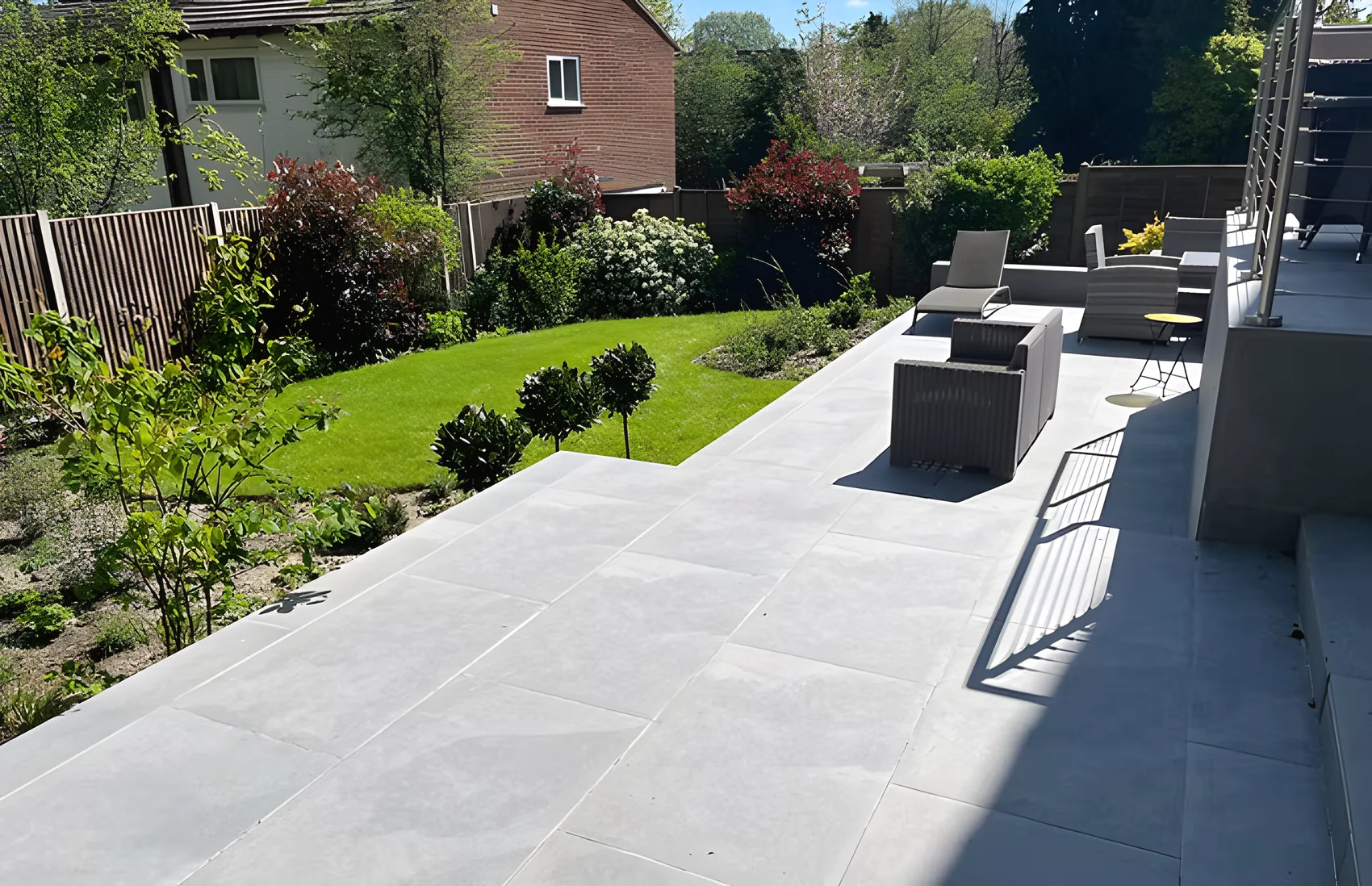
  • A porcelain terrace and lawn at dusk

Good to know

Questions We Are Asked in Weybridge

Why Does My Garden on St George's Hill Dry Out So Quickly After Rain?

The hill sits on the Bagshot Formation, a fine to coarse grained sand that drains so freely the water effectively disappears into it, and the summit carries a chert rich sand and gravel capping on top of that. Nutrients leach straight through with the water, so new planting here is far more likely to be lost to drought than to waterlogging. The honest answers are organic matter in real volume, mulch kept topped up, and a properly designed irrigation system, rather than more feed.

How Do Deliveries and Machinery Work on a Gated Estate Like St George's Hill?

St George's Hill is a private gated estate. Entry is by a private gated road controlled during the day by security personnel, restricted at all times, covered by automatic number plate recognition, and limited to residents and visitors to the private tennis and golf or country club. Plant, deliveries and skip movements have to be arranged with the estate rather than simply turning up, the internal roads are narrow wooded lanes, and houses sit well back concealed by vegetation. On a good many plots, machine access to the rear garden is the thing that decides what can be built at all.

Our Lawn Near the River Is Sodden Every Winter. Can That Be Fixed?

Along the Wey, the Thames and around Broadwater the ground is alluvium with thin peat, the water table is high and the two flood plains combine at Weybridge, so that ground is not going to be dried out. What does work is raised levels, proper land drainage and planting chosen for wet feet, designed around the flood plain rather than against it. For Hamm Court and part of Wey Meadows the planning side runs through Runnymede rather than Elmbridge, which is worth confirming before anything is drawn.

Do We Need Consent to Work on the Trees in Our Garden?

Quite possibly, and it is worth finding out early. Elmbridge protects trees through tree preservation orders and through conservation area designation, Weybridge has five conservation areas, and private tree cover is heavy on St George's Hill, Lower St George's Hill and parts of Oatlands. Applications generally go through the Planning Portal with a plan identifying the trees, an objective description of the works and a justification for them, and felling can need a Forestry Commission licence as well. On a wooded plot the tree constraint usually comes before the layout, so we establish the position with the council before a design is fixed.

Our House Has No Side Access. Is a Proper Build Still Realistic?

Yes, and it is normal in parts of this town. In the Victorian and Edwardian streets off the High Street, along St Mary's Road in Oatlands Village and around Portmore Park Road, side boundaries are narrow, rear access is frequently through the house only, and on street parking part lines one or both sides of the road because the district centre is so close. It changes how long the build takes and where a skip or grab lorry can stand, so we work that out and price it before we quote rather than afterwards.

Do You Look After the Garden Once It Is Built?

That is the point of the way we are set up. The same in house team designs, builds and then maintains, so nothing is handed over to someone who was not there when it went in. Garden maintenance plans start from £160 per month on a twelve month agreement, with a minimum four hour visit each month. For larger houses and grounds we run grounds maintenance and estate management instead, with a dedicated team working to a planned calendar rather than a weekly mow.

Close by

We Also Work In

Start your garden

Talk to Us About Your Weybridge Garden

Tell us where you are in the town and what you want the garden to do, and we will come and look at the ground before we say anything about the design. Call 01276 582095 or 07717 058646, or email info@cjlandscapesltd.co.uk.

  1. 01
    We Call You BackWithin one working day, to talk the garden through.
  2. 02
    The First VisitA walk round the garden to take in the levels, the access and where the water sits.
  3. 03
    A Written ScopeA specification and a programme, with samples to see in your own light.
Prefer to talk?01276 582095info@cjlandscapesltd.co.uk
1 Webbs Mews, High Street
Hartley Wintney, Hook RG27 8NZ
What Would You Like Help With?

Choose as many as you like.

Tell Us About the Project

Roughly is fine. It helps us bring the right people to the first visit.

Your Details
Photographs Optional, up to five

Thank You

Your enquiry has come through and we will call you back within one working day.

Step 1 of 3

We only use your details to reply to this enquiry.