Planting and ongoing care
Planting Chosen for the Ground It Actually Has to Live In.
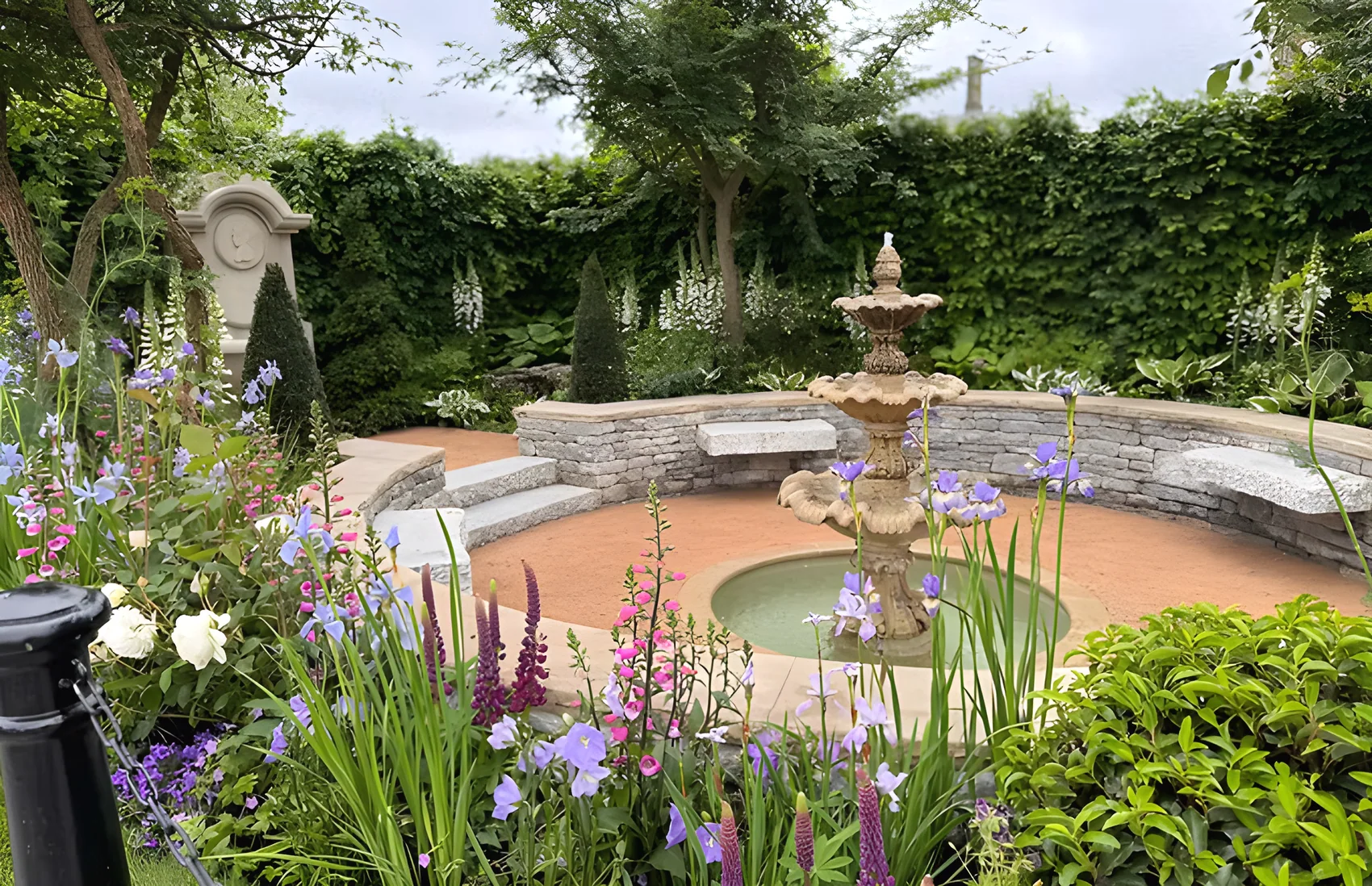
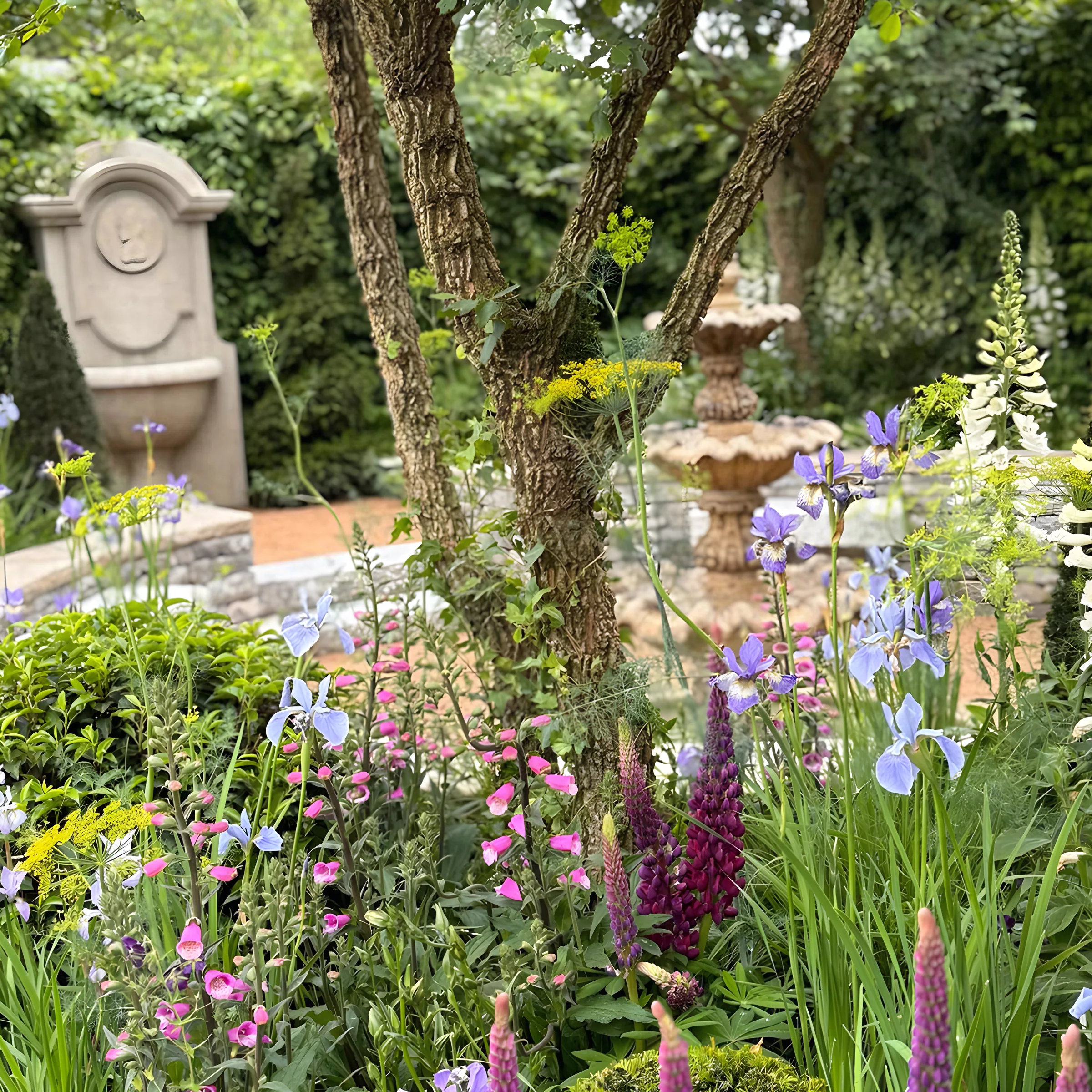
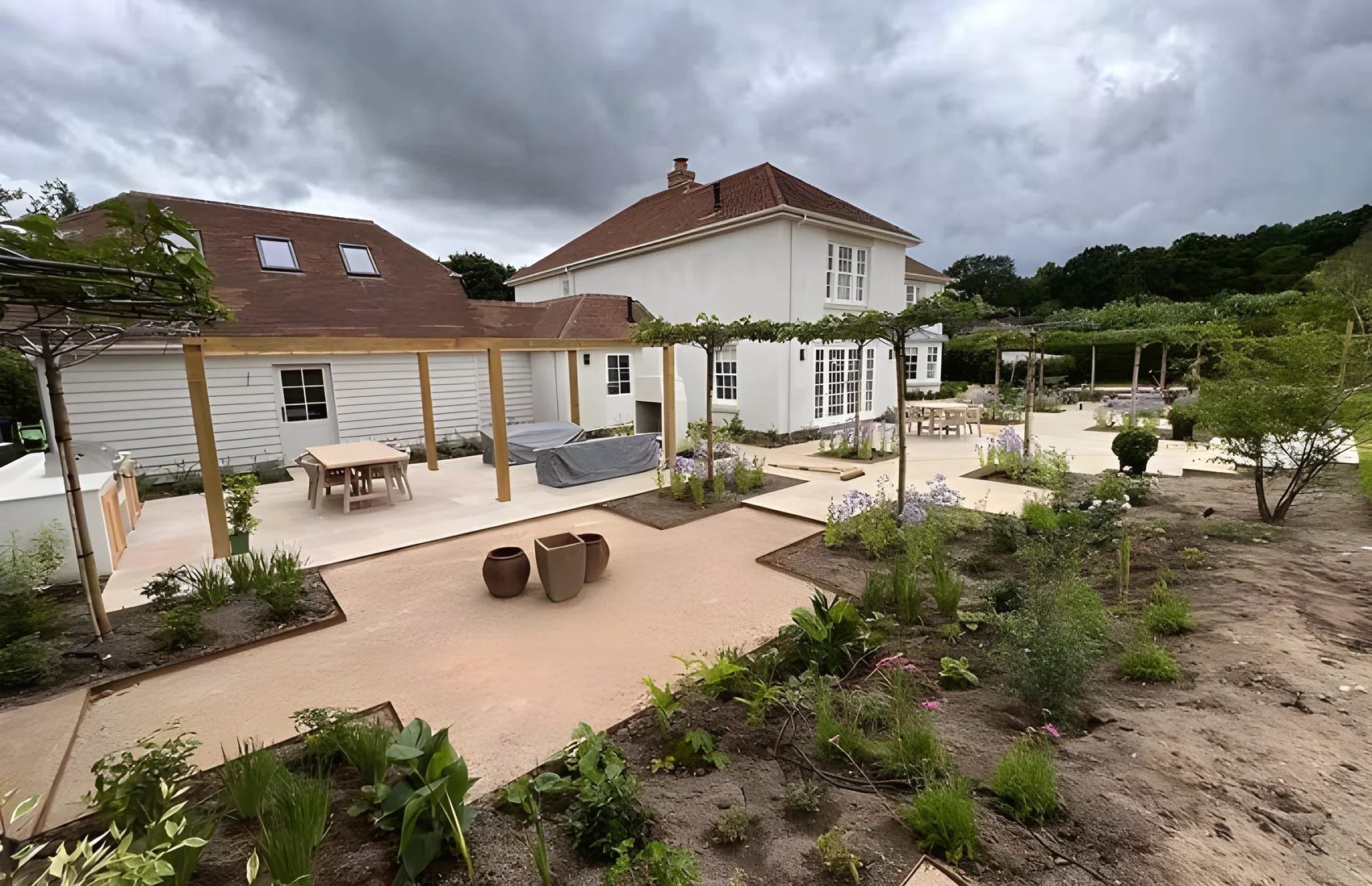
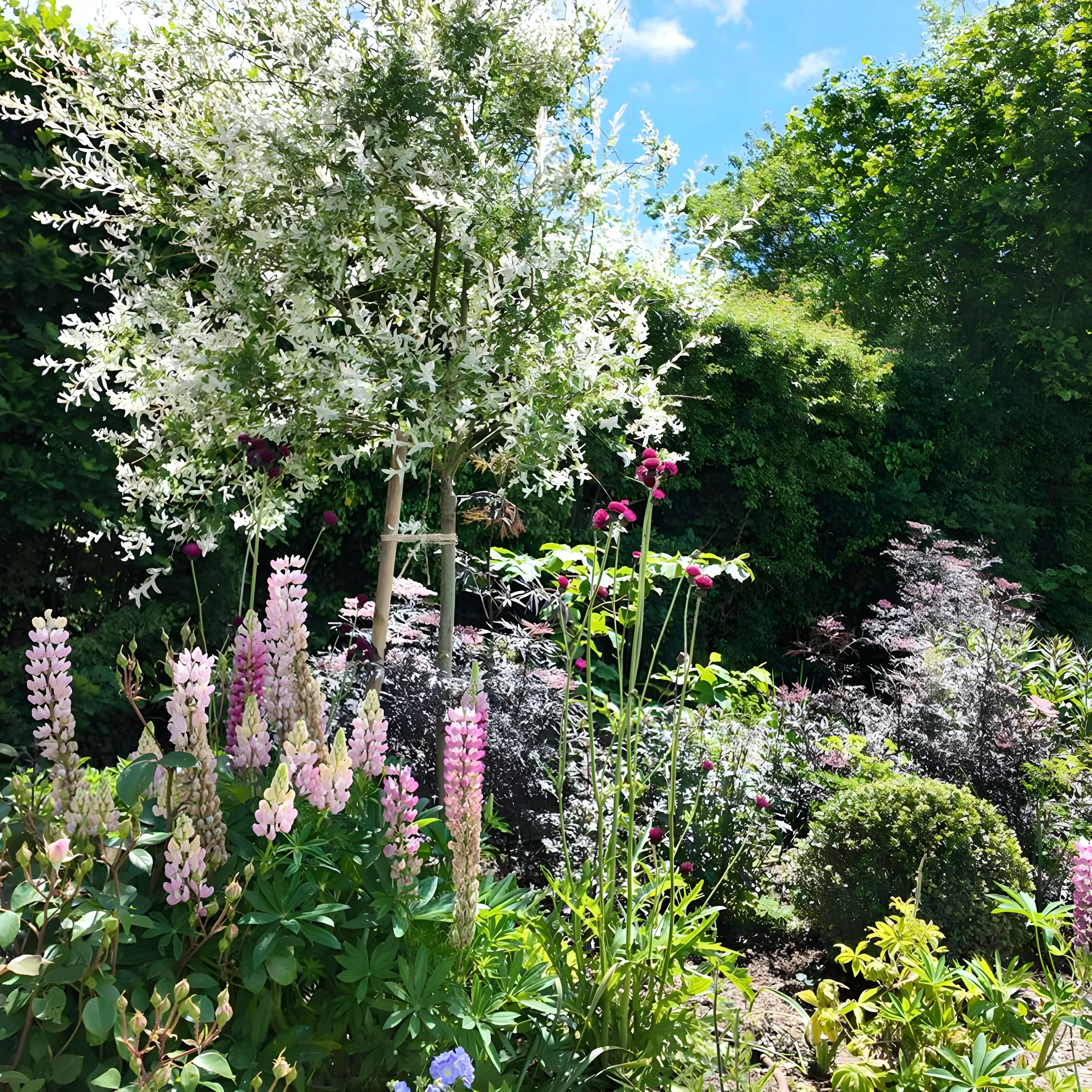
The clay is fertile and moisture retentive, so the planting that thrives is the planting that enjoys a well fed, moisture retentive soil rather than sharp drainage. The Royal Borough's guidance for the Windsor clay character areas names willow, alder, birch, oak, sycamore, hawthorn, ash, beech, field maple, hazel, lime, rowan, aspen and elder as the suitable native species, and that is a fair steer for the ornamental planting too: hornbeam, viburnum, roses, hellebores, geraniums, astrantia, persicaria and the clay tolerant grasses all settle in well.
Silver leaved Mediterranean planting is where Windsor gardens are most often disappointed. Lavender, cistus and most salvias ask for a dry crown, and on undisturbed clay they sulk and then rot off. Ericaceous planting is a non starter on the clay and on the chalk slopes near the castle, although it is the natural choice on the acid Bagshot sand along the southern fringe, the deep woodland leaf mould over acid sand that makes the Valley Gardens magnolia, rhododendron and azalea country.
On the riverside gardens at the Goswells and the lower Clewer and Maidenhead Road streets it is willow, alder, birch, dogwood, iris and the wet tolerant perennials that earn their keep. On the gravel terraces and the brickearth it is the drought tolerant end of the palette instead.
- Soil assessed on site before a single plant is specified
- Clay tolerant structure planting, not a catalogue list
- Rabbits and squirrels allowed for where gardens back onto parkland
- Maintenance plans from £160 per month on a twelve month agreement