C J LANDSCAPES 01276 582095Get in touch

Sunningdale · Berkshire

Landscaping in Sunningdale, on Sand and on Clay.

A village of two halves: large grounds behind long gravel drives on the golf estate roads, tight old village plots with no rear access, and ground that turns from sand to clay street by street.

Where we work

Sunningdale, Where the Sand Made Everything

Sunningdale is a sand village, and almost everything about its gardens follows from that. The Palaeogene sands of the Berkshire and Surrey sand belt made heathland here, the heathland made Sunningdale Golf Club, and the golf brought the Edwardian and interwar villas that still line Titlarks Hill, Devenish Road and Charters Road on plots of real size. Sunningdale Old, laid out to a Willie Park Junior design, is described as arguably the first truly great course on that sand belt, and the pines, birches and rhododendron banks that frame it are the same ones growing in the gardens either side of it.

Around that sits a far more ordinary village. There is the old centre at Church Road and Holy Trinity, interwar and post war houses on Dale Lodge Road, Coworth Road and Trinity Crescent, gated estates such as Broomfield Park and St James Gate, and a shopping parade on the A30 London Road where the level crossing stops the traffic several times an hour. It is green, heavily treed and largely ringed by green belt, and residents are rightly proud of the pines and the banks of rhododendron that the acid ground throws up almost for free.

Sunningdale is a regular run for us from our base in Hartley Wintney, and the same in house team designs a garden, builds it and then looks after it. The reason that matters in Sunningdale is the ground. British Geological Survey mapping shows three different units under this one village, which means the drainage advice that is right on Church Road is wrong on Charters Road, and we would far rather read the mapping and dig a hole than give the same answer twice.

See the work
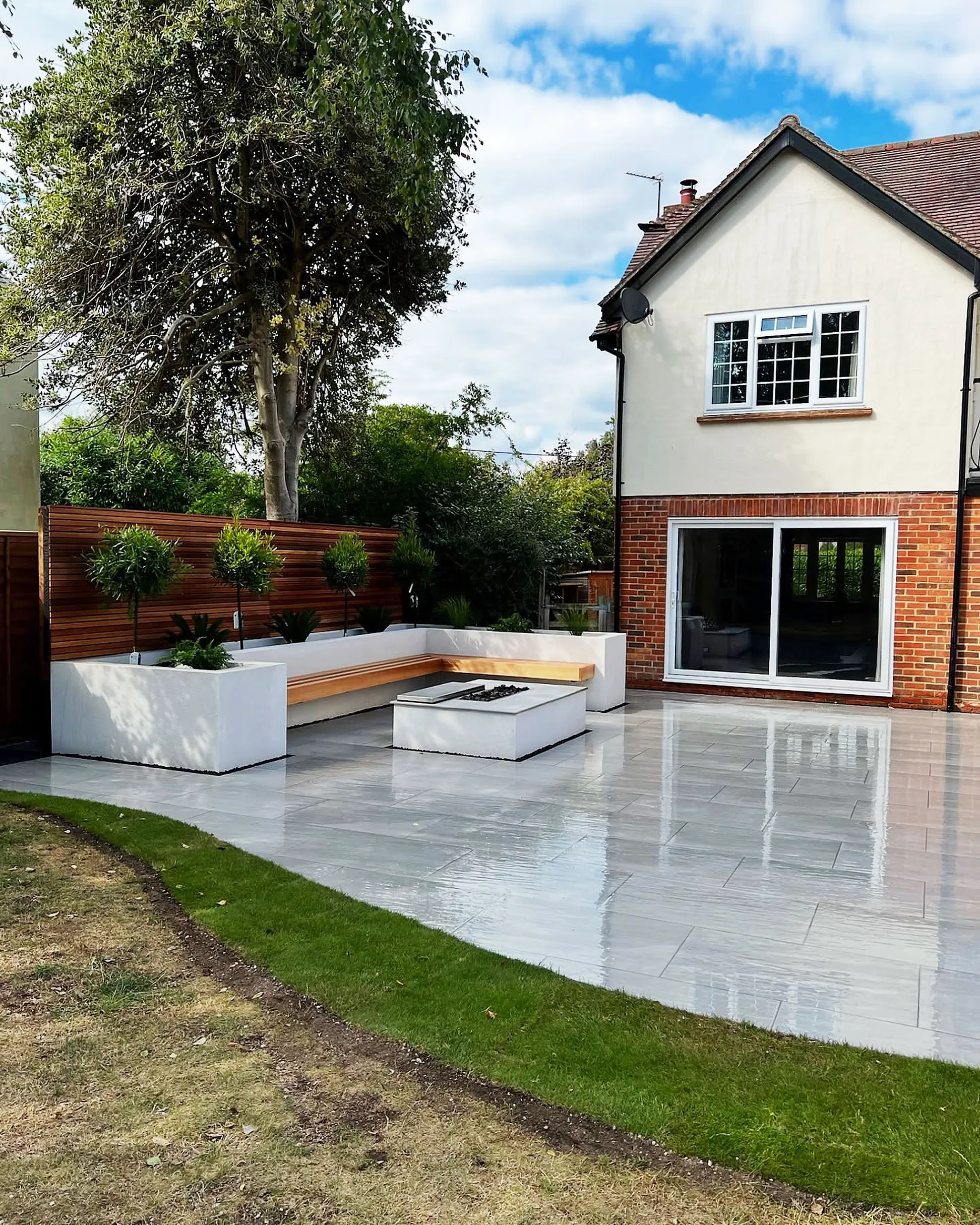
White rendered benches with timber seats around a fire table

The houses

The Houses Here, and the Plots Behind Them

For anyone who has to get stone and soil into a garden, Sunningdale is two villages. At one end are the golf era villas and the replacement houses that followed them, on long gravel drives behind gated entrances, with protected pines and oaks standing on the plot and genuinely good machine access to the rear. At the other end are the old village houses on Church Road, Trinity Crescent, Dale Lodge Road, Kiln Lane and Coworth Road, where there is often no rear access at all and every load goes down a narrow side path or straight through the house.

The lanes shape the programme as much as the gardens do. Titlarks Hill, Devenish Lane, Fireball Hill, Dry Arch Road and Shrubbs Hill Lane are narrow with no pavement, soft sandy verges and gated entrances, and those verges and drive edges rut badly in wet weather, so track mats and boards go on the job list before the first delivery arrives. Devenish Road is a different proposition, because it is the A330 and wants proper traffic management rather than a quiet word with a neighbour. On the gated estates, Broomfield Park, St James Gate and Knole Wood among them, the roads are private, so skip placement, parking, plant access and working hours all get agreed with the estate in advance rather than on the day.

The houses also tell you what the soil has already been through. On the rebuilt plots, construction traffic has usually left a hard pan under the lawn with thin imported topsoil laid over the top, which is why new turf and new planting fail there far more often than the budget would suggest. On the older plots the problem is the opposite: century old rhododendron and azalea banks gone leggy and bare at the base, dry shade and acidic needle litter under pine canopies that cannot be thinned because the trees are protected, and sand that has been cropped for generations without ever really being fed.

  1. Edwardian to 1930s
    Golf Era Villa and Country Lodge on a Large PlotTitlarks Hill, Ridgemount Road, Fireball Hill, Devenish Lane, Charters Road, Sunning Avenue and Shrubbs Hill Lane

    Grounds laid out when the golf courses arrived and planted to match: mature Scots pine, oak, birch and beech, century old rhododendron banks, and boundaries made of woodland belt and hedge rather than fence. Some of these roads are free draining sand and others, Charters Road and Ridgemount Road in particular, sit on mapped Swinley Clay, so conditions change road by road, and several of these gardens back straight onto Sunningdale Golf Club. The work is usually staged renovation of the old shrubberies, a terrace that suits the house, and drainage detailing across the gentle slopes before a single plant goes in.

  2. 1990s to 2020s
    Replacement Detached House of Substantial SizeTitlarks Hill, Devenish Road, Fireball Hill, Dry Arch Road, Shrubbs Hill Lane and Charters Road

    Plots where the original house came down and something much larger went up, with formal terracing and a level lawn cut and retained out of what was a sloping site. New hedging and specimen trees sit alongside the protected pines and oaks the planners insisted on keeping, which makes light and root protection the first design question rather than an afterthought. Almost always severely compacted below the surface from construction traffic, so the honest first answer here is decompaction and soil building, not more turf.

  3. Interwar to 1960s
    Detached and Semi Detached Family House in the Old VillageChurch Road, Trinity Crescent, Dale Lodge Road, Dale Close, Kiln Lane, Coworth Road, Coworth Close, Bedford Lane and Lynwood Crescent

    Rectangular plots of modest depth, fenced or hedged to the neighbours, one or two mature trees and a lawn with a patio. This is the Bagshot sand part of the village, with river terrace sand and gravel over it around Church Road, so these gardens drain fast and run hungry, and the better ones face south and back onto fields or the recreation ground. Access is the real constraint rather than the ground: a narrow side path or straight through the house, so a conveyor or a crane lift often works out cheaper than the barrow run.

  4. 1960s to 2000s
    Detached House on a Private Gated Estate or Wooded Cul De SacBroomfield Park, Broomfield Drive, Onslow Road, Knole Wood, St James Gate, Greenways Drive, Hillside Park, Elm Park, Priory Road, Heather Drive, Redwood Drive and Cedar Drive

    Generous but not estate scale plots, broadly level and well screened, with pine and birch kept from the original heath so there is a great deal of dry shade and acidic needle litter under the canopy. Lawn plus patio is the usual starting point and the usual disappointment, because grass will not hold under that canopy however much seed goes down. We tend to give the shaded ground back to planting that wants those conditions, and move the lawn, the terrace and the seating to where the light actually is.

The ground

The Ground Under Sunningdale

Sunningdale is not one soil, it is three. British Geological Survey mapping shows Bagshot Formation sand under the village centre and the old village roads, the Swinley Clay Member under the golf club and the best addresses on Charters Road and Ridgemount Road, and the Windlesham Formation under Titlarks Hill and Fireball Hill.

RAINThin acidic heathland topsoilBagshot Formation sandSwinley Clay MemberLondon Claywater stops here

Layer 1

The Topsoil

Thin and naturally acidic, the heathland soil that gave Sunningdale its pine, birch, heather and rhododendron character. It holds very little nutrient, and around Church Road, over part of the golf club and at Sunningdale Park there are river terrace deposits of sand and gravel beneath it that drain faster still. Anything that grows well here grows on organic matter somebody put in, not on what was already there.

Layer 2

The Bagshot Sand

BGS describes it as fine grained, pale yellow brown to pale grey quartzose sand, and in the garden it drains free to the point of being thirsty. Water goes straight through, nutrients leach away with it, and lawns and shallow rooted planting brown off through a dry July and August. These loose sands also erode and gully, which is why planted banks, gravel drives, steps and path edges wash out unless they are edged, haunched and drained properly.

Layer 3

The Swinley Clay and the Windlesham Formation

This is the part that catches people out. The Swinley Clay Member is brown organic laminated clay with laminae of fine sand and silt, and it is mapped at the surface across Sunningdale Golf Club and the Charters Road, Ridgemount Road, Lady Margaret Road and Sunningdale Park ground, so a perched water table, soft seepage lines and standing water are normal there rather than a nasty shock. The Windlesham Formation under Titlarks Hill, Fireball Hill and Shrubbs Hill Lane is sand, silt and clay together, so it behaves differently again, and Head of clay, silt, sand and gravel is mapped at Whitmore Lane.

Layer 4

London Clay and the Spring Lines

London Clay underlies the whole sequence and reaches the surface on the lower ground north of the village around Blacknest, alongside the Claygate Member. Where sand sits on clay, BGS records springs issuing at the base of the sand after heavy rain, with erosion, burst out of the sands, and loss of strength on saturated lower angle slopes. The Wentworth Brook rises inside the golf club and runs on to join the Chertsey Bourne, so ground near those channels holds moisture whatever the mapping says above it.

CJ Landscapes remodelled our back garden with a new patio, paths and lawn. It looks fantastic and we are really happy with it. Carl was friendly, professional, hardworking and conscientious.

Kathy Moriarty · Google review

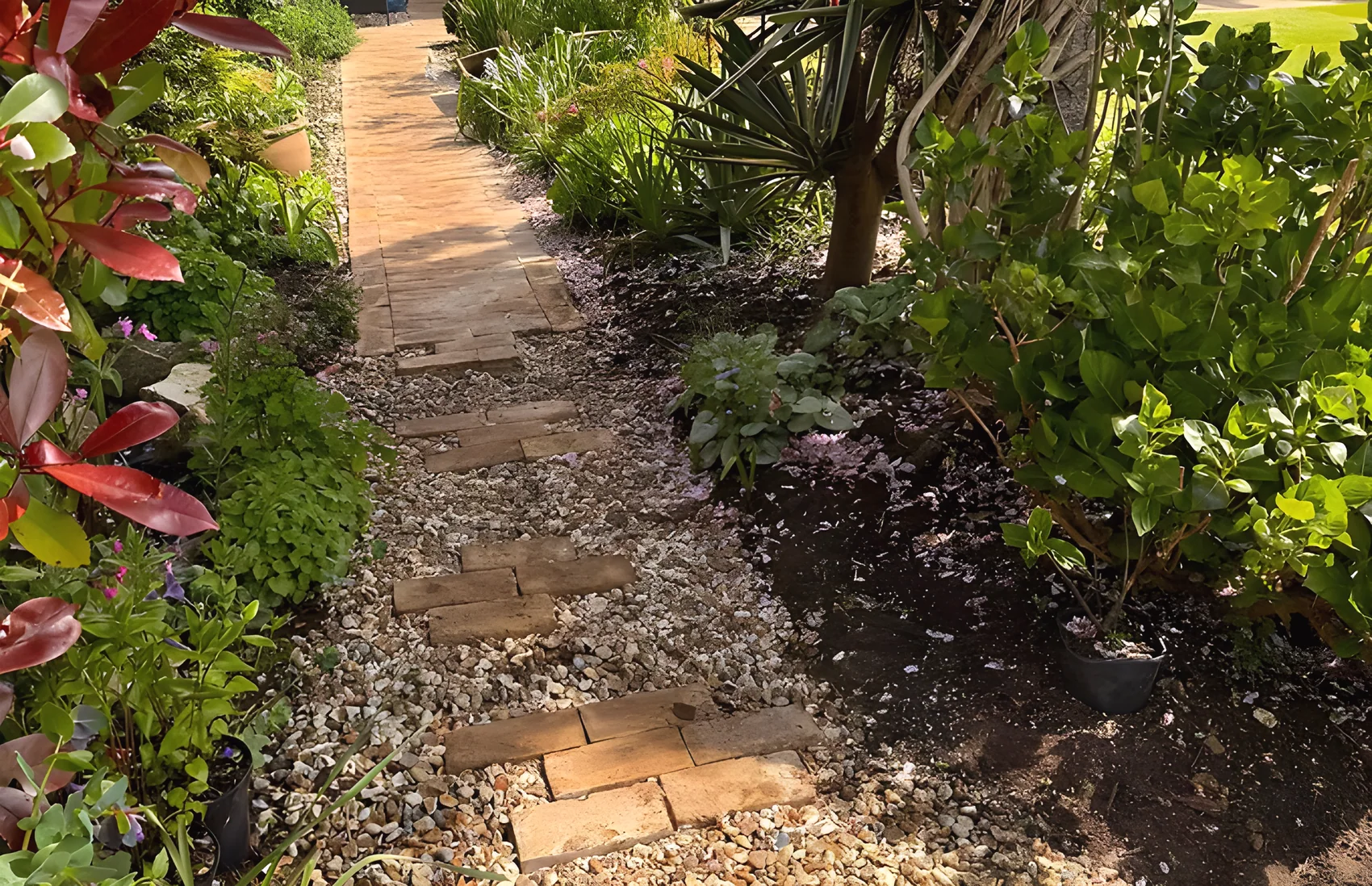
A narrow path winding through established planting

Drainage and compaction

Working Out Which Sunningdale You Are In

Before we price a terrace or a lawn here, we read the mapping for that plot and then we dig. Two gardens on the same road can want opposite things, and promising free drainage on ground that turns out to be Swinley Clay is how a good garden fails in its first winter.

On the sandy plots the answer is holding water and nutrient: serious volumes of organic matter, deep mulch, and on the larger gardens zoned irrigation put in while the ground is open rather than retrofitted later. On the clay and on the rebuilt plots the brief inverts. Where construction traffic has left a pan, we decompact rather than dig, using compressed air to fissure the ground and enriched biochar to hold those fissures open, which cures waterlogged ground without lifting the garden to do it.

  • Mapping checked and trial holes dug before anything is priced
  • Organic matter, mulch and zoned irrigation on the thirsty sand
  • Deep soil aeration where construction traffic has left a hard pan
  • Edging and drainage detailing on sandy slopes that gully and wash out
  • Japanese knotweed checked by survey on plots backing the railway or a watercourse
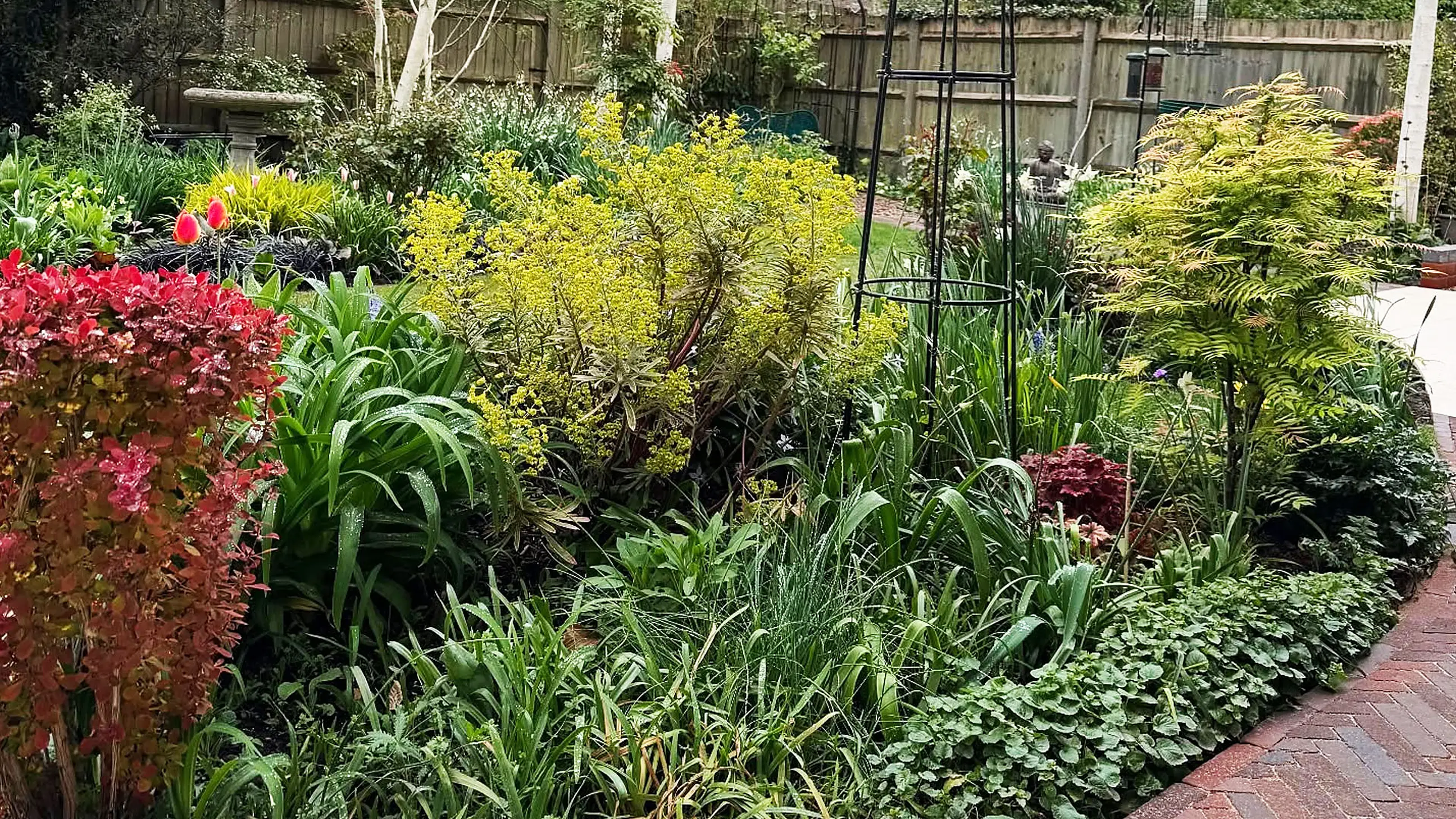
Dense mixed planting running the length of a garden

Planting

The Acid Ground Is an Advantage, Not a Problem

Acidic sand is the native language of a Sunningdale garden, and the ericaceous palette speaks it without any correction. Rhododendron, azalea, camellia, pieris, magnolia, Japanese maple and skimmia all thrive here under the pine, birch, oak, holly and gorse frame of the old heath. The Valley Gardens next door in Windsor Great Park hold National Collections of magnolia, rhododendron and Glenn Dale azaleas on exactly the same ground, which is a fair indication of what is possible on a private plot.

What sulks is anything wanting lime, fertility or steady moisture. Box, clematis, bearded iris and hungry herbaceous borders all struggle, and chlorosis shows up quickly where alkaline topsoil has been imported or hard water used on established ericaceous beds. So we plant for sharp drainage rather than against it, protect new planting from the deer, rabbits and squirrels that come off Windsor Great Park and the common edge, and we would far rather renovate a leggy century old rhododendron bank in stages across a few seasons than take it out and start again.

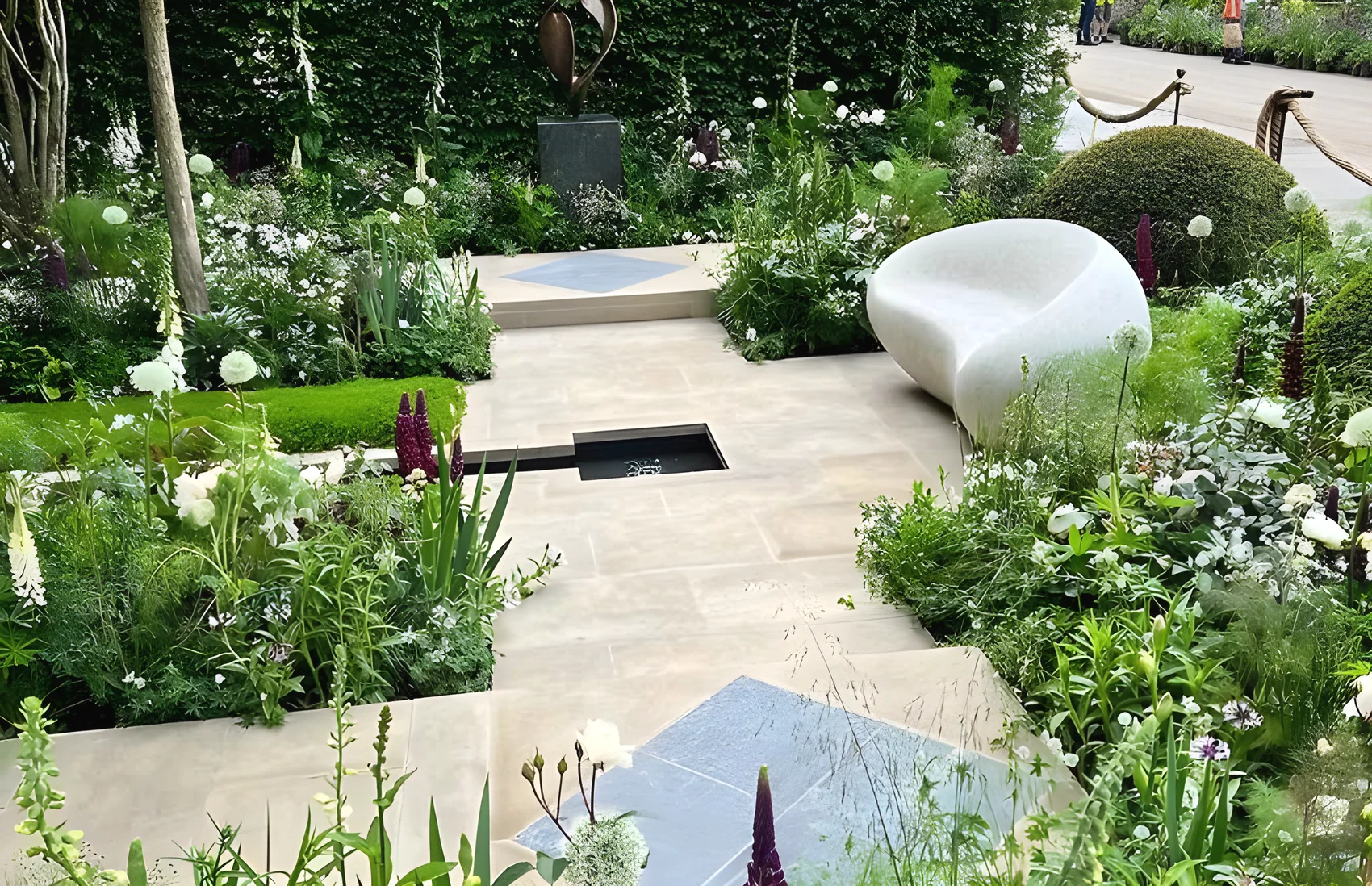
Inset stone paving and perennial planting at RHS Chelsea 2024

Building a garden

Terraces, Levels and Getting the Stone to the Back

Most of what we build in Sunningdale comes down to levels. The golf era plots fall gently and the replacement houses sit on ground that has already been cut and filled, so a terrace that sits properly against the house usually means retaining, steps and a path that read as part of the garden rather than an apology for the slope.

Materials and detailing matter more on this ground than people expect, because fine sand moves. Edges, haunching and sub base decide whether a gravel drive or a planted bank still looks right in a few seasons. We also plan the route in before we plan the build: track mats on the soft verges of the lanes, estate permission on the private roads, deliveries timed around the London Road level crossing, and a conveyor or a crane lift on the old village plots where there is simply no way round the house.

  • Levels, retaining and steps set out before any paving is ordered
  • Deliveries and grab lorries planned around the London Road level crossing
  • Track mats and boards on soft sandy verges and long gravel drives
  • Crane or conveyor where there is no rear access at all

On the ground

On the Ground in Sunningdale

We work right across the village: old Sunningdale around Church Road and Holy Trinity, the centre at London Road, Chobham Road and Station Road, Broomhall, Titlarks Hill, Dry Arch, Coworth, Devenish, Shrubs Hill reached from Shrubbs Hill Lane, the Broomfield Park estate, Charters and Sunningdale Park. The railway splits the village north from south, and the level crossing on the A30 London Road has backed traffic up through the village for decades, which is why deliveries and plant movements get planned around it.

The managed grounds are their own kind of work. Charters, the Grade II listed Art Deco mansion on Charters Road, sits in substantial private gardens and grounds, and at Sunningdale Park, off Larch Avenue, Northcote House is Grade II listed with its park and garden on the register and the lake, kitchen gardens and parkland listed separately. Residents in those buildings have terraces and courtyards rather than gardens, and everything beyond that is worked on under the estate's instruction with the authority involved from the outset.

Beyond the village we are regularly on the same sand in Sunninghill, Cheapside, South Ascot, Ascot, North Ascot, Woodside, Winkfield, Blacknest, Old Windsor, Virginia Water, the Wentworth Estate, Windlesham, Chobham, Burrowhill, Trumps Green, Longcross, Englefield Green, Bagshot and Lightwater. One thing worth knowing if your address says Sunningdale: Woodhall Lane sits in Windlesham parish in Surrey Heath, and Titlarks Hill, Devenish Lane, Shrubbs Hill Lane and Heather Drive each hold both Berkshire and Surrey street records, so we confirm which authority applies to your property before anything needs consent.

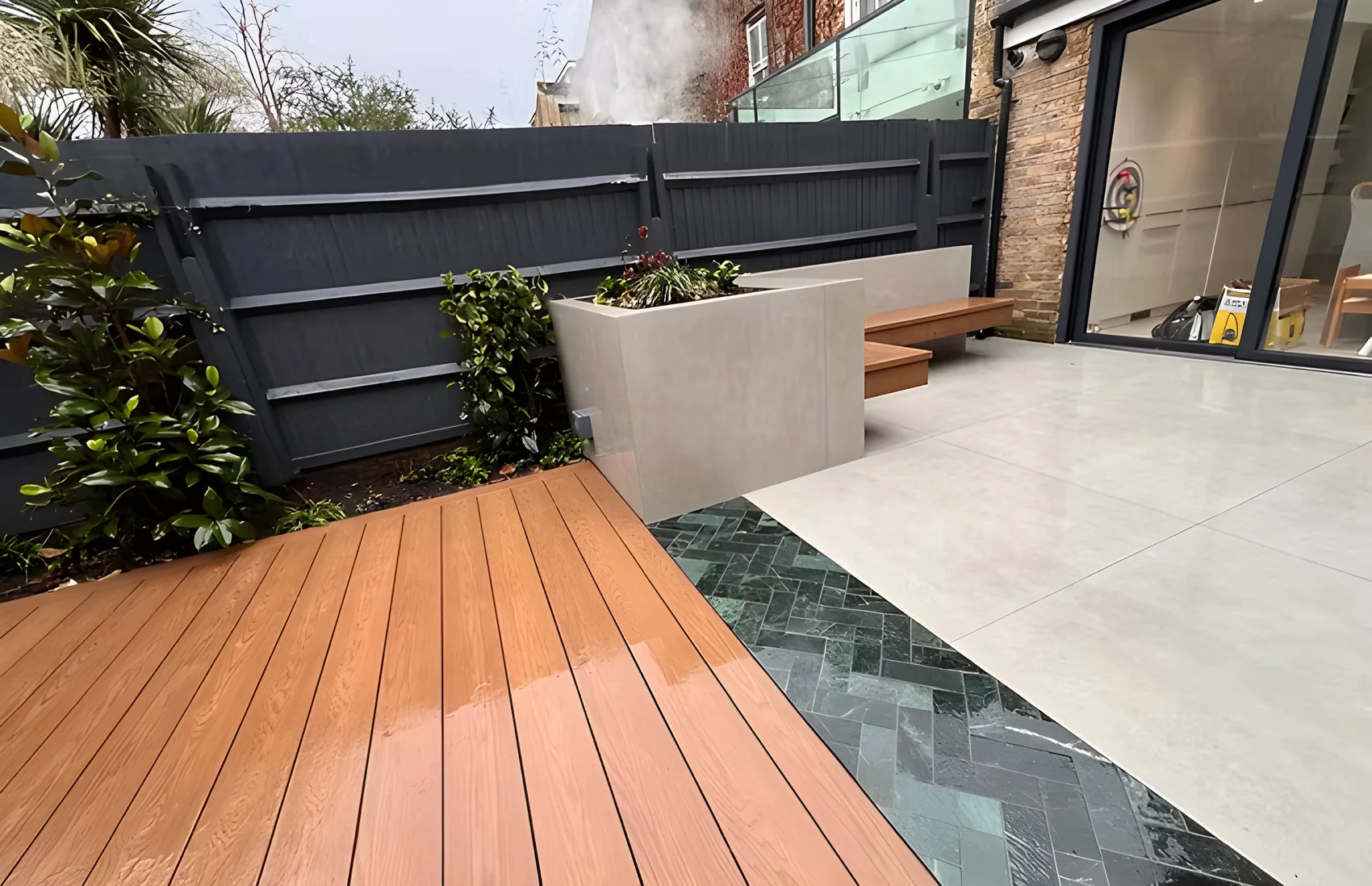
Hardwood decking meeting porcelain paving beside a glass extension

Neighbourhoods and villages

  • Old Sunningdale around Church Road and Holy Trinity
  • Sunningdale village centre at London Road, Chobham Road and Station Road
  • Broomhall
  • Titlarks Hill
  • Charters
  • Sunningdale Park
  • Dry Arch
  • Shrubs Hill
  • Broomfield Park estate
  • Coworth
  • Devenish
  • Sunninghill
  • Cheapside
  • South Ascot
  • Ascot
  • North Ascot
  • Woodside
  • Blacknest
  • Winkfield
  • Virginia Water
  • Wentworth Estate
  • Trumps Green
  • Windlesham
  • Chobham
  • Burrowhill
  • Longcross
  • Englefield Green
  • Bagshot
  • Lightwater
  • Old Windsor

Postcodes we cover

SL5

Planning and trees

Sunningdale is one of the designated conservation areas in the Royal Borough of Windsor and Maidenhead, and that status brings the trees into the picture. Trees in a conservation area are generally protected above a small stem size, and notice normally has to go to the council ahead of certain work, during which the authority can decide to make a Tree Preservation Order. Treat all of that as guidance rather than law and check the position with RBWM before touching anything, because a great many of the mature Scots pines, oaks and beeches on the golf estate roads also carry individual or area Tree Preservation Orders in their own right.

The Ascot, Sunninghill and Sunningdale Neighbourhood Plan puts weight on the green and leafy character, the spacing between buildings and the landscape setting, so tree loss and new hard surfacing tend to attract attention, and the parish council describes the village as a large village surrounded by green belt, which makes garden rooms and substantial new hard landscaping on the fringes worth a planning conversation early. Heritage adds a further layer in the grounds at Charters and Sunningdale Park, and if the address is Woodhall Lane the authority is Surrey Heath rather than RBWM.

Recent work

Recent Work on the Same Ground

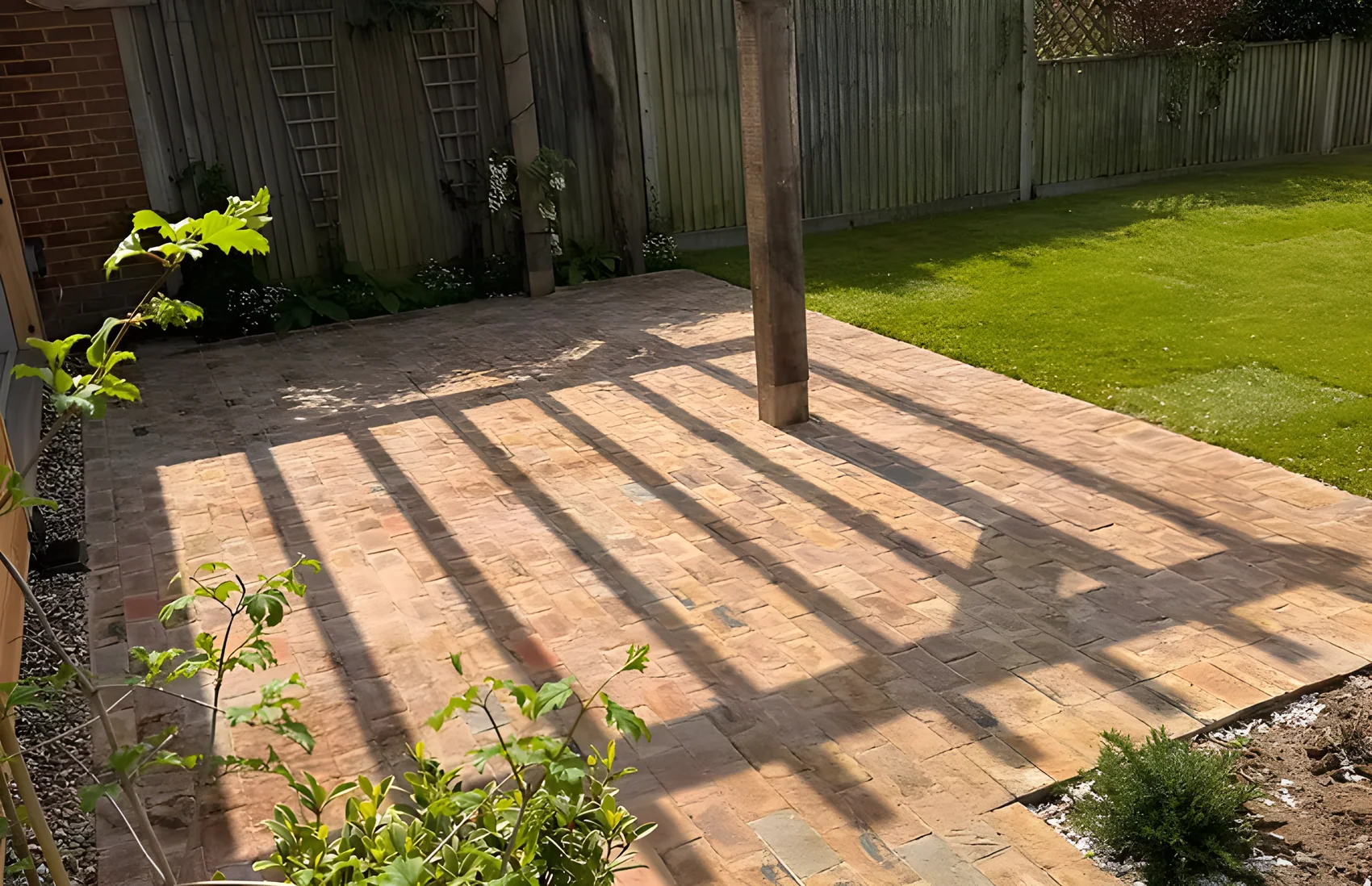
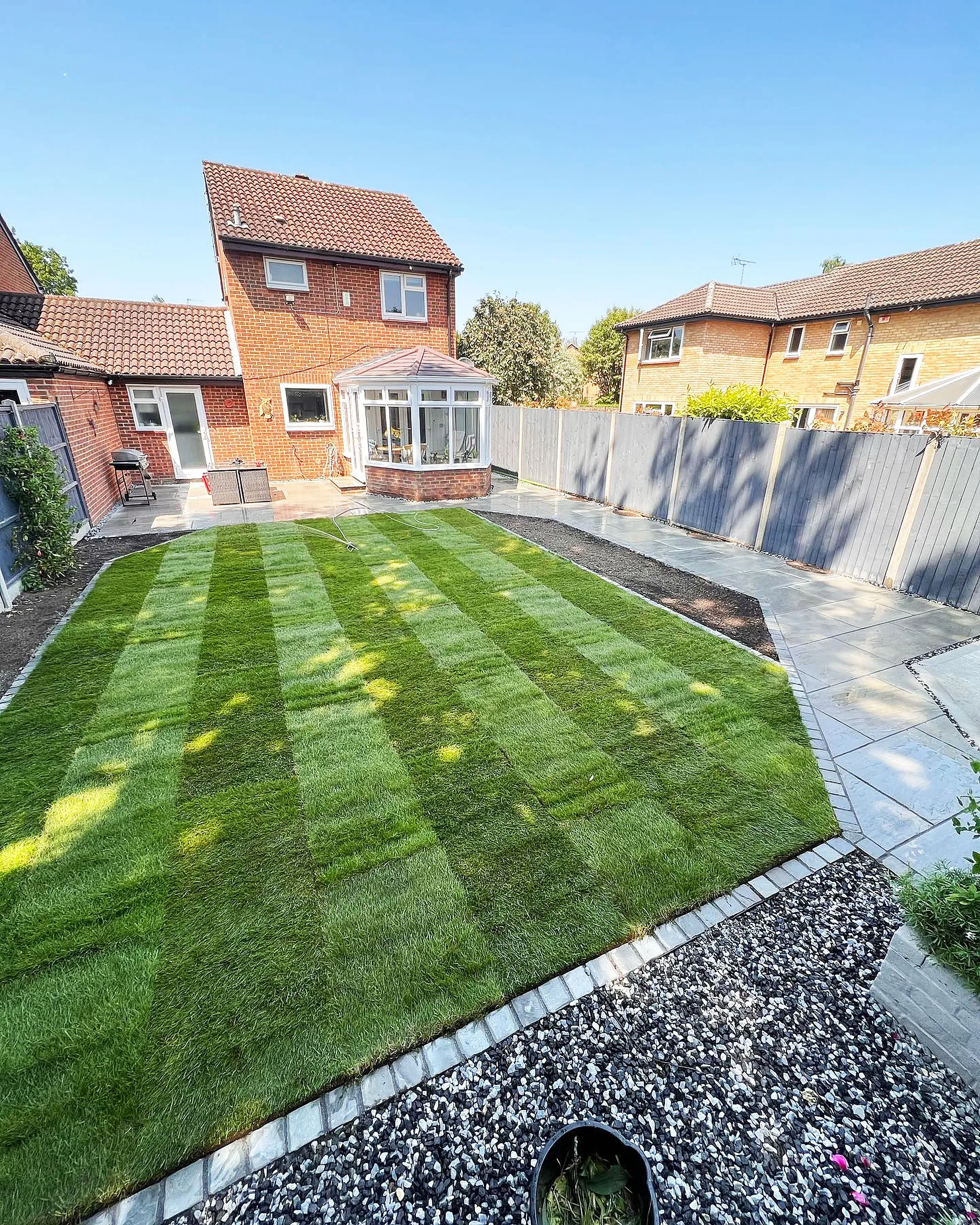
  • Stone paving laid in long bands beside a lawn
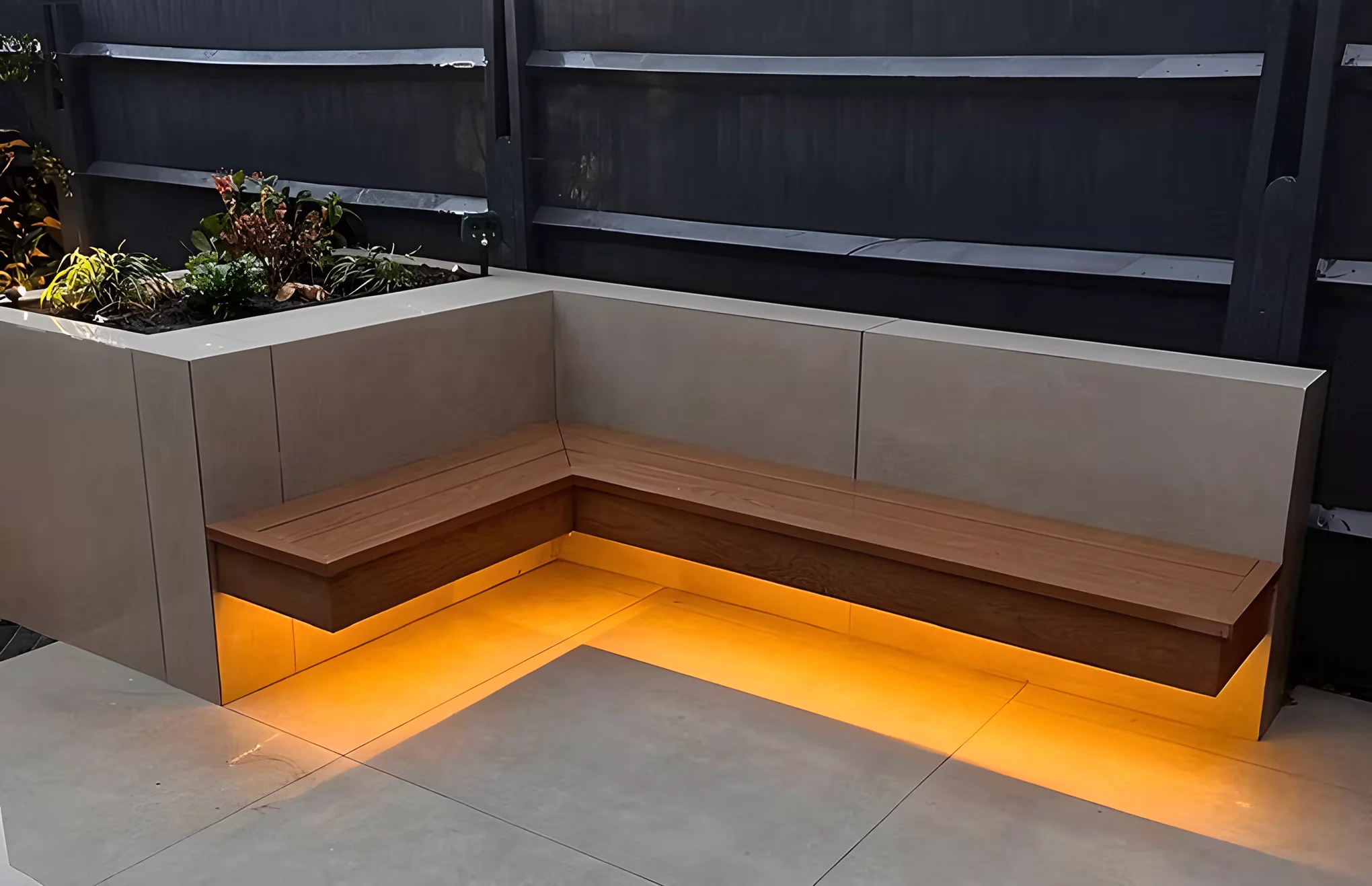
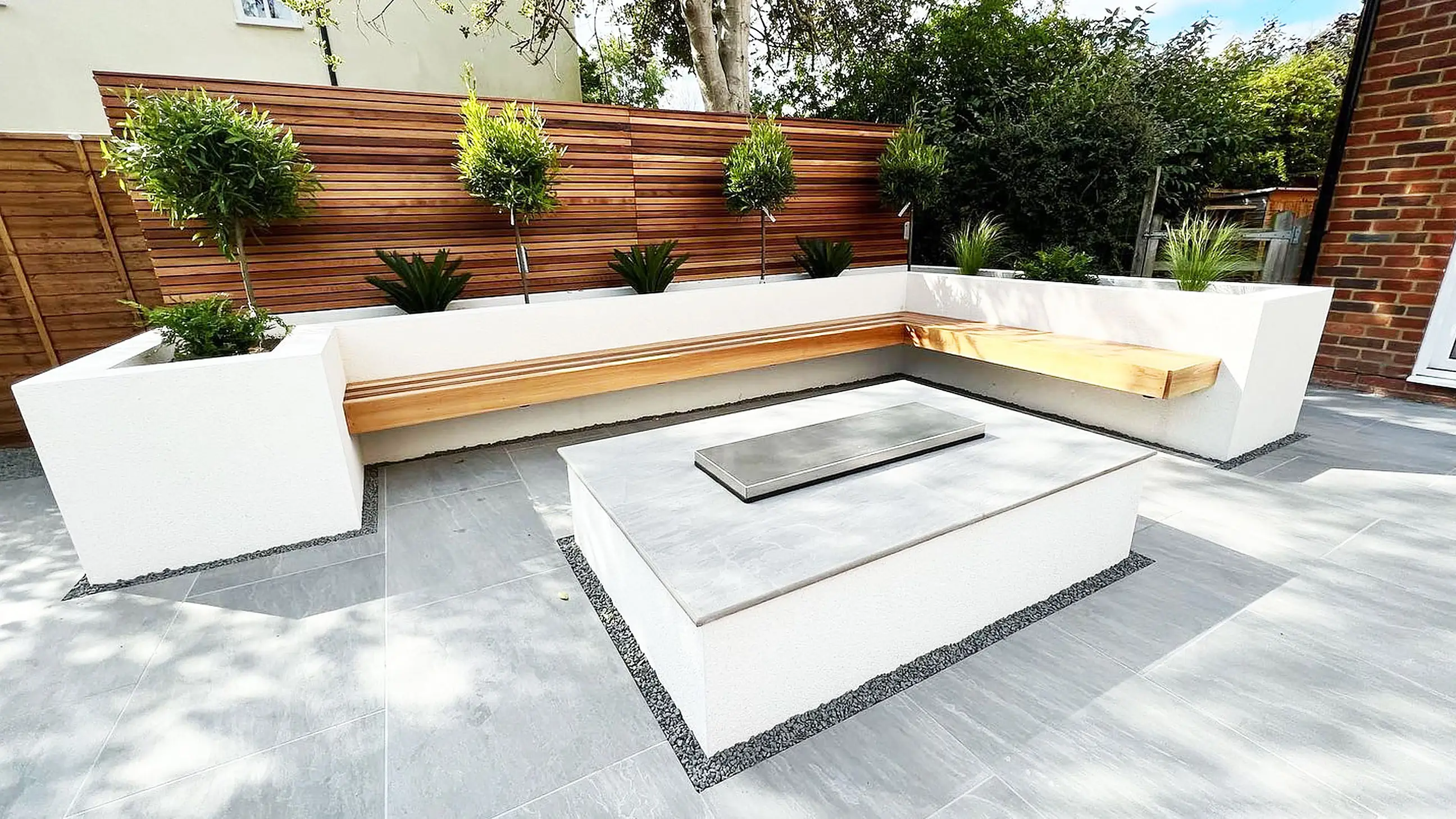
  • A floating timber bench lit from beneath on a porcelain terrace
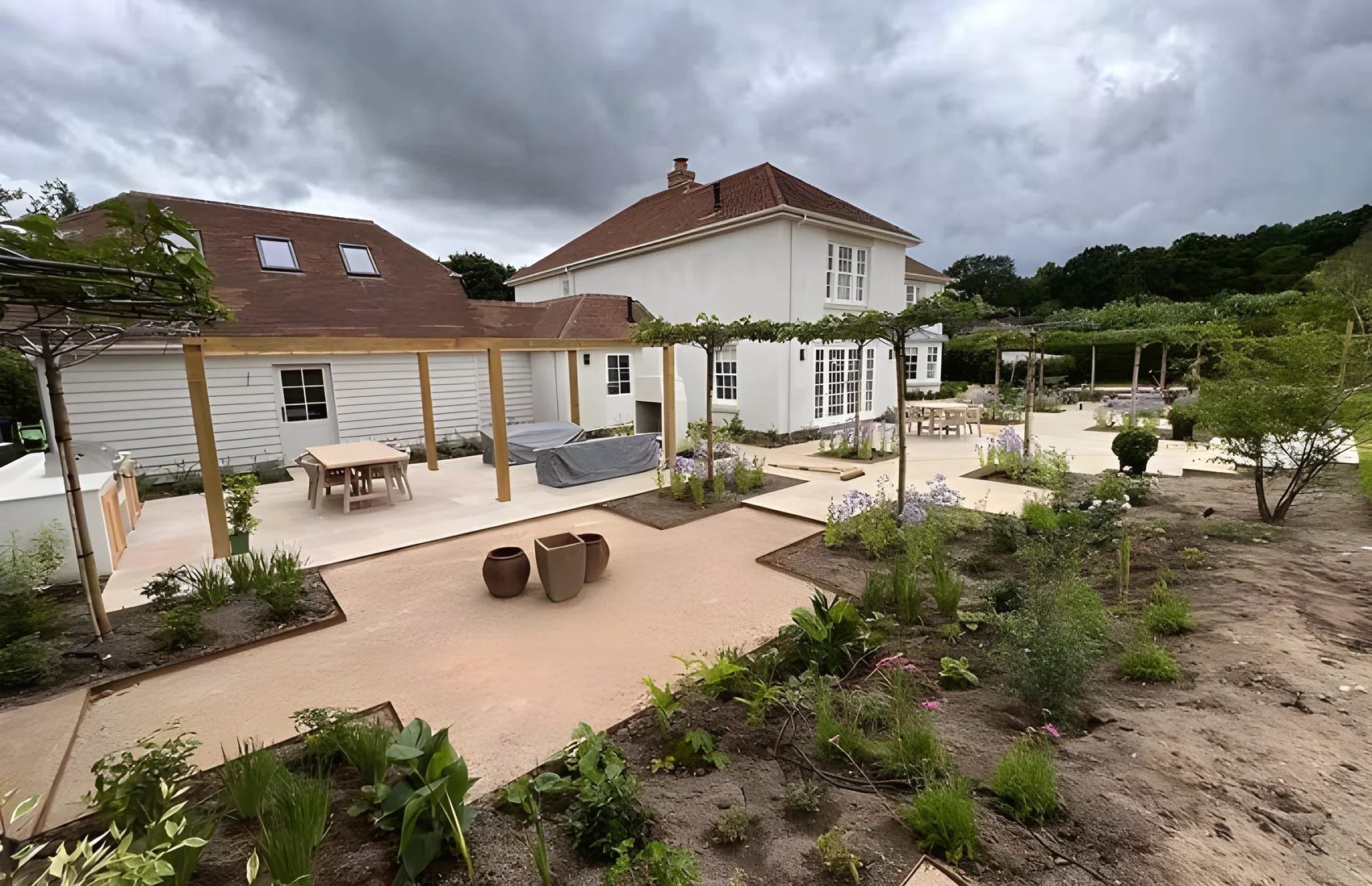
  • A natural limestone terrace with a pergola and outdoor seating

Good to know

Sunningdale Questions

Is the Soil in Sunningdale Sand or Clay?

Both, and which one you have depends on your plot rather than on the village. British Geological Survey mapping puts Bagshot Formation sand under the village centre and the old village roads, the Swinley Clay Member at the surface across Sunningdale Golf Club and the Charters Road and Ridgemount Road area, and the Windlesham Formation, which is sand, silt and clay, under Titlarks Hill and Fireball Hill. That is why we check the mapping for the actual address and dig trial holes before promising either free drainage or a drainage scheme.

Why Did Our New Lawn Fail on a Rebuilt Plot?

Usually because of what is under it rather than what is on it. On plots where a house has been replaced, construction traffic leaves a hard pan below the surface and the imported topsoil over the top is often thin and variable, so water sits, roots stall and turf thins out whatever you spend on seed and feed. The fix is to relieve the compaction first. Deep soil aeration fissures the ground with compressed air and holds the fissures open with enriched biochar, so the ground drains and roots can get down without the garden being dug up.

Our Rhododendron Banks Have Gone Bare at the Base. Do They Have to Come Out?

Almost never. Century old rhododendron and azalea banks are part of why Sunningdale looks the way it does, and the usual answer is staged renovation rather than removal. We take them back in phases across several seasons so there is always something to look at, feed and mulch the ground they are standing in, and open up the light where a protected canopy allows it. Where honey fungus or Phytophthora is in an old shrubbery, we identify that first, because it changes what can be replanted.

Do We Need Permission Before Working on Trees in a Sunningdale Garden?

Quite possibly, and it is worth finding out early. The village is a conservation area, so trees above a small stem size are generally protected and the council normally expects notice before certain work. On top of that, many of the mature pines, oaks and beeches on the golf estate roads carry Tree Preservation Orders of their own. This is guidance rather than law, so we check the specific position with the Royal Borough of Windsor and Maidenhead before any work is programmed, and we design around root protection so the question comes up less often.

There Is No Way Round Our House on Church Road. Can You Still Build a Garden?

Yes, and it is normal work for us in the old village. On Church Road, Trinity Crescent, Dale Lodge Road, Kiln Lane and Coworth Road there is frequently no rear access at all, so stone, soil and spoil move down a narrow side path, through the house on protected boards, or over the roofline. A conveyor or a crane lift often costs less than days of barrowing, and it does far less damage, so we price the access route as a real part of the job rather than hiding it in the build.

Do You Look After the Garden Once It Is Built?

That is the point of the way we work: the team that designed and built your garden is the team that comes back to it. Garden maintenance plans start from £160 per month on a twelve month agreement, with a minimum four hour visit each month. On this ground the calendar is most of the job: acidic needle litter cleared out from under the pines and birches, the rhododendron and azalea banks fed and mulched so they do not go bare at the base again, lawns on the Bagshot sand watched through July and August, and gravel drive edges and planted banks checked after heavy rain for the gullying that fine sand causes. For the bigger plots on the golf estate roads, grounds maintenance and estate management put one dedicated team across lawns, borders, trees, drives and drainage.

Close by

We Also Work In

Start your garden

Talk to Us About Your Sunningdale Garden

Tell us the road and we will tell you what the mapping says is underneath it, then come and dig a hole to check. Design, construction and the looking after afterwards, all from our own team in Hartley Wintney.

  1. 01
    We Call You BackWithin one working day, to talk the garden through.
  2. 02
    The First VisitA walk round the garden to take in the levels, the access and where the water sits.
  3. 03
    A Written ScopeA specification and a programme, with samples to see in your own light.
Prefer to talk?01276 582095info@cjlandscapesltd.co.uk
1 Webbs Mews, High Street
Hartley Wintney, Hook RG27 8NZ
What Would You Like Help With?

Choose as many as you like.

Tell Us About the Project

Roughly is fine. It helps us bring the right people to the first visit.

Your Details
Photographs Optional, up to five

Thank You

Your enquiry has come through and we will call you back within one working day.

Step 1 of 3

We only use your details to reply to this enquiry.